
WASHINGTON/NEW YORK — U.S. job growth accelerated sharply in August, signaling that the labor market remains more resilient than many investors expected and prompting financial markets to increase bets that the Federal Reserve will raise interest rates later this month.
Nonfarm payrolls increased by 162,000 jobs in August, the strongest gain in five months, the Labor Department reported Friday. The unemployment rate held steady at 4.1% even as the labor force grew by 683,000 people, an additional sign of underlying labor-market strength.
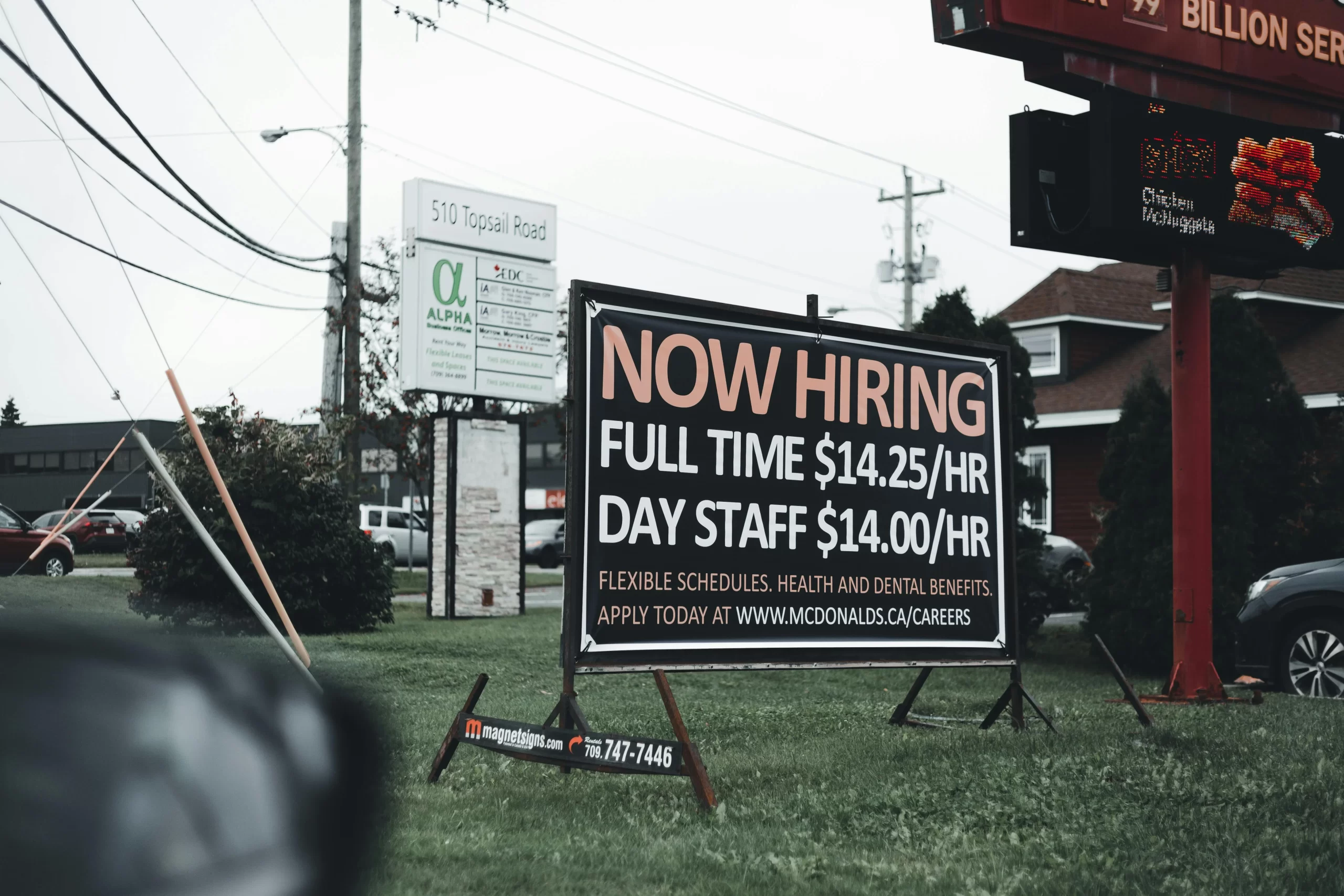
Economists surveyed by Reuters had expected employers to add about 56,000 jobs after an initially reported decline in July. July’s figure was revised higher to a gain of 21,000 jobs from a previously reported loss of 23,000.
The report changed the immediate market conversation.
Before the release, investors were debating whether slowing hiring might persuade the Fed to hold rates steady at its Sept. 15-16 policy meeting. After the data, traders raised the probability of a quarter-point rate hike, while Treasury yields and the U.S. dollar moved higher.
The yield on the policy-sensitive two-year Treasury note rose as much as 8 basis points after the report and was last up about 5 basis points at 4.38%. The 10-year Treasury yield rose to roughly 4.776%, after briefly reaching 4.812%.
The moves reflected a straightforward market judgment: a stronger labor market gives the Fed more room to focus on inflation rather than worrying that higher interest rates will push the economy into an immediate downturn.
“In the Fed’s eyes, the labor market is holding up, which means inflation remains the bigger problem,” Bret Kenwell, a U.S. investment analyst at eToro, told Reuters. “Next week’s CPI report will be closely watched with the Fed’s interest-rate decision looming in mid-September.”
Hiring rebounds after a weak summer
The August report marked a clear reversal from the weak hiring figures reported during the summer.
Payroll growth had slowed sharply in June and July, prompting concern that high borrowing costs, trade uncertainty and elevated energy prices were beginning to weigh on employers.
But August’s 162,000-job gain suggested that the labor market regained momentum.
The increase was the largest since March and nearly triple the level economists had forecast.
The steady unemployment rate added to the positive reading. The rate remained at 4.1% even though more people entered the labor force. A larger labor force can sometimes push the unemployment rate higher if job creation does not keep pace. In August, however, the economy added enough jobs to absorb many new entrants.
The labor-force increase of 683,000 was among the report’s most important details. It indicates that more Americans were working or actively looking for work, expanding the supply of available labor.
That development can help ease wage pressure over time because employers have a larger pool of potential workers. But it also shows that labor-market participation remains relatively healthy, which reduces the argument that the economy is weakening rapidly.
The jobs report did not point to an overheated economy in every respect. Average hourly earnings rose 0.3% in August after a 0.4% increase in July. Over the 12 months through August, wages increased 3.7%, down from 3.8% in July.
That moderation may be welcome to Fed officials. Strong job growth combined with rapidly accelerating wages could fuel concern that inflation will remain elevated. August’s data instead presented a more balanced picture: robust hiring, stable unemployment and wage growth that is still solid but slowing modestly.
What drove job growth
The hiring increase was broad enough to suggest that the improvement was not confined to a single industry.
Health care added 43,000 jobs, continuing its role as a major source of U.S. employment growth. Hiring was especially strong in ambulatory health-care services and hospitals.
Construction employment rose by 19,000 jobs, a notable gain given high mortgage rates and questions about the pace of commercial development. The sector has benefited from infrastructure spending, factory construction and investment tied to energy and technology projects.
Professional and business services added 18,000 jobs, while leisure and hospitality gained 17,000. Government payrolls increased by 14,000 jobs, largely reflecting hiring in local government education.
Manufacturing added 8,000 jobs after declining in July. The improvement was led by durable-goods manufacturing, including machinery and transportation equipment.
Retail employment increased by 6,000, while transportation and warehousing added 4,000 positions.
The distribution of gains matters because it indicates that employment strength was not dependent solely on government hiring or one unusually volatile industry.
Health care, construction and professional services are large and economically significant sectors. Their growth suggests that businesses and institutions continue to hire even as interest rates remain elevated.
The report did contain some weak spots. Temporary-help services lost 9,000 jobs, a category often watched as an early indicator of labor-market softness because companies may reduce temporary hiring before cutting permanent staff.
The decline does not establish a broader slowdown on its own. But it may show that employers remain cautious about longer-term staffing decisions.
Treasury yields jump
The immediate financial-market reaction was most visible in the Treasury market.
Treasury yields rise when bond prices fall. After the jobs report, investors sold shorter-dated government debt, reflecting higher expectations that the Fed could raise its benchmark interest rate.
The two-year Treasury yield is especially sensitive to monetary-policy expectations because it reflects where investors think short-term rates will be over the coming years.
After the report, the two-year yield rose to about 4.38%, while the 10-year yield climbed to around 4.776%.
The short end of the yield curve moved more sharply than the long end, which is typical when markets are repricing the likelihood of a near-term Fed decision.
The increase in yields can have consequences beyond Wall Street.
Treasury yields influence mortgage rates, auto loans, business borrowing costs and the interest rates charged on many forms of consumer credit. When yields remain high, households and companies may face more expensive financing.
Mortgage rates do not move one-for-one with the 10-year Treasury yield, but they are often influenced by the same forces. Housing economists said the jobs report had only a limited immediate effect on mortgage rates, partly because bond-market moves moderated later in the day.
Still, the report reinforced the broader message that borrowing costs may remain elevated.
The 30-year Treasury yield was little changed, slipping by about half a basis point to 5.239%, according to Reuters.
That divergence suggests investors saw the strongest effect in the near-term policy outlook rather than as a major change in long-run growth or inflation expectations.
Markets reprice the Fed
Before the jobs report, traders had assigned roughly a 55% chance to a rate hike at the Fed’s September meeting. Immediately after the release, that probability rose to about 65%. It later eased to around 57% as investors weighed the report’s details and awaited next week’s consumer-price data.
Another measure from CME Group’s FedWatch tool put the probability of a quarter-point rate hike at about 62%, up from 49% on Wednesday.
The difference in figures reflects timing and different market snapshots, but the direction was clear: investors became more convinced that a rate increase is possible.
The Fed’s benchmark interest rate currently influences the cost of borrowing throughout the U.S. economy. Higher rates are intended to cool demand and slow inflation, but they can also restrain hiring, investment and household spending.
The central bank faces a difficult choice.
Inflation has remained above the Fed’s 2% target, and higher oil prices tied to the U.S.-Iran conflict have added to concern that energy costs could produce a new wave of price pressure.
At the same time, some economic data had suggested hiring was slowing, creating an argument for the Fed to avoid tightening too aggressively.
August’s report shifted the balance toward the inflation side of that debate.
The strong job gain makes it harder to argue that the economy is suffering an immediate labor-market downturn. It does not guarantee that the Fed will raise rates, but it gives policymakers more flexibility to do so if inflation data remains uncomfortably high.
Barclays economists said the report “marginally” strengthened the case for a quarter-percentage-point hike and that attention would now shift to inflation figures.
Inflation is the next test
The next major economic release is the Consumer Price Index report due Sept. 11.
The CPI will show whether consumer prices continued to rise at a pace that concerns policymakers. The report will be the final major inflation reading before the Fed meets Sept. 15-16.
If inflation comes in hotter than expected, the August jobs report will likely strengthen the case for a rate increase. A resilient labor market combined with persistent price pressure is exactly the environment in which central banks are more likely to tighten policy.
If inflation data is softer, the Fed may decide that its current policy stance is restrictive enough and wait for more evidence before raising rates.
The report will be particularly important because energy prices have increased in recent weeks.
Oil prices rose sharply after renewed U.S.-Iran military strikes and concerns about shipments through the Strait of Hormuz. Higher crude prices can eventually feed into gasoline, diesel, transport and consumer-goods costs.
Brent crude was trading near $94 a barrel after pulling back from recent highs. U.S. crude was around $89.87 a barrel, down 1.6% on Friday.
The decline provided modest relief, but oil prices remain elevated enough to be a concern for inflation.
“Oil prices have become a direct factor in the Fed’s calculation,” said one market strategist. “If energy costs remain high while hiring stays strong, policymakers will have fewer reasons to wait.”
Stocks and the dollar react
Stocks reacted cautiously to the jobs report.
The Dow Jones Industrial Average fell 98.46 points, or 0.19%, to 53,587.65. The S&P 500 slipped 6.06 points, or 0.08%, to 7,741.65, while the Nasdaq Composite gained 17.02 points, or 0.06%, to 26,601.08.
The mixed performance reflected the competing effects of a strong labor market.
On one hand, stronger employment supports corporate revenue, consumer spending and economic growth. On the other hand, it raises the likelihood of higher rates, which can pressure stock valuations and increase companies’ financing costs.
Technology stocks, which tend to be particularly sensitive to interest-rate expectations, were mixed. The Nasdaq’s small gain indicated that investors were not abandoning growth stocks altogether, but the broader market lacked conviction.
The U.S. dollar rose about 0.2% against a basket of major currencies.
A stronger dollar often follows higher Treasury yields because investors can earn more on dollar-denominated assets. But it can create challenges for U.S. exporters, multinational companies and emerging-market economies with dollar-denominated debt.
Gold fell 1.2% to $4,418.09 an ounce as higher yields increased the opportunity cost of holding a non-yielding asset.
The market moves showed that investors were treating the report primarily as a monetary-policy event rather than simply a positive economic development.
What it means for workers
For workers, the August report offers a more encouraging picture than the June and July figures.
Job growth was broad. The unemployment rate stayed low. More people entered the labor force. Wage growth continued, even if it moderated slightly.
The numbers suggest that employers are still hiring and that workers, on average, have not experienced a sharp deterioration in job opportunities.
But the labor market is not uniformly strong.
Hiring rates remain lower than they were during the post-pandemic boom. Temporary-help jobs declined. Some industries, especially those exposed to high interest rates or trade uncertainty, may remain cautious.
The Fed’s next decision will also matter to workers.
A rate hike could help restrain inflation, protecting purchasing power over time. But it could also slow business investment and hiring. A decision to hold rates steady could support near-term growth but risk allowing inflation to persist.
The August jobs report does not answer that trade-off. It makes it more immediate.
The broader economic picture
The report arrives at a sensitive moment for the U.S. economy.
Consumers have faced higher borrowing costs, expensive housing, elevated energy prices and uncertainty about trade and geopolitics. Businesses have dealt with rising input costs, changing tariff policies and the prospect of slower global demand.
Yet the labor market has remained one of the economy’s strongest pillars.
The 162,000-job gain suggests that employers still see enough demand to justify expanding payrolls. It also suggests that the economy may be more resilient than the weak summer data initially implied.
The question is whether that resilience will keep inflation elevated.
For the Federal Reserve, the answer may depend on next week’s CPI data.
For markets, the message from Friday’s report was immediate: the path to lower rates is no longer assured. Treasury yields rose because investors began to price in a greater chance that the Fed’s next move will be up, not down.
The U.S. economy added more jobs than expected. Now, policymakers must decide whether that strength is good news, or another reason to worry about inflation.