
NEW YORK — Bitcoin rose sharply Friday, trading near $79,346 after gaining 6.37% in the latest session, as the world’s largest cryptocurrency rebounded from an opening price of $73,013 and briefly approached the $80,000 level.
Bitcoin traded as high as $79,479 and as low as $73,013 during the session, according to real-time market data fetched at 10:04 a.m. UTC. The gain represented a rise of $4,647.70 from the previous close of $73,013.
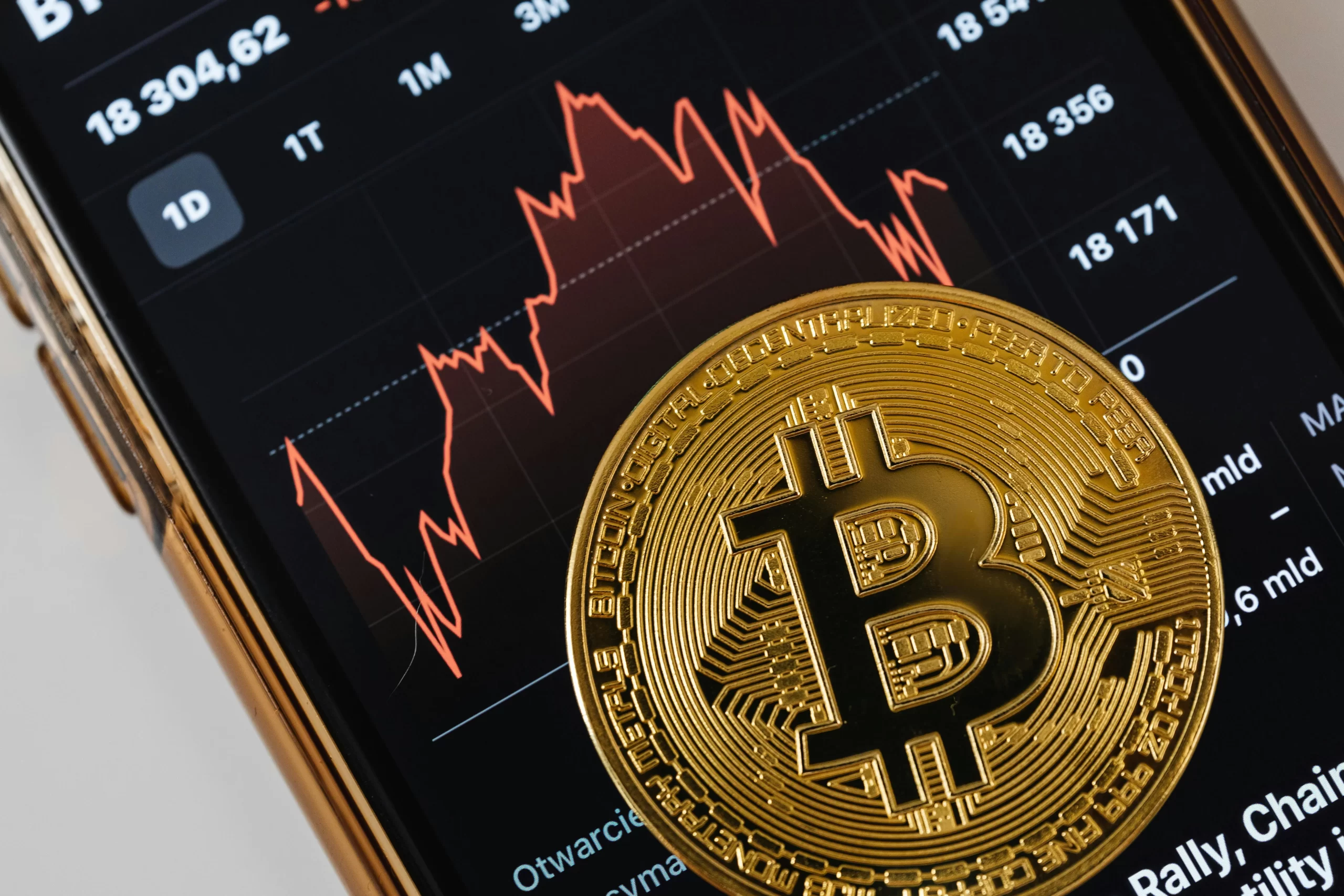
The move lifted Bitcoin’s market capitalization to approximately $1.55 trillion, reinforcing its position as the dominant digital asset despite an extended period of pronounced price swings. Trading volume in the latest session was about $62.6 billion in Bitcoin units and dollar-equivalent market activity, underscoring continued heavy investor interest.
Bitcoin’s latest rally follows a turbulent 90-day period. The cryptocurrency closed near $76,650 on May 23, fell into the low-$60,000 range by early July and then rallied sharply in the second half of August. Its year-to-date trading range has extended from a low of $57,747.77 to a high of $126,198.07.
The price remains highly volatile. While Friday’s rebound brought Bitcoin closer to $80,000, it was still well below its 52-week high. The gap between those levels illustrates why Bitcoin remains both an increasingly mainstream financial asset and one of the market’s most unpredictable instruments.
Bitcoin price today
Bitcoin was quoted at $79,345.50 on Friday trading, based on the latest available daily pricing data. The real-time quote was slightly lower, at $77,660.70, because cryptocurrency markets trade continuously, and prices can move materially within minutes.
| Market measure | Latest reading |
| Latest daily close | $79,345.50 |
| Real-time quoted price | $77,660.70 |
| Daily change | +$4,647.70 |
| Daily percentage change | +6.37% |
| Session open | $73,013 |
| Session low | $73,013 |
| Session high | $79,479 |
| Previous close | $73,013 |
| Market capitalization | $1.55 trillion |
| 52-week low | $57,747.77 |
| 52-week high | $126,198.07 |
Prices are snapshots and can change rapidly because Bitcoin trades 24 hours a day, including weekends and holidays.
The difference between the most recent daily closing price and the real-time quote is a reminder that “Bitcoin price today” is not a single fixed number. Unlike U.S. stocks, Bitcoin does not trade on one central exchange with a set market close. Its price reflects activity across a global network of crypto exchanges, market makers, and derivatives venues.
Investors may see slightly different quotes depending on the exchange, data provider, currency pair, and the exact time the price is checked. The figures cited here use the BTC/USD market pair, which measures the value of one Bitcoin in U.S. dollars.
A volatile 90 days
Bitcoin’s latest gain came after a difficult stretch in which the cryptocurrency moved through several major price levels.
On May 23, Bitcoin closed at $76,650. By late May, it traded above $77,000. The market then weakened through June and early July, with Bitcoin closing at $64,001.84 on July 6, $63,323.27 on July 7 and $62,237.70 on July 8.
Those figures show how quickly the market can change. In less than two months, Bitcoin moved from the upper-$70,000 range into the low-$60,000 range, a decline that would be considered extreme for most major asset classes but remains familiar territory in cryptocurrency markets.
The recovery accelerated in August. Bitcoin closed at $69,300.01 on Aug. 19, then rose to $73,011.87 on Aug. 20 before reaching a daily close of $79,345.50 on Aug. 21.
The three-session jump from Aug. 19 through Aug. 21 represented a gain of roughly $10,045, or about 14.5%, based on closing prices. That type of rapid movement illustrates why traders closely watch technical levels, derivatives markets, liquidity conditions and macroeconomic news for signs of momentum or reversal.
But short-term price changes do not establish a sustained trend. Bitcoin has repeatedly experienced sharp rallies followed by abrupt declines, particularly when leveraged trading intensifies or macroeconomic expectations shift.
What drives Bitcoin’s price
Bitcoin’s price is shaped by a mix of supply, demand, investor sentiment, monetary-policy expectations, regulation, technology developments and market structure.
Unlike a company’s stock, Bitcoin does not generate earnings, pay dividends or offer a claim on a stream of cash flows. Its valuation is therefore more dependent on how buyers and sellers assess its usefulness as a store of value, payment mechanism, speculative asset, portfolio diversifier or hedge against currency debasement.
Supporters often describe Bitcoin as “digital gold,” emphasizing its capped supply of 21 million coins and decentralized network. They argue that scarcity can make it attractive in periods of rising government debt, inflation concerns, or uncertainty about traditional financial institutions.
Critics argue that Bitcoin’s price remains too volatile for routine payments or reliable wealth preservation. They also point to regulatory risk, cybercrime, the possibility of exchange failures and the fact that the asset’s value depends heavily on continued demand.
In practice, Bitcoin has increasingly traded alongside other risk-sensitive assets, particularly technology stocks. When investors are optimistic about growth and more willing to take risk, Bitcoin can benefit. When markets become cautious, cryptocurrency can decline quickly.
Interest-rate expectations are also important. Higher interest rates can make risk-free assets such as Treasury bills more attractive, potentially reducing demand for speculative investments. Lower expected rates can have the opposite effect by encouraging investors to seek higher returns in equities, digital assets, and other riskier markets.
The year’s trading range
Bitcoin’s 52-week range has been unusually wide, stretching from $57,747.77 to $126,198.07.
The spread of more than $68,000 between the low and high demonstrates the scale of the asset’s volatility. An investor who bought Bitcoin near the annual high would be sitting on a substantially different return than someone who bought near the annual low.
The current price near $79,000 places Bitcoin above its yearly low but well below its peak. That position may lead market participants to interpret the rally in different ways.
Bullish investors may view the rebound as evidence that demand remains resilient after a decline. They may point to Bitcoin’s ability to recover quickly from lower levels and its continued market capitalization above $1.5 trillion.
More cautious investors may note that the price remains far below the 52-week high, and that a large one-day percentage gain does not resolve broader questions about market liquidity, regulation or macroeconomic conditions.
Both views can coexist because Bitcoin’s market is influenced by short-term trading as well as long-term investment narratives.
Why daily volume matters
Bitcoin’s reported volume was about $62.6 billion in the latest session, higher than the roughly $60.3 billion recorded on Aug. 20 and $51.0 billion on Aug. 19.
Higher volume can indicate stronger market participation, but it does not automatically signal whether prices will continue rising. Volume can increase during rallies, selloffs and periods of uncertainty as traders reposition their holdings.
In Bitcoin markets, volume figures also require caution. Cryptocurrency activity is fragmented across many exchanges, and reported volumes may vary by provider. Some volume comes from spot markets, while a significant portion of trading occurs in futures, options, and other derivative products.
Derivatives can magnify price movements because traders often use leverage. A leveraged trader who is forced to close a position during a rapid move can contribute to additional buying or selling pressure, creating a feedback loop.
That structure helps explain why Bitcoin can move thousands of dollars in a single day. It is not only a reflection of long-term investors changing their views; it can also reflect the mechanics of trading, margin requirements, and liquidations.
Bitcoin’s role in the financial system
Bitcoin has become more integrated into mainstream finance than it was during earlier crypto cycles.
Institutional investors, hedge funds, asset managers, corporations and retail investors can now access Bitcoin through multiple channels, including direct ownership, exchange-traded products, futures markets and brokerage platforms.
That wider access has increased Bitcoin’s legitimacy in the eyes of some investors. It has also tied the asset more closely to conventional financial-market conditions. Bitcoin is no longer traded only by early adopters and specialized crypto participants; it is increasingly part of broader portfolios that respond to changes in interest rates, dollar strength, equity-market performance and global risk appetite.
Still, Bitcoin remains outside the traditional banking system in important ways. It is not backed by a central bank or government. It does not have any deposit insurance. Investors who hold their own Bitcoin face responsibility for securing private keys, while those who use exchanges face counterparty and custody risks.
Technology has matured, but the risks have not disappeared.
What investors should watch
Several factors could influence Bitcoin’s next move:
- Macroeconomic data that changes expectations for interest rates.
- Equity-market volatility, particularly in technology stocks.
- Regulatory developments affect crypto exchanges, stablecoins or investment products.
- Inflows and outflows from Bitcoin-linked investment vehicles.
- Derivative market positioning and potential leverage-driven liquidations.
- U.S. dollar movements and global geopolitical risk.
- Technical price levels near $80,000 and support areas around recent lows.
Bitcoin’s current move toward $80,000 is notable because round-number levels often attract attention from traders. But technical levels are not guaranteed. They represent areas where buyers and sellers may become more active, not fixed barriers.
For readers following Bitcoin price today, the essential point is that the market has rebounded sharply but remains volatile. A 6.37% daily gain is meaningful, yet it sits within a year in which Bitcoin has traded from below $58,000 to above $126,000.
Bitcoin’s latest rally offers evidence of renewed momentum. It does not eliminate the risks that have always defined the asset: large price swings, regulatory uncertainty, market fragmentation, and the possibility that sentiment can reverse as quickly as it improves.