
A New Year’s Eve table does not have to be a calorie trap to feel festive. Nutrition experts say the healthiest spreads lean on vegetables, whole grains, lean proteins, and lower‑sugar drinks, with a few indulgent touches for balance rather than all‑night excess. With some planning, it is possible to offer guests colorful canapés, satisfying mains and celebratory mocktails that support January health goals instead of undermining them.
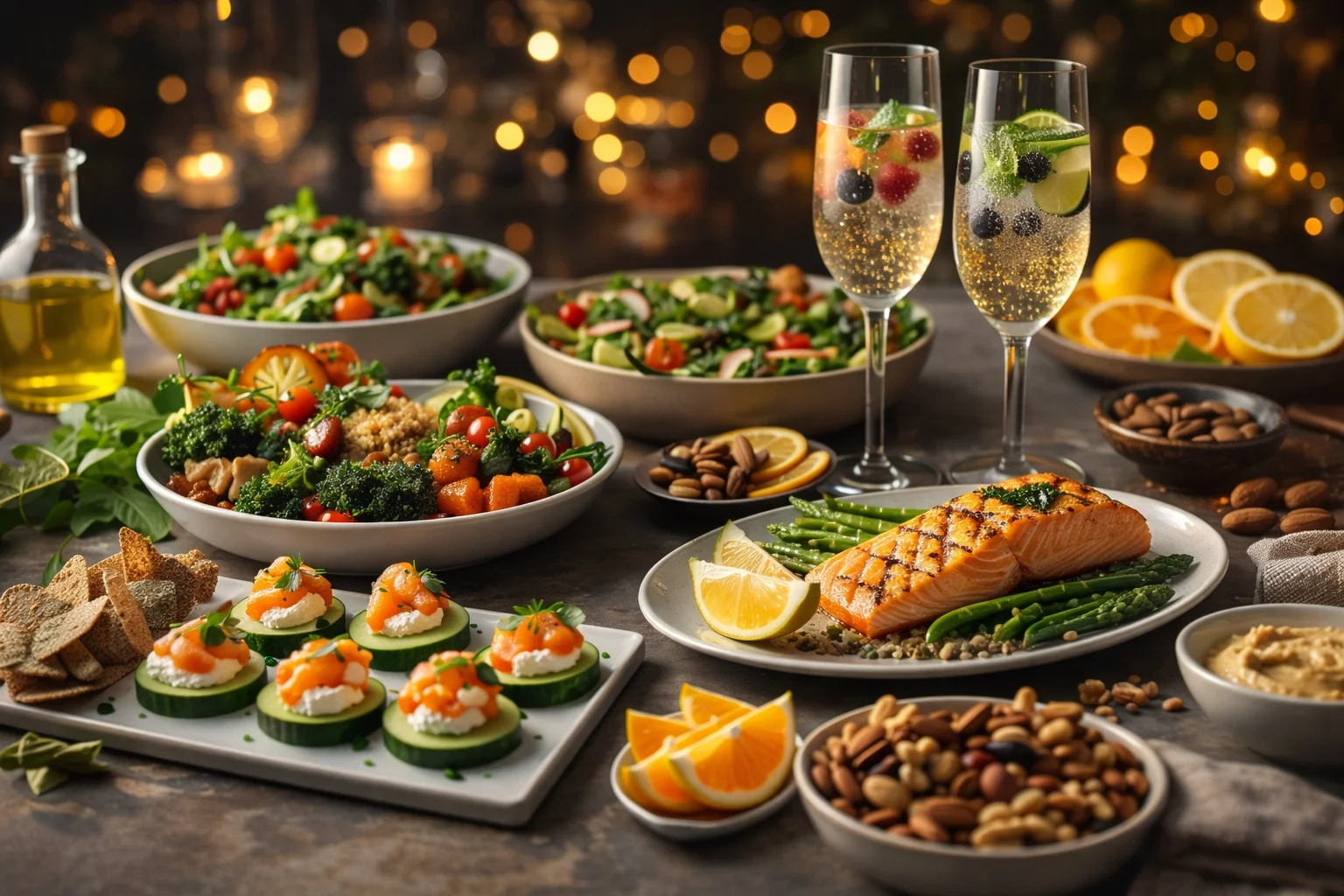
Principles for a Healthier New Year’s Eve Menu
Dietitians who specialize in party menus advise starting with structure rather than recipes. A balanced New Year’s Eve spread typically emphasizes:
- Fruits and vegetables should be the main ingredients in appetizers and sides. They can be served raw, roasted, or in salads to boost fiber and micronutrient intake.
- Seafood, poultry, beans, tempeh, or lentils are examples of lean proteins that can help you feel full and stop you from snacking too much on refined carbs and sweets.
- Whole grains and legumes, such as farro, quinoa, and lentils, are good sources of complex carbohydrates and extra fiber.
- Drink lighter drinks, like mocktails and cocktails with less sugar, to cut down on the empty calories from alcohol and added sugar.
Registered dietitians also suggest planning at least one protein‑rich main and one vegetable‑forward centerpiece, then filling in with dips, crudités, and a modest dessert selection.
Lighter Appetizers: Vegetables, Spreads and Smart Bites
Appetizers set the tone for the evening, and many traditional finger foods can be reworked with healthier ingredients.
- Crudité and dip boards: large platters of raw and lightly blanched vegetables, carrots, celery, radishes, peppers, and snap peas, paired with hummus, Greek‑yoghurt‑based dips or smoky eggplant spreads offer crunch and color with relatively few calories. One New Year’s Eve guide recommends a “dips and crudité grazing board” as an easy way to help guests meet vegetable goals before midnight.
- Bruschetta and crostini: thin slices of baguette or whole‑grain bread topped with chopped tomatoes, herbs, pesto, or roasted vegetables provide familiar flavors in controlled portions. Nutrition‑focused blogs suggest brushing the bread with olive oil, piling on vegetables, and using cheese sparingly for richness without excess saturated fat.
- Plant‑based bites: Mini kale, goat cheese and caramelized onion pizettes, tempeh squares with light barbecue glaze, or fresh spring rolls with tofu or tempeh pack fiber and plant protein while remaining visually appealing. These can stand alongside small meatballs made from lean beef or turkey for omnivorous crowds.
Portion size matters: nutrition advice for holiday parties often recommends assembling small bites guests can finish in two or three bites, encouraging variety without large, calorie‑dense servings.
Healthier Mains: Lean Proteins and Veggie‑Forward Dishes
For gatherings that include a sit‑down element, health‑conscious mains focus on lean protein and generous vegetables.
- Seafood and poultry: Baked salmon, shrimp skewers, roasted chicken or turkey breast are repeatedly cited as suitable New Year’s Eve centerpieces, offering high‑quality protein with less saturated fat than many red meats. Kidney‑health resources likewise endorse roasted turkey, chicken, and fish as “good choices” at holiday parties, while advising modest portions.
- Grain and vegetable salads: Salads built around farro, quinoa or lentils, combined with roasted squash, apples, greens, nuts, and a vinaigrette, provide fiber, complex carbohydrates, and healthy fats. One 2025 New Year’s menu suggests squash and farro with apples, goat cheese and pecans as a festive but balanced side that can double as a vegetarian main.
- Vegetable‑rich pastas and bowls: Dishes such as simple zucchini pasta, sheet‑pan chicken with vegetables or grain bowls topped with roasted vegetables and lean protein give diners volume and variety while keeping sauces relatively light. A round‑up of “healthy New Year’s Eve dinner ideas” recommends air‑fryer or sheet‑pan meals as efficient ways to serve large groups with controlled amounts of added fat.
These options align with broader healthy‑eating guidance, which prioritizes lean meats, fresh produce, whole grains, and lighter sauces at holiday events.
Smarter Drinks and Desserts
Beverages and sweets can quietly dominate calorie intake at celebrations, but both can be adjusted without abandoning a sense of occasion.
- Mocktails and lighter cocktails: Recipes for lemon basil mojito mocktails, raspberry fizz, and other fruit-based drinks use sparkling water, citrus, and herbs to add flavor without adding as many calories as regular mixed drinks. One article about kidney health says that flavored teas and fruit-infused waters are safer choices for people who need to cut back on alcohol or sugar. Guests who choose to drink alcohol can often adapt these bases with a small measure of spirits, keeping portions modest.
- Fruit‑forward and portion‑controlled desserts: Mini fruit‑based cupcakes, meringues, or angel food cakes with berries generally contain less fat and fewer calories than rich cream‑based desserts, especially when served in bite‑size portions. Guides to “secretly healthy” party food highlight items such as lemon meringue angel cake or small raspberry desserts as examples of sweet endings that do not rely on heavy creams or large pastry shells.
For people with specific health conditions, such as kidney disease or diabetes, medical nutrition resources stress the importance of watching sugar and fat content and choosing fruit‑based options in controlled portions.
Building a Balanced New Year’s Eve Plate
Health organizations and nutrition‑focused platforms often suggest using a simple visual rule at buffets: aim for half the plate to be vegetables or salads, a quarter lean protein and a quarter whole grains or starchy sides. Applied to New Year’s Eve, that might mean:
- Filling half the plate with crudités, roasted vegetables, or grain‑based salads.
- Choosing a modest serving of fish, poultry, lean beef or a plant‑based protein like tempeh or lentils.
- Adding a small portion of bread, whole‑grain crostini, or pasta if desired.
Experts also emphasize pacing and hydration: eating a substantial meal earlier in the evening, drinking water between alcoholic beverages and pausing between trips to the buffet can help prevent overconsumption late at night.
A Healthier Start to the New Year
In the end, nutritionists see New Year’s Eve not as a test of willpower but as a chance to practice the kind of balanced eating that many people want to keep doing in January and beyond. Menus that put vegetables, lean proteins, and whole grains at the top of the list, along with smart drink and dessert choices, can help you reach that goal without losing flavor or fun.
The message from current health food advice is clear for hosts: you can have a table that feels full and festive when the clock strikes midnight, and your guests won’t feel stuffed.