
The U.S. labor market added 172,000 jobs in May, extending a three‑month run of solid gains and offering fresh evidence that hiring is stabilizing after last year’s near‑stall. The unemployment rate held at 4.3% for a fourth straight month, even as more people entered the workforce, underscoring what economists describe as a “low‑hire, low‑fire” job market that remains resilient despite persistent inflation and geopolitical shocks.
Hiring beats expectations and revisions brighten the picture
The May jobs report from the Bureau of Labor Statistics showed nonfarm payrolls rising by 172,000, easily topping consensus forecasts that had called for roughly 100,000 new positions. CNN noted that it was the third month in a row with job gains above 100,000, a pattern not seen since early 2024 and a marked shift from last year, when monthly additions often dipped into the single‑digit thousands.
Revisions to prior months were another bright spot. March’s job gains were revised up by 29,000 to 214,000, while April’s figure was revised higher by as many as 64,000 to roughly 179,000, according to CNN and Yahoo Finance. Taken together, the economy has added an average of about 188,000 jobs over the past three months, the strongest three‑month advance in more than two years. Year‑to‑date, the monthly average is near 114,000, a sharp improvement from the under‑10,000 pace seen through much of last year.
Economists quoted by Bloomberg and Barron’s said the data suggest the labor market has “regained its balance” after a period of lackluster hiring, supporting the view that the economy is slowing gently rather than tipping into recession.
Where the jobs are: restaurants, hotels, healthcare and local government
One of the most notable shifts in May was the breadth of job gains across industries. For much of the past year, healthcare had been the primary engine of job growth; last month, hiring picked up in leisure and hospitality, construction, and the public sector as well.
According to detailed breakdowns from NPR, NBC News and Yahoo Finance:
- Leisure and hospitality added about 70,000 jobs, including 48,000 at restaurants and bars, as businesses staffed up for the summer travel season.
- Government employment grew by roughly 50,000 to 55,000, with most of the gains in local government roles outside education, positions like public works, transit, and public safety.
- Healthcare and social assistance continued their steady climb, adding around 35,000 to 47,000 positions, depending on the classification, reflecting ongoing demand for nurses, aides, and support staff.
- Construction firms also added workers, taking advantage of milder weather and a backlog of infrastructure and private‑sector projects.
By contrast, the report highlighted weakness in parts of finance, with banking and insurance firms combining to shed around 22,000 jobs in May as higher interest rates and restructuring continued to ripple through the industry.
White House officials pointed to the data as proof that hiring is “broad‑based” rather than dependent on a single sector, while private‑sector economists said the mix of new jobs, skewed toward services and public employment, reflects an economy still driven by consumer spending and government outlays.
A “low‑hire, low‑fire” market with steady unemployment
The unemployment rate held at 4.3% in May, matching April and staying in a narrow band that economists view as close to full employment. The labor force grew modestly, with about 83,000 people entering the job market or starting work, but that increase was not enough to move the headline rate.
“This is still a low‑hire, low‑fire market,” Indeed economist Laura Ullrich told WPTV, meaning employers are not adding workers at the breakneck pace seen earlier in the recovery but are also reluctant to lay off staff amid lingering memories of shortages. The underlying dynamic, she said, is one of “stillness underneath, rather than genuine momentum” — a labor market that is stable, but not booming.
Measures of broader underemployment, such as the share of people working part time for economic reasons, were little changed, reinforcing the picture of a job market that has cooled from its post‑pandemic extremes but remains historically tight.
Wages trail inflation as Fed weighs its next move
While hiring is holding up, paychecks are not quite keeping pace with prices. Average hourly earnings in May rose 3.4% over the past year, down from 3.6% in April. Over the same period, consumer prices increased 3.8%, meaning real wages, pay adjusted for inflation, are still slightly negative.
For workers, that gap helps explain why the labor market can feel strong on paper but strained in household budgets, particularly as energy prices and rents have climbed amid the ongoing war with Iran and related supply shocks. For the Federal Reserve, the combination of solid job growth, low unemployment and stubborn inflation complicates any plans to cut interest rates.
Bloomberg and Barron’s noted that the May report gives the Fed little immediate incentive to ease policy at its mid‑June meeting. With the economy still generating jobs faster than population growth and wage pressures only gradually moderating, policymakers are expected to keep their benchmark rate on hold while watching for clearer signs that inflation is moving toward their 2% target.
What it means for workers, businesses, and politics
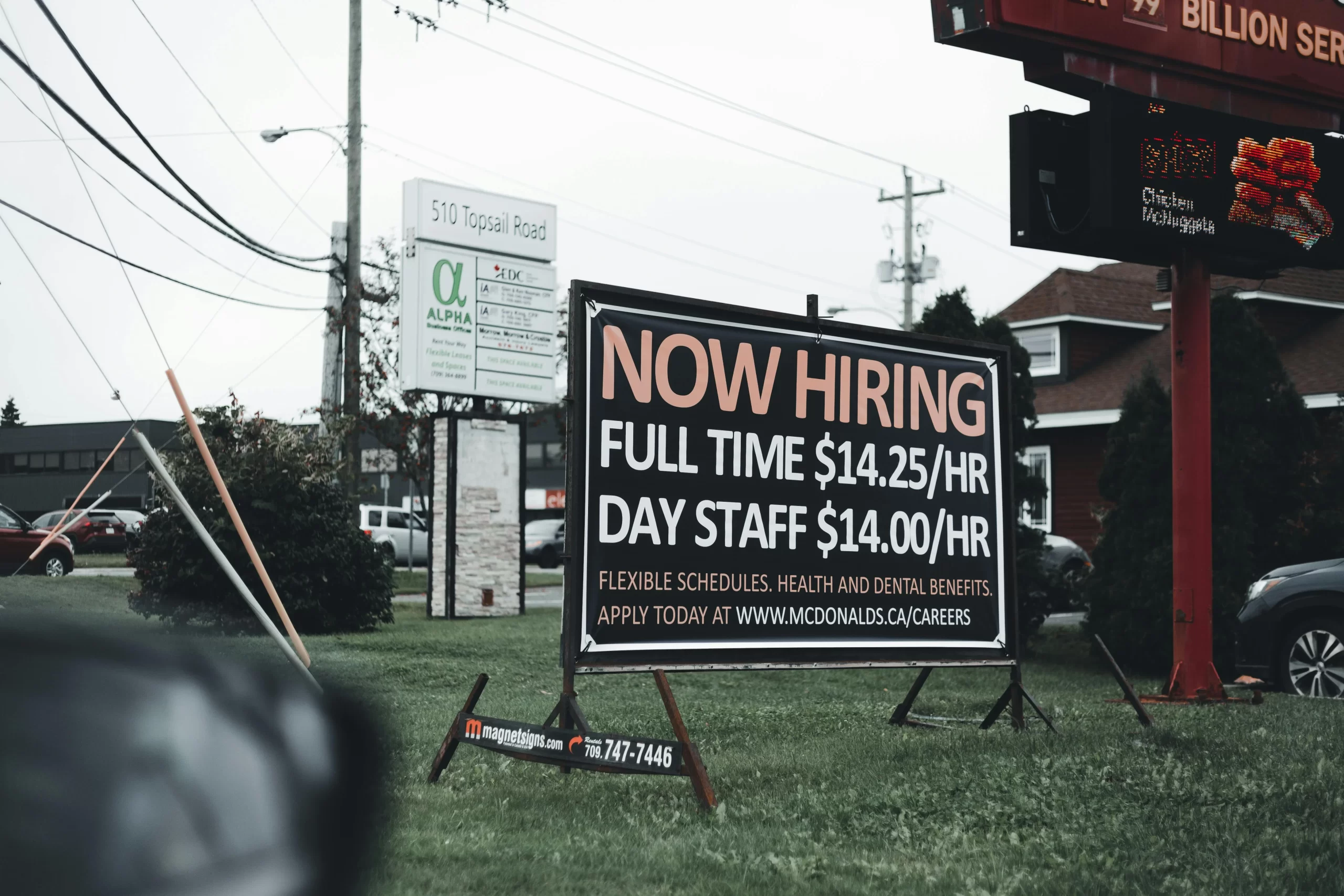
For job seekers, the numbers suggest opportunities remain plentiful, especially in frontline service work, healthcare and state and local government roles. Employers in those sectors continue to report difficulty filling positions, helping to support hiring even as overall growth cools.
For businesses, a steady but no longer overheated labor market can ease pressure on wage bills and turnover, though sectors like finance and tech remain sensitive to higher borrowing costs and shifting demand. With job growth now comfortably above 100,000 per month and unemployment low, economists say the economy appears to be threading a narrow path between overheating and a sharp slowdown.
Politically, the report offers both sides talking points. President Donald Trump’s advisers have touted the May data as evidence that his policies are sustaining a robust job market despite external shocks, while critics point to lagging real wages and persistent inflation as signs that many families are not yet feeling the benefits.
As summer begins, the central question is whether the economy can keep adding around 150,000 to 200,000 jobs a month without reigniting inflation, or whether the Fed will be forced to keep rates higher for longer, testing the staying power of what has become one of the most durable labor market expansions in decades.