
TAIPEI, Taiwan — Foxconn said Saturday that strong demand for artificial intelligence hardware is expected to push its third-quarter performance above market expectations, offering another sign that the global AI investment boom continues to lift the companies building the servers, chips and networking equipment behind it.
The Taiwanese contract electronics manufacturer, formally known as Hon Hai Precision Industry, said its visibility for the July-to-September quarter had improved compared with a month earlier. The company cited continued demand for AI-related products and the start of the second-half peak season for information and communications technology goods.
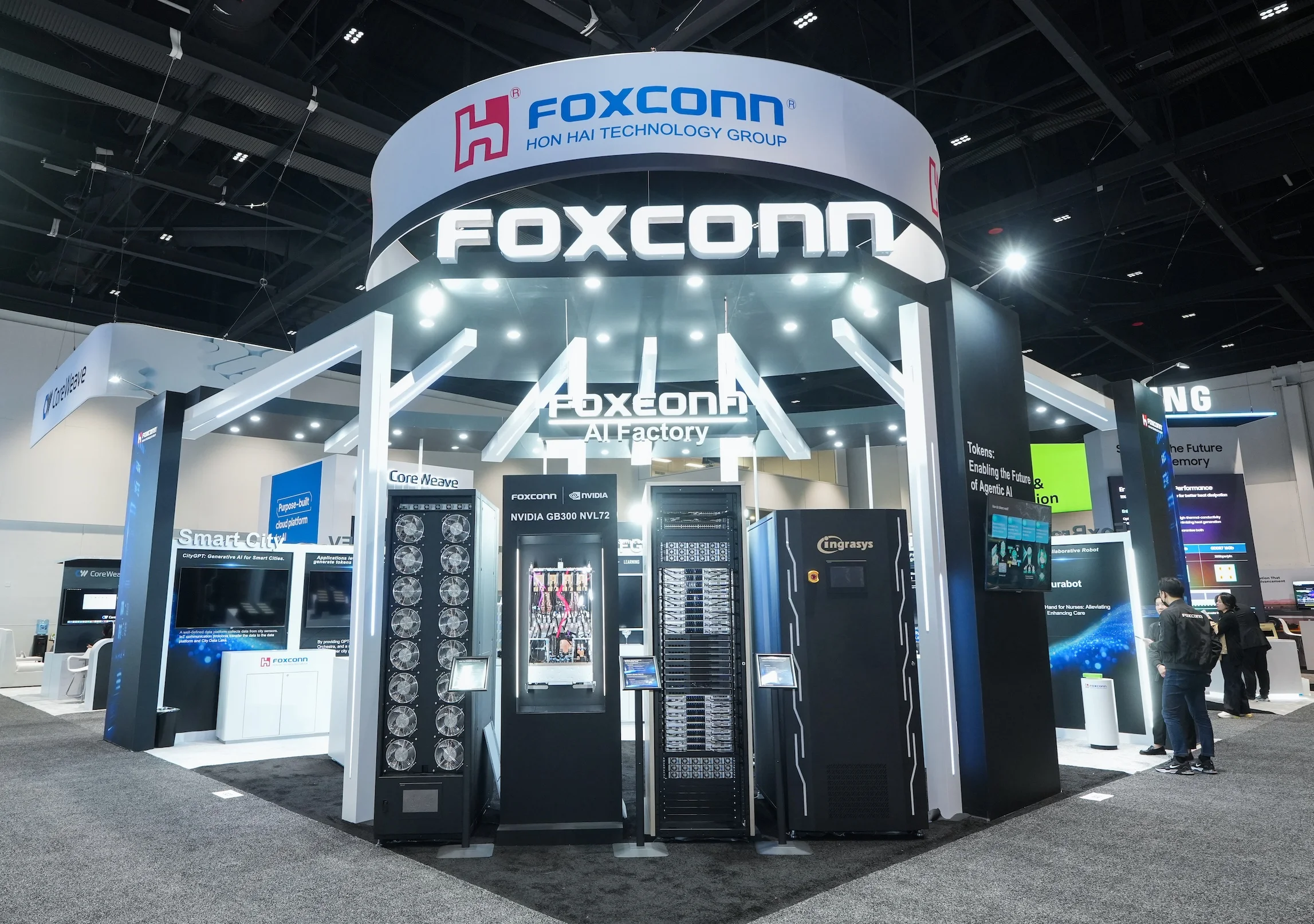
“Currently, the company’s visibility for the third quarter has improved compared to the previous month, with overall performance expected to outperform market expectations,” Foxconn said in a statement.
Foxconn did not provide a numerical forecast. But its latest revenue data underscored the strength of demand: August sales rose 51.98% from a year earlier to T$921.8 billion, or $29.15 billion, the highest August revenue in the company’s history. It was also the second consecutive month in which Foxconn generated more than T$900 billion in revenue.
The company is Nvidia’s biggest server maker and one of Apple’s most important manufacturing partners. Its scale places it at the intersection of two of the technology industry’s most important trends: the rapid expansion of AI data-center infrastructure and the annual consumer-electronics cycle centered on smartphones, computers and related devices.
Foxconn’s outlook adds to a growing body of evidence that spending on AI computing has remained resilient despite concerns about high technology valuations, rising interest rates, supply constraints and geopolitical tensions.
At the same time, the company cautioned that “volatile” global political and economic conditions could affect its outlook.
Record August revenue signals momentum
Foxconn’s August sales figure was one of the clearest indicators yet of the company’s acceleration.
Revenue of T$921.8 billion was 51.98% higher than in August 2025 and marked the company’s best-ever August performance.
The figure was also notable because it came before the traditional peak period for major consumer-electronics producers. Foxconn’s third quarter typically benefits from production ramps ahead of year-end holiday sales, especially for smartphones and other devices sold by major clients such as Apple.
This year, however, the company has an additional growth driver: AI infrastructure.
Foxconn manufactures servers used by Nvidia and other technology companies to train and operate artificial-intelligence models. These systems include high-performance processors, networking components, storage equipment, power systems and cooling infrastructure designed to handle the intensive computing workloads generated by large language models and other AI applications.
The demand is not limited to a single type of buyer.
Technology companies are building massive data centers to support cloud-based AI services. So-called neocloud providers are leasing computing capacity to AI startups and enterprises. Governments are exploring sovereign AI infrastructure, and businesses are investing in AI systems for analytics, automation, software development and customer support.
That breadth of demand has made companies such as Foxconn central to the AI supply chain.
Foxconn said AI demand continued to grow while information and communications technology products entered their normal second-half high season.
In practical terms, that means the company is benefiting from both enterprise investment in data-center equipment and consumer demand for electronics.
From iPhone assembler to AI hardware giant
Foxconn is best known to many consumers as the company that assembles Apple products, including iPhones. But its business has expanded well beyond smartphones.
The company has become a major manufacturer of AI servers and related infrastructure, supplying systems for Nvidia, the world’s leading producer of AI chips, and other firms building large-scale computing clusters.
That shift is strategically important.
Consumer electronics can be cyclical, sensitive to household spending and vulnerable to product-release schedules. AI data-center demand, by contrast, has become a major source of industrial technology investment. It is driven by cloud providers, governments, research institutions and large enterprises seeking to deploy AI systems at scale.
Foxconn’s role in both markets gives it a degree of diversification. When smartphone or PC demand softens, AI-server orders can provide support. When AI investment is volatile, consumer-device production can still contribute substantial revenue.
The company reported a 35% increase in second-quarter profit last month, beating analyst expectations.
That result reflected the growing contribution of AI products and reinforced investor confidence that Foxconn has successfully moved into higher-growth segments of electronics manufacturing.
Its shares rose 3.4% Friday, outperforming the broader Taiwan stock market’s 1.5% gain, before the August revenue data was released.
The stock movement suggests investors were already anticipating favorable news. The record sales figure and upgraded third-quarter outlook are likely to strengthen the view that Foxconn is one of the clearest manufacturing winners from the AI boom.
AI spending remains broad
Foxconn’s update follows a series of strong reports across the AI hardware industry.
Dell Technologies, for example, raised its annual revenue forecast by $25 billion this week and lifted its profit outlook for the second time this year, citing surging demand for AI servers.
Dell now expects fiscal 2027 revenue from AI-optimized servers of $74 billion, up from a previous forecast of $60 billion. Its second-quarter revenue rose 58% to a record $47 billion, exceeding an analyst estimate of $44.92 billion.
Dell Chief Operating Officer Jeff Clarke said the company had booked more than $130 billion in AI server orders over the previous 12 months and had more than 6,500 customers for its AI systems.
Broadcom also reported strong AI chip demand, with third-quarter AI semiconductor sales more than tripling to $16.7 billion.
The pattern is consistent: from chip designers to server manufacturers, networking companies and cloud providers, much of the technology supply chain is reporting continued demand for AI capacity.
Global manufacturing data has also reflected the trend.
Reuters reported that AI demand helped keep factories in China, Japan and South Korea busy in August, supporting output of semiconductors, computers and related equipment.
Japan’s manufacturing purchasing managers’ index rose to 54.9 in August, its highest level since April and its eighth consecutive month of expansion. The country saw new business grow at its fastest pace since January 2018, supported by demand for semiconductors and AI-related products.
South Korea’s manufacturing sector expanded for a ninth straight month, while its exports rose 68.7% in August from a year earlier.
China’s private manufacturing PMI rose to 51.5 in August from 50.9 in July, signaling expansion and reinforcing the view that AI-related demand is helping stabilize parts of the country’s industrial sector.
For Foxconn, these trends create a favorable environment. The company operates in the middle of a regional production network that supplies components, assembly capacity and finished systems to global technology buyers.
The second-half electronics cycle
AI is not Foxconn’s only advantage entering the third quarter.
The company is also approaching the busiest part of the year for consumer technology production. Major clients typically ramp up manufacturing in the second half to prepare for new product launches and year-end holiday demand.
Apple’s annual iPhone cycle is especially important.
As one of Apple’s largest assembly partners, Foxconn sees higher production activity when the company prepares new smartphone models. Apple is expected to hold a major product event in September, and any strong demand for new iPhones could provide further support to Foxconn’s revenue.
The company does not break down all customer-specific data publicly, making it difficult to isolate the contribution of Apple versus AI servers or other products.
But Foxconn’s statement indicated that both categories are supporting its outlook. It cited continued AI demand and the high season for information and communications technology products.
That combination matters because it may reduce the risk of depending on one market alone.
A company selling only AI servers could be vulnerable if data-center investment slows. A company relying only on smartphones could suffer if consumers delay upgrades. Foxconn’s diverse manufacturing base gives it exposure to both enterprise technology spending and consumer demand.
What “outperform expectations” means
Foxconn’s statement that third-quarter performance will “outperform market expectations” is significant, but it is not a detailed forecast.
The company does not provide numerical guidance, Reuters noted.
That means investors will have to rely on monthly revenue disclosures, industry data and analysts’ estimates to determine the likely scale of the outperformance.
The statement could refer to revenue, profit, margins or a broader measure of operating performance. Foxconn did not specify which metric it expects to exceed.
Still, the tone is more confident than a typical cautious outlook.
The company said its visibility had improved compared with the previous month. In corporate language, “visibility” generally refers to management’s ability to see incoming orders, production schedules, customer demand and near-term operating conditions.
Improved visibility suggests Foxconn has a clearer view of demand from major clients and sees less uncertainty in its immediate production pipeline.
The record August sales result supports that view. A 51.98% year-on-year increase is not a marginal improvement; it points to a substantial expansion in business activity.
Geopolitical risks remain
Foxconn’s optimism comes with an important warning.
The company said it remained necessary to monitor the effect of “volatile global political and economic conditions.”
Foxconn did not specify the risks, but several are evident.
U.S.-China relations remain a major concern for electronics manufacturers. Tariffs, export controls, technology restrictions and political tension can affect supply chains, demand and investment decisions.
Taiwan’s position is another factor. The island is a linchpin of global technology output, in particular semiconductors and electronics manufacturing, but is under continuing pressure from China and remains a flashpoint in U.S.-China strategic conflict.
The U.S.-Iran conflict is also affecting global trade and energy markets. Disruption around the Strait of Hormuz has raised oil prices and increased uncertainty for manufacturers that depend on stable shipping, energy costs and global demand.
Higher energy prices can raise the cost of manufacturing, transportation and data-center operation. They can also contribute to inflation, potentially leading to higher interest rates and slower consumer or business spending.
Foxconn’s warning therefore reflects the broader reality facing global technology companies: AI demand may be strong, but the industry operates in an unstable geopolitical environment.
A surge in orders does not eliminate risks from trade barriers, supply-chain disruptions, currency moves, component shortages or regional conflict.
The Taiwan advantage
Taiwan remains a central hub in the global AI supply chain.
The island is home to Taiwan Semiconductor Manufacturing Co., the world’s largest contract chipmaker, as well as a deep network of electronics manufacturers, server assemblers, component suppliers and design firms.
Foxconn’s strong outlook reinforces Taiwan’s position as a key beneficiary of AI infrastructure spending.
The company’s role goes beyond assembling finished products. AI servers require sophisticated integration of chips, memory, circuit boards, networking hardware, cooling systems and power components. Building them at scale requires manufacturing expertise and close coordination with suppliers.
Foxconn’s ability to meet demand from Nvidia and other clients demonstrates why manufacturing capacity has become strategically important in the AI era.
The AI race is often discussed in terms of models, software and data. But it also depends on physical infrastructure: chips, servers, cables, electricity, cooling systems and factories.
Foxconn sits at the center of that physical layer.
Will the AI boom last?
The strongest question for investors is whether AI infrastructure demand can remain this strong.
Technology companies are spending billions of dollars on data centers, chips and computing capacity. The investment has fueled rapid growth for Nvidia, Broadcom, Dell, Foxconn and many other companies.
But skeptics have raised concerns about whether the level of capital spending can be sustained, whether companies will generate enough revenue from AI applications to justify the investment, and whether a shortage of power, memory chips or skilled labor could slow expansion.
Foxconn’s results suggest the boom remains intact for now.
The company’s record August revenue, improved third-quarter visibility and confident outlook align with strong reports from other AI hardware suppliers.
That does not guarantee that demand will grow at the same pace indefinitely. Technology investment cycles can shift quickly, especially if economic conditions deteriorate or major cloud providers reduce spending.
But the current evidence points to continued momentum.
For Foxconn, the challenge will be converting that demand into sustained profit growth while managing supply chains, costs, customer concentration and geopolitical risk.
What comes next
Foxconn will report further monthly revenue data before releasing full third-quarter results. Investors will watch for several signals:
- Whether AI-server demand continues to offset weakness in other electronics segments.
- Whether Apple’s new product cycle boosts smartphone assembly volumes.
- Whether the company’s margins improve along with revenue.
- Whether geopolitical conditions affect orders, shipping or component supply.
- Whether management provides more detail on AI-related sales and capacity.
For now, Foxconn’s message is clear: AI infrastructure demand remains strong enough to lift its business beyond what markets had expected.
The company’s record August revenue and bullish third-quarter outlook position it as one of the most important industrial beneficiaries of the global AI race.
Its caution about global politics is equally clear.
The AI boom may be reshaping technology manufacturing, but Foxconn is still operating in a world where wars, trade disputes, supply constraints and economic uncertainty can change the outlook quickly.