President Donald Trump has approved a nuclear cooperation deal with Saudi Arabia that could open the door to uranium enrichment on Saudi soil, a major shift in U.S. nonproliferation policy that is already drawing concern from lawmakers and arms-control experts. The agreement, expected to be formally announced and sent to Congress within days, would let American firms play a central role in building Saudi Arabia’s civilian nuclear industry while leaving open the possibility of a future enrichment facility.
What the deal does
The accord is being framed as a civilian nuclear cooperation agreement, or “123 Agreement,” under Section 123 of the Atomic Energy Act, the legal framework required for U.S. nuclear partnerships with foreign governments. Under the reported terms, the pact would last 30 years and allow U.S. companies to lead much of the work in developing Saudi Arabia’s nuclear infrastructure.
The most controversial element is what the deal may permit in the future: uranium enrichment in Saudi Arabia, depending on the outcome of a joint U.S.-Saudi study on the economics and feasibility of producing nuclear fuel on Saudi territory. Reuters previously reported that the administration had been willing to remove long-standing guardrails from the proposed pact, including restrictions that would have barred enrichment and reprocessing.
That marks a sharp departure from what U.S. officials often call the “gold standard” of civilian nuclear agreements, which typically requires a partner nation to forgo enrichment and reprocessing capabilities that can also be used in weapons programs. In this case, reporting indicates the agreement does not include the strongest version of those safeguards, relying instead on bilateral oversight between Washington and Riyadh.
Why it matters
The Saudi deal is significant because enrichment is one of the main technical pathways to producing fissile material for nuclear weapons, even if a program begins with civilian intentions. Arms-control advocates say allowing the kingdom to gain that capability could set a troubling precedent in the Middle East, where regional rivals already view each other’s strategic moves through a security lens.
Saudi officials have long said the kingdom wants a civilian nuclear program to diversify energy production and support industrial development. But Crown Prince Mohammed bin Salman has also warned in the past that if Iran obtains a nuclear weapon, Saudi Arabia would follow suit, a statement that has heightened concern among nonproliferation experts.
The deal’s critics argue that even the possibility of enrichment raises the risk of a future regional arms race, especially if the accord is viewed as a political concession to Riyadh rather than a tightly conditioned nonproliferation framework. Supporters counter that keeping U.S. companies at the center of the project may give Washington more leverage over safety, inspection, and fuel-cycle decisions than if Saudi Arabia turned to other suppliers.
Congress steps in
The administration is expected to submit the agreement to Congress in the coming days, beginning a formal review period under U.S. law. Lawmakers can pass a resolution of disapproval, but in practical terms that is difficult because a veto-proof majority would be needed to overturn a presidential signature.
Still, the political battle could be intense. Senators and House members from both parties have previously raised alarms about Saudi Arabia’s nuclear ambitions and the possibility that enrichment could eventually be used to advance a latent weapons capability. Given the kingdom’s strategic weight, the debate is likely to mix security concerns with broader questions about U.S.–Saudi relations, energy policy and the administration’s willingness to relax nonproliferation norms.
Reuters reported earlier this year that Trump had already told Congress he was pursuing a civil nuclear pact without the safeguards Washington had long said were necessary to prevent weaponization. The latest move suggests those concerns were not a bargaining chip but a feature of the deal itself.
U.S.-Saudi strategic backdrop
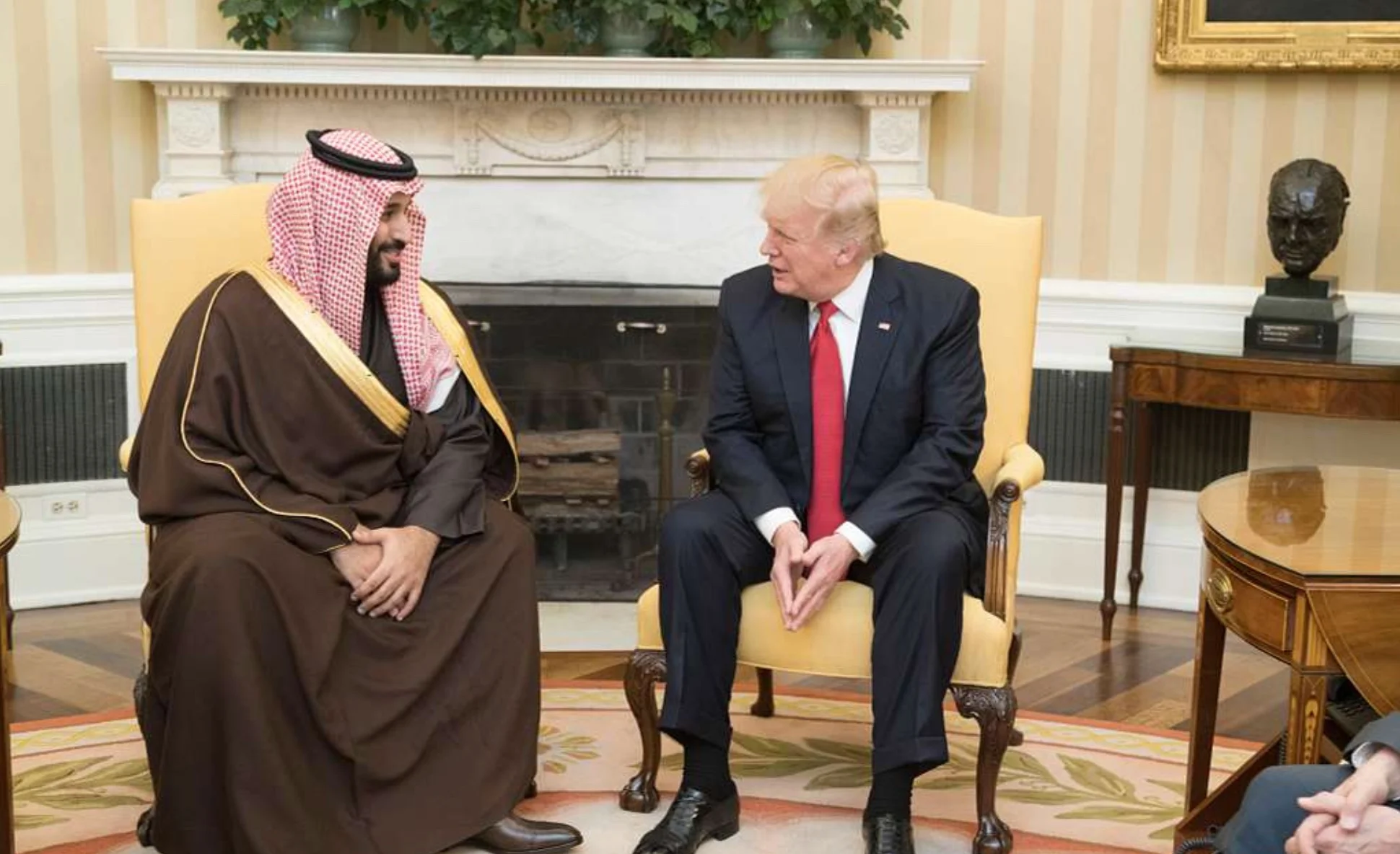
The nuclear pact is the latest in a widening U.S.-Saudi strategic relationship that has included defense cooperation, arms sales, and investment pledges. In November 2025, the White House said Trump and Crown Prince Mohammed bin Salman signed a broader strategic defense agreement alongside a civil nuclear declaration, laying groundwork for deeper energy and security ties.
That context matters because the nuclear deal is not being negotiated in isolation. The administration has also signaled support for a larger package of cooperation with Saudi Arabia, including potential advanced weapons sales and industrial partnerships that could anchor U.S. interests in the kingdom for decades. Analysts say such a package gives Riyadh leverage while offering Washington a way to keep China, Russia, and European competitors from dominating a lucrative market.
Yet the strategic logic does not erase the risks. Saudi Arabia’s record on human rights and its rivalry with Iran ensure that any nuclear agreement will be scrutinized as much for geopolitics as for safety. The 2019 revelations that the Trump administration had approved nuclear technology transfers to Saudi Arabia after the murder of journalist Jamal Khashoggi still loom over the current debate, reinforcing concerns about transparency and oversight.
What happens next
If the agreement reaches Congress this week, hearings are likely to focus on safeguards, inspection rights and whether the U.S. can realistically prevent diversion of technology in the long term. Lawmakers will also want details on whether the pact includes an Additional Protocol or other enhanced inspection measures that would give the International Atomic Energy Agency broader access to undeclared sites.
For the White House, the challenge is to present the deal as a commercial and strategic win while convincing skeptics that it will not erode the global nonproliferation regime. For critics, the central question is simpler: whether a civilian program that may one day include enrichment can ever be separated from the risk of weapons capability in a volatile region.
Either way, Trump’s approval of the Saudi deal marks one of the most consequential nuclear policy decisions of his second term, and possibly the most controversial nuclear agreement Washington has pursued in years.