
Rapper Afroman has won a closely watched civil lawsuit brought by seven Ohio law enforcement officers who claimed he defamed them and exploited their images in viral music videos and merchandise after a 2022 raid on his home, in what civil liberties advocates are calling a landmark victory for artistic free speech. A jury in Adams County, Ohio, found the 51‑year‑old “Because I Got High” artist, whose legal name is Joseph Edgar Foreman, not liable on claims that his post‑raid videos and songs subjected the deputies to defamation, invasion of privacy and emotional distress.
How a botched raid became a viral track
The dispute traces back to August 2022, when Adams County sheriff’s deputies executed a search warrant at Afroman’s rural Ohio home, looking for drugs and possible kidnapping victims. According to court filings and local coverage, officers smashed through his front gate and door with guns drawn, rifled through rooms and safes, seized cash and marijuana products, but ultimately filed no charges against the rapper.
Security cameras inside and outside the property captured the raid in detail, including one widely shared clip of a deputy eyeing a lemon pound cake on Afroman’s kitchen counter. In the months that followed, Afroman did what artists often do with trauma: he turned it into material.
He released a string of tracks, including “Lemon Pound Cake” and “Will You Help Me Repair My Door?”, cutting the surveillance clips into music videos and posting them to YouTube and social platforms. He also printed images of deputies on merchandise, arguing that any money raised would help pay for property damage and missing cash he says he never got back.
Deputies sue, saying their lives were put at risk
The officers responded with a civil lawsuit in 2023, accusing Afroman of crossing the line from satire into defamation and commercial exploitation.
In their complaint, seven Adams County deputies and supervisors alleged that the rapper:
- used their likenesses and names without consent in videos, social posts and merch
- falsely implied they stole money and acted unlawfully during the raid
- subjected them to “humiliation, ridicule, mental distress, embarrassment and loss of reputation”
- exposed them to harassment and anonymous threats that made it harder to do their jobs
They sought monetary damages and an injunction barring him from using their images for profit in future projects.
To critics, the case looked like an attempt by public officials to punish a citizen for mocking them. In a friend‑of‑the‑court brief, the ACLU warned that the suit fit the pattern of a SLAPP (strategic lawsuit against public participation) designed to chill criticism of government actors.
Afroman’s defense: “All of this is their fault”
On the stand this week, Afroman made his argument as much cultural as legal.
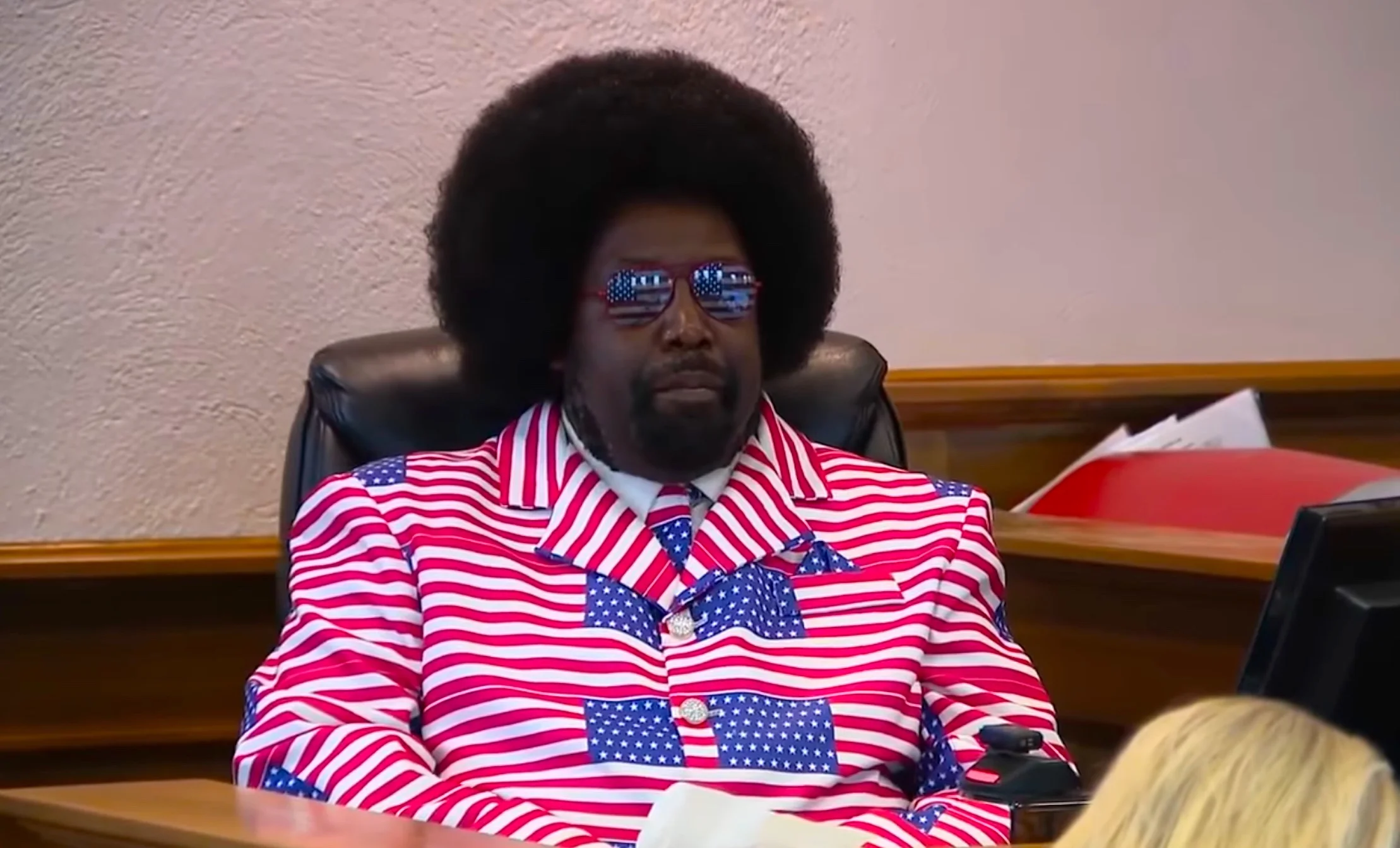
Clad in a red‑white‑and‑blue suit and American‑flag sunglasses, he told jurors that he was exercising his rights as an artist and citizen to comment on a “wrongful” and “fruitless” raid that damaged his home and reputation.
“The whole raid was a mistake. All of this is their fault,” he testified, according to local station WCPO. “If they hadn’t wrongly raided my house, there would be no lawsuit, I would not know their names, they wouldn’t be on my home surveillance system, and there would be no songs.”
He described the music and videos as a way to:
- document what happened
- recoup repair costs for his broken doors and gate
- call out what he views as abuses of power
“After they left, I had the right to kick the can and to do what I had to do to repair the damage they brought to my house,” he said. “I have freedom of speech. I’m a rapper. I entertain.”
His lawyers argued that his statements about the raid were based on his understanding of events and clearly part of satirical, opinion‑laden works targeting public officials—a category the First Amendment protects especially strongly.
The verdict: jury sides with the rapper
After several days of testimony in Adams County Common Pleas Court, the jury took only a few hours to reach a decision: Afroman was not liable.
Local outlet WKRC reported that jurors rejected the deputies’ claims tied to the “Lemon Pound Cake” video and related posts, clearing the rapper of defamation and misappropriation of likeness. A social‑media summary from observers called it a “landmark victory for free speech and artistic expression,” noting that the court effectively affirmed his right to use actual footage of on‑duty officers in critical, even mocking art.
The ruling does not erase the raid itself, Afroman still has a separate lawsuit pending against the sheriff’s office over alleged property damage and missing cash, but it removes the multimillion‑dollar civil threat hanging over his music and merchandise business.
For the deputies, the loss underscores the high bar public officials face when they sue critics. To prevail, they would have needed to show not just that Afroman offended or embarrassed them, but that he made false statements of fact with actual malice, a standard juries rarely find met in satire‑driven cases.
Why the case matters for artists and activists
Free‑speech advocates say the “Lemon Pound Cake” saga could resonate far beyond one mid‑career rapper.
By siding with Afroman, the jury reinforced several principles:
- Public officials have limited privacy claims over their on‑duty conduct, especially when it takes place in a citizen’s home and is captured by that person’s own cameras.
- Satirical and critical art about government actions, even when commercialized through songs, videos and merch, sits near the core of First Amendment protection.
- Civil lawsuits can themselves become speech‑suppressing tools, and courts and juries are increasingly alert to SLAPP‑like dynamics when officers or politicians sue their critics.
For musicians and content creators, the verdict sends a signal that using real‑world footage of public officials in commentary and parody remains on relatively solid legal ground, provided the work does not knowingly peddle false factual claims about private‑life conduct.
It also arrives at a moment when smartphones and home‑security cameras routinely capture contentious encounters with police, and when viral posts can flip power dynamics by subjecting officers’ conduct to millions of viewers.
Afroman leans into the moment
If the deputies hoped the lawsuit would quiet their critic, it appears to have had the opposite effect.
Even as the trial unfolded, Afroman continued releasing diss tracks about the raid, including a recent song titled “Batteram Hymn of The Police Whistle Blower,” and sharing clips that name‑check individual officers. After the verdict, posts celebrating his win framed the case as proof that “the pen, the camera and the mic are still mightier than the badge” when it comes to public accountability.
For now, at least, the jury has agreed: in the clash between deputies who didn’t like how they looked on camera and a rapper who turned that footage into a hook, the Constitution gives more leeway to the one holding the mic.