Phil Collins has revealed he nearly died in 2024 amid a severe relapse into alcohol addiction, disclosing in a new interview that his organs began failing and his five children were called to his hospital bedside in Switzerland to say what they feared might be a final goodbye.
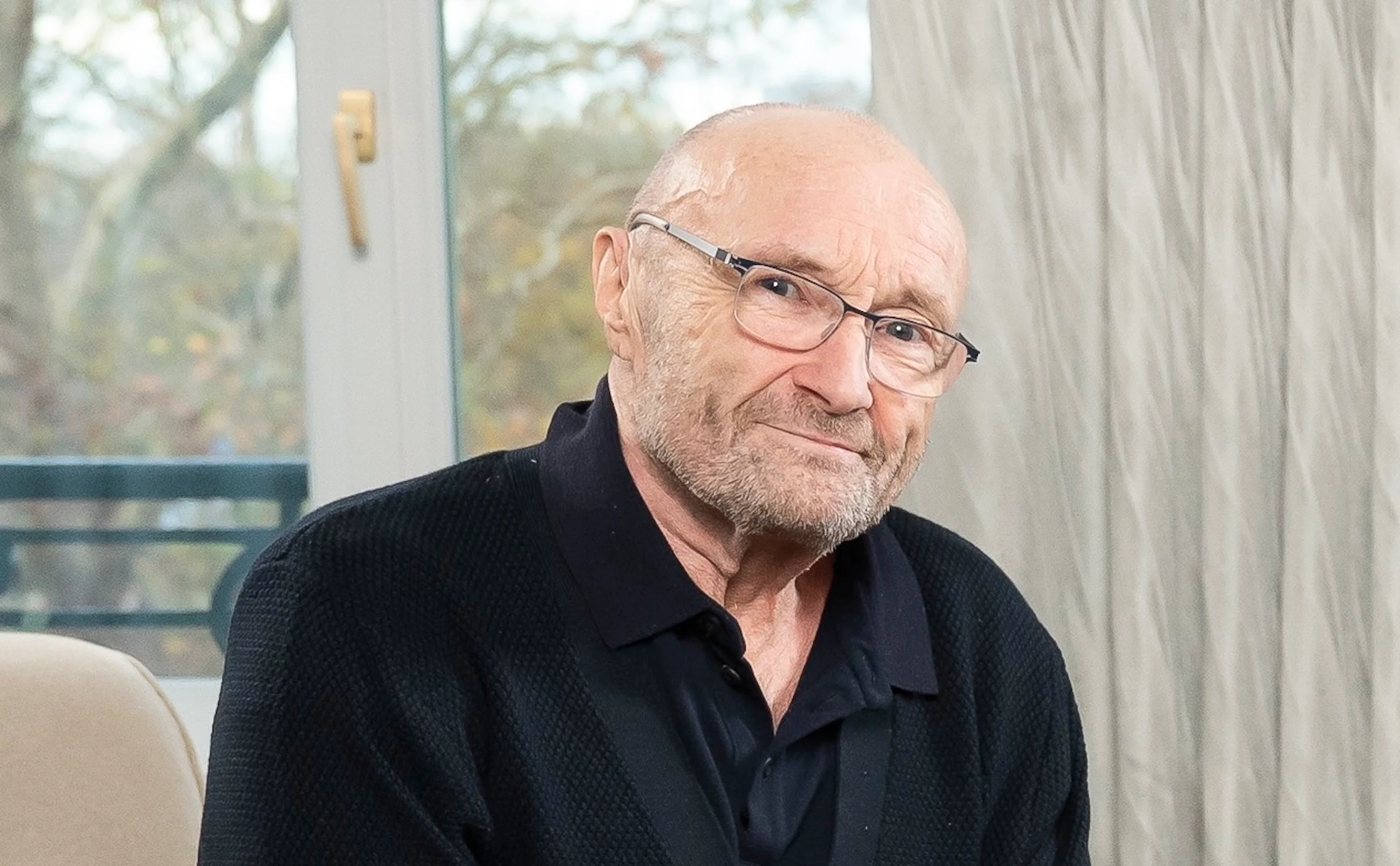
Speaking with The Sunday Times, the Genesis frontman and Grammy-winning solo artist said he was first hospitalized in Switzerland for alcohol-related issues in November 2023. He was released before Christmas that year but was readmitted only weeks later and placed into intensive care, where he remained unconscious for an extended period.
‘My organs were just seizing up’
Collins described the physical toll of the episode in stark terms. “My kidneys were packing up, my organs were just seizing up,” he told the Sunday Times, according to Entertainment Weekly’s account of the interview. He said doctors and family members faced difficult decisions about his care during the crisis. “There were some decisions to be made about ‘Do we keep Phil on life support?’ kind of thing,” he said.
The singer said he has no memory of the visits from loved ones who came to see him during that time, despite the gravity of the situation. “People were coming to say goodbye,” Collins said, “but I don’t remember them coming… I didn’t have no idea this was going on. They were all worried that they wouldn’t see me again. It could all have gone so terribly wrong.”
His five children rushed to the hospital fearing the worst, according to Rolling Stone’s coverage of the interview. Ultimately, Collins spent seven months in the hospital recovering from the episode. “I was very fortunate to have come through that,” he said. “It goes without saying that I haven’t touched a drink since.”
A struggle documented for nearly a decade
Collins first spoke publicly about his alcoholism in his candid 2016 memoir, “Not Dead Yet,” in which he described turning to drinking to fill what he called a “gaping void” following the breakdown of his third marriage and subsequent divorce in 2006. “Night after night I find myself lying on the bed, staring out of a skylight at grey Swiss skies, ruing my life,” he wrote in the book, according to Loudersound. “I’m all alone, save for my good friends Johnnie Walker and Grey Goose.“
In that same memoir, Collins reflected on how alcoholism arrived relatively late in his life despite decades in the music industry. “It took me until the age of 55 to become an alcoholic,” he wrote. “I got through the heady 1960s, the trippy 1970s, the imperial 1980s, the busy 1990s. I was retired, content, and then I fell. Because I suddenly had too much time on my hands.” He added, “But it was something I lived through, and I was lucky to live through it and get through it. I was very close to dying.”
Clapton’s intervention and a rehab stay cut short
In a separate, related interview with British music magazine MOJO, Collins detailed an earlier attempt to address his drinking during the 2010s, when longtime friend and fellow rock legend Eric Clapton encouraged him to check into the Crossroads Centre, a rehabilitation facility Clapton founded in Antigua.
Collins said he was supposed to stay at the facility for six weeks but checked himself out after only a month because he had a tour booked. The stay ended with a stark warning that he initially failed to heed. “The nurse who took me to the airport gave me a note and told me to read it on the plane,” Collins recalled to MOJO’s Mark Blake. “It said, ‘If you have a drink, you will die.’ And it’s terrible to say, but I had a glass of wine.”
Health complications beyond addiction
Collins’ battle with alcohol has unfolded alongside a series of serious physical health setbacks that have significantly limited his mobility in recent years. Entertainment Weekly noted that the 74-year-old musician has endured complications from a 2007 spinal injury and has undergone multiple knee surgeries, both of which severely restricted his physical capabilities well before his most recent hospitalization.
In January, Collins revealed that his ongoing health challenges had left him under 24-hour supervised care, telling media at the time, “I had everything that could go wrong with me, did go wrong with me.” NME’s coverage of the singer’s remarks placed his alcohol-related hospitalization within that broader pattern of declining health that has defined much of his public life over the past two decades.
Distinguishing addiction from coping
In an earlier televised conversation carried by AXS TV, Collins offered his own perspective on the distinction between substance dependency and situational coping, describing a period when he “was depressed and used alcohol to cope, versus being addicted.” He noted at the time that “there’s a difference,” explaining that “people who are not addicts can stop cold turkey,” a comment that drew supportive responses from viewers who identified as being in long-term recovery themselves.
A message of survival
Throughout his recent interviews, Collins has framed his account less as a cautionary tale and more as a testament to having endured a brush with death that could easily have ended differently. His repeated assertion that he has not had a drink since the 2024 hospitalization suggests a period of sustained sobriety following what he has described as the most dangerous chapter of a decades-long struggle.
Collins’ latest revelations in interviews with The Sunday Times and MOJO around the same general time are indicative of a larger openness on the part of the artist to talk candidly about addiction and its physical toll, continuing a trend of candor he’s established with his 2016 memoir, which has only increased as his health troubles have grown in recent years.