
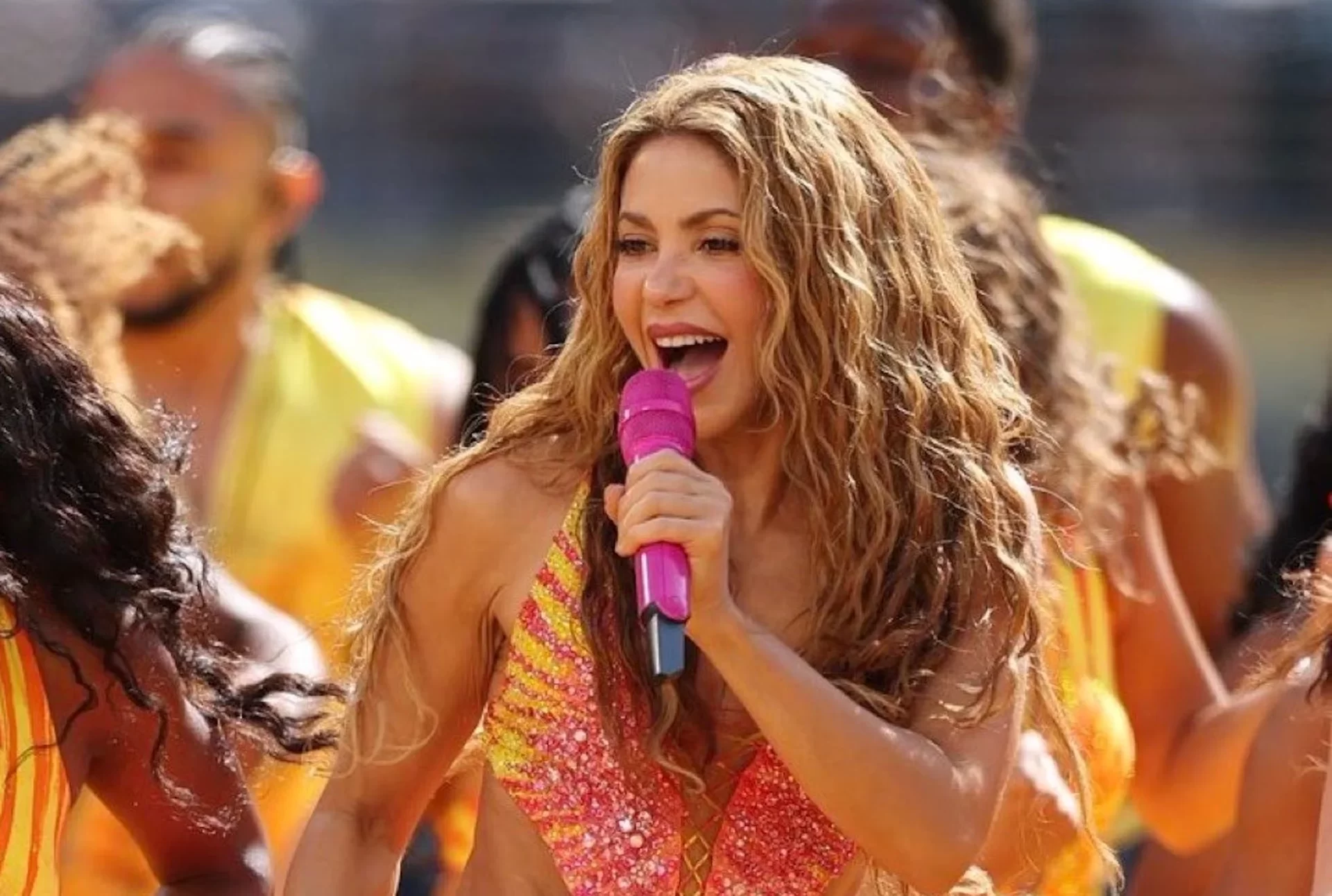
Shakira’s high-voltage performance at the 2026 FIFA World Cup final in New Jersey cemented her status as the tournament’s defining musical voice, 16 years after “Waka Waka” became a global anthem for the game. Taking the stage at MetLife Stadium for FIFA’s first-ever World Cup final halftime show, the Colombian superstar turned a historic sporting moment into a showcase of Latin pop power, global solidarity, and women’s leadership in entertainment.
Shakira returns as the World Cup’s defining soundtrack
Under a clear New Jersey night sky, Shakira walked onto the World Cup stage with the confidence of an artist who has long understood the emotional stakes of this tournament. The 2026 final between Spain and Argentina at MetLife Stadium marked FIFA’s first formal halftime show at a men’s World Cup final, a format more closely resembling the Super Bowl than previous closing ceremonies.
For many in the 80,000-strong crowd, her presence felt inevitable. “The World Cup has been part of my journey for a long time, so being invited to perform at the first-ever halftime show feels incredibly meaningful,” Shakira told Vogue ahead of the performance. Her 2010 hit “Waka Waka (This Time for Africa)” still echoes in stadiums and fan zones around the world, and its shadow loomed large over the expectations for Sunday’s show.
Shakira chose not to simply reprise her greatest hits, but to place this performance squarely in 2026. She built a set that threaded her World Cup legacy through new material, most notably “Dai Dai,” her recent single tied to the FIFA Global Citizen Education Fund, underscoring the governing body’s push to connect the tournament with social-impact initiatives.
A global halftime, with Shakira at the center
FIFA’s inaugural World Cup final halftime show was deliberately multinational, bringing together Shakira, Madonna, Justin Bieber, and K‑pop group BTS as co-headliners in a tightly choreographed, television-first production. The rotating lineup aimed to mirror the tournament’s global audience, spanning Latin pop, Western pop, and Korean idol culture in a single 12‑minute block.
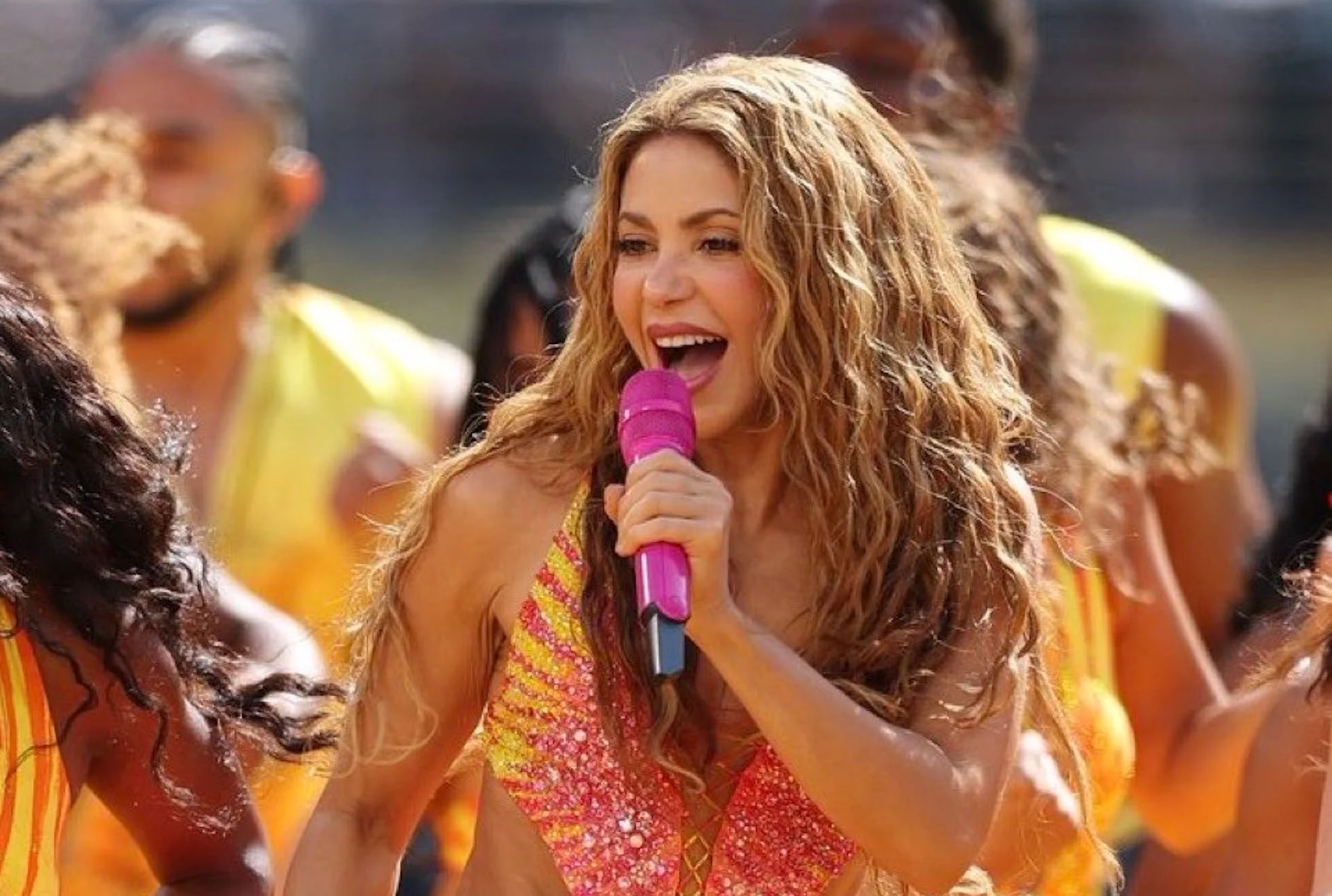
Shakira’s portion of the show was framed as its emotional core. She opened surrounded by a phalanx of dancers in crimson and gold, an echo of both Spain’s colors and her own Colombian flag, backed by a live band that pushed her catalog toward rock and Afro-Latin rhythms. In a key moment, cameras swept from her to the stands, where Argentina and Spain supporters moved in unison to familiar hooks that have soundtracked fan culture for more than a decade.bbc+1
Critics noted that while Madonna relied on archival hits and theatrical staging, and Bieber leaned into a more intimate pop performance, Shakira’s set was the one most directly calibrated to the atmosphere of a World Cup final. ESPN and Billboard both highlighted her command of the stadium, with Billboard calling the halftime production “a full-circle moment for the woman who turned a World Cup song into pop canon.”
“Dai Dai,” social impact and a full-circle fashion moment
Centerpiece to Shakira’s performance was “Dai Dai,” performed with Nigerian star Burna Boy, whose Afrobeats sound has been central to FIFA’s musical palette in recent years. The song, released in partnership with the FIFA Global Citizen Education Fund, channels proceed toward education initiatives, a detail the broadcast spotlighted with on-screen graphics and stadium announcements.
The collaboration underscored a thematic throughline: the World Cup as not only a sporting event, but a platform for cross-continental music and philanthropy. NPR described the halftime as a “cavalcade of international stars,” noting that the Shakira–Burna Boy segment had “the clearest sense of purpose” among the evening’s collaborations.
Visually, Shakira’s appearance was as carefully plotted as the setlist. She wore a custom Roberto Cavalli design crafted by creative director Fausto Puglisi, a look she described as “strong, joyful, and celebratory” in keeping with the night’s tone. Vogue reported that she and Puglisi viewed the halftime show as a “full-circle fashion moment,” nodding to her earlier World Cup performances while updating her stage armor for a new generation of fans.
Global reactions and the stakes of a new format
The decision to introduce an American-style halftime show to the World Cup final drew mixed reactions even before the performers took the field, with some traditionalists wary of diluting football’s focus. In the hours after the final whistle, coverage reflected that split. Fox and other outlets noted that the production drew both praise for its ambition and criticism from fans who felt the game itself should remain center stage.
Still, ratings and social media metrics suggested that Shakira’s segment successfully bridged those concerns. Early audience data cited by U.S. broadcasters showed a spike in viewership during the halftime window, with clips of her performance trending across platforms in multiple languages. ESPN’s post-show breakdown rated Shakira among the strongest acts of the night, pointing to her ability to “read the room” of a high-stakes final while still delivering a distinct pop spectacle.
For FIFA, the debut of the halftime format represents a strategic test. The 2026 tournament, co-hosted across North America, has been conceived from the start as a broadcast-friendly, cross-market product, and the final at MetLife was always going to be a showcase. Choosing Shakira, an artist with proven World Cup history, pan-Latin appeal and global streaming reach, as the face of that experiment was a calculated move that appears, at least in the short term, to have paid off.
What Shakira’s night means for future World Cups
Beyond the immediate spectacle, Sunday’s show may reshape expectations for musical performances around the World Cup. If 2010’s “Waka Waka” defined what a modern tournament anthem could be, 2026’s halftime experiment suggests FIFA envisions the final as a tentpole entertainment event as much as a sporting climax. Shakira’s performance fused that entertainment logic with an insistence on cultural and charitable stakes, grounding the glitter in a message about education and global citizenship.
For fans in the United States, many experiencing a home World Cup for the first time, the show offered a familiar format with a distinctly global accent. For viewers elsewhere, it was a reminder that the game’s center of gravity now includes artists who, like Shakira, move fluidly between languages, genres, and markets.
As the fireworks faded over East Rutherford and attention shifted back to the match’s outcome, the image that lingered was of Shakira at midfield, framed by flags from every competing nation, leading a stadium in a chorus that blurred club loyalties and national borders. In a tournament defined by expansion, commercialization, and debate over what the World Cup should become, her performance argued that the emotional heart of the event still lies in shared songs, shared stories, and a shared sense of spectacle.





