Sarah Mullally, a former NHS chief nurse turned bishop, has been formally enthroned as the Church of England’s first female Archbishop of Canterbury, a landmark moment in the 500‑year history of the Anglican Communion and a watershed for women in Christian leadership worldwide.
Her installation at Canterbury Cathedral, in a liturgy that wove together ancient ritual and pointedly modern symbolism, cements the 64‑year‑old’s rise from parish priest to spiritual head of the established church in England and first among equals for nearly 85 million Anglicans across the globe. It also tests whether a church riven for decades over gender and sexuality can rally around a leader whose own story embodies both tradition and change.
A historic day at Canterbury
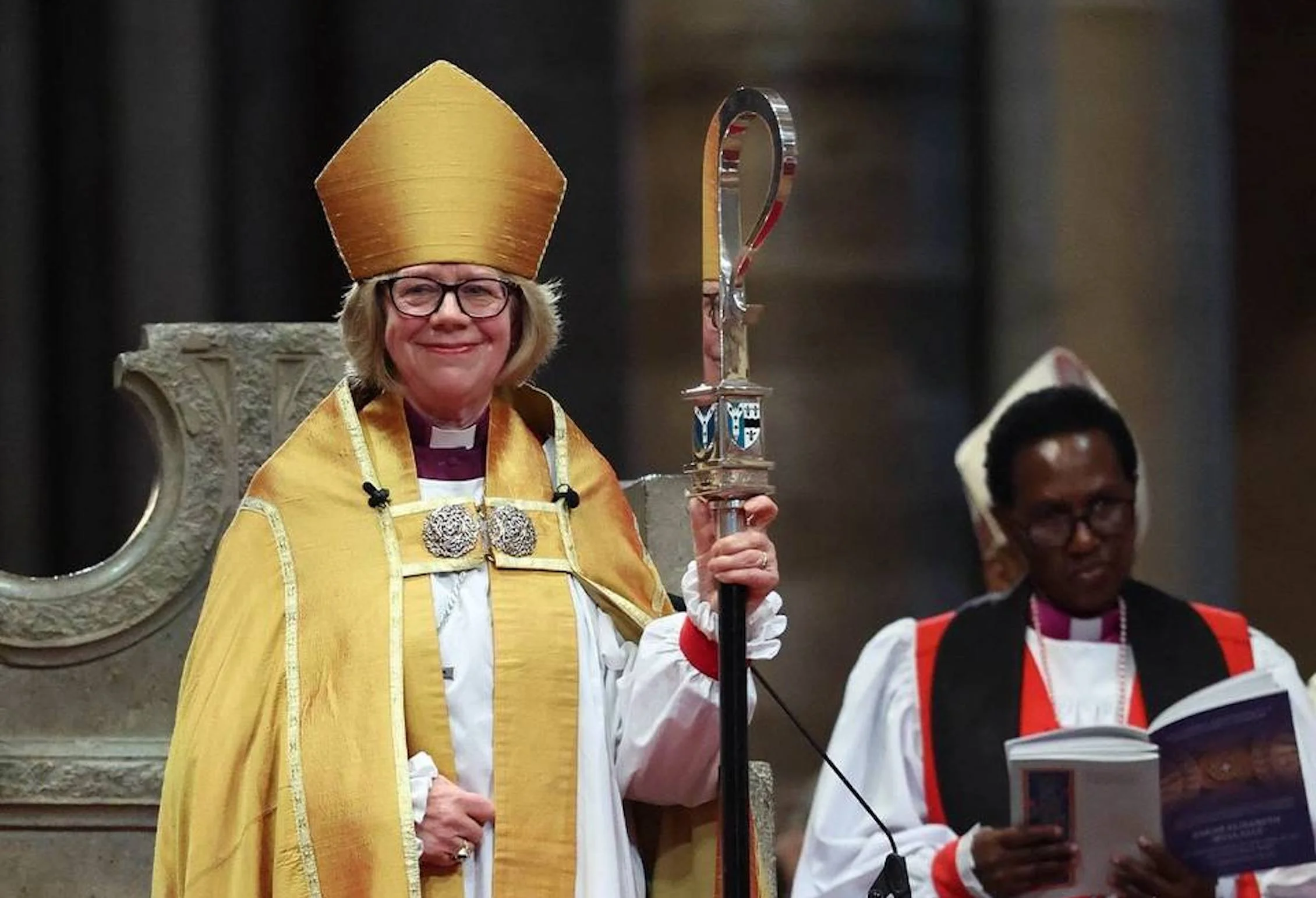
The enthronement service at Canterbury Cathedral unfolded with the choreography of centuries: processions under fan‑vaulted ceilings, the knock on the great west door, the reading of royal mandates, the archbishop taking her seat in the ancient cathedra, the stone throne that symbolizes the office.
But it was also unmistakably different. For the first time, the central figure in this ritual was a woman in episcopal robes, greeted not only by clergy and civic dignitaries, but by women priests and lay leaders who, a generation ago, could not even have been ordained.
Representatives from Parliament, the Royal Family, other faiths, and the global Anglican provinces filled the nave. Mullally’s family, former NHS colleagues and parishioners from her first London curacy watched as she swore oaths of faith and loyalty, before being led to the throne amid applause that broke through the usual cathedral reserve.
In her sermon, she acknowledged both the weight of history and the fractures in the church she now leads. She spoke of “standing in a long line of those called to hold this office,” while also naming “the women whose callings were denied or delayed” and pledging to listen to those who still struggle with the change.
From hospital wards to the highest see
Sarah Mullally’s path to Canterbury is unusual by Anglican standards. Trained first as a nurse, she rose to become the youngest Chief Nursing Officer for England, overseeing thousands of staff and major reforms in the National Health Service. Only later did she move into full‑time ministry, training as a priest and serving in parishes before being consecrated Bishop of Crediton and then Bishop of London.
That dual background, frontline care, and high‑level management is widely seen as central to her appeal. Supporters say she combines pastoral instinct with an ability to navigate large, complex institutions under public scrutiny, something the Church of England has struggled with in scandals over safeguarding, abuse, and declining membership.
Her appointment as Archbishop of Canterbury crowns a trajectory that mirrors the church’s own halting embrace of women’s leadership: women priests were permitted only in 1994; the first women bishops were consecrated in 2015; now, barely a decade later, a woman occupies the highest office in the English hierarchy.
A milestone – and a fault line – for Anglicans
Mullally’s enthronement is being hailed by many inside and outside the church as a long‑overdue milestone for gender equality in Christian leadership. For young women discerning a vocation, seeing a female Archbishop of Canterbury at the center of national worship sends a powerful message that “the sky is no longer the limit.”
Yet her new role also exposes existing tensions. Within England, a minority of parishes and clergy still reject the ordination of women, convinced that scripture and tradition reserve priestly and episcopal ministry for men. Past compromises have allowed those groups to exist within the Church of England under alternative oversight; how they relate to a woman at the very top remains to be worked out.
Internationally, parts of the Anglican Communion in Africa and Asia already felt uneasy about developments in the Western churches on issues of gender and sexuality. For some of those provinces, Mullally’s appointment as “first among equals” may be welcomed as a sign of progress; for others, it could deepen calls for looser ties or parallel structures.
Mullally has signaled that she intends to be an archbishop “for the whole Communion,” stressing listening, patience, and a focus on shared mission, particularly climate justice, poverty and peacebuilding, rather than leading with contested social issues.
Balancing tradition, reform, and declining numbers
Beyond symbolism, the new archbishop faces a daunting in‑tray. The Church of England continues to grapple with:
- Declining weekly attendance and aging congregations in many dioceses.
- Ongoing safeguarding reforms after reports of abuse and institutional failure.
- Divisions over same‑sex relationships, blessings, and marriage.
- The role of an established church in an increasingly secular and plural Britain.
Mullally’s supporters argue that her experience changing culture in the NHS, where she had to raise standards, confront failings, and still protect staff morale, is precisely what is needed in an institution that must reform without losing its soul.
Her early comments suggest a careful line: she has affirmed the importance of safeguarding survivors’ voices, acknowledged the “deep hurt” caused both to LGBTQ+ Christians and to those who feel the church has moved too fast, and emphasized that numerical growth cannot be the only measure of faithfulness.
She has also pointed to fresh expressions of church, chaplaincy work, digital ministry, and lay leadership as crucial in a context where many communities no longer relate to parish structures in traditional ways.
Women’s leadership beyond the church walls
Mullally’s enthronement resonates beyond ecclesiastical circles. In a United Kingdom that has seen women as prime minister, home secretary and senior judges, the Church of England – as an established church with bishops in the House of Lords, has often been criticized for lagging behind on gender representation.
Her presence on the bishops’ benches and at state occasions, from coronations to national memorials, will subtly shift the visual grammar of public religion: the Archbishop of Canterbury is now as likely to be introduced alongside female heads of government and CEOs as a male cleric among other men in suits.
For many, that change will feel simply in step with the country they live in. For others, it will raise fresh debates about the church’s theology of gender, the nature of tradition and the line between adapting to culture and proclaiming a counter‑cultural message.
An unfinished journey
Even as she steps into an office still steeped in medieval ritual, Sarah Mullally has been careful not to frame her enthronement as the final word in the struggle for women’s equality in the church.
There are still provinces of the Anglican Communion that do not ordain women at all, dioceses that have yet to appoint a female bishop, and subtle barriers in attitudes, expectations and informal networks that take far longer to change than canons and job titles.
In her first address from the chair of St Augustine, Mullally spoke less about breaking ceilings and more about “servant leadership”, a phrase that nods both to her nursing past and to a model of authority grounded in listening, sharing power, and washing feet rather than wielding it.
Whether that style can hold together a fractious church, speak credibly to a skeptical public and honor the hopes of those who see her as a pioneer will be the test of her tenure. For now, the image of a woman seated on the ancient Canterbury throne marks a clear turning point: whatever the Church of England becomes in the decades ahead, it will do so with women, visibly and unmistakably, at the helm.