
KATHMANDU, Nepal — A catastrophic flash flood and mudslide near the Nepal-Tibet border killed at least 160 people and left hundreds missing Wednesday, including foreign tourists and Nepali security personnel, as floodwaters tore through Himalayan river valleys, destroyed communities and severed a major cross-border route.
Nepalese authorities reported at least 157 deaths in the country’s Rasuwa and Nuwakot districts, while Chinese state media reported three fatalities and 265 people missing in Gyirong County in Tibet.
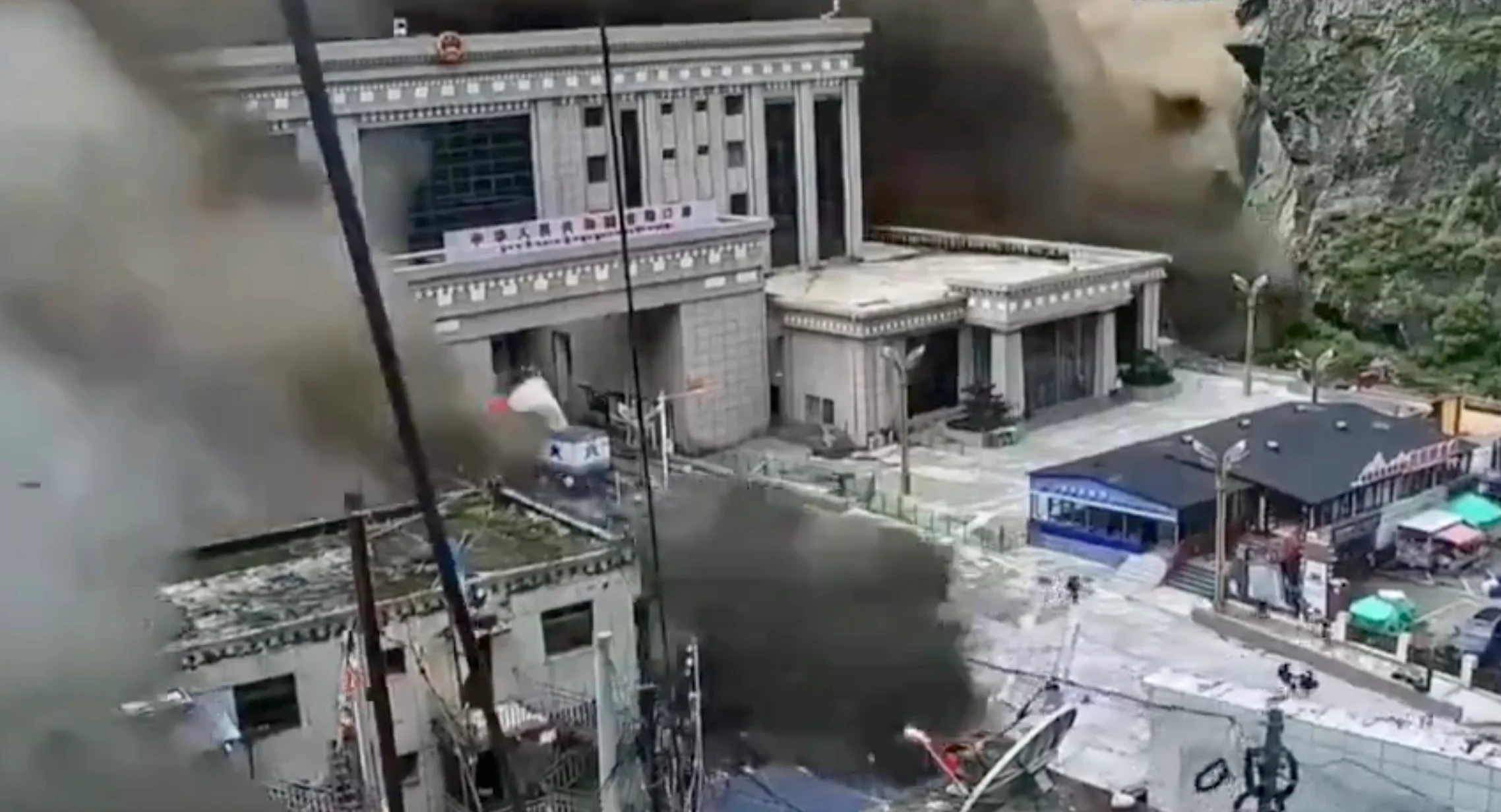
The disaster struck the Trishuli River valley, a mountainous corridor near the border between Nepal and China’s Tibet Autonomous Region. Floodwaters and mud swept through settlements, carried away buildings, damaged roads and bridges, and disrupted power and communications.
Hundreds of people were unaccounted for on both sides of the border. Nepal’s tourism board said foreign travelers were among those missing, including visitors from India, the United States, Britain, Australia, the Netherlands, Malaysia and South Africa.
The confirmed toll continued to rise throughout the day as rescue crews reached isolated areas. Officials warned that the number of dead and missing could change substantially as search operations continue.
The exact cause of the flood was still under investigation. But climate researchers said preliminary evidence suggested that an avalanche from a glacier may have triggered the surge of water and debris.
A flood through Himalayan valleys
The flash flood hit early Wednesday, sending a destructive wall of water, mud, rocks and uprooted trees down narrow mountain valleys.
The affected area includes the town of Syapru Besi and the border settlement of Timure in Rasuwa District, northwest of Kathmandu. The region is known for steep terrain, river gorges, trekking routes and access to the land crossing at Gyirong Port in Tibet.
In Nepal, water surged along the Trishuli River and its tributaries, inundating villages and leaving roads covered in mud and debris. Images from the disaster zone showed damaged homes beside swollen riverbanks, washed-out roads, and large trees embedded in sediment.
At least 19 bridges and 40 kilometers, or roughly 25 miles, of roads were destroyed, Nepal’s prime minister said.
The damage complicated rescue efforts. Roads in the region are narrow, vulnerable to landslides and difficult to repair quickly. Helicopters were deployed, but officials said severe weather and high water made some landing sites inaccessible.
“Hundreds of people are missing,” Nepal government spokesperson Sasmit Pokharel told Al Jazeera, saying the floods swept away buildings, schools, bridges and highways.
The disaster also damaged hydropower and solar installations. Nepal’s Electricity Authority said around 430 megawatts of production capacity had been affected.
That scale of energy disruption could worsen recovery challenges in a country where hydropower is a central source of electricity, and mountainous infrastructure is often difficult to rebuild.
Tourists and security personnel missing
Many of those unaccounted for were visitors traveling through the Himalayan region.
Nepalese officials initially reported that at least 403 people, including 341 foreign nationals, were missing. Tourism board spokesperson Sunil Sharma said 133 of those missing were Indian pilgrims traveling toward Mount Kailash in Tibet, a site sacred to Hindus, Buddhists, Jains and followers of Bon.
Later figures varied as officials gathered information from hotels, border posts, tour operators, local communities and rescue teams.
The New York Times reported that hundreds of travelers were unaccounted for, including at least 391 foreign tourists. The missing included more than 100 people from India, about a dozen British nationals and at least three Americans.
The variation in the numbers reflects the chaotic conditions after the flood. Many travelers may have been separated from their groups, unable to communicate or stranded in locations that rescuers have not yet reached.
Authorities also said at least 28 Nepali police personnel were missing.
The presence of missing police officers underscores the danger faced by emergency responders. Security personnel in remote districts often staff checkpoints, border posts and local stations close to rivers and roadways vulnerable to sudden flooding.
For families of missing travelers, the next hours and days are likely to be agonizing. In disaster zones with damaged communications networks, people may be safe but unable to contact relatives. Others may be stranded without access to roads, medical care, or shelter.
Damage on the Tibet side
Across the border in China’s Tibet Autonomous Region, the disaster affected Gyirong County and Gyirong Port, a key crossing between China and Nepal.
Chinese state broadcaster CCTV said a mudslide in the region killed at least three people and left 265 missing.
Xinhua, China’s state news agency, described “significant” casualties in the Gyirong Port area, where the disaster cut roads, communications and power connections in Shigatse prefecture.
Gyirong Port is an important commercial and tourism gateway. It connects Tibet with Nepal and is used by traders, transport operators, pilgrims and tourists.
Damage to the border crossing could affect not only rescue operations but also trade and travel between the two countries. The route has become more important in recent years as China and Nepal have expanded transport, tourism and commercial ties.
China’s President Xi Jinping directed local authorities to make every effort to find missing people and assist those affected, according to reports cited by the BBC.
Chinese authorities have released limited public detail about casualties, damaged structures and the exact causes of the mudslide. The remote terrain and continuing bad weather may slow assessments.
A likely glacial avalanche
Scientists said the flooding may have been triggered by an avalanche from a glacier.
The International Centre for Integrated Mountain Development, or ICIMOD, a Kathmandu-based research organization, said a glacier avalanche was the likely cause of the disaster.
That assessment remains preliminary. Officials and scientists will need satellite imagery, on-the-ground surveys, and hydrological analysis to determine exactly what happened.
Flash floods in high-altitude regions can occur due to strong rainfall, landslides, avalanches, glacial lake outburst floods or a combination of these occurrences.
A glacial lake outburst flood occurs when water held behind natural barriers, often ice, rock or sediment, is suddenly released. Such events can generate powerful surges that race through valleys with little warning.
An ice or rock avalanche can also displace water, block a river, and then trigger a sudden downstream release.
Climate researchers have warned that warming temperatures are increasing the risks facing Himalayan communities. Glaciers are retreating, lakes are forming and growing, and unstable slopes are becoming more hazardous.
The Himalayan region is particularly vulnerable because large populations, roads, hydropower facilities, and tourism routes are concentrated in narrow valleys beneath high mountains.
The region saw a similar flood event in August last year, when a glacial lake in Tibet overflowed amid high temperatures, according to ICIMOD researchers cited by NPR.
The latest disaster is likely to intensify calls for improved early-warning systems, better satellite monitoring, and more resilient infrastructure in the Himalayan region.
Rescue efforts face difficult terrain
Nepal’s army deployed helicopters, disaster-response personnel and medical teams to the affected area.
Rescuers were working to evacuate survivors, reach stranded communities and search riverbanks and debris fields.
But the terrain has made the operation extremely difficult.
The waters were too high for helicopters to land in some affected areas, including Syapru Besi and Timure, officials said.
Mountain roads were blocked by mud, rocks, and washed-out bridges. Communications outages made it harder for authorities to identify where people were trapped or missing.
Nepal requested assistance from both India and China, according to the government spokesperson.
Cross-border coordination could be critical because the disaster affected communities and infrastructure on both sides of the frontier. But rescue efforts may also be complicated by the sensitive political and security environment around the Tibet border.
The Nepal Army reported that it had airlifted survivors and was continuing to assess losses. Early rescue figures varied, with reports of dozens of people brought to safety by helicopter and ground teams.
Emergency crews face the dual tasks of saving survivors and recovering bodies. In flash-flood disasters, people can be carried far downstream, buried beneath debris or trapped in collapsed structures.
Persistent rain and the threat of additional landslides could further endanger both survivors and rescue workers.
A vital trade and tourism corridor
The affected region is important to Nepal’s economy and tourism industry.
Rasuwa District lies on a route used by travelers going to Langtang National Park, one of Nepal’s best-known trekking areas. It is also linked to journeys toward Mount Kailash and Lake Manasarovar in Tibet, which attract pilgrims from India and other countries.
Gyirong is one of the main land routes between Nepal and China. Goods, travelers and vehicles pass through the corridor, and the crossing is part of broader efforts to increase overland connectivity between the two countries.
The damage could therefore have consequences beyond the immediate disaster zone.
Damaged roads and bridges can impede trade, stop tourists coming and hurt local companies that depend on transport traffic. Power projects could be damaged, which may impair electricity supplies. Communities already vulnerable to landslides and seasonal flooding may be displaced for a long time.
For Nepal, which relies heavily on tourism and remittances, the loss of travelers and damage to trekking routes could carry an economic cost as well as a human one.
The immediate priority remains search and rescue. But recovery will require rebuilding infrastructure in a region where construction is expensive, weather-dependent and vulnerable to future climate-related hazards.
The climate-risk challenge
The flood is a reminder that the Himalayas are among the world’s most climate-vulnerable regions.
The mountain system contains vast reserves of ice and snow that feed rivers used by hundreds of millions of people across South and East Asia.
As temperatures rise, glaciers melt and glacial lakes expand. Heavy rain events can become more destructive when they occur on unstable slopes or near waterways already swollen by snow and ice melt.
Climate change is not necessarily to blame for every particular calamity, scientists warn. The immediate trigger in this case remains under investigation.
But the underlying conditions, melting glaciers, unstable mountain terrain, intense rainfall and development along vulnerable river corridors, are well-known risks.
Governments in Nepal, China, India and other Himalayan countries have expanded monitoring and early-warning programs. Yet gaps remain, especially in remote regions where equipment, communication networks, and evacuation routes are limited.
The challenge is further compounded by the increasing hydropower, highways and tourism amenities in the mountain valleys. Economic development can create much-needed jobs and connectivity but it also exposes more people and assets to flood and landslide hazards.
What happens next
Authorities will continue to revise casualty figures as rescuers reach isolated villages and compare missing-person reports with survivor lists.
The death toll could rise. Many people remain unaccounted for, and officials have warned that access to some areas remains limited.
Nepalese authorities are expected to assess damage to homes, schools, bridges, roads, and energy projects. China is likely to conduct its own assessment in Gyirong County and around the border crossing.
Scientists will study satellite images and field evidence to determine whether a glacier avalanche, glacial lake outburst, rain-driven landslide or combination of events caused the destruction.
For now, the disaster has left a wide trail of devastation through the Himalayas.
At least 160 people are dead, hundreds are missing, and entire communities face the prospect of recovery in a landscape transformed by water, mud and rock.
The flood has also exposed the growing risks confronting people who live, work, and travel beneath the world’s highest mountains.