KAMPALA, Uganda — King Oyo Nyimba Kabamba Iguru Rukidi IV, the traditional monarch of Uganda’s Tooro Kingdom who became the world’s youngest reigning king when he ascended the throne as a child, has died at 34.
The death of Oyo, known formally as the Omukama of Tooro, was announced late Thursday by the kingdom’s prime minister, Calvin Armstrong Rwomiire Akiiki. He said the king died at about 10 p.m. local time but did not publicly disclose a cause of death.
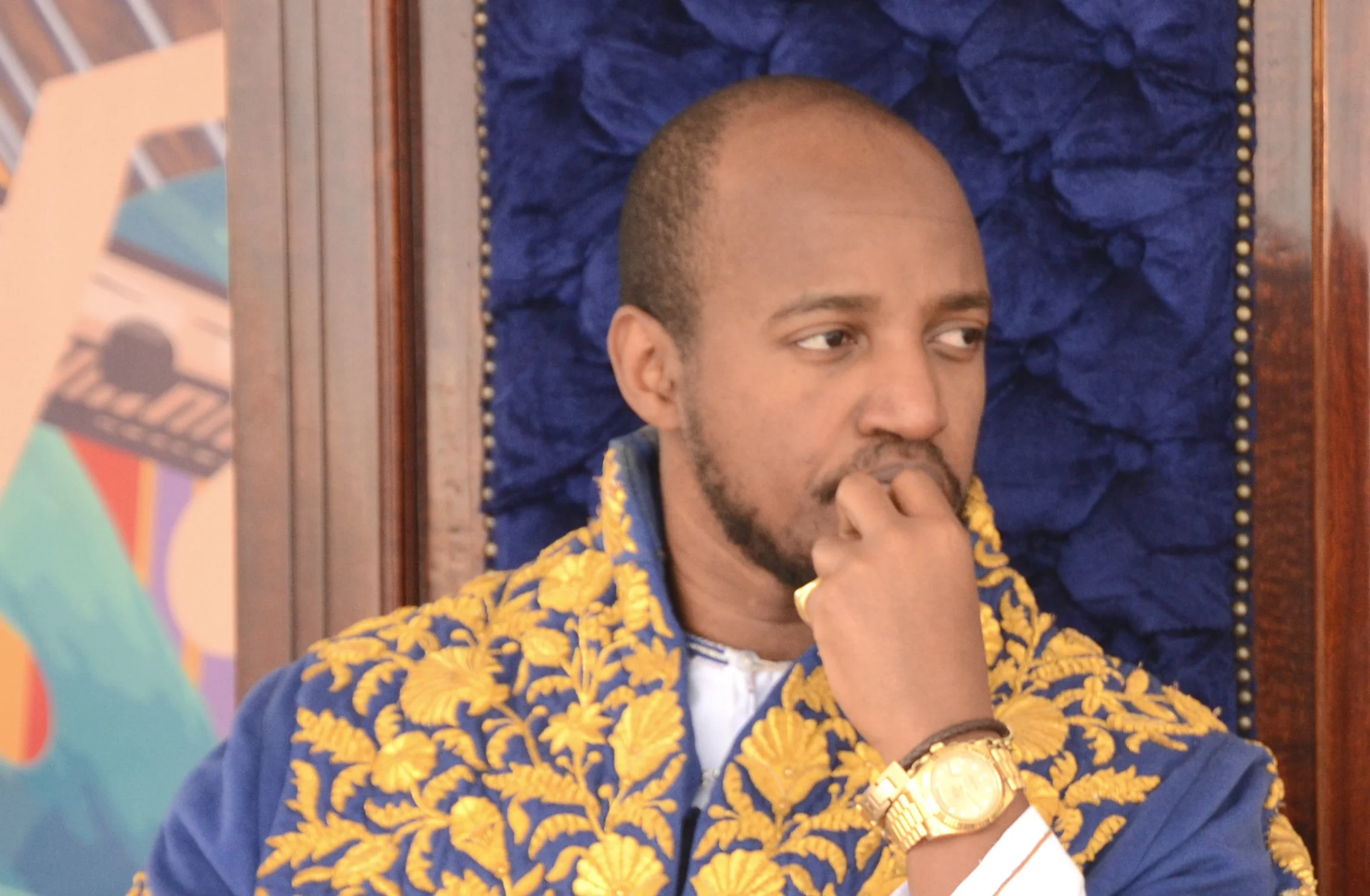
“It is with profound sadness and a heavy heart that I announce the passing of His Majesty the Omukama of Tooro, King Oyo Nyimba Kabamba Iguru Rukidi IV,” Akiiki said in a statement posted on social media.
Tooro authorities said the continuity of the crown was assured. The king is survived by a prince whose identity will be formally announced in accordance with the customs and traditions of the kingdom.
The death has prompted mourning in western Uganda and across the country, where Oyo’s image as a child king drew international attention and his three-decade reign became a symbol of the survival of Uganda’s traditional kingdoms within a modern republic.
Oyo’s death also brings an early end to one of the most distinctive royal stories in contemporary Africa: a boy who inherited an ancient throne at age 3 and grew into a monarch tasked with preserving the culture, identity and institutions of the Batooro people.
A king at age 3
Oyo became king of Tooro in 1995, shortly after the death of his father, King Patrick Matthew Kaboyo Olimi III.
He was 3 years old at the time and was widely described as the world’s youngest reigning monarch.
His accession was a remarkable event even in a country where traditional kingdoms retain cultural importance.
Uganda abolished its kingdoms in 1967 under then-President Milton Obote, but President Yoweri Museveni restored them in 1993. The restored institutions do not exercise formal political authority under the Ugandan Constitution, but they play an important ceremonial, cultural and community role.
Tooro is one of Uganda’s best-known traditional kingdoms. Located in the country’s west, near the border with the Democratic Republic of Congo, it is centered around Fort Portal and represents the Batooro people.
The kingdom traces its origins to the 19th century, when it emerged from the larger Bunyoro Kingdom. Its monarch is called the Omukama, a title used by rulers of several historic kingdoms in the Great Lakes region of East Africa.
Oyo inherited that history as a toddler.
Images of his coronation, in which he was dressed in royal attire and seated on a throne far too large for him, became symbolic of his unusual position. His youth attracted attention from global media and foreign dignitaries.
The young monarch was reported to have met world leaders and became one of the most recognizable traditional figures in Uganda.
Yet the novelty of his childhood accession eventually gave way to the more difficult work of kingship: preserving tradition, representing a community and navigating the limits of a ceremonial monarchy in a democratic state.
A nearly 31-year reign
Oyo’s reign lasted almost 31 years.
According to Uganda’s Daily Monitor, he died on Aug. 27, one day after the anniversary of his father’s death in 1995.
For much of that period, he represented continuity for the Tooro Kingdom.
Traditional monarchs in Uganda do not lead political parties or exercise direct executive authority. They are expected to stay above partisan politics while promoting culture, language, heritage, education and local development.
That role can be influential even without formal state power.
Kings and chiefs can serve as unifying figures in communities divided by political competition, economic hardship or generational change. They also preside over ceremonies, support cultural institutions and act as custodians of historical memory.
For Tooro, Oyo was the face of that continuity.
His reign bridged two eras: the period immediately after Uganda restored its traditional kingdoms and a more recent period in which young Ugandans have grown up in a digital, urbanizing society with different expectations of traditional authority.
As he matured, Oyo became involved in public events, cultural ceremonies and initiatives connected to tourism, environmental protection and social development.
He also became known for an international outlook that reflected both his upbringing and the changing role of African traditional leaders.
Oyo’s significance extended beyond the boundaries of Tooro. For many Ugandans, he was part of a broader revival of cultural institutions that had been suppressed during earlier periods of political upheaval.
Illness and death
The cause of Oyo’s death was not released by the Tooro Kingdom’s prime minister in the initial announcement.
The kingdom had earlier said the king was in critical condition and appealed to the public to pray for him and avoid spreading speculation or unverified information about his health.
The Associated Press reported that his death surprised many Ugandans who were unaware that he had been receiving treatment abroad for an undisclosed illness.
Some local reports have said Oyo had been hospitalized in the United States and had cancer. But the kingdom has not publicly confirmed those details.
That distinction is important. In reporting on a public figure’s death, the official cause should be stated only when confirmed by the family, royal authorities or medical representatives.
What is confirmed is that Oyo died Thursday night at the age of 34, after Tooro officials had informed the public that he was critically ill.
His death is likely to lead to an official period of mourning, public ceremonies and the arrival of visitors in Fort Portal and other parts of the kingdom to pay respects.
As of Friday morning, the kingdom had not released details about funeral arrangements, the length of mourning or the schedule for succession ceremonies.
A succession shaped by custom
Tooro’s prime minister said the king left behind a prince who will serve as his heir.
“The continuity of the Crown is assured,” Akiiki said. “His Majesty leaves behind a Prince as his heir, whose identity will be formally revealed at the appropriate time, in accordance with the traditions and customs of Tooro Kingdom.”
The statement indicates that the kingdom plans to manage the succession through established royal procedures rather than public speculation.
Traditional succession in Uganda’s kingdoms is often governed by royal family customs and councils of elders. The process can involve hereditary rules, consultations among clan leaders and ceremonial declarations.
In Tooro, the identity of a successor is not necessarily disclosed immediately after a monarch’s death. Royal authorities may wait until they have completed internal consultations and observed cultural protocols.
That approach can help protect the dignity of the royal family and prevent public pressure during a period of mourning.
It also means that, for now, the public knows only that Oyo’s son is expected to succeed him.
The succession will be closely watched because Oyo himself became king at such a young age. If his heir is also a child, the kingdom may again face the challenge of balancing a youthful monarch’s symbolic role with the practical administration of royal affairs.
Tooro has experience with that challenge.
During Oyo’s childhood, members of the royal family and kingdom officials played key roles in supporting the monarchy and representing its interests. That structure may once again become important in the years ahead.
Tooro’s place in Uganda
Tooro Kingdom is one of several traditional kingdoms recognized in Uganda.
The country’s most prominent kingdom is Buganda, whose king, or Kabaka, has significant cultural influence among the Baganda people in central Uganda. Other traditional institutions include Bunyoro-Kitara, Busoga and Rwenzururu.
These kingdoms do not function as independent states. They cannot run for political office or command government authority. But they are deeply connected to identity, language, land, tradition and local social life.
The return of traditional kingdoms in the 1990s helped restore institutions that many communities viewed as central to their history.
For the Batooro people, the Omukama represents more than a ceremonial office. The throne embodies the kingdom’s continuity through colonial rule, independence, political turmoil and social change.
Oyo’s death therefore has cultural as well as personal significance.
The kingdom’s institutions will continue. But the loss of a monarch who reigned from childhood into adulthood creates a moment of transition for a generation that has never known another king.
A public figure with global recognition
Oyo’s childhood accession made him a global curiosity, but it also created expectations that followed him throughout his life.
As a young king, he was featured in foreign news reports and invited to international events. His story was often presented as an example of Africa’s enduring monarchies and the coexistence of tradition and modern governance.
He grew up under the gaze of the public in a way few traditional leaders do.
That experience shaped the public image of Tooro. It helped raise awareness of the kingdom outside Uganda and contributed to Fort Portal’s profile as a cultural and tourism destination.
Tooro lies near national parks, crater lakes and the Rwenzori Mountains, making the region important to Uganda’s tourism industry. The kingdom has promoted its heritage alongside the natural attractions of western Uganda.
Oyo’s international visibility supported those efforts.
But he also faced the challenge of moving beyond the “boy king” label. As an adult, he was expected to demonstrate leadership, represent his people and sustain the authority of an institution whose relevance is sometimes questioned by younger, more urbanized populations.
His nearly 31-year reign suggests that he succeeded in maintaining the monarchy’s place in Tooro public life.
Tributes and mourning
Tributes began emerging Friday from Ugandans, political figures and members of the royal community.
The kingdom’s prime minister described the death as an “immeasurable loss” to the royal family, the people of Tooro and Uganda.
The Associated Press said Oyo’s death had shocked many people in Uganda, particularly because the public had not known the extent of his illness.
The coming days are expected to bring formal messages of condolence from government officials, leaders of other traditional kingdoms, religious figures and foreign representatives.
The government of Uganda has not yet announced whether it will declare national mourning or take part in official funeral events.
For the people of Tooro, mourning will likely combine public grief with traditional rites. Royal funerals in Uganda often involve ceremonies that reflect centuries-old customs alongside modern state protocols.
The details will be closely followed not only by the Batooro community but by Ugandans across the country.
A legacy of continuity
King Oyo Nyimba Kabamba Iguru Rukidi IV became a monarch before he was old enough to understand the meaning of the throne.
He spent almost his entire life carrying the responsibilities and symbolism of an ancient institution.
For some, he will be remembered first as the child who became the world’s youngest reigning king. For others, he will be remembered as a cultural leader who gave Tooro a visible place in modern Uganda.
His reign was defined by continuity: the survival of a kingdom, the restoration of a royal institution and the passage of tradition from one generation to the next.
Now, that tradition faces another transition.
Tooro authorities have said the crown will continue through Oyo’s son.
The next Omukama will inherit a kingdom in mourning, a royal legacy shaped by an extraordinary childhood accession and the task of preserving a cultural institution in a rapidly changing Uganda.
For now, the people of Tooro are left to mourn a king whose story began on a throne at age 3 and ended, unexpectedly, at 34.