
Cyclospora is a microscopic parasite that infects the small intestine and causes an illness called cyclosporiasis, which most often leads to watery diarrhea, stomach cramps, bloating and fatigue. It usually spreads through contaminated food or water, not from casual person-to-person contact, and it is commonly linked to fresh produce in outbreaks.
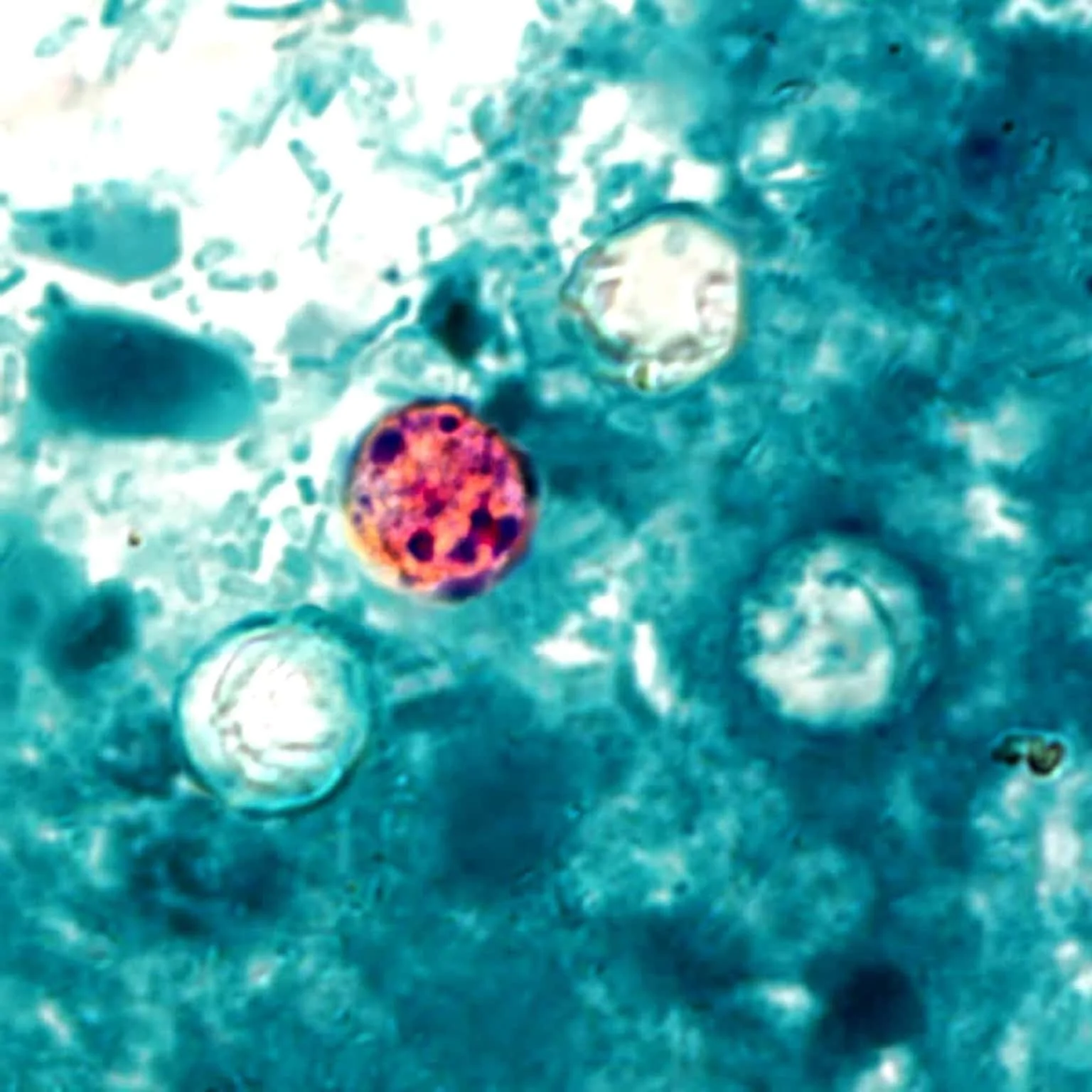
What it is
Cyclospora cayetanensis is a one-celled parasite that causes an intestinal infection called cyclospora. So small it can only be viewed through a microscope.
The parasite infects the small intestine and may cause symptoms that vary from mild to severe. Some people have no symptoms at all, while others may be ill for days or weeks.
The condition is not new, but it remains important because it can spread through food systems and cause outbreaks that are difficult to detect quickly. That makes awareness important to both consumers and food makers.
How it spreads
Cyclospora usually spreads when people consume food or water contaminated with infected feces. Public health agencies say the parasite needs time outside the body to become infectious, which is why it is not commonly passed directly from person to person.
That incubation period matters. Symptoms usually begin about a week after exposure, though they can start later. Because the parasite develops in the environment before becoming infectious, outbreaks often trace back to contaminated water, irrigation, or handling practices rather than direct household spread.
The CDC and state health agencies say Cyclospora has been linked to fresh produce including raspberries, basil, lettuce, snow peas and other leafy greens. That is why food safety investigators often look at imported or freshly harvested produce first when there is a cluster of cases.
Symptoms to watch
The most common symptom is watery diarrhea, often frequent and sometimes explosive. Other symptoms can include loss of appetite, weight loss, stomach cramps, bloating, gas, nausea, and fatigue.
Some patients also experience vomiting, body aches, headache, and low-grade fever. In more severe or prolonged cases, particularly in immune-compromised people, symptoms may last for weeks, and cause significant weight loss and dehydration.
But people don’t all get sick the same way. Some people may develop only mild symptoms, while others can become severely ill and require medical attention. That difference can make it harder to identify Cyclospora without lab testing.
Diagnosis and treatment
Doctors usually diagnose cyclosporiasis by testing stool samples for the parasite. In some cases, repeated samples may be needed because the organism is not always detected on the first test.
Treatment is available. The FDA and CDC say Cyclospora infections can be treated successfully, and trimethoprim-sulfamethoxazole is the standard antibiotic used in many cases. People who are allergic to that medication may need alternative management from a clinician.
Hydration is also important. Because the illness can cause prolonged diarrhea, patients can become dehydrated if they do not replace fluids. Medical care is especially important if symptoms are severe, persistent or occur in people with compromised immune systems.
Who is at risk
Anyone can get Cyclospora if they eat or drink something contaminated. But risk is higher in places where sanitation and water safety are weaker or where produce may be exposed to contaminated water during growing, washing or packing.
Travel can also matter. The NHS says the parasite is more common in parts of Central and South America, South and Southeast Asia, the Middle East and Africa. That means travelers to those regions should pay attention to food and water safety guidance.
People with weakened immune systems may face more severe or prolonged illness. For food businesses and public health agencies, that makes outbreak prevention especially important because even a small contamination event can affect many people quickly.
Prevention basics
Safe food and water practices are the start of prevention. Public health agencies recommend washing produce with clean water, not using sources of water that are not clean and cooking food thoroughly when appropriate.
But not all risks have been washed away. Prevention also depends on the quality of agricultural water, sanitation, and supply-chain controls, because Cyclospora can be picked up from the environment before food arrives in the kitchen.
The practical advice for consumers is simple: be careful with raw produce, particularly when traveling, and if watery diarrhea lasts longer than expected, seek medical evaluation. For food safety officials, the challenge is tracing contamination early enough to stop an outbreak from spreading further.
Why it matters
Cyclospora is important because it sits at the intersection of public health, food safety and travel medicine. It can cause a miserable illness, spread through global food chains, and take time to diagnose if clinicians do not think of it early.
It is also a reminder that not all foodborne illnesses are caused by bacteria. A parasite can be just as disruptive, especially when it reaches fresh produce that people assume is safe to eat raw. That is why outbreaks often attract attention quickly once cases appear across multiple states or countries.
For readers, the takeaway is simple: Cyclospora is a microscopic parasite, but its public-health footprint can be large. Knowing the symptoms and how it spreads is the first step in avoiding it.




