
WASHINGTON/MOSCOW — U.S. special envoy Steve Witkoff and Jared Kushner, President Donald Trump’s son-in-law, are preparing to travel to Moscow and Kyiv with a proposal aimed at ending the war in Ukraine, launching a new diplomatic effort as fighting intensifies and the two sides remain deeply divided over territory and security guarantees.
Trump said Friday that the two envoys were heading to Russia and Ukraine to present a plan “to end the war.” The intended sequence is a meeting in Moscow, followed by talks in Kyiv, according to U.S. and Russian media reports.
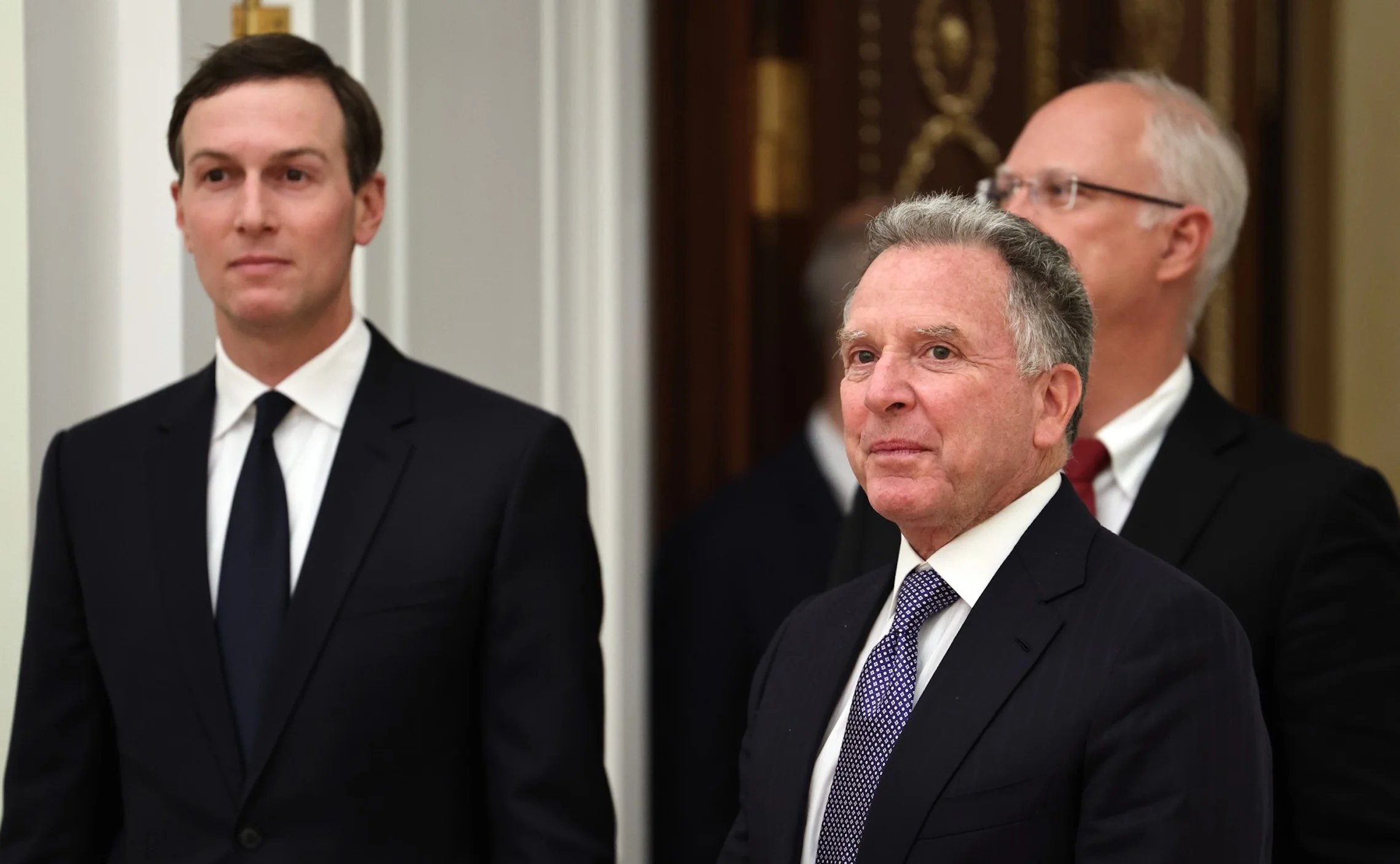
The trip would mark the first visit to Kyiv by Witkoff and Kushner, who have been central to Trump’s effort to broker a settlement. They last visited Moscow in January, holding roughly four hours of late-night talks with Russian President Vladimir Putin in the Kremlin.
But the diplomatic push is unfolding under unusually difficult conditions. Russian and Ukrainian forces have escalated long-range strikes, both capitals face heightened security risks, and officials from Moscow and Kyiv remain publicly committed to positions that leave little visible room for compromise.
A source familiar with the proposed trip told Reuters that Washington was still seeking security assurances before the envoys could travel. The United States wants commitments that Ukraine will not strike Moscow and that Russia will not attack Kyiv while Witkoff and Kushner are present, though the terms were still under discussion.
“The plan is to visit Moscow and Kyiv,” the source said, adding that Witkoff had expressed concern about security.
The mission presents a high-stakes test for Trump’s foreign policy. The president has repeatedly said he wants to end the conflict, now in its fourth and a half year, but the United States faces an entrenched war with incompatible demands on land, NATO and Ukraine’s future security.
A trip still shaped by security fears
The possible itinerary calls for Witkoff and Kushner to visit Moscow on Saturday and Kyiv on Sunday, though the schedule has remained fluid.
Russian state news agency TASS and U.S. outlet Axios reported that the envoys would travel to both capitals over the weekend. Ukrainian President Volodymyr Zelenskyy said U.S. representatives were expected in Kyiv after meetings in Moscow.
The trip was complicated by a Russian attack Friday on the headquarters of Ukraine’s SBU security service in Kyiv, a high-profile target struck during a period of intensified Russian drone and missile attacks.
Russia and Ukraine have both expanded long-range operations in recent months. Moscow has launched drones and missiles at Kyiv, Black Sea ports and other Ukrainian targets. Ukraine has sent large waves of drones toward Russian refineries, oil terminals and commercial warehouses.
The air war has introduced a new complication for diplomacy: ensuring the security of visiting officials.
Zelenskyy this week warned airlines and insurers to avoid Russian airspace because Ukrainian drones had made the skies dangerous. He said Ukraine’s targets were Russian military facilities and that civilians and civilian aircraft were not intended targets.
Putin responded by calling Ukraine’s warnings a form of “state terrorism” and said such actions complicated prospects for peace talks.
Kremlin spokesman Dmitry Peskov said the United States would likely seek commitments from Kyiv about security during the envoys’ visit. But he rejected the idea of a formal direct agreement between Russia and Ukraine for a pause in attacks. “No, there won’t be,” he said.
That response captures the fragile nature of the proposed mission. Even limited safety arrangements could be difficult to establish between two governments that remain engaged in intensive military operations and distrust each other profoundly.
Who are Witkoff and Kushner?
Witkoff, a real-estate developer and longtime Trump associate, has served as the president’s special envoy in several sensitive diplomatic efforts. He has taken part in discussions involving Russia, Ukraine and the Middle East, becoming one of Trump’s most trusted nontraditional negotiators.
Kushner, Trump’s son-in-law and a former senior White House adviser, is returning to a familiar role. During Trump’s first term, he played a significant part in Middle East diplomacy, including the Abraham Accords between Israel and several Arab states. His inclusion in the Ukraine peace effort signals Trump’s preference for relying on a small circle of personally trusted envoys rather than only career diplomats.
The two men have spearheaded the administration’s negotiations with Russia and Ukraine, though their efforts have yet to produce a breakthrough.
Their roles have drawn attention because they operate outside the traditional structure of the State Department. Supporters argue that special envoys can move more quickly and engage leaders directly. Critics argue that informal channels can create confusion, weaken coordination with allies and risk bypassing experienced diplomatic and security professionals.
The coming trip will test whether the pair can convert access to Trump and Putin into meaningful progress with both sides.
They are expected to meet Russian presidential envoy Kirill Dmitriev upon arrival in Moscow, according to people familiar with the visit. Dmitriev has participated in prior meetings between Putin and the U.S. envoys.
Trump’s proposed path to peace
Trump has not publicly released the full content of the proposal Witkoff and Kushner are expected to present.
The president told reporters that they were taking a plan intended to end the war, but he did not specify whether it includes a ceasefire, territorial arrangements, security guarantees, sanctions relief, reconstruction commitments or a timetable for negotiations.
The lack of detail is significant because each of those issues is deeply contested.
Russia has demanded that Ukraine surrender the full territory of four Ukrainian regions claimed by Moscow and abandon its ambition to join NATO. Peskov said this week that Putin’s position, first set out in a speech two years ago, remained “unshakeable.”
Ukraine has repeatedly rejected those demands. Zelenskyy’s government argues that ceding territory would reward aggression, violate Ukraine’s sovereignty and expose the country to future attacks.
Kyiv also regards security guarantees from Western governments as essential to any durable settlement. Ukrainian officials have argued that a ceasefire without enforceable protection could allow Russia to rearm and resume the war later.
A source close to the Kremlin told Reuters that Putin remains focused on capturing more territory, particularly the remaining parts of Ukraine’s Donetsk region. The source said there was “no chance” of agreement on the front line before Russia secures that area.
Western military analysts view such an outcome as uncertain because Russian advances have been slow and costly.
The disconnect is stark. Moscow seeks recognition of territorial gains and limits on Ukraine’s military alliances. Kyiv seeks territorial integrity and credible security guarantees. The United States must find a formula that both sides can at least discuss, without appearing to dictate terms that either government considers unacceptable.
Rare public optimism, little concrete progress
The planned visit follows unusual public comments from both Putin and Zelenskyy suggesting that diplomacy may have some potential.
Putin said Thursday that there was a chance of reaching an agreement to end the war. He said the United States, China and other countries were prepared to support a settlement, though he stressed that Russia and Ukraine themselves would have to resolve the conflict.
“Is there a chance? In my view, yes, there is,” Putin said at an economic forum in Russia’s Far East.
Zelenskyy also described a “new dynamic” in diplomatic activity and said it was important that the United States remain engaged.
Those statements offered a rare contrast to the usual public rhetoric of the war. Yet neither leader outlined concessions, and both continued to identify obstacles that could block a deal.
The last U.S.-mediated talks between Russia and Ukraine took place in February, shortly before Washington and Israel launched military action against Iran. Since then, U.S. diplomatic bandwidth has been divided by the Middle East conflict, while Russia and Ukraine have increased attacks on infrastructure, ports and commercial shipping.
Chicago wheat futures fell more than 2% after Putin’s comments about possible peace, reflecting market hopes that a reduction in hostilities could improve trade security in the Black Sea region.
But commodity markets can react to a headline faster than diplomats can resolve a war. The conflict’s underlying issues remain unchanged.
The stakes for Ukraine and Russia
For Ukraine, a U.S.-backed peace push carries risks and opportunities.
A negotiated ceasefire could reduce deaths, limit destruction and allow reconstruction to accelerate. It could also ease pressure on Ukraine’s energy system, cities and civilian population after years of missile and drone attacks.
But Ukrainian leaders must weigh those potential benefits against the danger of accepting terms that could weaken the country’s sovereignty or leave it vulnerable to future Russian military action.
Zelenskyy has insisted that Ukraine cannot be compelled to surrender land it has defended at enormous human and economic cost.
For Russia, a settlement could reduce sanctions pressure, stabilize its economy and give Putin a way to claim progress after a long and costly war. But the Kremlin has shown little willingness to abandon its territorial objectives or accept Ukraine’s eventual integration into Western security structures.
Putin has framed the conflict as central to Russia’s national security and geopolitical future. Any deal that appears to fall short of those goals could carry political risks for the Kremlin.
The war has become a contest not only over territory but also over national identity, security and the post-Cold War order in Europe. That makes compromise harder.
The role of Europe and China
Trump’s envoys are entering a diplomatic landscape that includes far more than Washington, Moscow and Kyiv.
European governments remain crucial to Ukraine’s financial, military and political support. Any settlement would likely require European participation, particularly if it involves security guarantees, reconstruction funding, sanctions changes or monitoring a ceasefire.
Putin said the United States and China were among countries willing to support peace efforts. China has sought to position itself as a potential mediator while maintaining close economic and political ties with Russia.
The involvement of multiple powers could help support a deal if one emerges. It could also make negotiations more complex, as each country brings different priorities.
European governments are likely to be cautious about any agreement that appears to formalize Russian territorial gains without Ukraine’s consent. They may also resist changes to sanctions absent clear verification of Russian compliance with a settlement.
The United States, meanwhile, faces pressure to show that its diplomacy can produce results after months of fighting and amid a foreign-policy agenda stretched by conflict in both Europe and the Middle East.
What could come from Moscow?
The first test will be whether Witkoff and Kushner actually meet Putin in Moscow and what, if anything, emerges from those talks.
A successful meeting would not necessarily produce a peace agreement. More likely, it could establish whether Moscow is willing to consider a ceasefire framework, direct talks with Ukraine or a phased arrangement that addresses security and territory over time.
The envoys may seek to identify areas of limited agreement, such as:
- A temporary pause in long-range strikes on cities and infrastructure.
- Expanded protections for commercial shipping and Black Sea trade.
- Humanitarian exchanges involving prisoners, detainees or displaced civilians.
- A mechanism for future talks on territorial disputes.
- Security arrangements that reduce the risk of renewed escalation.
None of those steps would resolve the central conflict. But they could create diplomatic space for a broader negotiation.
The immediate risk is that the mission becomes a symbolic visit without meaningful progress, or that either side uses it to reinforce its existing position.
A difficult diplomatic opening
The Witkoff-Kushner trip represents the Trump administration’s most visible new effort to restart diplomacy on Ukraine since talks stalled earlier this year.
It comes at a moment when both Russia and Ukraine are publicly signaling some openness to dialogue while privately remaining far apart. It also comes during escalating attacks that make even the journey to Moscow and Kyiv a security challenge.
Trump said he believes the war can end.
The coming meetings will show whether Putin and Zelenskyy are prepared to move beyond statements of principle and begin confronting the concessions, guarantees and verification mechanisms a real settlement would require.
For now, the envoys are headed toward two capitals at war, carrying a proposal whose details remain undisclosed, and facing a diplomatic task made harder by the very conflict they are trying to stop.