
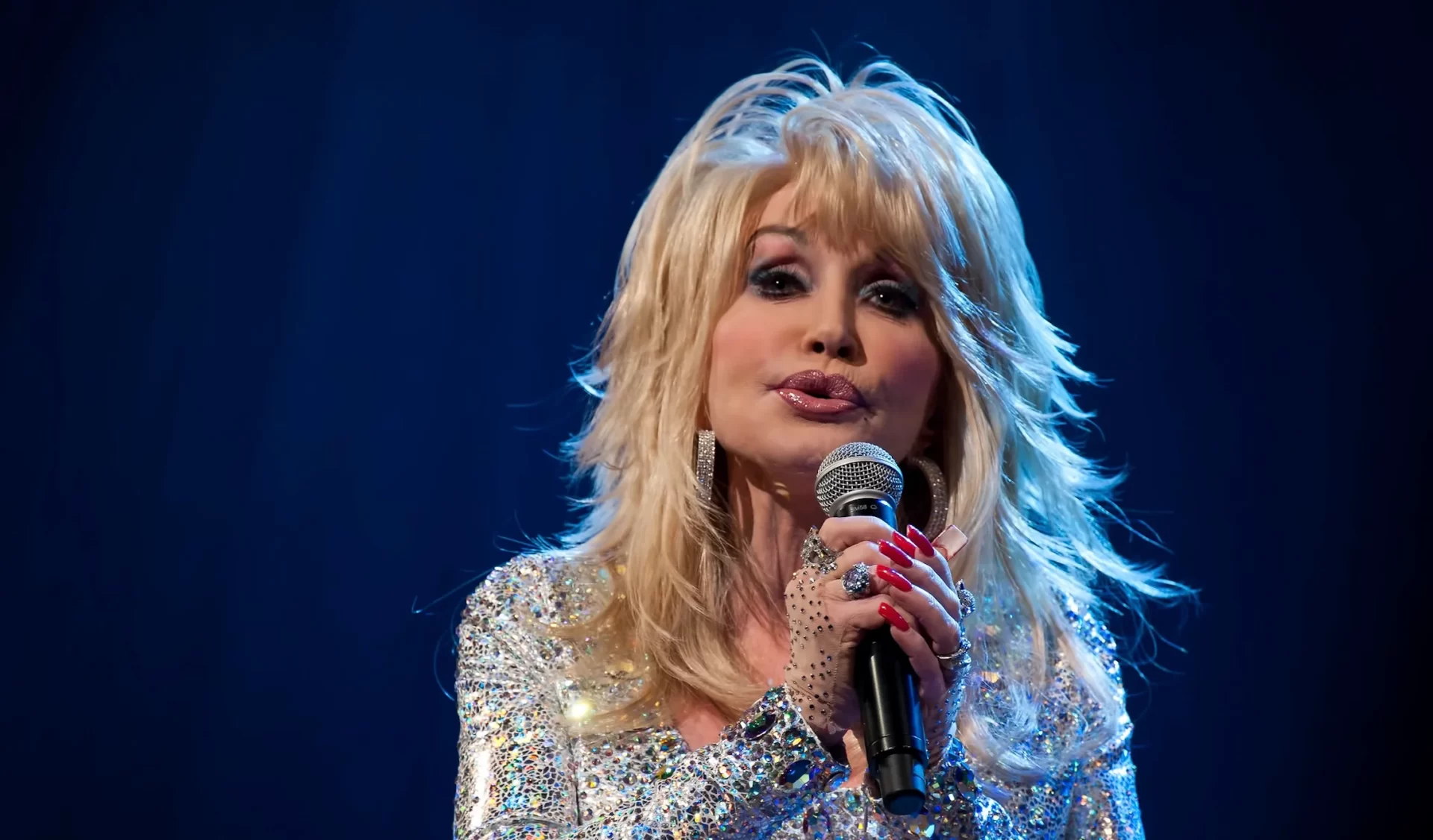
NASHVILLE, Tennessee — Dolly Parton, the country music singer, songwriter, actor, entrepreneur and philanthropist whose talent and generosity made her one of America’s most beloved cultural figures, has died at 80.
Parton died peacefully Tuesday in Nashville, her family said in a statement delivered by her nephew, Bryan Seaver. Her publicist said she was surrounded by loved ones.
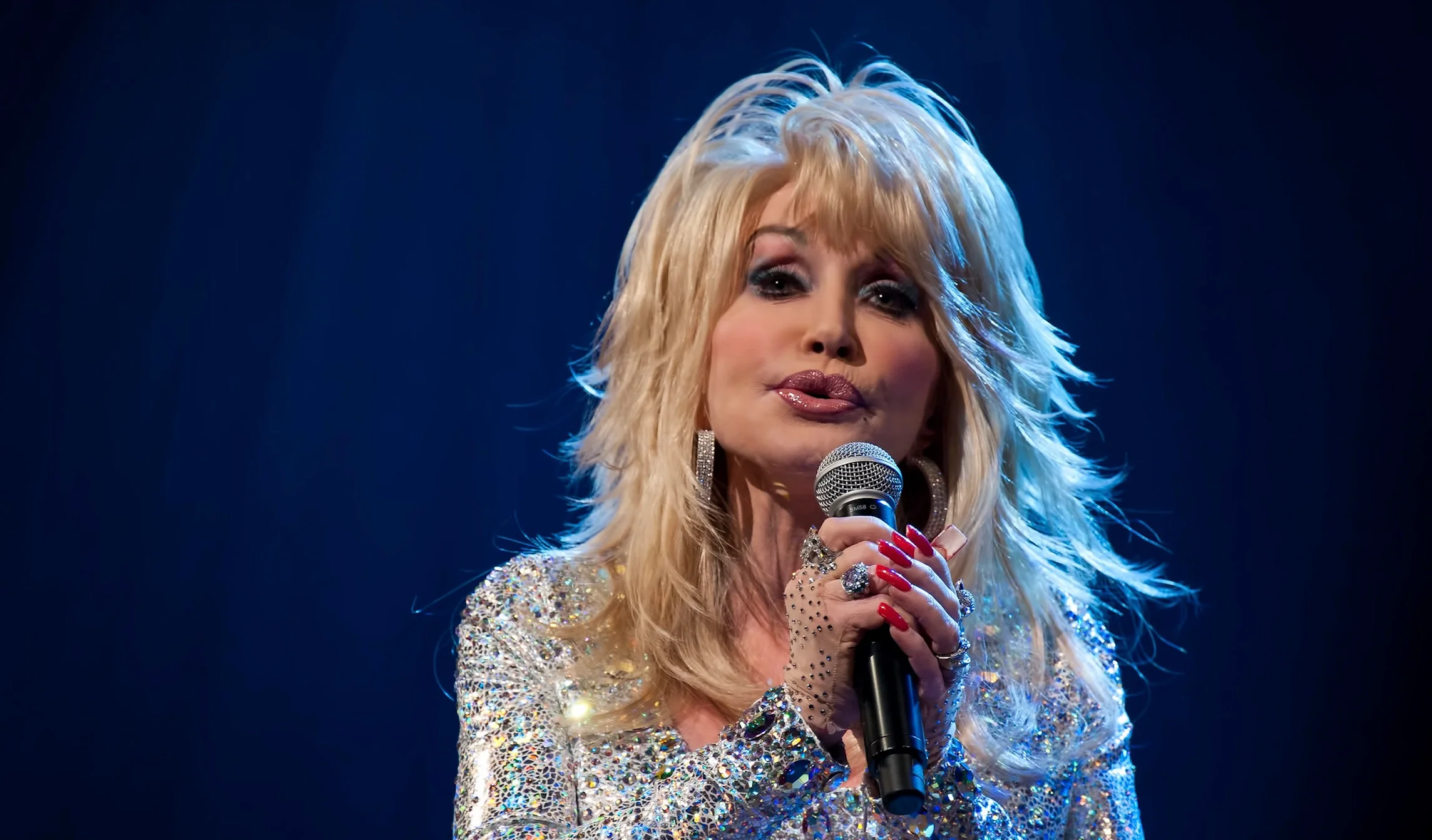
The family did not initially disclose a cause of death. Later reporting said Parton had faced a brief battle with cancer, but the family’s original announcement focused on her life, faith and enduring influence.
“A rhinestone life that shone bright enough for the world to see, Dolly will forever stand as an inspiration not only through her timeless music and prolific songwriting, but also her wit, warmth, and kindness that made us all feel like family,” her representatives said.
Parton’s death closes a remarkable career that spanned seven decades and crossed nearly every boundary in American entertainment. She was a country star who became a pop icon, a songwriter whose work was recorded by generations of artists, an actor who became a Hollywood fixture, and a businesswoman who transformed her East Tennessee roots into a global brand.
Her songs, including “Jolene,” “9 to 5,” “Coat of Many Colors” and “I Will Always Love You”, entered the American songbook. Her Imagination Library provided free books to millions of children. Her Dollywood theme park became one of Tennessee’s biggest tourist attractions. And her public persona, built on humor, candor and kindness, made her a rare figure admired across political, cultural and generational lines.
A voice from the Smoky Mountains
Dolly Rebecca Parton was born Jan. 19, 1946, in Sevier County, Tennessee, the fourth of 12 children in a family that lived in a one-room cabin in the Great Smoky Mountains.
Her father, Robert Lee Parton, was a farmer and construction worker. Her mother, Avie Lee Parton, sang and played music at home. The family had little money, but music was central to daily life.
Parton often described her childhood as poor in material terms but rich in love, imagination and storytelling. Those experiences became the foundation of her songwriting.
She wrote her first song, “Little Tiny Tasseltop,” when she was about 6 years old, an ode to a corncob doll with hair made from corn silk.
By age 10, she was performing on local radio and television programs in Knoxville. At 13, she recorded her first single, “Puppy Love,” and appeared at the Grand Ole Opry, where she was introduced by Johnny Cash.
After graduating from high school in 1964, Parton moved to Nashville the next day to pursue a career in music. She began as a songwriter, earning recognition for her ability to turn vivid details and simple melodies into emotionally direct stories.
Her early songs were recorded by other artists, including Bill Phillips, who took “Put It Off Until Tomorrow” to the top of the country charts in 1966.
Parton’s own breakthrough came soon afterward. She joined “The Porter Wagoner Show” in 1967 and became half of one of country music’s most successful television and recording partnerships.
Country success and creative independence
Parton and Porter Wagoner recorded a string of hit duets, including “The Last Thing on My Mind,” “Burning the Midnight Oil” and “Please Don’t Stop Loving Me.”
But Parton was determined to build a solo career. Her songwriting and vocal range gave her an identity that could not be confined to a supporting role.
In 1971, she reached No. 1 on the country chart with “Joshua.” More hit songs followed, including “Coat of Many Colors,” “My Tennessee Mountain Home,” “Jolene” and “I Will Always Love You.”
“Jolene,” released in 1973, became one of Parton’s most enduring songs. Its direct plea from one woman to another, “Jolene, please don’t take my man”, was delivered with a mixture of vulnerability, strength and melody that made it instantly memorable.
“I Will Always Love You,” written in 1973 as Parton prepared to leave Wagoner’s show, was a song of gratitude and farewell rather than romantic despair. It became a country hit for Parton and later reached a vastly larger audience when Whitney Houston recorded it for the 1992 film The Bodyguard.
Houston’s version became one of the best-selling singles in music history, but Parton remained the song’s writer and its emotional source. Success demonstrated the extraordinary durability of her songwriting: a country ballad written in Nashville could become a global pop anthem nearly two decades later.
Parton won 10 Grammy Awards during her career and received dozens of nominations.
Her influence reached across country, pop, rock, gospel, bluegrass and contemporary music. Artists from Linda Ronstadt and Emmylou Harris to Miley Cyrus, Beyoncé and countless others cited her as an inspiration.
‘9 to 5’ and Hollywood success
Parton’s career expanded beyond music when she made her film debut in 9 to 5 in 1980, starring alongside Jane Fonda and Lily Tomlin.
The movie, a workplace comedy about three women fighting sexism and exploitation in the office, became a major hit. Parton’s title song, “9 to 5,” reached No. 1 on both the country and pop charts and earned Academy Award and Grammy recognition.
The song turned Parton into a crossover star. Its punchy rhythm, typewriter-inspired sound and lyrics about underpaid workers connected with audiences far beyond country music.
She followed with film roles in The Best Little Whorehouse in Texas, Rhinestone, Steel Magnolias and Straight Talk. In Steel Magnolias, her performance as Truvy Jones showed that her screen presence could balance humor and emotional depth.
Parton never abandoned music, but Hollywood helped broaden her cultural reach. She became a familiar figure to people who might never have listened to a country radio station.
Her ability to move between formats was rooted in a clear sense of self. Parton’s glamorous image, platinum-blond hair, rhinestones, high heels and bright makeup, was often treated as comedy by outsiders. She responded with self-aware humor.
“It takes a lot of money to look this cheap,” she famously said.
The line captured a key part of her appeal. Parton understood the artifice of celebrity but used it to create warmth rather than distance. She could make a joke about her appearance while maintaining complete control over her image and business.
Business success and Dollywood
Parton was more than an entertainer. She was a savvy businesswoman, holding on to her publication rights and creating a sprawling entertainment empire.
In 1986, she opened Dollywood in Pigeon Forge, Tennessee, near her childhood home. The theme park expanded to become one of the most popular tourist attractions in the Southeast, attracting millions of tourists every year.
Dollywood brought jobs and investment to a region that Parton never forgot. It also reflected her distinctive vision of entertainment: family-friendly, rooted in Appalachian culture and designed to give visitors joy rather than simply sell them a celebrity name.
Parton’s business ventures extended to film production, television, books, music publishing, and tourism. Her success challenged assumptions about country artists, women in entertainment and performers from rural backgrounds.
She understood branding long before the term became central to popular culture. Yet her commercial success rarely seemed to weaken her public authenticity. Fans believed that the woman who built a major enterprise was still connected to the girl who grew up in a Tennessee cabin.
The Imagination Library and philanthropy
Parton’s most far-reaching legacy may be her philanthropy.
In 1995, she founded Dolly Parton’s Imagination Library, a program that provides free books to children from birth until age 5. The idea began in Sevier County as a tribute to her father, who could not read or write.
The program expanded across the United States and into several other countries. It has distributed hundreds of millions of books and encouraged early childhood literacy for families who might not otherwise have access to them.
Parton’s charitable work also included support for disaster relief, education, health care, and medical research.
After devastating wildfires struck Gatlinburg, Tennessee, in 2016, her My People Fund provided direct financial help to families whose homes had been destroyed. During the COVID-19 pandemic, she donated $1 million to Vanderbilt University Medical Center, supporting research that contributed to the development of the Moderna vaccine.
Her generosity was often practical rather than performative. She did not simply lend her name to causes; she used her resources to create programs that delivered books, money, aid and opportunity.
Her team said Tuesday that Parton’s “unmatched generosity reached the lives of countless people whom she would never meet.”
A life of resilience and loss
Parton’s death came after a period in which she had spoken publicly about health challenges.
In a statement released days before her death, she said she was dealing with health issues she had neglected while caring for her husband, Carl Dean, who died in March 2025 after 60 years of marriage.
Parton and Dean maintained an unusually private relationship despite her global fame. He rarely appeared in public with her and largely avoided interviews, while she spoke affectionately about him in songs and interviews.
She told People that she was still healing from his loss but remained committed to working.
“Even though I’m still healin’, I’m still workin’,” she said. “You know me, as I’ve often said, I’ve dreamed myself into a corner and I still have so many things I want to achieve.”
That statement now reads as a final expression of the work ethic that defined her career. Parton kept writing, recording, producing and imagining new projects long after most artists would have retired.
Her nephew, speaking for the family, said Parton had asked years earlier for the announcement of her death to be made in a video message.
“Sadness lies with us, not with Dolly,” Seaver said. He described her as someone who “farmed songs and happiness,” echoing the agricultural life of her father.
A national and global response
Tributes to Parton came quickly from the music industry, political leaders, artists, and fans around the world.
President Donald Trump ordered flags lowered for one week, according to reporting by KCRA.
The response reflected Parton’s unusual standing in American public life. She was loved by country fans, pop listeners, LGBTQ+ audiences, religious communities, business leaders, children’s-literacy advocates and people who admired her as a symbol of resilience.
Her appeal did not come from avoiding complexity. Parton was candid about poverty, sexism, aging, loss and ambition. But she offered humor and generosity rather than cynicism.
She could write a devastating song such as “Jolene,” perform a comic role in a Hollywood movie, fund a child’s first library and appear in a rhinestone gown, all without seeming to change who she was.
An enduring American original
Dolly Parton’s death at 80 marks the end of an era, but her work is likely to remain embedded in American culture for generations.
Her songs will continue to be recorded, streamed, and performed. Children will continue to receive books through the Imagination Library. Visitors will continue to travel to Dollywood. And her story will remain a model of how talent, discipline and imagination can turn a difficult beginning into a life of extraordinary influence.
Parton once said she never tried to be fashionable because she wanted to be timeless.
She achieved that.
From the Smoky Mountains to Nashville, Hollywood and stages around the world, Parton built a career on emotional truth, melodic clarity and a generosity of spirit that made millions of people feel she was singing directly to them.
Her family plans a small private service for immediate relatives.
For the public, the farewell will take place through the songs, the playful, heartbreaking, hopeful songs that made Dolly Parton not only the queen of country music, but one of the most enduring voices in American life.