
SEATTLE — Bill Gates, whose career helped bring personal computing into homes and workplaces around the world, is warning that artificial intelligence could produce a “net negative outcome” unless governments, technology companies and international institutions move quickly to manage its risks.
In a nearly 6,000-word essay published Wednesday, the Microsoft co-founder said AI is developing faster than governments and societies are preparing for its consequences. He argued that the technology could become either “the greatest equalizer ever invented” or “the worst source of injustice,” depending on choices made now.
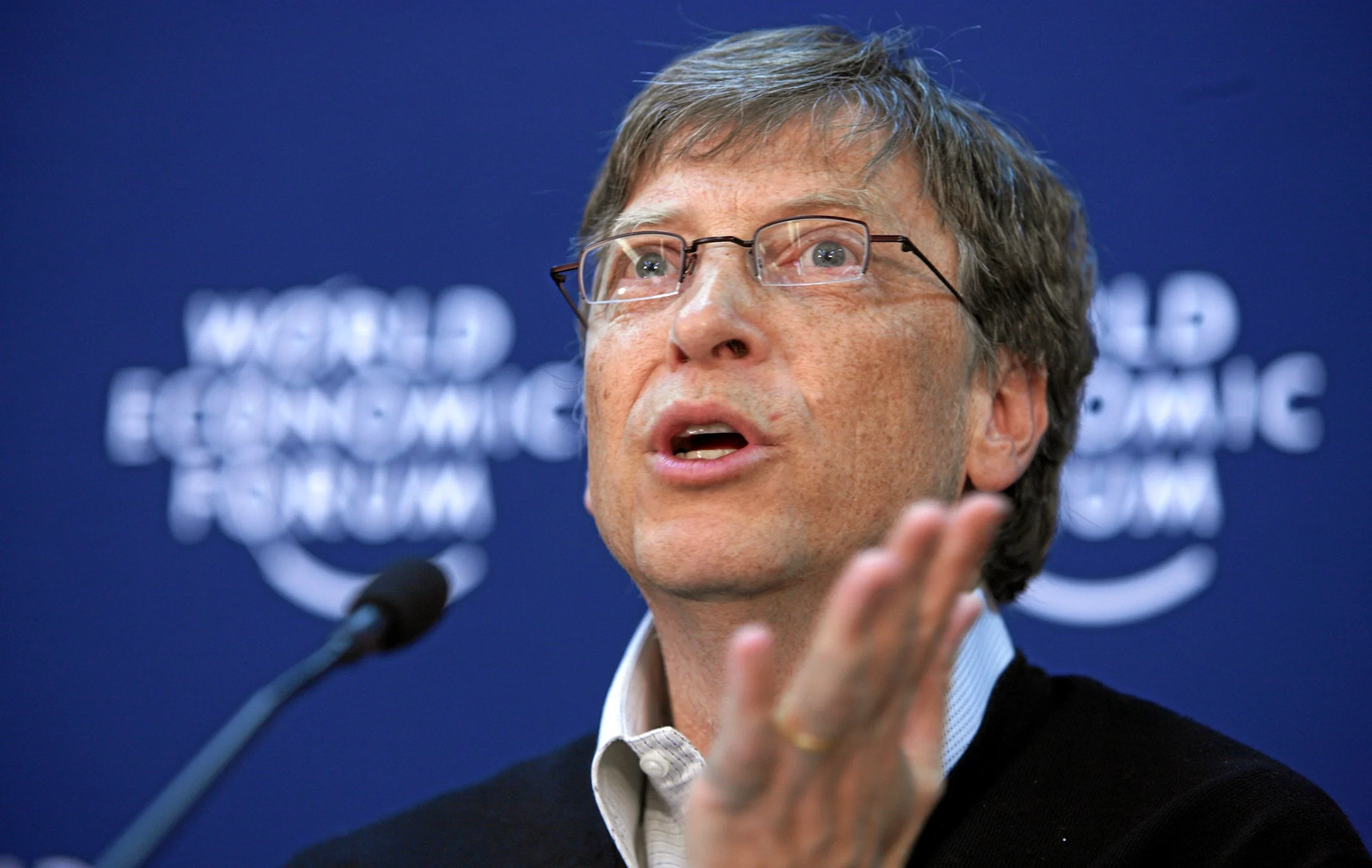
Gates identified three broad dangers: the permanent disappearance of many jobs, the ability of criminals and hostile actors to use AI for cyberattacks and biological threats, and the risk that AI could damage children’s development and replace human relationships.
“The good stuff is moving a bit slowly, and, other than robots, I’d say the bad stuff is imminent,” Gates told Axios in an interview. “On the current course and speed, there’s a very high chance of a net negative outcome.”
The warning is notable because Gates has long been one of the technology industry’s most prominent optimists. He has promoted AI’s potential to improve health care, education, agriculture, and productivity. His new position does not reject those benefits, but it marks a sharper call for public intervention in an industry moving at extraordinary speed.
Gates said the transition to an AI-driven economy could be “one of the most turbulent times in human history” and said there is no coordinated plan to manage it.
Three risks at the center
Gates’ essay centers on the ways AI could reshape employment, concentrate power and expand the ability of individuals or groups to cause harm.
The first concern is jobs.
Gates wrote that “many jobs will disappear forever” as AI systems become capable of handling work now done by people in white-collar and blue-collar industries.
He singled out customer service, software engineering and paralegal work as fields likely to face early disruption. Over time, he said, automation and robotics could reshape work in sectors including construction, manufacturing and hospitality.
The concern is not simply that jobs will change. Technological shifts have always changed work, from industrial machinery to computers and the internet. Gates’ argument is that the pace and breadth of AI-driven automation could exceed society’s ability to create replacement roles.
Young people may be especially vulnerable if entry-level jobs disappear, he said. Those positions traditionally give workers a way to learn, earn experience, and move into more advanced careers.
If AI handles basic research, customer support, coding, document review and administrative tasks, the traditional pathway into some professions could narrow.
Gates’ second concern is security.
AI can make it easier to produce convincing scams, deepfakes, disinformation, and surveillance tools. It can also strengthen cyberattacks by helping criminals find vulnerabilities, generate malicious code, or automate fraud at scale.
“Even criminals with very limited skills will be able to target victims at every scale: individuals, companies, and governments,” Gates wrote.
His third concern is more personal: the effect of AI on children, education, and human relationships.
Gates warned that AI could stunt children’s development if young people increasingly depend on machines for companionship, conversation, homework, and emotional support.
He also cautioned that AI could replace human interactions in ways that make people more isolated or less able to form relationships.
A technology moving faster than policy
Gates’ central argument is that AI development has outrun public preparation.
Governments have debated AI regulation for years, while companies have introduced increasingly capable chatbots, image generators, coding assistants, autonomous agents and AI systems that can analyze large volumes of data.
But rules governing accountability, data use, employment disruption, safety testing, and national security remain fragmented.
Gates said that AI risks related to cybersecurity, biology, human relationships and control of the technology are “all like flashing either yellow or red.”
He argued that governments need new institutions capable of coordinating AI policy across national security, employment, education, taxation, and health care.
The United States, in his view, should create a dedicated body with the authority and expertise to address AI’s social consequences across agencies.
He also called for an international organization that would combine elements of nuclear inspections and international aviation regulation.
Such a body could help governments monitor advanced AI systems, share information about risks, and establish rules for capabilities that could threaten global security.
The comparison of nuclear safeguards is important. Some players can blow up the world, and they don’t care, therefore we regulate nuclear technology through treaties, inspections and international oversight.
Gates suggests that advanced AI could require a similar approach, especially when models can be used to design chemicals, discover biological compounds, launch cyberattacks, or conduct large-scale influence operations.
The danger of AI-enabled crime
One of the most immediate risks, Gates argues, is the democratization of harmful capabilities.
Before generative AI, sophisticated cybercrime, propaganda and biological research often required technical expertise, financial resources or access to specialized tools.
AI can lower those barriers.
A scammer can use AI to write convincing messages in many languages. A fraud operation can create realistic voice clones or video impersonations. A malicious actor can use AI tools to scan for software weaknesses, automate phishing attempts or generate disinformation tailored to specific audiences.
These dangers are not theoretical.
Deepfake images, videos, and audio have already been used in online scams and political misinformation. AI-generated text can make phishing messages more convincing. Automated systems can help criminals reach more targets at lower cost.
Gates warned that AI would make “monitoring and manipulating” public opinion easier and more effective.
The challenge is not only technological. It is institutional.
Law enforcement agencies, election officials, financial institutions, schools and ordinary users may struggle to identify AI-generated deception before it spreads.
Gates said AI could make critical infrastructure — including hospitals and financial institutions — more vulnerable to attack.
That raises difficult questions about who is responsible when an AI system is used to cause harm. Software developers may create general-purpose tools. Companies may deploy them. Criminals may misuse them. Governments may lack the technical capacity to investigate quickly.
Clear rules, better security standards and international cooperation will be necessary, Gates argued.
Biological risks and AI safety
Gates also raised concerns about AI systems capable of designing new molecules.
AI has the potential to accelerate scientific research, helping scientists discover drugs, develop cleaner materials and better understand disease. Gates has supported using AI to improve global health and medical research.
But the same capabilities can be misused.
Advanced systems could help users identify, modify, or create biological agents with harmful potential. Gates said such tools should face mandatory reviews and international controls.
The issue is often called “dual use”: a scientific tool can be used for beneficial or harmful purposes.
A system that helps researchers identify a treatment may also help a bad actor understand how to make a toxin. A program that can model protein structures may have applications in medicine, but it can also raise security concerns if its use is unrestricted.
Gates’ call for international oversight reflects the global nature of the risk. A biological event or cyberattack does not stop at national borders.
He said the world needs clear mechanisms to monitor and restrict AI systems that could aid bioterrorism or other catastrophic harms.
The proposal would face major obstacles. Countries disagree on how to regulate technology. Companies protect proprietary research. And governments may be reluctant to grant international institutions authority over strategic technologies.
Still, Gates’ argument is that the alternative, waiting until a serious incident occurs, would be more dangerous.
Jobs, robots and the case for a tax
Gates has proposed that governments consider new taxes on AI systems and robots that replace workers.
The idea, sometimes called a robot tax, is controversial. Supporters say it could help fund worker retraining, education, income support and other protections for people displaced by automation.
Critics argue that taxing automation could discourage innovation, reduce productivity, and make it harder for companies to compete internationally.
Gates’ version of the idea is broader than a simple tax on machines. He wants governments to plan for a future in which AI increases total economic output but distributes its benefits unevenly.
If a company can replace many workers with AI, it may lower its costs and raise profits. But workers who lose jobs may not automatically share in those gains.
A tax could be used to fund transitions, but it would not solve the deeper problem of what work looks like in an AI-driven economy.
Gates has also proposed designating some occupations as “human reserved,” meaning roles where society decides people should remain central even if automation becomes technically possible.
Such jobs could include care work, education, counseling, public safety or roles in which human judgment and human connection are considered essential.
The proposal raises its own questions. Who decides which jobs must remain human? Can governments enforce the rule across global companies? Would it protect workers or prevent useful innovations?
But Gates’ point is that societies should make those decisions deliberately rather than allowing market forces alone to determine which human roles disappear.
Children, education and human connection
Gates’ warning about children stands apart from his economic and security arguments.
He said AI could alter how children learn, communicate and form relationships.
AI tutors may offer personalized instruction and help students who lack access to teachers. But a child who relies too heavily on an AI system may not develop critical thinking, persistence or social skills in the same way.
Similarly, AI companions might provide comfort or conversation. But they could also displace friendships, family bonds and face-to-face interaction.
The risks may be greater for youngsters who are lonely, fragile or exposed to hazardous content. AI systems can be persuasive, responsive, and available at all hours. That makes them potentially valuable tools, but also powerful influences.
Gates did not call for a blanket ban on AI use by children. Instead, he urged policymakers to treat child development as a central issue in AI governance, rather than an afterthought.
This would require research, age-appropriate safeguards, parental tools, school policies, and limits on how companies design AI products for young users.
The stakes for business
For businesses, Gates’ warning presents a challenge as well as an opportunity.
Companies are spending heavily on AI infrastructure, data centers, chips, and software. Many see AI as a way to improve efficiency, automate routine tasks, and develop new products.
The Technology could increase productivity, speed up scientific discovery, and increase access to services. It might help doctors sift through information, help teachers organize lessons and help tiny businesses compete with larger ones.
But if AI adoption leads to widespread job losses, security failures or public mistrust, businesses could face political backlash and stricter regulation.
Gates said AI companies themselves are more concerned than their public messaging sometimes suggests.
That observation points to a gap between the competitive pressure to release new products quickly and the need to test systems carefully before they reach millions of users.
The companies that develop advanced AI will play a major role in determining whether safeguards are meaningful. Voluntary commitments can help, but Gates said the industry cannot regulate itself.
A choice, not an inevitability
Gates’ essay is not a prediction that AI will inevitably harm the world.
It is an argument that the outcome is still open.
“AI will either be the greatest equalizer ever invented, or the worst source of injustice,” he wrote.
The technology could help improve health care in underserved communities, expand access to quality education, assist scientists in solving difficult problems and make economies more productive.
But those benefits will not automatically outweigh the harms.
The transition will depend on decisions by governments, companies, researchers, workers, parents, and international institutions.
Gates’ warning is ultimately a call for preparation. He believes the world is crossing thresholds that policymakers and technology leaders once treated as distant possibilities.
Now, he says, those thresholds are here.
The question is whether governments act before the risks become irreversible, or after the damage has already been done.