
WASHINGTON — The Federal Reserve raised interest rates for the first time in more than three years Wednesday and signaled that additional tightening is likely as policymakers confront persistent inflation, high energy prices and an economy that has continued to expand at a solid pace.
In a unanimous decision, the Federal Open Market Committee lifted its benchmark federal funds rate by 25 basis points to a range of 3.75% to 4.00%, from 3.50% to 3.75%. It was the Fed’s first increase since July 2023 and the first major policy shift under Chair Kevin Warsh.
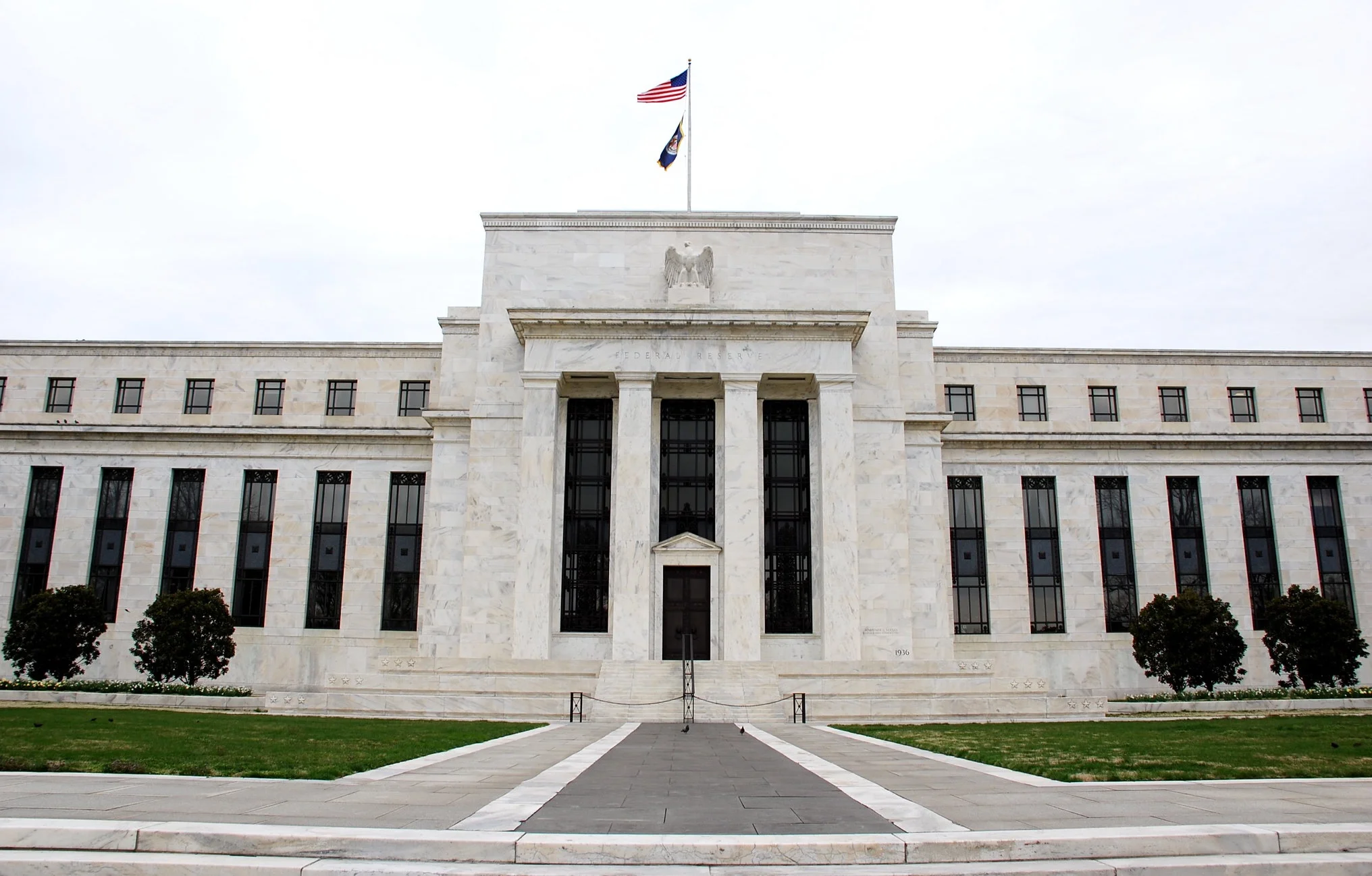
The decision marked a significant reversal from the market’s expectations at the start of the year, when investors anticipated rate cuts. Instead, a resurgence in inflation pressure, amplified by rising oil prices following conflict in the Middle East, has pushed the central bank back toward a more restrictive stance.
“Inflation remains elevated,” the Fed said in its policy statement. “Today’s policy action will support a timelier return to the Committee’s 2% goal.”
New projections showed that 16 of 18 policymakers who submitted forecasts expect at least one additional quarter-point increase by the end of 2026. The median outlook points to a policy rate of 4.00% to 4.25% by year-end, with rates expected to remain at that level through 2027.
For households, the immediate effect will be uneven. Credit-card rates and other variable borrowing costs are likely to rise, while savings yields may improve. Fixed mortgage rates will depend more on long-term Treasury yields, which have remained near 5%, than on the Fed’s move alone.
For investors, the decision introduces a new uncertainty: whether Wednesday’s hike is a one-time adjustment to renewed inflation pressure or the start of a broader tightening cycle.
A unanimous vote with a hawkish message
The 12-0 vote was one of the most important signals from the two-day Fed meeting.
In July, the central bank voted 9-3 to keep rates unchanged. The unanimous September hike suggests a broader consensus that inflation risks have become too serious to ignore.
The policy statement did not explicitly promise another increase. Warsh has generally avoided providing detailed forward guidance, preferring to leave future decisions dependent on incoming data.
But the combination of the unanimous vote, the updated projections and Warsh’s language left little doubt that the Fed is prepared to tighten further if price pressures persist.
“I would be hard pressed to describe broad financial conditions as restrictive,” Warsh said at his post-meeting news conference. “This view was widely shared by the committee, so we removed a dose of accommodation.”
That phrase, “removed a dose of accommodation”, is central to understanding the Fed’s decision.
It means officials do not believe monetary policy was sufficiently constraining economic activity to guarantee a return to the 2% inflation goal. Even after Wednesday’s hike, the Fed sees room to tighten further if demand remains resilient or inflation broadens beyond energy-related costs.
The updated “dot plot,” which records policymakers’ individual projections for the federal funds rate, reinforced the message. Sixteen of 18 participants expected at least one more increase before year-end. Only two expected rates to remain at the new 3.75%-4.00% range.
Warsh did not submit an individual rate projection, according to Reuters, continuing his practice of avoiding a personal “dot.” But his public comments were clearly hawkish.
Inflation remains the central problem
The Fed’s mandate is to pursue stable prices and maximum employment. In practice, that means trying to bring inflation back to 2% without unnecessarily damaging the labor market.
The central bank’s latest projections show that challenge has become harder.
Policymakers raised their estimate for inflation, measured by the personal consumption expenditures price index, to 3.7% from 3.6% in the June forecast. They now do not expect inflation to return to the 2% target until 2029, one year later than previously projected.
The Fed’s preferred gauge of underlying inflation, core PCE, was running at an annual rate of 3.3% in the latest available reading.
The persistence of inflation has several sources.
Global import tariffs have raised costs for some goods. Higher oil prices have increased gasoline, transport and production costs. And capital spending associated with the artificial-intelligence boom has supported demand for equipment, energy and construction even as higher borrowing costs have pressured other parts of the economy.
The U.S.-Israeli war with Iran has added a new and particularly difficult inflation risk. Oil prices rose above $100 a barrel in recent weeks amid disruptions to Saudi energy infrastructure and concerns over shipping through the Strait of Hormuz. While oil prices eased Wednesday and Thursday, the possibility of renewed supply disruption remains a concern for policymakers.
The Fed cannot repair a damaged pipeline or reopen a shipping route. But it must judge whether higher energy costs will remain temporary or spread into broader prices, wage demands and inflation expectations.
Wednesday’s decision suggests officials believe the risk of broader inflation has increased.
Notably, the Fed removed language from its previous statement that attributed elevated inflation to “supply shocks,” particularly in energy markets. Reuters said the change reflected concern that price pressure had become too broad to dismiss as a temporary oil-related effect.
Growth remains resilient
The Fed’s decision was not driven only by inflation. It was also shaped by the economy’s continued resilience.
Policymakers lifted their 2026 growth forecast to 2.3%, from 2.2% in June. They expect unemployment to end the year at 4.1%, lower than the 4.3% projection made earlier in the summer.
That combination, stronger growth and lower unemployment than previously expected, gives the Fed more room to raise rates.
If the economy were contracting sharply or unemployment were rising rapidly, officials might be more reluctant to tighten policy even with inflation above target. But a solid expansion reduces the immediate risk that a quarter-point hike will push the economy into recession.
At the same time, resilience can create its own inflation problem. Strong household spending, firm hiring and continued investment can keep demand high enough that businesses retain pricing power.
The Fed’s challenge is to cool the economy just enough to reduce price pressure without creating a deeper downturn.
That is the traditional “soft landing” goal of monetary policy. It is also notoriously difficult to achieve, especially when inflation is being driven by both domestic demand and external energy shocks.
A test of Warsh’s independence
The meeting was widely seen as a test of Warsh’s willingness to act independently of President Donald Trump.
Trump selected Warsh, who took office in late May, after repeatedly calling for lower interest rates. The president has argued that the Fed should cut borrowing costs to support growth and ease pressure on households and businesses.
But Wednesday’s decision went in the opposite direction.
The unanimous hike may ease concerns that Warsh would defer to political pressure from the White House. Investors had questioned whether the new chairman, chosen by a president who favored rate cuts, would be willing to raise rates so close to the November midterm elections.
The answer, at least for now, is yes.
“I hope at least at a very high level, one takeaway that investors have is that economics is trumping politics at the Fed, at least for right now,” Marta Norton, chief investment strategist at Empower, told Reuters.
Trump responded by again calling for lower interest rates but stopped short of directly criticizing Warsh, a contrast with his sharper attacks on Warsh’s predecessor, Jerome Powell.
The political consequences may still be significant. The rate increase comes as voters face gasoline prices roughly one-third higher than a year ago and average 30-year fixed mortgage rates approaching 7%, according to Reuters.
Higher borrowing costs can become a political issue quickly, especially for first-time homebuyers, small businesses reliant on credit lines and households carrying credit-card debt.
Markets react to a higher-for-longer outlook
Financial markets had largely expected the quarter-point increase. The more consequential surprise was the Fed’s hawkish tone.
After the meeting, the S&P 500 closed down 0.45%, while the U.S. dollar strengthened against a basket of major currencies. The 10-year Treasury yield rose to 5.02%, moving back above the closely watched 5% level.
Stocks and bonds can react differently to higher rates depending on the reason for the increase.
If investors believe the Fed is acting credibly to contain inflation, longer-term yields may eventually decline because markets expect future price pressures to ease. If investors fear that the Fed will need to raise rates repeatedly, borrowing costs may climb and equity valuations can come under pressure.
Wednesday’s market response reflected both views. Investors appeared to welcome the Fed’s independence, but they also confronted uncertainty about how far rates may rise.
“The meeting does make them look independent … it adds trust to the market,” Matthew Miskin, co-chief investment strategist at Manulife John Hancock Investments, told Reuters. But he added that the Fed “may have come off a little too hawkish.”
Futures markets put the probability of another rate increase at the Fed’s late-October meeting near 50%, according to Reuters. That meeting would occur shortly before the midterm elections.
| Indicator | Latest signal | Why it matters |
|---|---|---|
| Federal funds rate | 3.75%-4.00% | New target range after a 25-basis-point hike |
| Vote | 12-0 | Unanimous decision signals broad concern about inflation |
| Fed forecast for year-end rate | 4.00%-4.25% | Median outlook implies one more hike in 2026 |
| Policymakers expecting another 2026 hike | 16 of 18 | Strongly hawkish projection pattern |
| Inflation forecast | 3.7% | Up from 3.6% in June |
| Expected return to 2% inflation | 2029 | One year later than previously projected |
| 10-year Treasury yield | 5.02% | Raises pressure on mortgages and corporate borrowing |
| Next Fed meeting | Late October | Futures indicate roughly even odds of another hike |
What it means for borrowers
The Fed does not set every interest rate directly. But its benchmark rate influences many consumer and business borrowing costs.
The fastest impact is usually on variable-rate debt.
Credit-card annual percentage rates often move with the prime rate, which tends to rise after a Fed increase. People carrying balances may see higher interest charges in coming billing cycles. Home-equity lines of credit and variable-rate private loans can also become more expensive.
The effect on mortgages is more complicated.
Fixed mortgage rates are influenced primarily by long-term Treasury yields, mortgage-backed securities and expectations about inflation. Because the 10-year yield is already near 5%, mortgage rates were under pressure before the Fed decision.
Homeowners with existing fixed-rate mortgages will not see their monthly payments change because of Wednesday’s hike. But people seeking new mortgages, refinancing, buying cars or applying for business loans may face higher rates if long-term yields remain elevated.
For businesses, higher rates increase the cost of credit lines, floating-rate loans and refinancing. This can affect hiring, inventory purchases, equipment investment and expansion plans.
The key takeaway is that the Fed’s hike is not a one-day event. Its impact will spread through borrowing markets gradually, especially if officials follow through with additional tightening.
What it means for savers
Higher rates are not entirely negative for households.
Savers may benefit if banks and credit unions raise annual percentage yields on high-yield savings accounts, money-market accounts and new certificates of deposit. However, institutions are not required to pass through the full Fed increase, and rates can vary widely.
People with emergency savings should compare insured deposit accounts, paying attention to fees, minimum balances and withdrawal restrictions.
The broader trade-off is that higher returns on savings come with higher costs for borrowers. The same policy that helps a depositor earn more interest can make it more expensive for a small business owner to finance inventory or for a family to carry a credit-card balance.
What comes next
The Fed has made clear that its next moves will depend on data.
The central bank will watch inflation reports, wage growth, employment, consumer spending, oil prices, financial conditions and the effect of higher rates on the housing market and business investment.
The major risks point in different directions:
- If inflation stays elevated: The Fed may raise rates again in October or December.
- If oil prices surge again: Energy costs could add to inflation and force a more aggressive response.
- If growth slows sharply: The Fed could pause, even if inflation remains above target.
- If unemployment rises: Officials may face a more difficult trade-off between price stability and employment.
- If long-term yields remain high: Financial conditions may tighten without as many additional Fed increases.
Warsh’s message Wednesday was that the Fed will not declare victory too early.
“We will deliver price stability,” the central bank said in its statement.
That promise now faces a test. The Fed has raised rates for the first time in three years. It has signaled more tightening ahead. And it has done so in an economy where inflation, energy shocks, politics and financial-market uncertainty are all pulling policy in different directions.
For borrowers and investors, the era of assuming rate cuts are just around the corner appears to be over, at least for now.