
NEW YORK — Elena Rybakina overpowered Naomi Osaka 6-1, 6-4 Monday to reach the U.S. Open quarterfinals for the first time, delivering a commanding performance that moved the Kazakh star one victory from the world No. 1 ranking.
The second-seeded Rybakina needed only 66 minutes to beat Osaka, a two-time U.S. Open champion and four-time Grand Slam winner, in Louis Armstrong Stadium at Flushing Meadows.
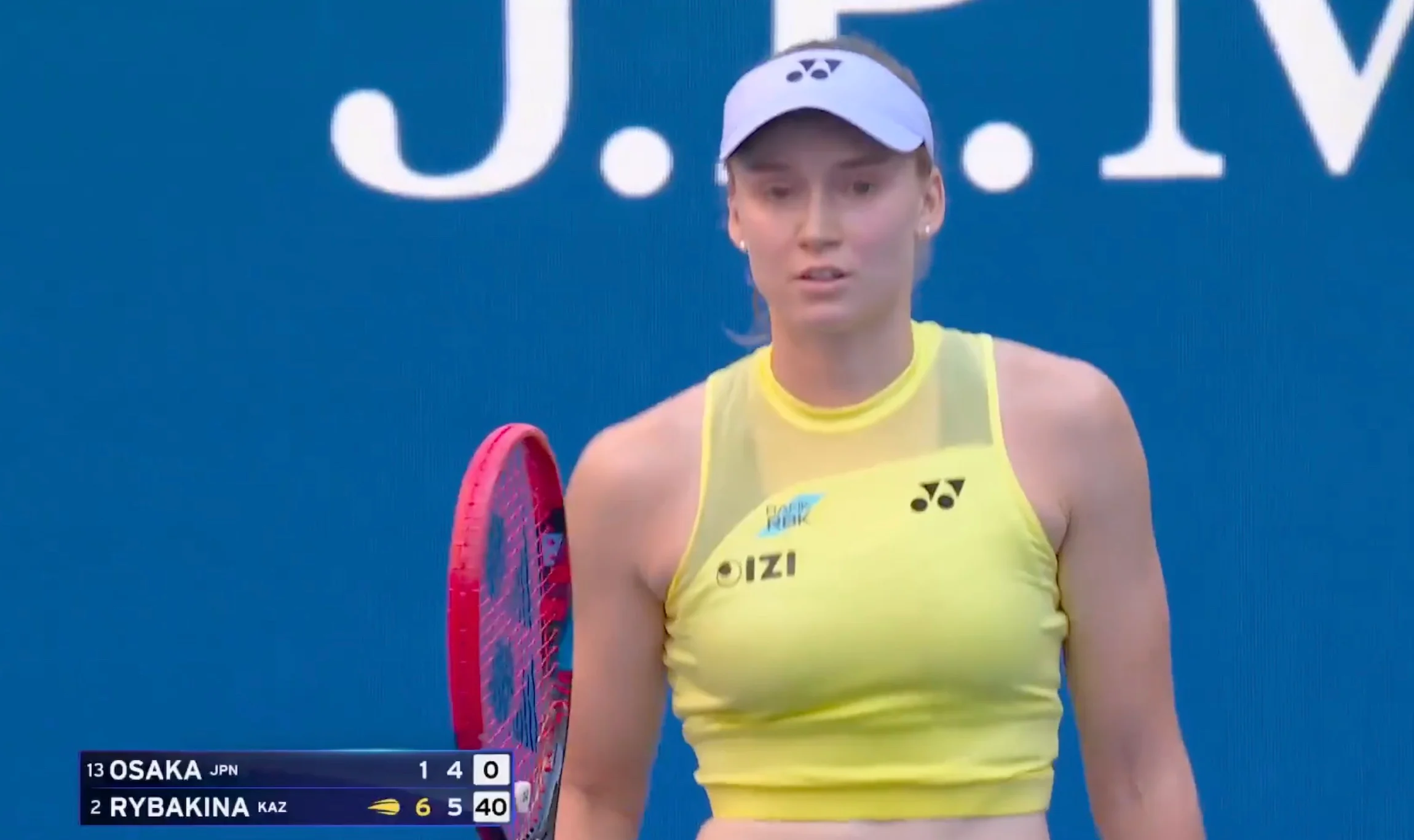
Rybakina controlled the match from the opening games, using her powerful serve and clean baseline hitting to overwhelm Osaka before the Japanese star could establish the rhythm that carried her through the first week of the tournament.
The victory sent Rybakina into a quarterfinal against Olympic champion Zheng Qinwen of China, who stunned six-time major winner Iga Swiatek in a comeback victory earlier Monday.
If Rybakina reaches the semifinals, she will rise to world No. 1 for the first time in her career.
For Osaka, the loss ended an encouraging U.S. Open run that showed how far she has come since returning to the sport after becoming a mother. But it also extended her wait for a fifth Grand Slam title, as she continues to manage physical challenges and rebuild consistency at the sport’s highest level.
“I had a kid, you know? There’s a lot that happened in that time,” Osaka said after the match. “I’m still learning.”
Rybakina takes control early
The match was billed as a clash between two of the most powerful ball-strikers in women’s tennis.
Rybakina, the reigning Australian Open champion and 2022 Wimbledon winner, entered as the No. 2 seed and one of the tournament favorites. Osaka arrived as the 13th seed, carrying the momentum of a difficult three-set win over Elise Mertens and the experience of two previous U.S. Open titles.
But the anticipated contest never developed into a long, even battle.
Rybakina immediately set the tone with her serve. She opened the match by holding at love, then broke Osaka in the second game as the Japanese player struggled to find timing on her groundstrokes. Rybakina broke again to move ahead 5-1 and closed out the opening set in just over 20 minutes.
The first-set score, 6-1, reflected the imbalance.
Rybakina’s pace forced Osaka into defensive positions, and her ability to redirect the ball from both wings prevented Osaka from settling into long, controlled rallies. Osaka committed errors under pressure and could not consistently earn the shorter balls needed to use her forehand aggressively.
Rybakina’s serving was especially important. Her first serve gave Osaka few opportunities to attack returns, while her second serve held up well enough to keep the pressure on.
The Kazakh player has long been one of the cleanest hitters in the women’s game, capable of producing pace without obvious effort. Against Osaka, that talent translated into a nearly flawless opening set.
Osaka finds a response
Osaka did not simply fade after the first set.
The second set became more competitive as she improved her serving and began to take the ball earlier. She held her opening service game and tried to impose more aggression from the baseline.
For a time, the momentum appeared to shift.
Osaka created break opportunities and showed the kind of power that has made her one of the sport’s most formidable hard-court players. But Rybakina repeatedly escaped pressure with big serves and composed point construction.
The decisive moment came in the seventh game of the second set.
With the score at 3-3, Rybakina broke Osaka’s serve after a series of deep returns and forceful groundstrokes pushed Osaka into mistakes. The break gave Rybakina a 4-3 lead, and she never relinquished it.
Osaka had one final chance to recover, earning break points in the following game. But Rybakina saved them, again relying on her serve to prevent the match from turning.
The No. 2 seed then served out the 6-4 second set to complete the win.
The 66-minute duration underlined Rybakina’s dominance. Matches between two Grand Slam champions often turn on small margins. This one was decided by Rybakina’s ability to maintain a high level from the first ball and prevent Osaka from turning the contest into a physical battle.
A first US Open quarterfinal
The victory was significant beyond the scoreline.
Rybakina had never before reached the U.S. Open quarterfinals, despite her success at other Grand Slam events. Her previous best result in New York was the fourth round.
That made Monday’s result a breakthrough at the final major of the season.
Rybakina has established herself as one of the defining players of the current era. Her Wimbledon title in 2022 announced her arrival among the elite. Her Australian Open victory this year reinforced that position.
But the U.S. Open has been one of the few major stages where her results had not matched her talent.
The hard courts at Flushing Meadows should suit her game. They reward powerful serves, clean baseline strokes and aggressive returning, the very elements that carried her past Osaka.
Her run this year suggests she has found the formula in New York.
The win also moved Rybakina closer to a major personal milestone: the world No. 1 ranking.
She is currently ranked second and will take the top spot if she reaches the semifinals.
That opportunity adds pressure, but it also reflects the consistency of her season. Reaching No. 1 requires more than one great tournament. It requires sustained results across the calendar, and Rybakina has delivered them.
Zheng Qinwen awaits
Rybakina’s quarterfinal opponent will be Zheng Qinwen, who produced one of the day’s biggest upsets by defeating Iga Swiatek.
Zheng mounted an extraordinary fightback to beat Swiatek, preventing a possible quarterfinal between the world No. 2 and one of the sport’s most accomplished champions.
The matchup with Zheng will present a different challenge for Rybakina.
Zheng is an Olympic champion with a powerful serve, aggressive baseline game and the confidence that comes from beating a six-time Grand Slam winner. She can match Rybakina physically and has the ability to turn a match into a battle of first-strike tennis.
For Rybakina, the key will likely be maintaining the efficiency she displayed against Osaka.
If she serves as well as she did Monday and controls the center of the court with her forehand and backhand, she will be difficult for any player to beat. But Zheng’s ability to absorb pace and produce her own winners means the match could be more competitive than the Osaka result.
The winner will reach the semifinals, and, in Rybakina’s case, the top of the rankings.
Osaka’s setback, and perspective
For Osaka, the defeat was disappointing but not necessarily discouraging.
The former world No. 1 entered the U.S. Open with questions about her form and fitness. She had shown flashes of her old power but had not consistently made deep runs at Grand Slam events since returning to the tour after giving birth to her daughter in 2023.
In New York, she reached the fourth round, defeating Elise Mertens in a three-set match despite an Achilles problem.
That victory demonstrated the resilience Osaka still possesses. She was down late in the deciding set against Mertens, fought back, served an ace to take a 6-5 lead and closed the match with aggressive baseline tennis.
But against Rybakina, the physical demands became more evident.
Osaka said after the loss that she had been dealing with an Achilles injury and that the issue affected her movement.
She did not use the injury as an excuse.
Instead, Osaka placed the loss in the context of a career and life that have changed significantly in recent years.
“I had a kid, you know? There’s a lot that happened in that time,” she said.
The comment reflected a broader perspective that has become part of Osaka’s return to tennis.
She remains ambitious, but she is no longer measuring every result solely against the peak years when she won four Grand Slam titles and reached No. 1 in the world.
At 28, she has time to improve, regain fitness and compete for more major championships. Her performance at the U.S. Open showed that she can still beat high-level opponents and produce elite tennis under pressure.
But Monday also showed the gap she must close to challenge the players currently at the top of the game.
Two champions, different paths
Rybakina and Osaka represent two different versions of modern women’s tennis.
Rybakina is defined by her calm, low-key presence and her uncomplicated power. Her game is built around a high-quality serve, flat groundstrokes and an ability to take control without appearing to overplay.
Osaka is one of the sport’s most recognizable global figures. Her game is also based on power, but her career has unfolded under a far more intense public spotlight, shaped by Grand Slam triumphs, social activism, mental-health advocacy, motherhood and a return from time away.
Their meeting was only the second of their careers.
Rybakina had won the first encounter in Toronto less than a month earlier, ending Osaka’s run in the quarterfinals.
Monday’s match confirmed Rybakina’s current edge in the rivalry.
But Osaka’s return to the second week of a Grand Slam remains meaningful. She has been absent from the very top of the women’s game for stretches, and her U.S. Open performance provided evidence that she is again capable of making deep runs.
The next step is sustaining that level over multiple tournaments and finding a way to compete against players like Rybakina when their power game is fully engaged.
What Rybakina’s win means
Rybakina’s victory has implications for the entire women’s draw.
She entered the tournament as one of the favorites, but Monday’s emphatic performance made her case stronger.
The No. 2 seed now has:
- Her first U.S. Open quarterfinal appearance.
- A chance to become world No. 1 by reaching the semifinals.
- A quarterfinal against Zheng Qinwen rather than Swiatek.
- A record of dominance over Osaka in their two recent meetings.
She’s also chasing her third Grand Slam crown, having won Wimbledon in 2022 and the Australian Open in 2026.
The U.S. Open trophy would complete a major hard-court statement for a player whose best tennis has often come on faster surfaces.
For Osaka, the tournament ends with a loss but also with signs of progress. Her fourth-round run and win over Mertens showed competitive resilience. Her Achilles issue and the lopsided opening set against Rybakina showed the challenges that remain.
For Rybakina, the path continues.
She arrived in New York as a contender. After dismantling one of the sport’s most accomplished champions, she leaves the fourth round looking like a player capable of taking the title, and the No. 1 ranking that comes with one more win.