
LONDON — Oil prices rose above $108 a barrel Tuesday as the shutdown of a critical Saudi export pipeline, fresh attacks on the kingdom and a sharp decline in shipping through the Strait of Hormuz heightened fears that global crude supplies could face a prolonged disruption.
Brent crude futures gained $2.50, or 2.37%, to $108.18 a barrel by 8:13 a.m. GMT. U.S. West Texas Intermediate crude rose $2.46, or 2.43%, to $103.85 a barrel.
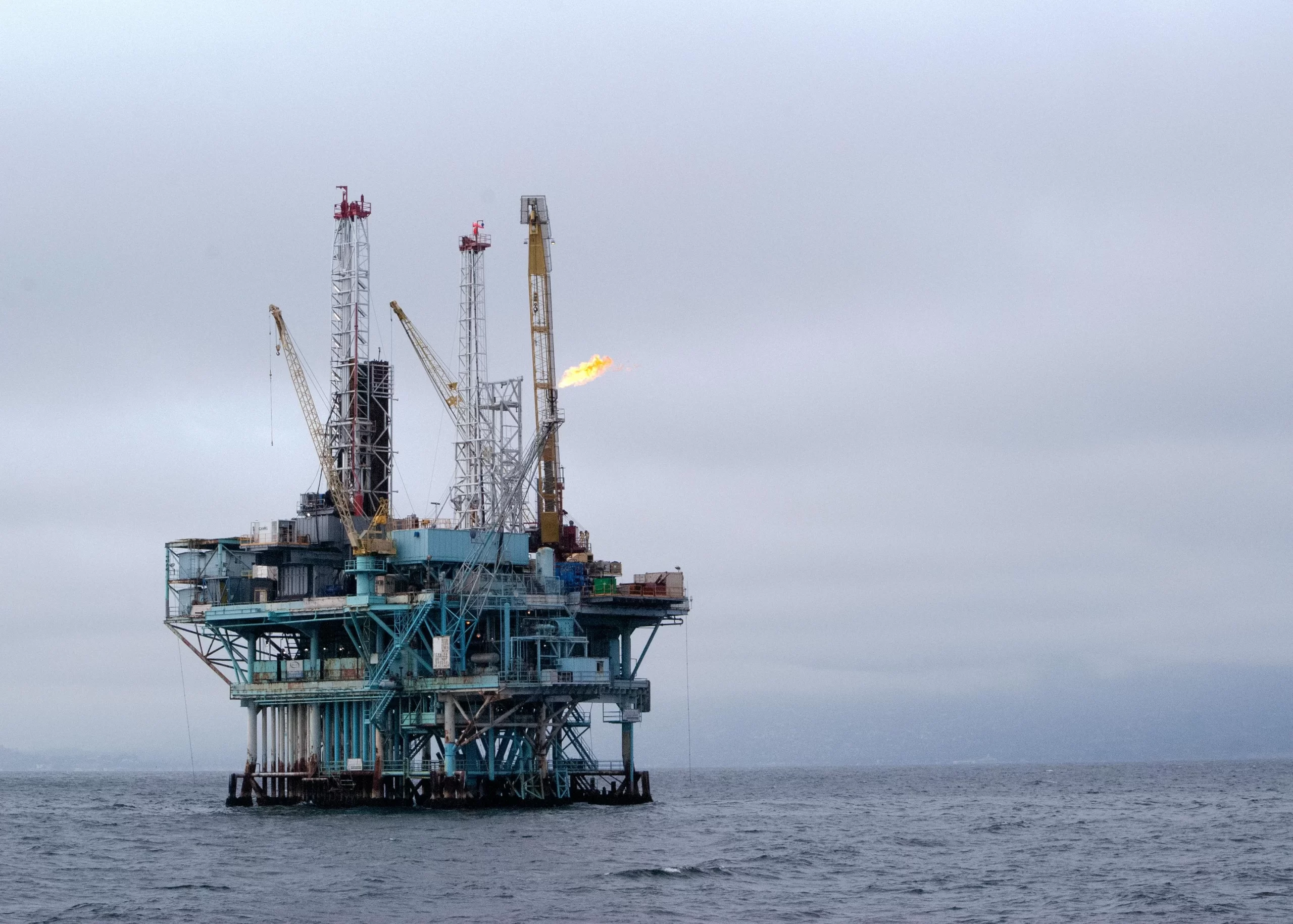
The move extends an oil rally that has pushed Brent more than 21% higher over the past month and driven U.S. crude up more than 25%. It also adds pressure to a global economy already confronting higher borrowing costs, renewed inflation concerns and a 10-year U.S. Treasury yield that has moved above 5%.
The immediate trigger is Saudi Arabia’s East-West pipeline, which remains offline after attacks damaged energy infrastructure. The route normally allows the kingdom to move crude from its eastern fields to the Red Sea port of Yanbu, avoiding the Strait of Hormuz — the narrow Gulf waterway that carried about one-fifth of global oil supplies before the U.S.-Israeli war on Iran began Feb. 28.
With the bypass route shut and vessel traffic through Hormuz falling to just four commodity-ship transits on Monday, oil traders are increasingly pricing in the possibility that disrupted supply could last longer than previously expected.
The key question for the market is no longer simply whether Saudi Arabia has enough oil to export. It is whether it can move that oil safely, reliably and quickly enough through a region where pipelines, ports and sea lanes all face rising risk.
A vital Saudi safety valve is offline
Saudi Arabia’s East-West pipeline, also known as the Petroline, is one of the world’s most strategically important pieces of oil infrastructure.
It connects oil facilities near Abqaiq on the kingdom’s eastern Gulf coast with Yanbu on the Red Sea. Its broader design capacity is estimated at up to 7 million barrels per day, though current exports through the route have been estimated at more than 4 million barrels a day.
The route is crucial because it offers Saudi Arabia an alternative to the Strait of Hormuz. When Gulf shipping is threatened or restricted, the East-West pipeline can send crude across the kingdom for export from the Red Sea.
That safety valve is now compromised.
Reuters reported that attacks Friday, which Riyadh blamed on Iranian-backed fighters in Iraq, disrupted the pipeline. Saudi Arabia has not released a public timetable for restarting operations, and buyers and traders told Reuters that the kingdom could exhaust crude available for export within days if the pipeline remains out of service.
The immediate cushion appears limited. Analysts and industry sources estimate Yanbu has enough stored oil to support exports for roughly five to seven days. If the shutdown lasts longer, Saudi Arabia may be forced to reduce exports, reroute volumes where possible or draw down inventories more aggressively.
The uncertainty over repairs is driving the market. Goldman Sachs said the damage could threaten the remaining 2 million barrels per day of recent Yanbu exports, with repair estimates ranging from “very soon” to eight weeks.
Those are wide-ranging estimates, and they underline the problem for traders: the oil market is not only reacting to lost capacity, but also to a lack of clarity about how quickly the lost capacity can return.
Hormuz traffic drops to four vessels
The situation is made more serious by the conditions in the Strait of Hormuz.
The route between Iran and Oman is one of the world’s most important energy chokepoints. It connects the Persian Gulf to the Gulf of Oman and the Arabian Sea, serving as a principal passage for crude oil, refined fuels and liquefied natural gas from major Gulf producers.
Before the current conflict, around one-fifth of global oil supplies moved through the strait.
Preliminary Kpler data cited by Reuters showed commodity-vessel traffic through the waterway dropped to four transits Monday, down from 10 the prior day.
That decline does not necessarily mean all oil has stopped flowing. Vessel activity can fluctuate for operational, security and commercial reasons. But the low number is a signal of how deeply conflict risk has affected shipping behavior.
For a refinery in Asia or Europe, a delayed cargo can create a chain reaction: tighter inventories, higher freight costs, more expensive replacement barrels and uncertainty over production schedules. For a tanker owner or insurer, the risk of damage or closure can lead to higher premiums, route changes or a decision to avoid the area altogether.
The result is a market where the cost of moving oil can rise even before a formal supply cut is announced.
Fresh attacks add to the risk premium
Oil prices rose Tuesday after Iran-backed Houthi forces in Yemen launched fresh attacks on Saudi Arabia, while Gulf Arab states postponed planned talks with Iran intended to address shipping risk.
The Houthis said they fired dozens of missiles and drones at a Saudi military airbase in Khamis Mushait, targeting aircraft hangars, radar systems, runways and ammunition depots. The action was described as retaliation for Saudi airstrikes in Yemen.
The direct target in that incident was military rather than oil infrastructure. But markets treat it as relevant because it signals that the conflict remains active and that the risk of further attacks on energy assets has not diminished.
“Fresh attacks by the Houthis targeting Saudi Arabia may be influencing oil market investors’ expectations about the severity and duration of the conflict,” Hamad Hussain, a senior climate and commodities economist at Capital Economics, told Reuters.
That expectation is what produces a geopolitical risk premium.
Oil traders do not need to wait for an actual loss of every threatened barrel. If there is a meaningful possibility of more pipeline damage, port closures, tanker attacks or shipping restrictions, buyers may bid up futures contracts in anticipation of tighter physical supply.
The market’s current concern is therefore broader than the East-West pipeline. It includes the prospect that multiple export routes, Hormuz, the Red Sea and the Bab el-Mandeb strait — could face simultaneous pressure.
Why $108 matters
Brent crude is the leading international oil benchmark. It is used to price large volumes of crude sold around the world, particularly in Europe, Africa, the Middle East and Asia.
A Brent price above $108 is not merely a headline figure. It influences the cost structure of refiners, transport companies, airlines, manufacturers and governments that subsidize fuel or import energy.
The benchmark was trading at $108.18 Tuesday, while U.S. WTI stood at $103.85.
| Market measure | Latest level or condition | Why it matters |
|---|---|---|
| Brent crude | $108.18 a barrel | International benchmark; up more than 21% over the past month |
| WTI crude | $103.85 a barrel | Main U.S. benchmark; up more than 25% over the past month |
| Saudi East-West pipeline | Offline | A key export route from eastern Saudi fields to the Red Sea |
| Saudi capacity at risk | Up to 4 million barrels per day | Roughly 4% of global oil supply, according to Reuters |
| Yanbu inventory cushion | About 5 to 7 days | Limited buffer if pipeline repairs are delayed |
| Hormuz commodity traffic | Four transits Monday | A sharp sign of disruption in a major energy chokepoint |
| 10-year U.S. Treasury yield | Above 5% | Raises mortgage, corporate and government borrowing costs |
Prices can retreat quickly if infrastructure is restored, shipping risks decline or diplomacy produces a credible route toward de-escalation. They can also rise sharply if the disruption lasts longer, traffic through Hormuz remains constrained or attacks expand to other facilities.
Goldman Sachs said the probability of Brent moving above $120 has increased in a scenario where average Gulf output in 2027 stays 4 million barrels per day below prewar levels. Capital Economics said Brent could move toward $130 if the East-West pipeline stays closed for several weeks without a demand adjustment or greater oil flows through Hormuz.
These are scenario analyses, not forecasts. They demonstrate the market’s upside risk rather than a certainty about where prices will settle.
The shrinking inventory buffer
Oil markets normally have several layers of protection against disruption: commercial inventories, strategic petroleum reserves, spare production capacity, alternative pipelines and flexible shipping routes.
The current concern is that many of those buffers are being used at once.
CNBC reported that global oil inventories have already fallen by approximately 1 billion barrels during the ongoing Middle East conflict. While another estimated 1 billion barrels of storage capacity may remain before “tank bottoms,” the margin for absorbing a long disruption is narrowing.
Paul Gooden, head of natural resources at investment manager Ninety One, told CNBC that the market still had “breathing space” but warned that every day Hormuz remains closed or severely disrupted makes the oil market tighter and leaves risk “asymmetrically to the upside.”
Inventories matter because they can temporarily bridge a mismatch between supply and demand. A refinery can draw from stored crude while waiting for a cargo. A country can release strategic reserves. A producer can use storage while a pipeline is repaired.
But inventories are finite. If a supply disruption lasts beyond a few days or weeks, the market needs actual barrels to return, through repaired infrastructure, higher production elsewhere, restored shipping or lower demand.
Saudi Arabia’s pipeline closure is therefore a test of how much resilience remains in the global energy system.
Inflation and the Fed complicate the picture
The oil surge comes at an awkward time for policymakers.
Higher energy costs can feed directly into gasoline, diesel, jet fuel and heating bills. They can also raise the cost of moving food, goods and raw materials. If those increases persist, they can widen into broader inflation pressure.
That possibility is one reason financial markets are expecting the Federal Reserve to raise interest rates by 25 basis points on Wednesday. Reuters reported that traders expect a rate increase this week and a further 40 basis points of tightening by the middle of next year.
The 10-year U.S. Treasury yield rose as high as 5.0328% Tuesday, its highest level in nearly two decades. Rising yields affect nearly every corner of the economy: mortgages, auto loans, business investment, government borrowing and equity-market valuations.
The combination of expensive oil and higher interest rates creates a difficult environment.
Oil-importing countries face higher fuel bills and weaker trade balances. Households may face higher prices at the pump at the same time credit cards, adjustable-rate loans and other variable borrowing become more costly. Businesses may see both energy costs and financing costs increase.
Oil-producing countries can benefit from higher export revenue, but even they face risks if infrastructure or shipping routes are under attack.
This is why the oil market matters beyond energy traders. A sustained Brent price above $100 can reshape inflation forecasts, central-bank policy and consumer confidence worldwide.
What businesses and consumers should watch
The next moves in the oil market will depend on developments in Saudi Arabia, the Gulf and the Red Sea rather than technical trading alone.
The most important indicators are:
- Pipeline repairs: Has Saudi Arabia assessed the full damage, and when will the East-West pipeline reopen?
- Yanbu exports: How long can stored crude sustain shipments from the Red Sea port?
- Hormuz traffic: Do transits recover from Monday’s four-vessel level, or fall further?
- Shipping insurance: Are insurers increasing premiums or limiting coverage for Gulf voyages?
- Diplomacy: Will Gulf states and Iran restart talks on maritime safety and shipping?
- Further attacks: Are oil fields, ports, pipeline stations, tankers or refineries targeted?
- Strategic reserves: Will major consuming countries consider releasing emergency stocks?
- Demand response: Will high prices begin to reduce fuel consumption, especially in price-sensitive markets?
For consumers, retail gasoline prices do not move in lockstep with Brent crude. Taxes, refinery output, local inventories, fuel specifications and distribution costs all matter. But crude oil is the largest component of the price chain, and a sustained rally typically puts upward pressure on fuel costs.
For businesses, the warning is to review exposure. Airlines, trucking firms, manufacturers, logistics providers, farmers and retailers may need to prepare for higher fuel, freight and input costs if the disruption persists.
A market waiting for proof of recovery
Oil is holding above $108 because traders are waiting for evidence that the energy system can recover.
So far, that proof has not arrived.
The East-West pipeline remains offline. Shipping through Hormuz has slowed dramatically. Fresh attacks have kept conflict risk elevated. Talks aimed at reducing maritime danger have been postponed. And the market’s inventory cushion is shrinking.
The result is an oil market that is no longer responding simply to a temporary headline shock. It is pricing a deeper question: whether the world can keep moving Gulf oil through its most important routes while the region’s conflict continues to threaten the infrastructure that makes those flows possible.
Until the pipeline reopens, shipping traffic normalizes and the threat to energy assets eases, Brent is likely to retain a substantial geopolitical premium above $100 a barrel.
FAQs
Why is oil above $108 a barrel?
Brent crude rose above $108 because Saudi Arabia’s East-West pipeline remains offline after attacks on energy infrastructure, while traffic through the Strait of Hormuz has fallen sharply. The pipeline is a key alternative route that allows Saudi exports to bypass Hormuz.
What is the Saudi East-West pipeline?
The East-West pipeline moves crude from Saudi Arabia’s eastern oil fields near the Gulf coast to Yanbu on the Red Sea. It is strategically important because it can bypass the Strait of Hormuz. Its broader design capacity is estimated at up to 7 million barrels per day.
How much oil supply is at risk?
Reuters reported that the pipeline strike threatened up to 4% of global oil supply. Saudi Arabia could exhaust crude available for export within days if the route does not resume, according to buyers and traders cited by Reuters.
Why does the Strait of Hormuz matter?
The Strait of Hormuz is a major maritime chokepoint between Iran and Oman. Before the current conflict, it carried about one-fifth of global oil supplies. Commodity-vessel traffic through the route fell to four transits on Monday, according to preliminary Kpler data cited by Reuters.
Could Brent crude rise to $120 or $130?
It is possible but not certain. Goldman Sachs said the probability of Brent moving above $120 has risen in a scenario of prolonged Gulf supply loss. Capital Economics said Brent could approach $130 if the East-West pipeline stays closed for several weeks without increased Hormuz flows or lower demand.
Will higher oil prices raise gasoline prices?
Usually, sustained increases in crude oil put upward pressure on retail gasoline prices, though the timing and magnitude vary by region. Refinery operations, taxes, local inventories and distribution costs also affect what drivers pay at the pump.
What does oil above $108 mean for inflation?
Higher crude prices can raise fuel, transportation and production costs. If the increase lasts, it can add to broader inflation pressure and make central banks more cautious about cutting interest rates. The oil rally is one factor contributing to expectations that the Federal Reserve will raise rates this week.