
Péter Magyar has ended Viktor Orbánʼs 16‑year rule in Hungary, leading his new Tisza party to a landslide victory that redraws the political map in Budapest and reverberates across Europe. With nearly all votes counted, the 45‑year‑old former insider‑turned‑critic is on course for a two‑thirds supermajority in parliament, enough to start dismantling Orbán’s self‑styled “illiberal” system and reset relations with Brussels and Kyiv.
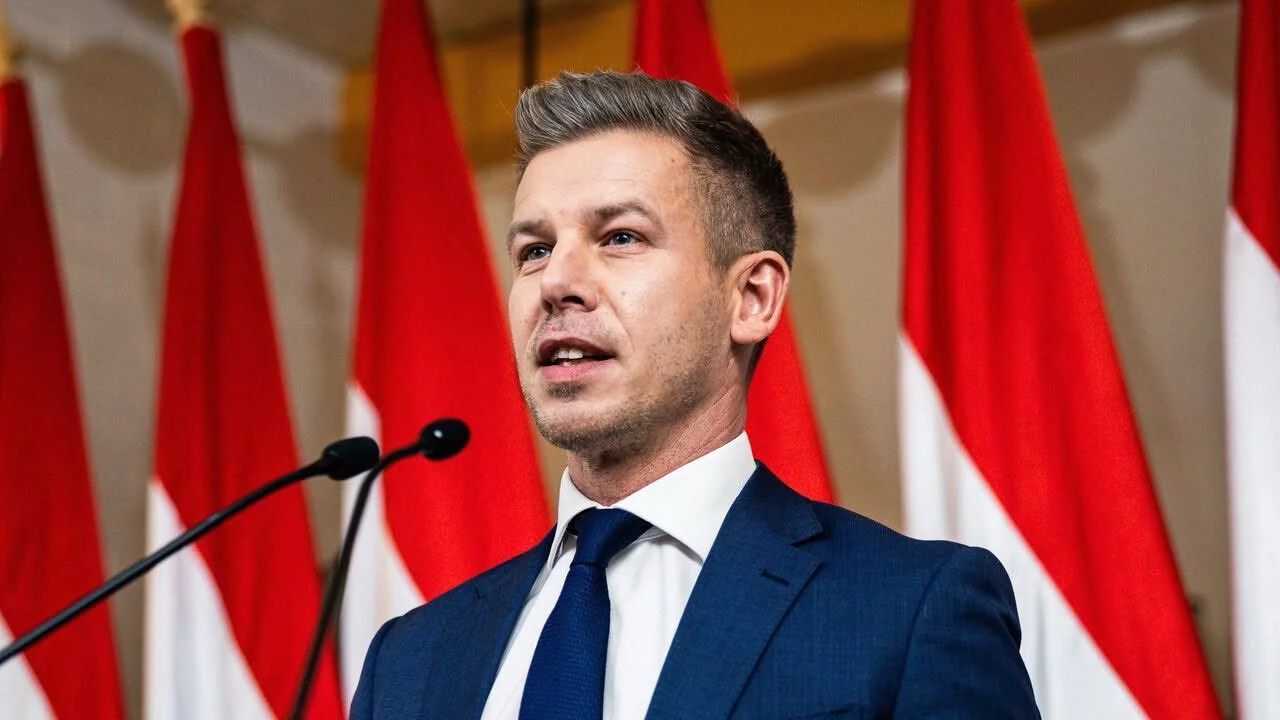
Landslide numbers end a 16‑year era
With more than 98 percent of ballots counted, preliminary figures show Péter Magyarʼs center‑right Tisza party on track to win about 53–54 percent of the vote and an estimated 138 of the 199 seats in parliament. Orbán’s ruling Fidesz party, which has governed since 2010 and earlier from 1998 to 2002, has slumped to roughly 38 percent and about 55 seats, one of the heaviest defeats for an incumbent in post‑communist Hungarian history.
The far‑right Our Homeland party is projected to win just six seats, leaving Tisza commanding a two‑thirds majority, above the 133‑seat threshold needed to amend the constitution Orbán re‑wrote to entrench his power. Turnout was the highest since the 1990s, according to NPR, as voters flocked to the polls in a contest widely framed as a referendum on the country’s democratic direction.
On election night, Orbán appeared before downcast supporters in Budapest to concede. “The election results are clear and painful,” he said, adding that Fidesz would “serve the Hungarian nation…from the opposition.” He said he had called Magyar to congratulate him.
A former insider who broke away
Magyar, a 45‑year‑old lawyer and former senior official in state‑owned companies, was once part of Orbán’s extended political ecosystem. Disillusioned by corruption scandals and what he described as the “moral decay” of the system, he broke away last year, founded the Tisza party and quickly drew thousands to rallies by presenting himself as a conservative, pro‑European alternative.
BBC reporting describes him as a “former party member who persuaded a majority of Hungarians to end” the era many critics labeled an “electoral autocracy.” In a victory speech by the Danube, with the illuminated parliament behind him, Magyar told supporters: “We accomplished it…Together, we have toppled the Hungarian government.”
He has promised to keep some of Fidesz’s popular social policies, such as family benefits, while restoring judicial independence, easing pressure on independent media and civil society and rebuilding ties with the European Union.
Campaign framed as battle for democracy, and Europe
For much of the campaign, Orbán cast the race as a choice between his nationalist, sovereignty‑first agenda and what he called “Brussels’ puppets” who would bring migration, “gender ideology” and war to Hungary. He leaned heavily on international allies; U.S. Vice‑President JD Vance, a close partner of President Donald Trump, traveled to Hungary in the final week to stump for Fidesz, while Russian President Vladimir Putin remained a key tacit backer.
But a slowing economy, high inflation and anger over corruption allegations eroded that message. PBS notes that voters “rejected the authoritarian policies and far‑right ideology” associated with Orbán in favor of a pro‑European alternative, giving the opposition one of the largest winning margins since the end of communist rule.
For many in Brussels and other EU capitals, the election became a test of whether a long‑entrenched illiberal leader could be defeated through the ballot box. The answer, European leaders said in congratulatory messages, now appears to be yes.
Budapest’s streets erupt as “Orbán era” ends
Across Budapest, jubilation spilled into the streets as it became clear early in the evening that Tisza was outperforming even optimistic polling. Euronews and other outlets showed honking cars, fireworks and supporters waving red‑white‑green flags from sunroofs along the Danube embankment after Orbán’s concession.
“Tonight, truth triumphed over falsehoods,” Magyar told tens of thousands at a riverside victory rally, reworking a famous John F. Kennedy line to urge Hungarians to ask what they can do for their homeland. Champagne corks popped as he spoke of a “regime shift” and a “new republic” built on the rule of law.
In provincial towns that had long been Fidesz strongholds, early results showed Tisza either leading or running competitively, underscoring how broad the swing was.
What Magyar’s supermajority could change
With roughly 138 seats projected, Magyar’s Tisza party is expected to control well over the 133 seats needed to amend the constitution and undo key planks of Orbán’s system. Analysts say the new government could:
- Reshape the constitutional court and judicial appointments process, widely seen as stacked with Fidesz loyalists.
- Reform media and NGO laws used to pressure critical outlets and civil society groups.
- Overhaul electoral rules and gerrymandered districts that helped Fidesz turn pluralities into supermajorities in past cycles.
The Wall Street Journal notes that with 98 percent of ballots tallied, Tisza’s lead constitutes “one of the most substantial winning margins” since 1989, giving Magyar a “sweeping mandate” to legislate. Still, he will need to move carefully to avoid appearing to simply replace one dominant machine with another, a concern he has tried to address by promising broad consultations and “national reconciliation.”
EU, Ukraine, and the end of an awkward partnership
International reaction was swift. Al Jazeera and other outlets report that European leaders “welcomed” Magyar’s victory, seeing a chance to ease years of clashes over rule‑of‑law issues, migration and Hungary’s blocking of EU decisions. Billions of euros in EU cohesion and recovery funds were frozen over concerns about judicial independence and corruption; a reform‑minded government in Budapest could unlock at least part of that money.
Magyar has signaled a sharp turn on Ukraine, vowing to end Orbán’s practice of vetoing or delaying EU aid and sanctions packages and to align Hungary more fully with NATO consensus. That would be welcomed in Kyiv, where Orbán’s close ties to Vladimir Putin had made Budapest an outlier in the Western response to Russia’s invasion.
For right‑wing populist movements in Europe and beyond, including allies of President Donald Trump, the result is a symbolic blow. Orbán had been held up as a model for nationalists from Washington to Warsaw; his defeat demonstrates the vulnerability of even entrenched populists when economic conditions sour and opposition unites.