
RENO, Nevada — A fast-moving, human-caused wildfire has forced about 42,000 people to evacuate near Reno, Nevada, while another 45,000 residents have been warned to prepare to leave as the Hawk Fire burned through the Sierra foothills toward the city’s northern and western edges.
The fire had grown beyond 13,000 acres by Sunday and remained 0% contained, according to local officials. Shifting winds complicated firefighting efforts and raised concern that the blaze could expand further into populated areas.
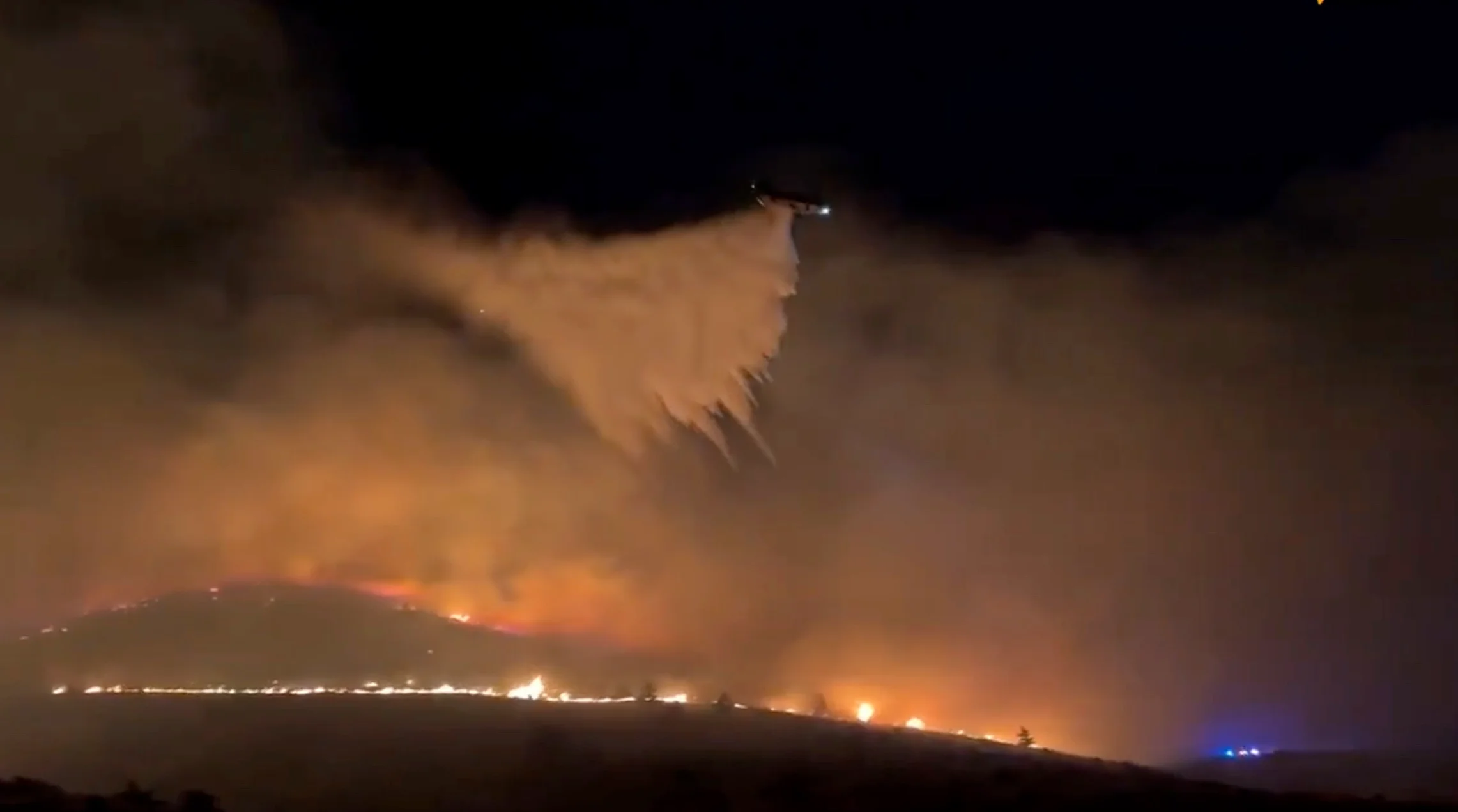
Approximately 90,000 people were within the combined “Go Now” and “Get Set” evacuation zones, Washoe County officials said. Residents in the warning areas were urged to leave if possible and prepare to remain away from home for several days.
At least six people, including three first responders, were injured. Authorities said several structures had been damaged or destroyed, though they had not released a definitive count.
The fire began Saturday near the Nevada-California border and spread rapidly in dry vegetation under strong winds. Investigators have determined that it was caused by human activity, though the specific cause remains under investigation.pbs+1
Nevada Gov. Joe Lombardo declared a state of emergency for Washoe County and activated the Nevada National Guard to assist the response.
The Hawk Fire is now among the most urgent wildfire threats to hit the Reno area in recent years, placing thousands of homes, businesses, schools and major transportation routes in danger as crews try to slow down the blaze.
Fire reaches Reno’s edge
The Hawk Fire began in the Sierra foothills northwest of Reno and expanded quickly toward populated communities.
By Sunday morning, evacuation orders had reached areas near the University of Nevada, Reno, with fire-warning zones extending within about 1,000 feet of the campus. The university’s fall semester was scheduled to begin Monday, placing added pressure on administrators, students and emergency officials.
The official “Go Now” zone included about 42,000 residents. These are mandatory evacuation areas where officials say people should leave immediately because of an imminent threat to life and property.
An additional 45,000 people were in “Get Set” areas, meaning they were not necessarily under mandatory orders but were advised to pack essential items, monitor alerts, prepare vehicles and be ready to leave without delay if the fire shifted direction.
Washoe County’s emergency guidance said the combined evacuation zones covered about 90,000 residents. It urged people not to call 911 for evacuation information and instead use official emergency resources, including the county’s evacuation map, fire line, and public-information channels.
The fire’s proximity to Reno makes it particularly dangerous. Reno is Nevada’s third-largest city, with a population approaching 300,000, and the wider Reno-Sparks metropolitan area includes hundreds of thousands more residents.
Wildfires near urban areas can spread unpredictably because winds can carry embers far ahead of the main fire line. A house, fence, vehicle, roof or landscaping can ignite from burning material carried by wind, creating new fires in neighborhoods that may appear distant from the main blaze.
That risk is heightened in dry conditions and areas where housing sits close to grassland, brush, or forested terrain.
Human-caused, but exact source unknown
Authorities said the Hawk Fire was caused by human activity, though the investigation remains ongoing.
A human-caused fire can result from many sources, including equipment use, vehicles, utility work, campfires, fireworks, debris burning, discarded cigarettes or intentional acts. Officials have not identified the specific cause of the Hawk Fire or announced whether any criminal investigation is underway.
Determining a fire’s origin is a specialized process. Investigators examine burn patterns, weather conditions, witness reports, physical evidence, and possible ignition sources. The process can take days or weeks, particularly when the fire scene is large and dangerous.
The finding that the blaze was human caused may intensify scrutiny because the fire has placed such a large population under evacuation orders. But officials have cautioned against speculation until the investigation is complete.
The immediate priority remains protecting life, evacuating residents and stopping the fire’s advance.
Wind-driven growth challenges firefighters
The Hawk Fire’s rapid expansion has been driven by wind, dry fuels and difficult terrain.
Fire officials warned that shifting and strengthening winds could make the blaze more unpredictable.
Wind can dramatically change wildfire behavior. It can push flames uphill or across open ground, carry burning embers into new neighborhoods, and make aircraft operations more difficult. A fire that appears to be moving away from a community can change direction quickly when weather conditions shift.
The lack of containment Sunday reflected the fire’s speed and the need for crews to focus first on evacuations and structure protection. Firefighters often prioritize saving lives and defending homes before they can construct broader containment lines around a large, wind-driven blaze.
The fire crossed more than 13,000 acres by Sunday morning, according to officials. Some reports later placed its size above 15,000 acres, showing how quickly the situation was changing.
Acreage figures can be revised as aircraft, satellites, and ground crews map the perimeter. The larger concern is not only the total size but the direction of the fire, the condition of fuel ahead of it and the weather forecast.
Firefighters from across the region, including crews from California’s Bay Area, were deployed to northern Nevada to reinforce the response.
The multi-agency effort includes local fire departments, state resources, federal agencies, law-enforcement officers, emergency managers, and the Nevada National Guard.
Injuries, power outages and structure damage
Six people were injured in the Hawk Fire, including three first responders, according to incident officials.
Authorities did not release detailed information about the injuries, but the report underscores the danger facing both residents and emergency workers. Wildfire response can involve smoke inhalation, burns, vehicle accidents, heat stress and injuries caused by uneven terrain, falling debris or fast-changing fire behavior.
Officials also reported that several structures had burned.
The number of destroyed homes and businesses was not immediately known. Firefighters often delay full damage assessments until conditions are safe enough to enter affected neighborhoods.
About 5,000 homes and businesses were without power Sunday, according to unified incident commander Shane Ackerson.
Power outages can result from damage to lines and equipment, precautionary shutdowns, or the need to de-energize infrastructure to protect firefighters. Residents using generators were urged to operate them outdoors and away from windows and doors to prevent carbon-monoxide poisoning.
For many evacuees, uncertainty can be as difficult as the immediate danger. People may leave with only a few belongings, unsure whether their homes remain standing or when they will be allowed to return.
Emergency officials asked residents not to re-enter evacuation zones until formal orders are lifted. Roads may be blocked by fire equipment, downed trees, utility damage, or active flames.
Evacuation zones and road closures
The evacuation area expanded through Somersett, northwest Reno, Golden Valley, Lemmon Valley and areas near Verdi and U.S. Highway 395.
U.S. 395 was closed in both directions between Parr Boulevard and Red Rock Road as of Sunday morning, according to Washoe County’s emergency update.
Other closures included portions of North Virginia Street, Stead Boulevard, Lemmon Valley Drive, East Golden Valley Road, Robb Drive, Mae Anne Avenue, Del Webb Parkway, and several connecting roads.
Road closures are intended to keep residents away from danger and preserve access for fire engines, ambulances, law-enforcement vehicles, and evacuation of traffic. Officials urged drivers not to bypass barriers or use navigation apps to search for alternate routes through restricted neighborhoods.
The Reno-Sparks Convention Center, at 4590 South Virginia Street, was opened as an evacuation shelter. Small animals were directed to Washoe County Regional Animal Services, while large animals could be taken to the Ironwood Event Center in Reno.
Emergency shelters provide basic safety and assistance, but residents were asked to bring medications, identification, chargers, important documents, clothing, and essential supplies if time allowed.
People with mobility impairments, medical needs or transportation problems were encouraged to seek aid early rather than waiting until things worsened.
State emergency response
Gov. Lombardo declared a state of emergency for Washoe County, enabling the state to mobilize additional resources and coordinate the response.
A state emergency declaration can help accelerate the use of personnel, equipment, and funding. It can also position the state to seek federal assistance if the fire grows beyond local and state capacity.
The Nevada National Guard was activated to assist, though authorities did not immediately specify its full role. National Guard personnel may help with traffic control, logistics, communications, shelter support, transportation, and other emergency functions.
The scale of the response reflects the potential threat to Reno’s urban area. Wildfires in remote locations can often be managed with fewer disruptions, but a fire near a major city requires a far broader operation involving evacuation planning, infrastructure protection, and public communication.
The sheriff’s office has emphasized that residents should use official sources for updates, including Emergency Washoe, Perimeter Map, and local government alerts.
Social media posts, old maps, and word-of-mouth reports can become inaccurate quickly as fire conditions change.
Why the fire is so dangerous
Northern Nevada’s landscape is vulnerable to fast-moving fires in late summer, when grasses, brushes and other vegetation can become dry after months of heat and limited rain.
The wildland-urban interface, where homes and communities meet undeveloped vegetation, creates a particularly difficult firefighting environment. Homes, outbuildings, fences and gardens all contain fuel and narrow roads and steep terrain make evacuation difficult.
The Hawk Fire also demonstrates the importance of wind. Wind can turn an ordinary vegetation fire into a major urban threat in hours.
Firefighters are likely to focus on multiple tasks at once:
- Defending homes and critical infrastructure.
- Building containment lines where terrain and conditions allow.
- Using aircraft when smoke and winds permit.
- Removing vegetation and creating defensible space around structures.
- Coordinating evacuation and traffic control.
- Monitoring weather changes that could shift the fire.
Residents in the warning areas were told to prepare for several days away from home. That is a realistic expectation when a fire is large, uncontained, and close to populated neighborhoods.
What residents should do
People in a “Go Now” zone should leave immediately. They should not wait to see flames or smoke at their home.
Residents in “Get Set” zones should pack essential items, fill vehicles with fuel, keep phones charged, prepare pets and livestock, and identify more than one evacuation route.
Emergency officials recommend taking:
- Identification, medications, and medical equipment.
- Important documents and insurance information.
- Phone chargers and batteries.
- Clothing, water, and basic food.
- Pet supplies.
- Cash and credit cards.
- A list of emergency contacts.
Before leaving, residents should close windows and doors, turn off gas if directed by officials, move flammable outdoor items away from structures and leave lights on if power is available to help firefighters see homes through smoke.
They should not delay evacuation to collect valuables. Lives are more important than property.
Residents outside evacuation zones should avoid traveling into the area, keeping roads open for emergency vehicles, and following local instructions.
What comes next
The next 24 to 48 hours will be critical.
Fire crews will be watching wind speed, direction, humidity, and temperature. Any reduction in winds could help firefighters establish containment lines. Stronger winds could push the fire toward additional neighborhoods and require more evacuation orders.
Authorities are expected to update acreage, containment, injuries and structure damage as mapping and ground assessments continue.
For residents, the immediate message is clear: evacuation orders are not suggestions. The Hawk Fire is moving quickly, remains uncontained and has already reached the outskirts of Reno.
The fire’s eventual impact will depend on weather, firefighting conditions and whether crews can prevent embers from starting new fires in threatened neighborhoods. But with tens of thousands displaced and tens of thousands more preparing to leave, the event has already become one of Nevada’s most significant urban wildfire emergencies of the year.