
A federal judge has struck down President Donald Trump’s 100,000‑dollar fee on new H‑1B visas, ruling that the steep surcharge on employers seeking to hire highly skilled foreign workers amounts to an illegal tax that the White House had no authority to impose. The decision, handed down Monday by U.S. District Judge Leo T. Sorokin in Boston, is a major victory for a coalition of 20 Democratic state attorneys general, universities and technology companies that argued the fee was both unlawful and economically damaging.
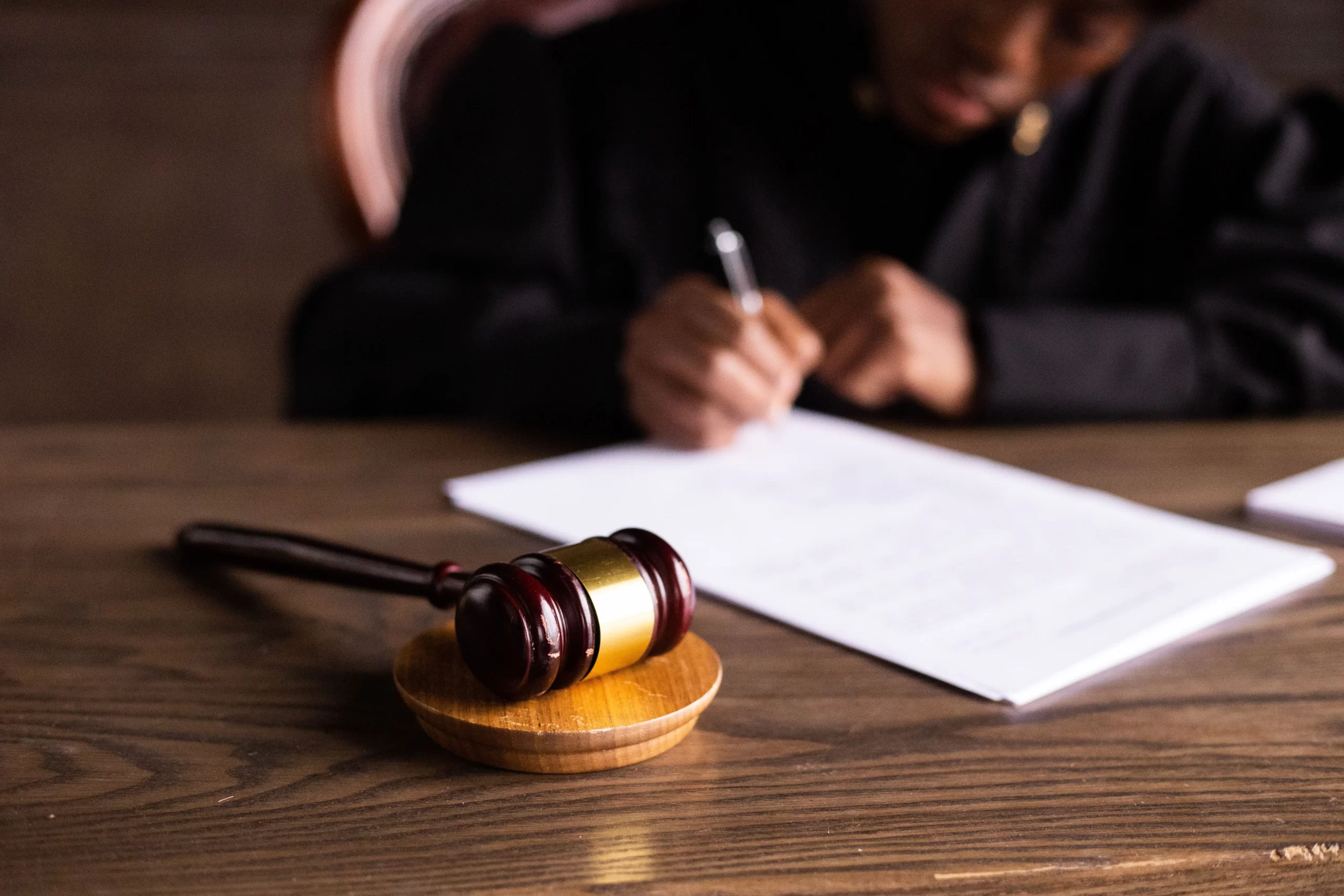
Judge: Fee is a tax only Congress can impose
The now‑voided fee stemmed from a September 19, 2025 presidential proclamation that required employers to pay an extra 100,000 dollars per petition for certain new H‑1B visas, on top of existing filing fees that already run into the thousands of dollars per worker. The Trump administration framed the move as a way to discourage what it called overreliance on foreign labor and to fund domestic training, but business groups and Democratic‑led states swiftly sued.
In a 42‑page opinion, Judge Sorokin concluded that the six‑figure charge could not be justified as a mere “regulatory payment” or penalty within the president’s power to shape immigration policy. “Analyzing the nature and implementation of the 100,000‑dollar payment shows it functions as a tax, regardless of its designation,” he wrote, adding that the Constitution gives exclusive taxing authority to Congress, not the executive branch.
The judge rejected the administration’s argument that the fee was simply a lawful condition on entry similar to other visa charges. “Defendants provide a definition for what constitutes a ‘regulatory payment,’ reference no precedents or laws using that terminology, and fail to present a rational argument clarifying how this concept differs from a tax or a penalty,” Sorokin wrote.
He held that U.S. Citizenship and Immigration Services (USCIS) and the State Department “cannot enforce” the 100,000‑dollar payment and ordered that the proclamation and related implementation steps be vacated in their entirety.
A major win for states, tech companies and universities
The case was brought by 20 Democratic state attorneys general, led by California’s Rob Bonta, who argued that the fee would harm their economies by discouraging employers from sponsoring H‑1B workers in sectors facing acute talent shortages. States said the surcharge would hurt universities, hospitals, and research institutions as well as the tech industry, which relies heavily on H‑1B visas for software engineers, data scientists and other specialists.
Al Jazeera and Reuters report that the 100,000‑dollar fee had already been in effect for several months, dramatically increasing the cost of new H‑1B petitions and prompting some employers to suspend or cancel hiring plans for foreign nationals. The American Institute of Physics noted that the surcharge applied not only to profit‑seeking businesses but also to non‑profit research institutions, potentially undermining U.S. leadership in high‑tech fields.
Business groups had also mounted separate challenges. The U.S. Chamber of Commerce filed suit in Washington, D.C., arguing that the president lacked authority to impose the fee and that it violated the Administrative Procedure Act (APA), but a federal judge there upheld the proclamation in December, citing broad statutory powers over entry. That case is on appeal.
By contrast, Sorokin sided with the states and employers, finding that the scale and structure of the 100,000‑dollar charge crossed a line from regulation into taxation. Bloomberg described Monday’s ruling as “a reprieve for U.S. technology firms that depend on hiring skilled international talent.”
Legal context: Immigration power vs. tax power
The ruling highlights a key distinction in U.S. law between the president’s broad authority to regulate entry of non‑citizens and the more limited role the executive can play in imposing financial burdens.
In upholding the proclamation late last year, the D.C. District Court leaned heavily on statutes that give presidents discretion to suspend or restrict entry of certain non‑immigrants “for such period as he shall deem necessary,” a power that has underpinned past travel bans and visa suspensions. That court saw the 100,000‑dollar payment as a lawful condition attached to entry.
Sorokin took a narrower view. While acknowledging the president’s authority over who may be admitted, he held that charging an additional six‑figure sum per visa, beyond the fees Congress has already authorized through statute, is not simply a matter of entry control. Because the money is collected by the federal government and not earmarked in any statute, he said, it looks and functions like a tax, which requires explicit congressional approval.
He also found that the administration violated the APA by implementing the fee without formal rulemaking or public comment, despite its sweeping impact on employers and visa applicants. The Washington Post noted that the policy was “created hastily, without a formal procedure or solicitation for public feedback,” even as industries that depend on H‑1Bs warned of broad disruption.
What it means for employers and foreign workers
For companies and institutions that sponsor H‑1B visas, the immediate effect is that the extra 100,000‑dollar payment is off the table, unless a higher court quickly reverses Sorokin’s ruling. Employers remain responsible for the usual mix of filing, including base petition costs, anti‑fraud charges and, for some large H‑1B‑dependent employers, additional surcharges that Congress has explicitly authorized.
Immigration lawyers say the decision could unlock pending petitions that were on hold because companies balked at the new cost and encourage employers to move forward with offers that had been frozen since the proclamation took effect in September. For foreign workers, especially in technology and research, it removes what advocates described as a de facto barrier that would have priced many smaller firms and start‑ups out of the visa program altogether.
However, because another federal court has upheld the fee and that case remains pending on appeal, the legal landscape is not fully settled. The Justice Department could seek to appeal Sorokin’s ruling to the 1st U.S. Circuit Court of Appeals or ask for a stay, potentially creating a circuit split that might eventually draw in the U.S. Supreme Court.
Until those appeals play out, immigration attorneys are advising employers to closely monitor agency guidance, which will need to be updated to reflect Monday’s ruling and clarify whether any fees collected under the proclamation will be refunded.
A broader rebuke to Trump’s legal immigration squeeze
The 100,000‑dollar H‑1B fee was one of several tools Trump has used to tighten legal immigration channels, even in fields where U.S. employers say they struggle to find domestic talent. Over the past year, his administration has layered new security reviews, processing freezes and nationality‑based restrictions onto visa categories ranging from H‑1Bs to employment‑based green cards.
Advocacy groups such as the American Immigration Council and the American Immigration Lawyers Association have argued that these moves are less about addressing abuses than about shrinking legal immigration overall, especially from certain countries. Monday’s decision adds to a growing list of court setbacks for the administration’s attempts to reshape immigration law through executive action alone. For now, Judge Sorokin’s ruling sends a clear message: if the Trump administration wants to dramatically raise the cost of hiring foreign talent, it will have to persuade Congress to do it, not use presidential proclamations to impose what he calls an unauthorized tax.