Nigeria’s military has confirmed that several of its own officers will be court‑martialed on accusations they plotted to overthrow President Bola Tinubu’s government, in one of West Africa’s largest democracies’ most serious brush with a coup in decades. The move comes three months after authorities quietly detained at least 16 officers for “acts of indiscipline” and repeatedly denied rumors of a failed putsch, only to now acknowledge an alleged conspiracy in a region already rattled by a string of military takeovers.
From “indiscipline” to an admitted coup plot
Nigeria’s Defense Headquarters said in a statement on Monday that an investigative panel had concluded its work and found that “a number” of the 16 officers detained in October were implicated in an alleged attempt to overthrow the government. The officers, whose names and exact ranks have not been formally released, were initially arrested for what officials described at the time as “acts of indiscipline and breaches of service regulations.”
Local media and social networks nevertheless buzzed with talk of a foiled coup in the weeks after those detentions, speculation the military publicly rejected as “fake news” while insisting the personnel were only under internal investigation. The new statement marks a sharp shift: Defense spokesman Brigadier General Samaila Uba now says the inquiry “identified a number of the officers with allegations of plotting to overthrow the government, which is inconsistent with the ethics, values and professional standards required of members of the Armed Forces of Nigeria.”
Those “found culpable,” he added, will be arraigned before “an appropriate military judicial panel” to face trial under court‑martial procedures, though he did not specify when proceedings would begin or how many of the 16 would actually be charged.
A detailed report in Nigerian daily ThisDay, which has closely followed the case, said the panel’s findings effectively confirmed reports of an attempted coup and that 16 officers have been earmarked for court‑martial. The paper quoted military authorities as saying the trials were aimed at ensuring “full accountability” and demonstrating a commitment to fairness and due process while preserving discipline and operational effectiveness.
What we know, and what we don’t
So far, officials have released few specifics about the alleged plot: there is no public charge sheet, no description of when or how the officers supposedly planned to act, and no indication that any troops were actually deployed. Analysts note that some of the detainees are believed to be senior officers, including at least one brigadier general based on earlier local reporting, but these details have not been officially confirmed.
The lack of names and a full narrative has led to calls from opposition politicians and civil‑society groups for greater transparency, especially in a country with a long history of military interventions and where rumors can easily inflame tensions. Nonetheless, legal experts quoted by Africanews and other outlets say the charges hinted at conspiracy and mutiny aimed at overthrowing a constitutional government, could carry the death penalty under Nigeria’s military code if proved.
The Defense Headquarters says additional measures are being taken to “preserve order, discipline and the effectiveness of the military,” language some read as a warning that further internal purges or reshuffles could follow. Already, shortly after the October arrests, President Tinubu moved to reshuffle parts of the top brass, installing new service chiefs in what the presidency presented as a push to sharpen security operations against jihadists, bandits, and oil thieves.
A coup‑prone neighborhood on edge
The alleged plot lands at a particularly sensitive time for West Africa. Since 2020, the region has seen a cascade of coups and attempted coups in Mali, Guinea, Burkina Faso, Niger, Gabon, and, most recently, reported plots in Benin and Guinea‑Bissau late last year. Many of those power grabs followed contested elections, constitutional amendments allowing leaders to extend their rule, or deepening insecurity and economic hardship.
Nigeria, which returned to civilian rule in 1999 after a long stretch of military governments, has until now resisted that wave, even if its democracy has often been contentious and sometimes violent. Abuja has played a key role in regional diplomacy through ECOWAS, leaning on sanctions and negotiation in an effort to reverse or contain military rule in neighboring states.
News that a group of Nigerian officers allegedly considered joining the ranks of West Africa’s coup‑makers will therefore be watched closely by foreign partners and neighbors alike. Analysts say even a foiled plot can have lasting consequences: rattling investors, spooking allies, and emboldening hardliners inside and outside the barracks who are convinced that elected leaders have failed to deliver security or opportunity.
Tinubu’s domestic pressures
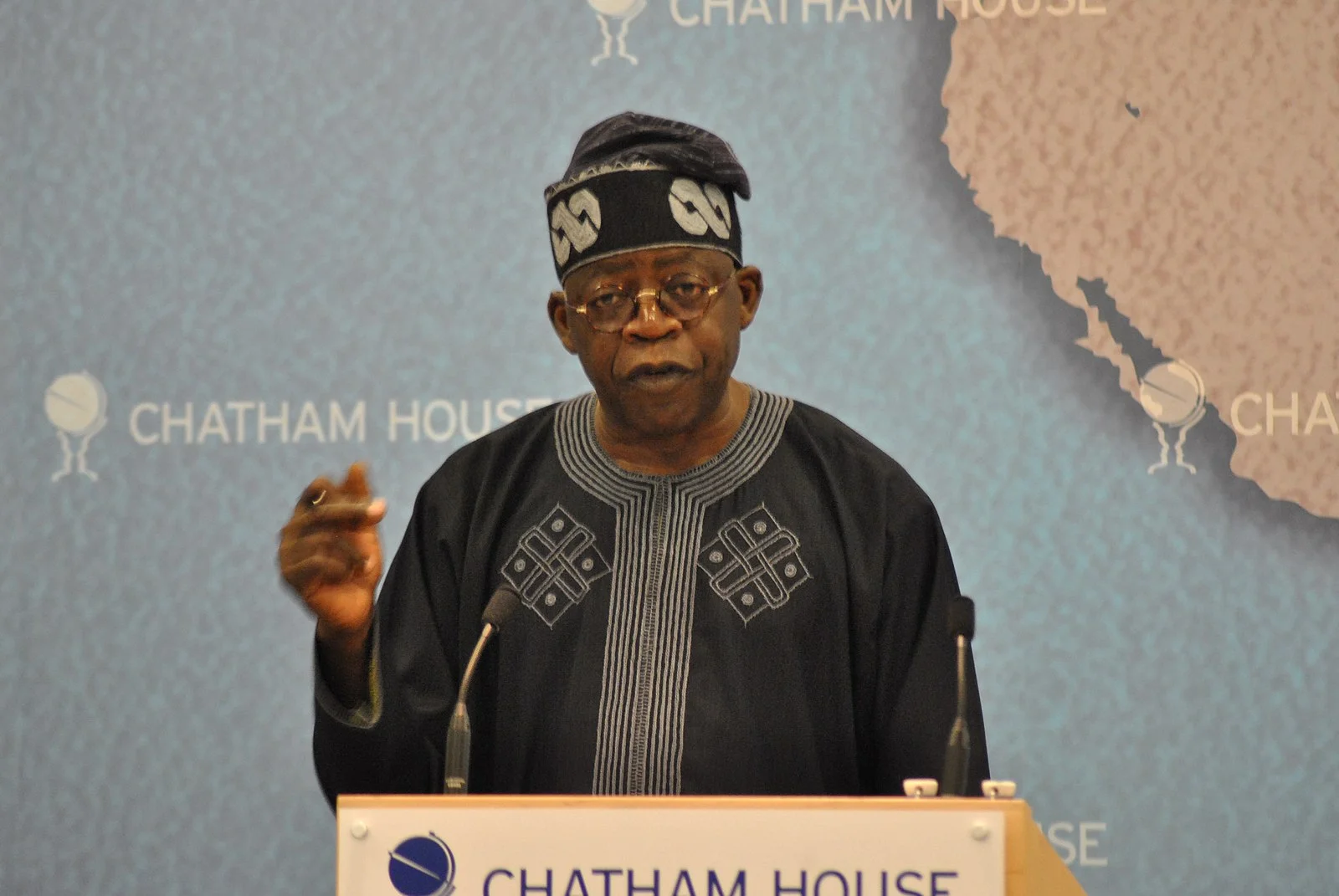
President Bola Tinubu, who took office in 2023 after a contentious election, faces multiple fronts of pressure that help explain both why some might be tempted to test the system, and why the government is keen to project control.
Economic reforms, including fuel subsidy cuts and currency moves, have contributed to a cost‑of‑living squeeze that has sparked sporadic protests and fueled anger at Abuja’s political class. Insecurity remains a central concern, from jihadist violence in the northeast and banditry in the northwest to separatist agitation in the southeast and piracy in the Gulf of Guinea.
Against that backdrop, the notion of discontented officers talking about radical solutions, even if they never advanced beyond planning or grumbling, is not far‑fetched in the eyes of many Nigerians. While younger Nigerians, who spearheaded the #EndSARS protests in 2020, have primarily framed their struggle in democratic terms, older generations remember the cycles of coups and countercoups that characterized the decades after independence. Nevertheless, there is also a profound weariness with military rule.
For Tinubu, the case offers a chance to send a clear message to the ranks that any flirtation with unconstitutional change will be punished, while also raising questions about whether his administration can address the frustrations that feed such talk.
Rule of law, or settling scores?
Human‑rights advocates will be watching the coming trials to see whether they meet basic standards of fairness. Court‑martials in Nigeria, as in many countries, are closed processes with limited public scrutiny, and past proceedings have drawn criticism over transparency, legal representation and appeals.
The Defense Headquarters has promised adherence to “principles of fairness, due process and justice” in handling the officers’ cases. Supporters of the government argue that the secrecy around names and evidence is necessary to protect ongoing operations and avoid inflaming divisions within the military, which remains stretched thin across multiple internal security missions.
Critics, however, warn that if the process is perceived as a political purge disguised as justice, it could deepen mistrust between the barracks and the civilian leadership. Without independent oversight or a clear accounting of what, exactly, the officers are accused of, they say, it will be hard to dispel suspicion that some may be being punished more for their views than their actions.
A stress test for Nigeria’s democracy
For Nigeria’s 220 million people, the revelation of an alleged coup plot is both unsettling and, for many, a reminder of how much, and how little has changed since the days when soldiers in sunglasses regularly interrupted the evening news.
If the trials proceed credibly and no broader destabilization follows, the episode could ultimately strengthen civilian supremacy by demonstrating that even suspected plotters are handled through institutional channels rather than counter‑plots. But if the process drags on in secrecy, or if fresh unrest or further arrests follow, the case could fuel darker narratives: of a system under strain, a restive officer corps and a region where the coup contagion has come uncomfortably close to West Africa’s biggest democracy.
For now, the message from Abuja is one of reassurance and resolve. The armed forces, its spokesperson insists, remain “firmly committed to the defense of the constitutionally elected government.” In a neighborhood scarred by recent putschists, that promise will be judged not just by what is said in statements, but by what unfolds in Nigeria’s military courts in the weeks and months ahead.