WASHINGTON — Sept. 12, 2026
The CIA has released 71 previously classified presidential intelligence briefs documenting what U.S. officials knew about Osama bin Laden and al-Qaida in the years before the Sept. 11, 2001, attacks, offering the public a more detailed view of repeated but often incomplete warnings delivered to two presidents.
The release, announced Friday on the 25th anniversary of the attacks, includes more than 100 pages of President’s Daily Brief material prepared for Presidents Bill Clinton and George W. Bush from February 1998 through Sept. 12, 2001. The CIA described it as its largest-ever declassification of analysis related to the attacks that killed nearly 3,000 people in New York, at the Pentagon and in Pennsylvania.
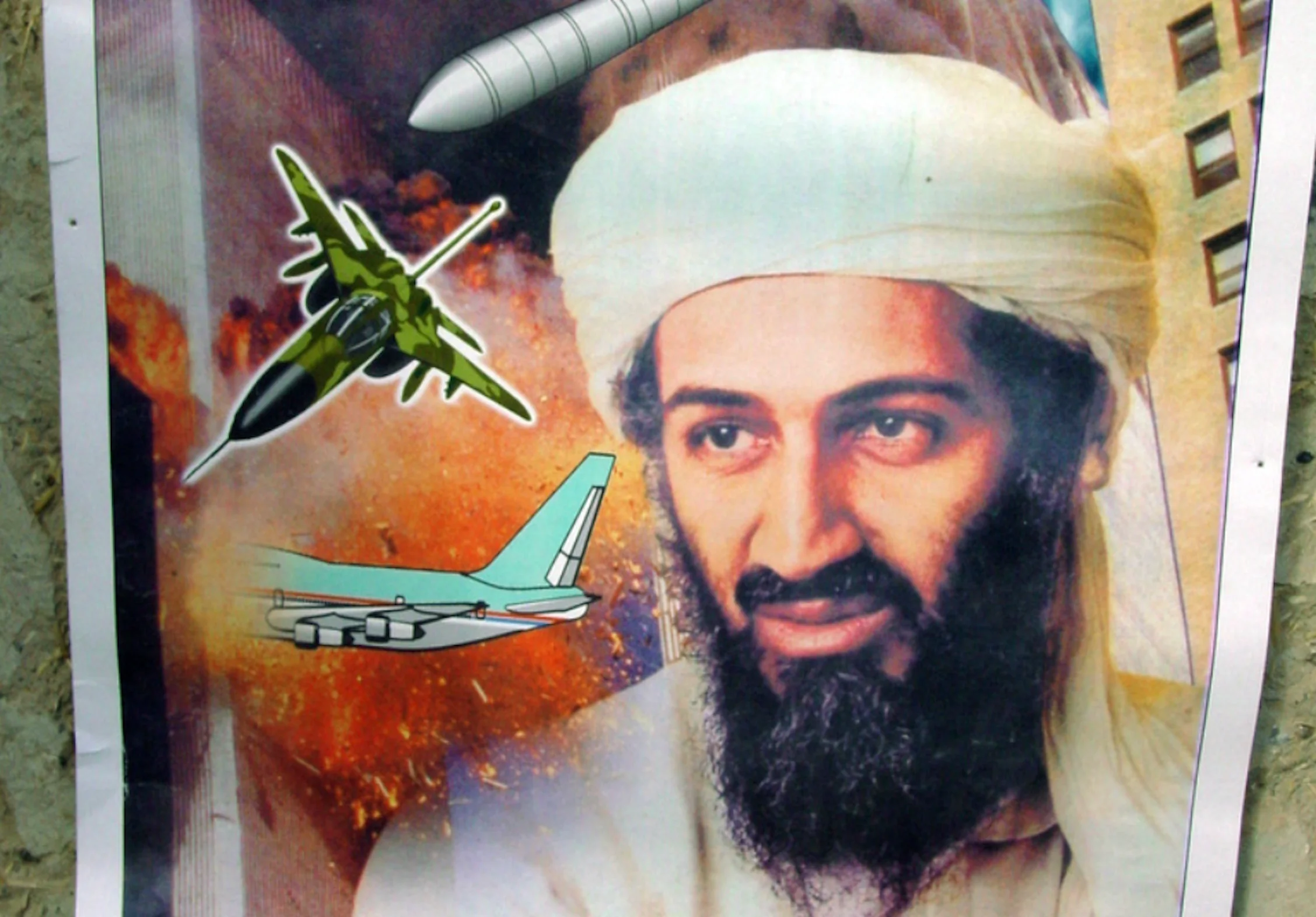
The documents do not substantially overturn the historical record established by the 9/11 Commission, congressional investigations and prior reporting. They do, however, provide an unusually direct account of the assessments that reached the White House as intelligence analysts tracked an increasingly capable extremist network whose leaders sought to strike American targets at home and abroad.
The central lesson of the collection is stark: U.S. intelligence agencies had accumulated a steady flow of warnings about bin Laden’s intentions, his organization’s adaptability and the possibility of attacks inside the United States. But those warnings were fragmentary, often heavily qualified and did not identify the exact timing, aircraft, targets or operational details that would have allowed authorities to disrupt the Sept. 11 plot.
“Americans can now see for themselves the intelligence leading up to this tragic day for our Nation,” CIA Director John Ratcliffe said in connection with the release. The agency said the documents trace analysts’ evolving understanding of al-Qaida and their effort to flag bin Laden’s attack planning despite what it called “sparse, vague, and imperfect information.”
A window into presidential intelligence
President’s Daily Briefs are among the most tightly held products of the U.S. intelligence community. They are prepared for the president and a limited group of senior officials, distilling reporting from the CIA and other intelligence agencies into concise assessments of the most urgent threats and developments.
The newly public collection spans a pivotal period in the evolution of al-Qaida. It starts with a Feb. 13, 1998, brief titled “Terrorists Seeking WMD Capability,” which referred to “bin Ladin and other Islamic extremists.” It ends with a Sept. 12, 2001, report that cited a source saying the attacks had been planned for two years and that the U.S. Capitol had also been a target.
Between those dates, analysts repeatedly described an organization that was growing more dangerous, more sophisticated and more determined to confront the United States.
The documents show intelligence officials following bin Laden’s movements, financial network, training infrastructure and relationships with the Taliban government in Afghanistan. They also chart U.S. concerns that al-Qaida could attack American embassies, military installations or targets within the United States.pbs+1
One September 1998 briefing warned that bin Laden’s supporters “may fly an explosive-packed airplane into a US city.” Yet the same document cautioned that intelligence did not provide conclusive information about his intentions for future attacks. The language captures the central challenge confronting policymakers: the threat was apparent, but the intelligence did not yield a clear operational blueprint.
The warning came soon after al-Qaida-linked bombings of U.S. embassies in Kenya and Tanzania in August 1998, which killed more than 200 people. The Clinton administration responded with missile strikes in Afghanistan and Sudan intended to target bin Laden’s network. But an intelligence brief issued eight days after the strikes concluded that bin Laden and other extremist leaders had survived, their communications infrastructure remained intact and militant training had resumed at some camps.
Warnings without precision
The briefing collection underscores that intelligence warnings can be both deeply alarming and operationally insufficient.
A stream of reports described possible attack methods and broad targets. Analysts noted that al-Qaida members were training to hijack commercial airliners, conducting activities that resembled tests of U.S. airport security, considering hostage-taking and exploring crude chemical or other unconventional weapons.
Another assessment, issued only weeks before the attacks, described al-Qaida’s “flexible operational decision making and broad definition of acceptable targets,” warning that the group could adjust its plans as conditions changed.
But intelligence findings are not equivalent to actionable evidence. A warning that a terrorist organization may use aviation, for example, does not necessarily identify a particular flight, date, airport, passenger or plotter. The newly released records show analysts were grappling with this problem in real time: recognizing a widening threat while trying to determine where and how it would materialize.
That distinction is crucial to understanding the history of Sept. 11. The CIA’s disclosures show a failure not of awareness alone, but of conversion, the inability of a sprawling national-security system to turn disparate reporting, suspicious activity and strategic threat assessments into a coherent defense against a specific plot.
The 9/11 Commission reached a similar conclusion in 2004, finding that failures of communication between the CIA and FBI, an inability to connect intelligence about al-Qaida suspects and what it called a “failure of imagination” contributed to the country’s vulnerability. The report prompted major changes in the U.S. national-security system, including the creation of the Department of Homeland Security and the Office of the Director of National Intelligence.
The August 2001 warning
The most widely known document from the period remains the Aug. 6, 2001, President’s Daily Brief titled, “Bin Ladin Determined to Strike in US.”
That briefing said that clandestine, foreign-government and media reporting indicated bin Laden had wanted to conduct terrorist attacks in the United States since 1997. It noted that al-Qaida had considered attacks in the country and that the FBI had information indicating possible terrorist activity.
The document has long been central to debate about whether the Bush administration acted forcefully enough after receiving broad warnings of a domestic attack threat. The new release adds surrounding material, showing the August brief was not an isolated alert but part of years of reporting about bin Laden’s ambitions and the evolving capabilities of al-Qaida.
Still, the records do not show that U.S. intelligence agencies possessed a complete account of the eventual conspiracy. There is no evidence in the released briefings that the government knew 19 hijackers would seize four commercial jets on Sept. 11 and use them as weapons against the World Trade Center, the Pentagon and, potentially, the Capitol or another Washington target.
That absence does not erase the significance of the warnings. Rather, it illustrates why the Sept. 11 attacks have remained an enduring case study in intelligence failure: institutions can receive substantial evidence of danger and still fail to anticipate the precise form it will take.
Afghanistan and the Taliban
The documents also depict the difficulties U.S. officials faced in dealing with Afghanistan’s Taliban government, which provided bin Laden and al-Qaida a sanctuary from which to plan and train.
One March 2001 intelligence memorandum concluded that the Taliban was unlikely to hand over bin Laden without “full diplomatic recognition and significant reconstruction aid.” The assessment reflected a broader U.S. understanding that Taliban leaders saw their relationship with bin Laden through a combination of ideological affinity, political calculation and concern for their own survival.
The Taliban’s refusal to expel bin Laden became central to U.S. policy after Sept. 11. The Bush administration demanded that the group hand over al-Qaida leaders and dismantle terrorist training camps. When those demands were not met, the United States launched military operations in Afghanistan in October 2001, beginning a war that would last two decades.
The documents released this week cannot fully explain every policy decision made before the attacks. Nor do they settle arguments over what individual officials should have done with the available intelligence. But they show that by 2001, bin Laden was not an obscure or peripheral threat in the highest levels of government. He was the subject of sustained intelligence attention.
Transparency, memory and accountability
The timing of the CIA release carries obvious symbolic weight. It came as Americans marked 25 years since the attacks, with memorial ceremonies held at the former World Trade Center site, the Pentagon and the Flight 93 National Memorial in Pennsylvania.
Ratcliffe called the declassification an “act of exceptional transparency.” The CIA said it had undertaken its most extensive declassification effort involving these materials since the 9/11 Commission’s work in 2004.
Transparency does not mean that all questions are resolved. The material remains redacted in places to protect sources, methods and foreign relationships. And the documents must be read carefully: intelligence reports often include raw or partially corroborated information, judgments that later change and warnings that reflect uncertainty as much as confidence.
For journalists, historians and the public, the value of the release lies in examining not merely the most chilling phrases, but the full context in which they were written. Intelligence documents are snapshots of what analysts believed at a particular time, based on the information then available. They reveal both what the government knew and what it did not know.
The record suggests that the United States faced an adversary whose intentions were clear in broad outline, but whose final operational plan remained concealed. Al-Qaida wanted to kill Americans, strike U.S. interests and demonstrate its reach. The country’s intelligence system recognized that danger. It did not stop the attack.
Twenty-five years later, the CIA’s newly public briefings provide a sobering reminder that the hardest part of national security is not simply collecting warnings. It is recognizing which warnings demand urgent action, sharing them across institutions and imagining threats before they become history.