
Nicaraguan President Daniel Ortega has declared that the country will “never” again hold elections, a sweeping rejection of even nominal democracy that deepens his nearly two-decade grip on power and alarms human rights advocates across the hemisphere. Speaking at a rally marking the anniversary of the 1979 Sandinista revolution, Ortega said future votes would not be allowed to serve as a path for opponents to “seize government and seize power,” without explaining how he intends to override constitutional requirements for elections.
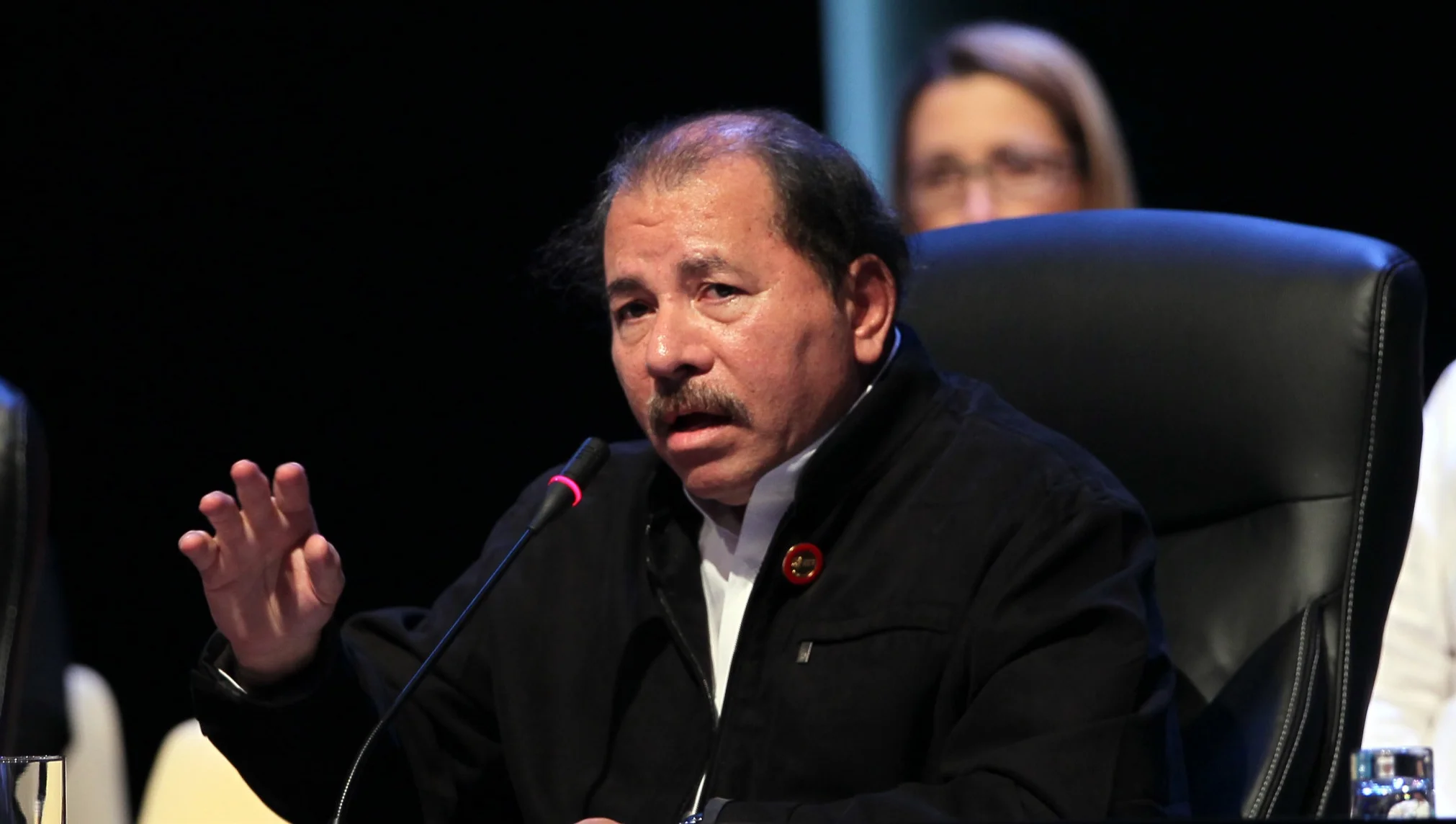
Ortega declares the end of elections
Ortega, 80, used a nationally broadcast speech on July 19 to announce that Nicaragua would cease holding elections, declaring that the “era” of opposition parties returning to power is over. “There won’t be any more elections here for them to try to seize the government and take power,” he said, referring to opponents he often labels as agents of the United States and remnants of the Somoza dictatorship ousted in 1979.
The speech came during celebrations of the 47th anniversary of the Sandinista revolution, a date that has defined Ortega’s political identity since his guerrilla movement led the overthrow of the U.S.-backed Somoza regime. “Parties put in place by the Yankees, put in place by the Somoza regime, coming back to power, that story is over. Never, never, never,” he said, in remarks reported by international media and human rights monitors.
Ortega did not present any formal legal text along with the declaration, leaving unclear whether he intends to abolish elections outright in the constitution or allow only tightly controlled, ceremonial votes with no real competition.
Constitutional fog and a hollowed-out system
Under Nicaragua’s constitution, presidential elections are still formally required, with the next vote technically scheduled for November 2027 after lawmakers loyal to Ortega extended the presidential term by one year in 2025. But analysts note that Ortega’s announcement caps years of dismantling the institutions that would make any election meaningful, including the neutral functioning of the electoral authority, the courts, and independent political parties.
“Instead of staging a rigged election, they have opted to eliminate electoral competition altogether,” one regional expert told ABC News, capturing a broader view among observers that Sunday’s declaration formalizes an already de facto one‑party state. Nicaragua’s electoral council has been purged and stacked with loyalists, and nearly all remaining opposition parties have been stripped of their legal status or forced into exile since a violent crackdown in 2018.
Human Rights Watch and other rights groups have documented a sweeping constitutional overhaul and legal changes in recent years that concentrated power in Ortega’s hands, weakened judicial independence and curtailed civil liberties, developments that now form the backdrop to his bid to rule without meaningful electoral challenge.
From protest crackdown to outright abolition
Ortega’s pledge to end elections comes after nearly a decade of democratic backsliding that accelerated with the brutal suppression of anti-government protests in 2018. Security forces and pro-government militias responded to demonstrations with lethal force, leaving hundreds dead and thousands injured, according to rights groups and regional bodies.
In the run‑up to the disputed 2021 elections, authorities arrested or forced into exile virtually every leading opposition presidential hopeful, then claimed victory in a race widely condemned as neither free nor fair. Subsequent measures stripped hundreds of critics, including journalists, clergy, and civic leaders, of their citizenship and seized their assets, further eroding any organized domestic challenge to Ortega’s rule.
Against that backdrop, Sunday’s speech appears less a sharp break than a final, explicit burial of what remained of Nicaragua’s democratic façade. “The infrastructure for competitive elections in Nicaragua was already gone,” one analysis noted, adding that the president had now simply said “the quiet part out loud.”
International and regional reaction
Early reactions from regional governments and international bodies were sharply critical. Prior reforms that extended Ortega’s term and postponed elections had already drawn condemnation from the United Nations, the Organization of American States, the United States, and the European Parliament. Observers said the new declaration will likely trigger renewed calls for sanctions, diplomatic isolation, and multilateral pressure.
CNN and other outlets reported that diplomats in Washington and Brussels view Ortega’s statement as a red line that confirms Nicaragua is no longer even nominally a constitutional democracy. Some Latin American governments that had previously adopted a more cautious posture toward Managua are expected to face stronger domestic pressure to speak out, particularly as Nicaraguan migrants and exiles continue to arrive across the region.
So far, Ortega and his powerful vice president and spouse, Rosario Murillo, have responded to international condemnation by doubling down, accusing foreign governments of “interventionism” and painting critics as part of an imperialist campaign. That stance suggests they are unlikely to reverse course in response to outside pressure alone.
What this means for Nicaraguans and the region
For Nicaraguans inside the country, the announcement confirms what many activists and opposition figures have argued since 2018: the ballot box is no longer a viable path to political change under the current regime. With parties outlawed, civic organizations shuttered, and independent media muzzled, avenues for peaceful opposition have narrowed to clandestine organizing, international advocacy and, increasingly, migration.
Economists warn that Ortega’s decision is likely to deepen Nicaragua’s isolation, depress foreign investment and tourism, and prolong existing sanctions that have already weighed on growth. The country’s fragile institutions and heavy dependence on remittances could make it more vulnerable to external shocks, especially if new punitive measures target state-linked entities and sectors.
Regionally, the move adds to concerns about democratic erosion in parts of Latin America and the Caribbean, where leaders in several countries have sought to rewrite rules to stay in power longer, harass opponents or weaken checks and balances. Nicaragua’s case stands out, analysts say, because Ortega is not merely changing the terms of competition, but openly declaring that competitive elections will no longer be allowed at all.