
WASHINGTON — Senior aides to President Donald Trump are pushing to prevent the war with Iran from escalating before the Nov. 3 midterm elections, according to people familiar with internal White House discussions, even as a new exchange of strikes has exposed the limits of a strategy built on restraint, sanctions and political timing.
The administration’s immediate goal is to keep the conflict from dominating the midterm campaign as Republicans defend narrow majorities in the House and Senate. But the effort is increasingly difficult as Iran continues to threaten commercial shipping and U.S. allies in the Gulf, and as American strikes inside Iran prompt retaliatory missile and drone attacks across the region.
For now, White House officials are seeking to rely more heavily on economic pressure than a return to sustained military operations, according to four people familiar with the discussions. The officials said the administration believes tighter sanctions could force Iran to make concessions in future negotiations after months of military action failed to produce a durable settlement.
“We are keeping the pressure on Iran,” one White House official said. “But November is a priority.”
The calculation illustrates the political and strategic bind facing Trump as the conflict enters its seventh month. The president has publicly said the midterms are not shaping his decisions. Yet advisers are worried that an unpopular war, higher gasoline prices and a renewed cycle of attacks could weaken Republican candidates in closely contested races.
A Reuters/Ipsos poll conducted in late August found that 31% of Americans approved of the Iran war while 63% disapproved. Trump’s approval rating has fallen from 40% to 33% since the conflict began, according to Reuters/Ipsos polling.
The latest fighting has made the White House’s hoped-for period of relative calm increasingly hard to sustain.
A strategy tested by fresh attacks
The conflict had entered a less intense phase in August, with the United States and Iran largely avoiding direct military exchanges while continuing hostile rhetoric, economic pressure and disputes over maritime access.
That period ended over the weekend.
U.S. forces struck Iranian rocket launchers on Larak Island near the Strait of Hormuz, saying Iranian Revolutionary Guard personnel were preparing attacks that could threaten shipping. Iran responded by firing missiles toward Jordan and the United Arab Emirates, according to Reuters.
On Tuesday, U.S. Central Command carried out a broader wave of strikes against Iranian Revolutionary Guard targets, including air defenses, radar sites, maritime assets, mine-laying capabilities and communications facilities.
Iran retaliated with attacks on U.S. and allied assets in Jordan, Bahrain and Iraq. Iranian authorities claimed heavy casualties among U.S. forces, but two U.S. officials told Reuters there were initially no American casualties reported from the strikes in Jordan.
The escalation was the most serious outbreak of fighting since July and came after attacks on commercial tankers departing the Strait of Hormuz, a vital oil-shipping corridor that Iran has effectively closed to much commercial traffic.
The renewed exchange has complicated efforts by Trump’s advisers to keep the conflict contained. Iran’s leaders have incentives to show that they can impose costs on the United States and its regional partners, particularly while Washington pursues a new campaign of sanctions and maritime pressure.
Barbara Leaf, the top State Department official for the Middle East during the Biden administration, told Reuters that Tehran has every reason to disrupt what the White House describes as calm.
“The regime has every incentive to disrupt the ‘calm’, which is no real calm, after all, since the administration’s explicit aim is to increase economic pressure massively on Iran,” Leaf said.
The risk is a familiar one in prolonged conflicts: each side may seek to avoid full-scale war while continuing actions that make broader escalation more likely.
Midterms shape the backdrop
Trump has insisted that election politics are not driving U.S. decisions on Iran.
“I’m not affected by the election,” Trump told reporters on Sept. 2. “No. 1, I’m not running. But my party’s running, and I’m going to help my party.”
He added that Republicans understood the administration’s argument that Iran should not be allowed to develop a nuclear weapon.
But the president’s advisers are looking at a political environment in which the war has become a vulnerability.
Republicans hold slim congressional majorities, and Democrats have built an advantage in generic-ballot polling. High gasoline prices, already a politically sensitive issue for any administration, could intensify voter frustration if oil-market disruption becomes more severe.
The timing matters because the conflict affects issues voters feel directly: the price of gasoline, household energy bills, inflation expectations and fears of a wider war involving U.S. service members.
Oil prices rose more than $4 a barrel Tuesday, reaching a five-week high after the latest military activity and attacks near the Strait of Hormuz. Higher crude prices can eventually feed into higher fuel costs, transportation expenses and consumer prices.
The administration’s reported strategy is therefore not simply to avoid military casualties or regional destabilization. It is also to prevent the conflict from becoming the defining issue of the final weeks before Election Day.
White House officials told Reuters that heavier military action could be considered after Nov. 3, though no decision has been made and a return to full-scale conflict is far from certain.
That prospect raises questions about whether military planning can be meaningfully separated from electoral timing. A sudden Iranian strike, tanker attack or civilian-casualty incident could force the administration to respond regardless of the political calendar.
Vance and Rubio back restraint
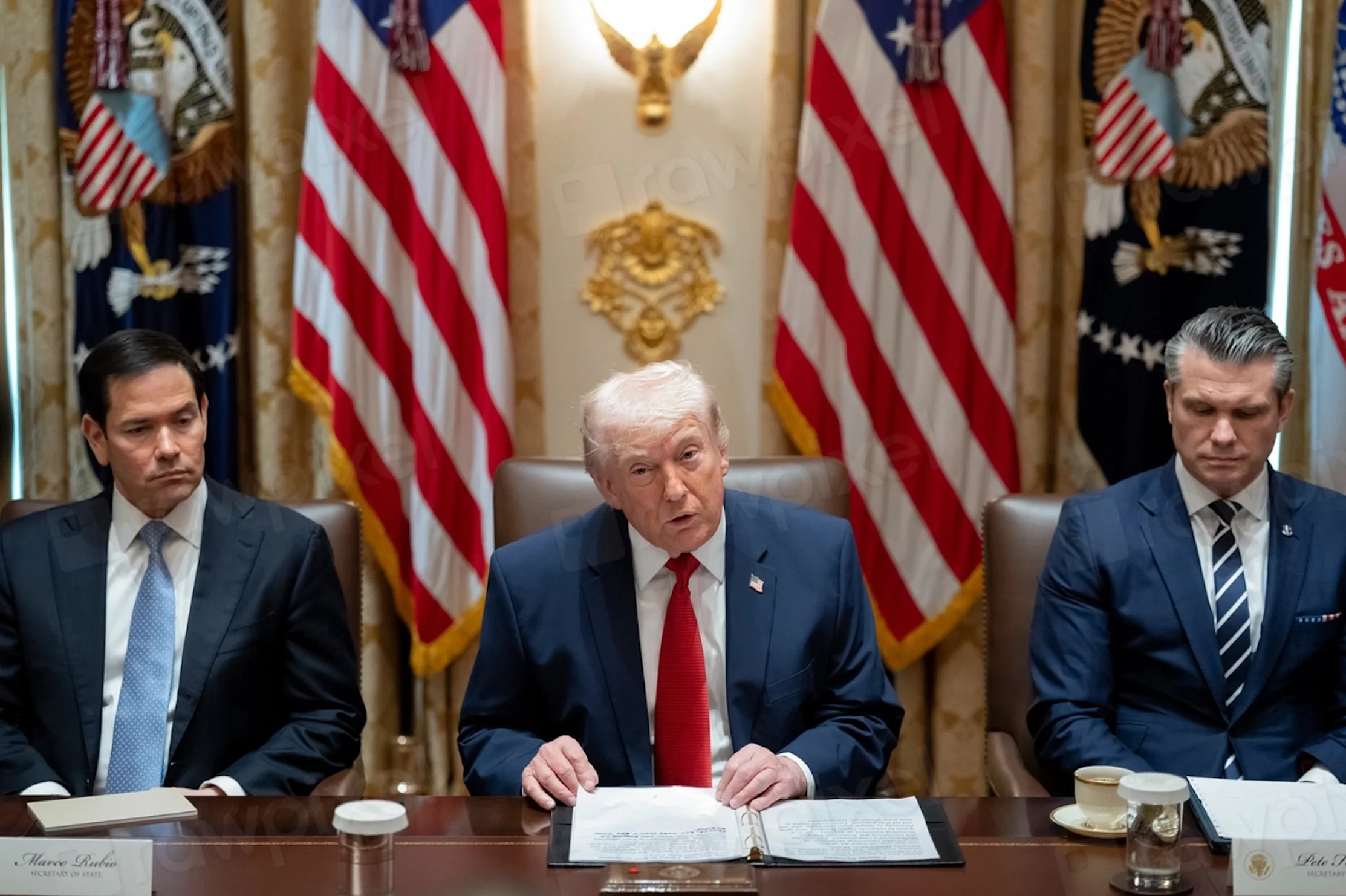
Vice President JD Vance and Secretary of State Marco Rubio are among senior administration officials supporting an effort to keep the conflict relatively “quiet” until November, according to two White House officials cited by Reuters.
Their reported support signals that the approach has backing from officials who influence both the administration’s political strategy and its foreign-policy posture.
Vance has been one of Trump’s closest political allies and is expected to play a visible role in the midterm campaign. Rubio, as secretary of state, has responsibility for managing diplomatic relationships with U.S. allies and coordinating pressure on Iran through sanctions and international outreach.
The strategy does not mean the administration intends to stop responding to attacks. U.S. officials have said recent strikes were retaliation for Iranian actions against American forces and commercial shipping.
Instead, it appears to reflect a desire to avoid a sustained or open-ended bombing campaign that could deepen domestic opposition and place greater strain on military resources.
Trump himself remains a major variable. The president has threatened Iran with more severe attacks if Tehran responds to U.S. strikes.
“If the failed Nation of Iran retaliates for this very justified attack, they will be hit again at a much harder and higher level,” Trump wrote on Truth Social.
Officials familiar with the administration’s thinking said Trump is not currently seeking escalation, Reuters reported. But he is known for changing course rapidly in response to events, political pressure or public messaging.
That uncertainty makes it difficult for allies, markets and military commanders to predict the next phase of the conflict.
Economic pressure replaces large-scale action
The administration’s preferred near-term tool is economic isolation.
Treasury Secretary Scott Bessent has said Washington plans to announce additional sanctions on Iranian financial institutions and entities doing business with the Islamic Revolutionary Guard Corps. The United States has also threatened to impose substantial penalties on countries that continue significant trade with Iran.
The objective is to increase pressure on Tehran’s leadership without immediately expanding military operations.
Alex Plitsas, a senior fellow at the Atlantic Council, told Reuters that the new sanctions package is intended to build on the economic effects of the blockade around the Strait of Hormuz and push Iran back to negotiations.
“The purpose of the new sanctions package is meant to add economic pressure on top of that being caused by the blockade to force Iran back to the table, after the administration determined it was a better option than returning to kinetic action,” Plitsas said.
But sanctions have limits.
Iran has lived under extensive U.S. and international sanctions for decades. Those measures have damaged its economy, restricted oil sales, complicated banking and reduced access to foreign investment. Yet they have not forced a fundamental change in the Iranian government’s position on core national-security issues.
China’s reluctance to support Washington’s attempt to isolate Iran further also raises doubts about how effective new secondary sanctions will be.
Bessent himself has acknowledged a related risk: greater economic pressure could prompt Iran to lash out militarily rather than compromise.
That creates a difficult feedback loop. Washington uses sanctions to avoid escalation, but Tehran may view the measures as a form of escalation and respond through military or maritime pressure.
Military resources add pressure
The White House is also constrained by military logistics.
Reuters reported in August that the U.S. military had used “virtually all” of its supply of certain precision missiles during the conflict. The Washington Post reported that the Army, Navy and Air Force chiefs warned Defense Secretary Pete Hegseth that a prolonged war could diminish U.S. readiness in other theaters.
The Pentagon has rejected suggestions that the military lacks the resources to carry out its mission, saying U.S. forces have “everything it needs to execute” operations.
Still, the issue is strategically important.
Precision-guided munitions are not unlimited. A sustained air campaign can consume large quantities of missiles, bombs and interceptors. The United States must also maintain readiness for potential crises elsewhere, including in Europe and the Indo-Pacific.
A period of reduced military activity could give the Pentagon time to replenish stocks, repair equipment, rotate personnel and reassess operational priorities. The White House’s preference for restraint before the midterms may therefore align with military practicalities as well as political interests.
But Iran could deny Washington that pause.
Iran has shown it can use relatively low-cost tools, including missiles, drones, maritime threats and attacks on commercial shipping, to create outsized pressure. Even limited strikes can force costly defensive responses from the United States and its allies.
Regional allies urge caution
U.S. partners in the Gulf have also urged the administration to de-escalate after recent rounds of attacks, according to regional diplomats cited by Reuters.
That represents a shift from earlier in the conflict, when some Gulf governments supported more aggressive action against Tehran in hopes of weakening a major regional adversary.
The calculus changed as the war threatened oil exports, commercial shipping, infrastructure and civilian safety. Gulf states rely on secure sea lanes and stable energy markets. They also host U.S. military forces and could become targets if the conflict expands.
Iran has warned that if it cannot export oil from the Persian Gulf, no country will be able to do so. That threat has placed Gulf governments in a difficult position: they want U.S. security guarantees but also need to avoid being drawn deeper into a confrontation that jeopardizes their own economies.
The reported attacks on tankers and the virtual halt in much commercial shipping through Hormuz demonstrate why regional leaders want a reduction in tensions.
For them, the cost of escalation is not abstract. It affects exports, state revenue, insurance premiums, investor confidence and domestic security.
The path to November
The administration’s immediate plan appears to be a form of controlled pressure: keep sanctions rising, respond to attacks when necessary, avoid an open-ended escalation and preserve the possibility of negotiations.
Whether that plan can hold is uncertain.
Iran remains under severe economic pressure but has not shown signs of capitulating. U.S. strikes have demonstrated military reach but have not secured a durable agreement. The Strait of Hormuz remains dangerous, and oil prices have become a direct political problem in Washington.
Trump’s advisers may seek quiet through Election Day. But the conflict has its own momentum.
A new attack on U.S. personnel, a strike on Gulf energy infrastructure, a sinking tanker or a surge in civilian casualties could quickly force the White House to reassess its posture. Each event would raise pressure for retaliation, and each retaliation could invite another response.
For now, the administration is trying to manage a war without allowing it to manage the midterm elections.
The question is whether events in Iran, rather than the political calendar in Washington, will determine what happens next.