
WASHINGTON — A second federal judge has blocked the Trump administration from enforcing new U.S. Postal Service requirements for mail ballots, adding another legal obstacle to the president’s effort to tighten voting-by-mail rules before the November midterm elections.
U.S. District Judge Carl J. Nichols in Washington issued a preliminary injunction late Sunday, barring the Postal Service from implementing a rule adopted last month at President Donald Trump’s direction. The rule would require states to obtain USPS approval for ballot-envelope designs, upload lists of mail-ballot recipients to a federal portal and use new barcoding standards for outbound and return ballot envelopes.
Nichols, who was appointed by Trump during his first term, ruled that the Democratic Party and other plaintiffs had shown a substantial risk that eligible absentee and mail-in ballots could go uncounted if the rule were put into effect now.
“Plaintiffs have demonstrated that, absent an injunction, there is an increased risk that a significant number of otherwise appropriate absentee or mail-in ballots will ultimately not be counted in the upcoming elections,” Nichols wrote. “The public has a strong interest in ensuring that doesn’t happen.”
The decision comes as the U.S. Supreme Court considers a separate request by the administration to lift a similar order issued in Boston by U.S. District Judge Indira Talwani. The parallel cases have turned the Postal Service rule into one of the most closely watched election-law disputes ahead of the Nov. 3 congressional elections.
The central legal question is whether the federal executive branch, acting through the Postal Service, can impose nationwide operational requirements that affect how states administer mail voting. Courts that have reviewed the rule so far have concluded that the Constitution assigns the principal authority for election administration to states and Congress, not the president or the Postal Service.
A second injunction
Nichols’ ruling is notable for both its timing and its source.
The judge, who was nominated by Trump, had declined in May to issue an injunction in the Washington case, finding that the legal challenge came too early. At that stage, the Postal Service had not finalized the regulations required to implement Trump’s executive order.
The legal circumstances changed after USPS issued its final rule Aug. 21.
Plaintiffs in the Washington case, including the Democratic Party, renewed their request for emergency relief, arguing that the regulations were no longer hypothetical and could disrupt mail voting as states began sending ballots to voters.
Nichols agreed that the risk had become immediate.
“No statute grants the Postal Service the power to issue key parts of the rule,” he wrote in the preliminary injunction.
The ruling prevents USPS from enforcing the regulations while the lawsuit moves forward. A preliminary injunction is not a final decision on the full merits of the case, but it reflects the judge’s conclusion that the plaintiffs are likely to succeed on important legal claims and that allowing the rule to take effect could cause harm that cannot easily be repaired after an election.
The practical concern is straightforward. Once an eligible voter’s ballot is rejected, delayed or not delivered because of a new administrative requirement, the harm cannot be fully fixed after Election Day.
That concern has become more acute because voting has already begun in some places. Alabama, North Carolina and Wisconsin had started mailing ballots by the time of the ruling, and other states were preparing to do so this week.
What the USPS rule would require
The disputed rule stems from an executive order Trump signed in March, after years of arguing that mail voting should face stricter limits.
The Postal Service regulation would require states to provide lists of voters eligible to receive mail ballots. It would also require unique barcodes on outbound and return ballot envelopes and would allow USPS to refuse to deliver ballots that do not comply with the new standards or are connected to voters who do not appear on the supplied lists.
Supporters of the initiative have described it as a measure to improve security, standardize ballot handling and prevent fraud. The Justice Department argued in court that the rule was only a “modest” mail-related regulation, not an attempt by the Postal Service to take control of federal elections.
But state election officials, voting-rights groups and Democratic-led states have argued that the requirements would be impossible to implement uniformly so close to an election. They say states use different ballot-envelope designs, voter-registration systems, election calendars and mail-processing arrangements. Requiring every jurisdiction to change those systems at the last minute, they argue, would create confusion and risk disenfranchising voters.
The rule’s requirement that states upload eligible mail-ballot recipients to a federal online portal has generated particular concern. According to Associated Press reporting, the portal was still inactive when litigation intensified.
Election officials also warned that ballot design changes cannot be made quickly. Local authorities must often complete procurement, printing, software integration, testing, staff training and voter education before ballots are mailed. Any late change can create errors, delays and uncertainty for voters.
The courts have treated that timing problem as central to the dispute.
Boston case already blocked the policy
Nichols’ order is the second major federal court block against the rule.
On Sept. 4, Talwani, a Boston-based federal judge appointed by former President Barack Obama, issued a preliminary injunction barring USPS from enforcing the regulation before the midterm elections. She found that the rule was likely unlawful and unconstitutional, concluding that its implementation could disenfranchise voters while offering little evidence of meaningful anti-fraud benefit.
The Trump administration appealed that order to the Boston-based 1st U.S. Circuit Court of Appeals. The three-judge panel declined on Sept. 10 to put Talwani’s injunction on hold.
The appeals court said it saw no error in Talwani’s conclusion that enforcing the rule before the election “will likely result in the disenfranchisement of millions of voters across the country while providing minimal, if any, gains in combating voter fraud.”
The First Circuit rejected the administration’s characterization of the rule as a limited postal regulation. It said the government’s argument focused on “the trees while ignoring the forest,” emphasizing that the Constitution gives states and Congress the principal authority to regulate elections.
The Justice Department had already asked the Supreme Court to intervene before the First Circuit ruled, seeking to lift Talwani’s injunction. That request remains pending before the nation’s 6-3 conservative-majority high court.
The Washington case gives the Supreme Court a more complicated procedural landscape. Even if the justices lifted Talwani’s order, Nichols’ independent injunction could still prevent USPS from enforcing the rule unless it is separately stayed or overturned.
Why mail voting is politically charged
Mail voting has become one of the most politically contentious issues in American elections.
All 50 states allow some form of mail voting. Twenty-nine states allow voters to request a mail ballot without providing a reason, while eight conduct elections entirely by mail, Reuters reported.
The systems vary widely. Some states automatically send ballots to every registered voter. Others require voters to make a request. Some use centralized vote-counting systems, while others rely on county-level administration. Deadlines, signature-verification procedures, ballot-tracking tools and cure processes also differ.
That variation helps explain why a national Postal Service rule faces legal and logistical resistance. A single federal standard may interact differently with each state’s election law and election infrastructure.
Trump has repeatedly criticized voting by mail and has falsely asserted that widespread voter fraud cost him the 2020 election. There is no evidence that fraud changed the outcome of that election, and numerous courts, state officials and federal agencies found no basis for claims of outcome-determinative fraud.
The administration’s new rule is part of a broader political effort to reshape voting procedures before the midterms, when Republicans are seeking to retain control of Congress.
The legal cases are not only about policy preference. They are also about institutional authority: whether federal executive agencies may impose rules that materially affect state-run election processes without clear authorization from Congress.
The legal argument: Who runs elections?
The U.S. Constitution gives state legislatures primary authority to determine the “Times, Places and Manner” of congressional elections, while allowing Congress to “make or alter” those regulations.
That structure does not give the executive branch a general power to write election rules.
The plaintiffs in the cases against USPS argue that the Postal Service crossed that line by making the delivery of ballots contingent on state compliance with new federal standards. The effect, they say, would be to alter voter access and ballot-counting procedures in ways that belong to the states and Congress.
Nichols agreed at least in part, writing that the Postal Service lacked statutory authority for key components of the regulation.
The First Circuit likewise treated the constitutional allocation of authority as a major factor in upholding Talwani’s injunction. The appellate court said that the Postal Service rule could not be viewed only as a narrow mailing regulation when its practical effect could determine whether millions of voters are able to cast ballots by mail.
The Trump administration and USPS maintain that the agency acted within its authority. A USPS spokesperson previously cited Postmaster General David Steiner’s statement that the agency had “at all times acted within our legal authority.”
The coming litigation will likely focus on the limits of that authority: whether USPS can establish operational rules for ballot handling, whether those rules conflict with state election laws, and whether the administration may use federal postal powers to impose standards that states consider disruptive.
Election officials warn of timing problems
The dispute has intensified because of the calendar.
Election administrators typically spend months, and sometimes years, preparing for statewide elections. Ballots must be designed, translated where required, printed, tested and mailed. Voter lists must be updated. Election workers need training. Voters need to know deadlines and procedures. Postal arrangements must be coordinated with local facilities.
Changing requirements weeks before an election can create more than inconvenience. It can create unequal treatment, missed deadlines and voter confusion.
Associated Press reported that a whistleblower disclosure to Congress warned that millions of people could be disenfranchised if the rule were allowed to take effect for the midterms. The union representing Postal Service employees has also opposed the executive order, arguing that verifying voter eligibility is not the role of postal workers.
The administration’s response has been that states could choose to follow the new requirements and that the rule is intended to improve ballot security. But the courts have emphasized that election administrators should not have to rebuild systems under tight deadlines to avoid having valid ballots delayed or rejected.
Talwani’s order applies to the midterms, leaving the possibility that the government could defend or revise a similar rule for later elections through ordinary litigation and regulatory processes.
That distinction may matter. Courts are often more willing to block late changes to election procedures because of the risk of voter confusion. A policy introduced well before an election may receive different legal treatment, even if the underlying constitutional issues remain contested.
Supreme Court decision looms
The Supreme Court is now the most important remaining venue in the dispute.
The Trump administration has asked the justices to lift Talwani’s injunction, arguing that the federal government should be allowed to implement its rule before the Nov. 3 election. The Court previously lifted an earlier, pre-finalization injunction that Talwani had issued, finding at the time that the challenge was premature.
Since then, however, USPS has finalized the rule and courts have found the potential harm more immediate.
The Supreme Court could deny the administration’s request, leaving Talwani’s order in place. It could grant the request, potentially allowing the rule to proceed unless Nichols’ Washington injunction remains in force. It could also issue a narrower order or provide guidance on the legal standards governing election-related emergency relief.
Whatever the justices decide, the case highlights the increasing role of emergency court orders in setting election rules close to voting deadlines.
That has consequences beyond mail ballots. When major legal disputes are resolved weeks before an election, state officials must translate court decisions into practical instructions for voters, printers, postal facilities and local election workers. The result can be uncertainty even when courts are trying to prevent it.
What voters should do
For voters, the immediate message is simpler than the legal fight: check official state and local election resources, not social media posts or partisan emails, for the latest rules.
People planning to vote by mail should:
- Confirm their registration status through an official election website.
- Request a ballot as early as possible if their state requires a request.
- Review the return deadline and signature requirements.
- Use official ballot-tracking tools where available.
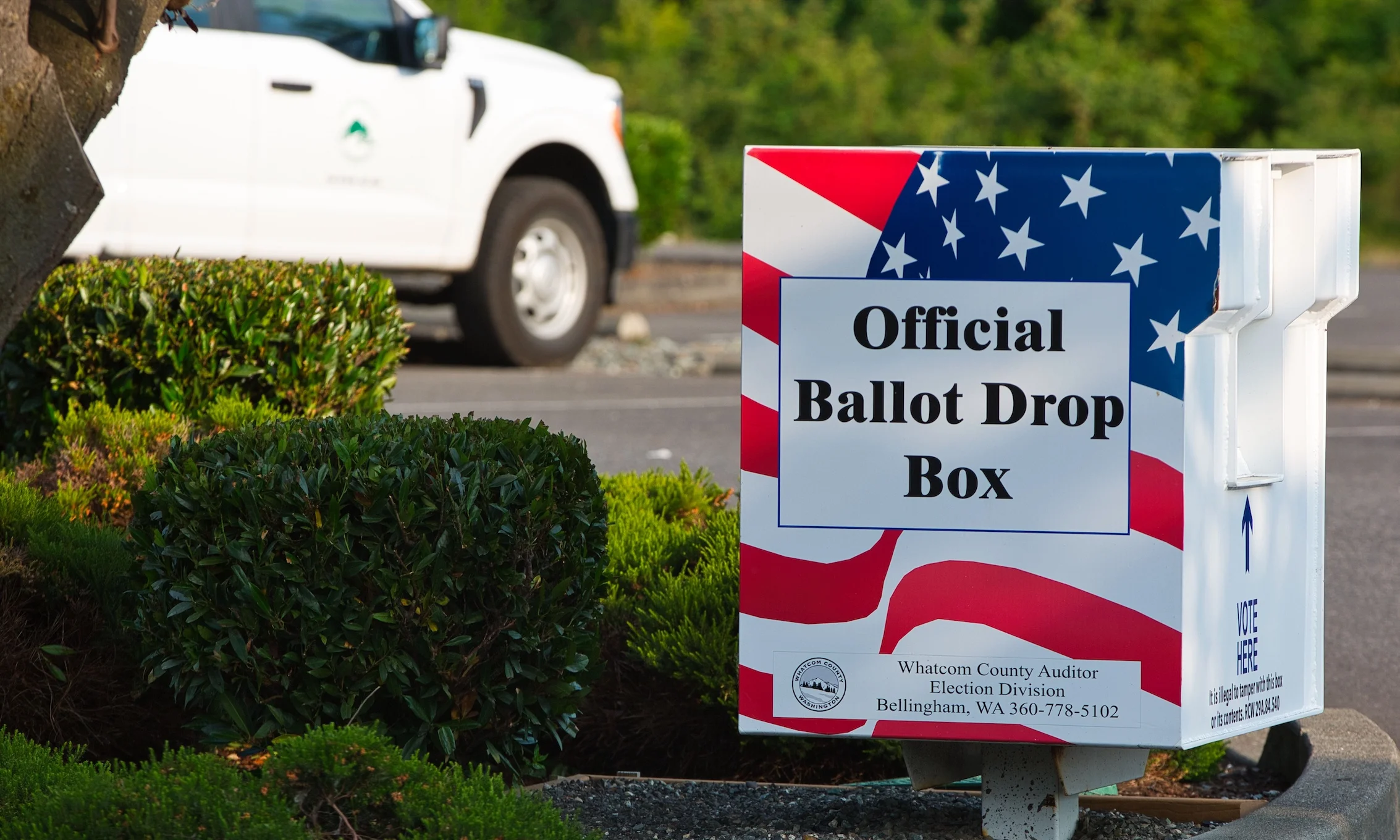
- Return ballots early by mail or use an authorized ballot drop box if permitted.
- Contact local election officials directly if a ballot does not arrive or if there is a problem with a signature or envelope.
The litigation could continue to change the legal landscape, particularly if the Supreme Court issues an order. But for now, two federal judges have blocked USPS from enforcing the administration’s new mail-ballot rule before the midterms.
Nichols’ decision does not end the broader debate over mail voting, federal authority or election security. It does, however, preserve the systems already in place as millions of voters and election officials prepare for November.