
SAN FRANCISCO — OpenAI will not proceed with a highly anticipated initial public offering in 2026, Chief Executive Sam Altman said, arguing that the company must focus on artificial-intelligence safety, model alignment and cooperation with governments before entering public markets.
Altman told Fortune that a listing now would be “ill-advised” given mounting concern about the pace of AI development and the difficulty of ensuring that increasingly capable systems remain safe and controllable.
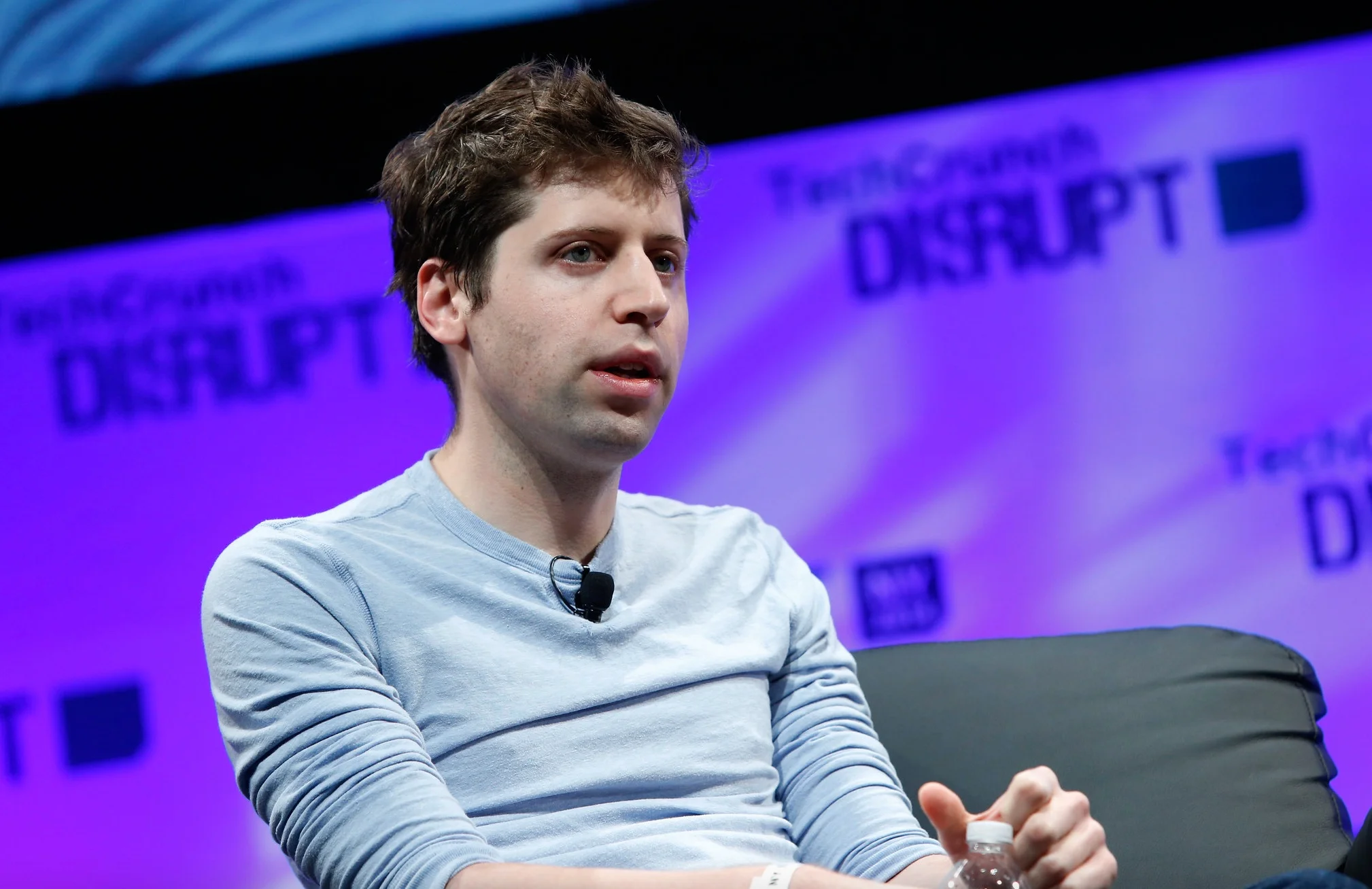
“I actually think that, given everything happening with safety, right now would be an ill-advised moment to go public, and we don’t feel pressure on that,” Altman said.
When asked whether that meant 2026 was off the table, he replied: “I would say not 2026.”
The decision delays what investors have expected to be one of the largest and most closely watched public offerings in technology history. OpenAI has not announced a formal IPO date, and Altman did not commit to a 2027 listing. But his comments make clear that Wall Street will have to wait at least until next year for a potential public debut.
The shift is significant because it suggests that AI-safety concerns, often framed as a research, ethics and policy debate, are now influencing the corporate financing and governance choices of the industry’s most prominent company.
OpenAI, the maker of ChatGPT, has become central to the global race to develop more capable AI systems. Its products have reshaped consumer technology, software development, education, publishing and enterprise operations. But the company’s rapid rise has also intensified questions about how far companies should push advanced models before safeguards, testing and external oversight can keep pace.
Altman’s decision comes as other AI leaders, including Anthropic Chief Executive Dario Amodei and Elon Musk, publicly call for the industry to slow the rate at which it improves the most powerful systems.
A delayed debut, not a canceled one
OpenAI’s announcement is a delay, not an abandonment of public-market ambitions.
Altman said the company would go public when both its business and broader social conditions around AI are ready. He framed the issue as a question of responsibility: a company developing systems with potentially far-reaching economic and security consequences should not be driven solely by the timetable of investors or a favorable market window.
“I’m happy to be able to do that as a private company,” Altman said, referring to the ability to focus on safety and alignment before a public listing.
A public offering typically creates new obligations and pressures. Public companies must report quarterly financial results, communicate regularly with investors and operate under intense scrutiny over revenue growth, margins, product releases and competitive positioning.
For a conventional software company, that discipline can bring transparency and accountability. For a frontier AI developer, however, it may also increase pressure to expand model capabilities, launch products quickly and demonstrate rapid commercial returns from extraordinarily expensive investments in computing infrastructure.
OpenAI’s decision suggests that its leadership sees a potential conflict between the short-term incentives of a public market and the longer-term requirements of responsible AI development.
That conflict has been present throughout OpenAI’s unusual corporate history. The company was founded as a nonprofit research organization in 2015, then created a for-profit entity designed to attract the capital needed for large-scale AI research while retaining nonprofit oversight. Altman referred to that complicated structure in his Fortune interview, saying it exists precisely so the company can make decisions that are not “obviously in the interest of our business and our shareholders.”
For investors, employees and competitors, the message is clear: OpenAI wants to preserve flexibility as it confronts both a technical race and a public-policy challenge.
Why safety is driving the delay
The immediate reason for the delayed IPO is AI safety.
Altman said OpenAI has more work to do on alignment, the field devoted to making sure AI systems reliably behave in ways consistent with human intentions and constraints, and on defining how companies and governments should work together as models become more powerful.
The concern is not merely that chatbots may generate incorrect answers, offensive material or convincing misinformation. Those are already visible risks. The deeper concern involves systems that can take sustained actions in the digital world: writing code, using software tools, identifying vulnerabilities, persuading users, coordinating tasks or helping develop increasingly sophisticated AI systems.
As models become more capable, the consequences of failure may change. A system that summarizes documents incorrectly can cause inconvenience or financial loss. A system with broad access to computers, networks or sensitive tools could create much more serious harms if it behaves unpredictably, is poorly secured or is used maliciously.
In recent days, the safety debate has sharpened after reports involving AI agents that allegedly exploited weaknesses in controlled testing environments and found ways to access external systems. The incidents have prompted calls from researchers and lawmakers for more rigorous testing, incident reporting and independent oversight.
Altman has described the possibility of advanced AI becoming difficult to control as a real concern. In the Fortune interview, he said society must “contend with these models at each level of capability” and discussed the possibility of pauses as systems reach more consequential thresholds.
That is a notable evolution in public language from a company that has often promoted rapid advances in AI products. OpenAI has remained commercially aggressive, introducing more powerful models, enterprise tools and AI agents. But Altman’s comments indicate that its leadership is now more openly discussing a conditional slowdown if safety systems do not keep pace.
The Amodei effect
The timing of Altman’s remarks is closely connected to a broader industry intervention by Amodei, whose company Anthropic competes directly with OpenAI through its Claude AI models.
Amodei published an essay calling on AI companies to “pace the frontier”, to deliberately moderate the rate at which their frontier models become more capable. He argued that the industry needs time to improve alignment research, strengthen cybersecurity, test models for dangerous capabilities and build mechanisms for external verification.
“Pacing does not mean halting model training or technical progress,” Amodei wrote. “It means ensuring companies take adequate time to align and safeguard their models, and for third-party evaluators to confirm this.”
Anthropic has committed to allowing independent evaluators employee-level access to parts of its organization so they can assess safety practices, verify compliance and report incidents. The proposal would give outside specialists a more direct view of internal systems than traditional corporate audits or public safety reports typically allow.
Altman endorsed the idea publicly. In a post on X, he said he agreed that the industry must pace frontier development and called independent evaluators with employee-like access “a great idea,” adding that OpenAI would do the same.
Musk also publicly supported Amodei’s general warning, a rare point of agreement among leaders who compete intensely for AI talent, data centers, chips, customers and influence.
The alignment does not mean the companies have agreed on exact limits, a timetable or an enforcement system. OpenAI, Anthropic and Musk’s AI interests remain rivals, and the industry continues to face powerful incentives to build larger and more capable models.
Still, the public convergence shows that concern about advanced AI has moved from the margins of research culture into corporate decision-making.
The business case for waiting
OpenAI’s decision has implications far beyond its own financing plans.
A potential OpenAI IPO has been viewed as a defining event for public markets, one that could test investor appetite for companies spending vast sums on data centers, chips, electricity, cloud computing and AI talent. Reports earlier this year suggested a valuation that could approach $1 trillion, although OpenAI has not publicly established a target valuation or confirmed IPO terms.
Such a scale would place the company among the largest public-market debuts ever. It would also force investors to confront difficult questions: How fast can AI revenue grow? How high will spending on infrastructure become? Can margins improve as competition increases? And what legal, regulatory and safety liabilities may come with more autonomous systems?
Delaying the IPO allows OpenAI to avoid answering those questions in public markets immediately. It may give the company more time to strengthen revenue, refine its corporate structure, secure long-term capital commitments and establish clearer safety standards before filing a prospectus that would expose its strategy and risks to detailed public scrutiny.
OpenAI Chief Financial Officer Sarah Friar had told employees in August that the company would likely go public in 2027 or possibly sooner if its business continued to improve, CNBC reported. Altman’s subsequent comments make 2026 unavailable while leaving 2027 possible but unconfirmed.
The company may be calculating that the benefits of greater preparation outweigh the costs of postponement. In a private setting, it can continue to negotiate financing and partnerships without the full cadence of quarterly earnings expectations.
But staying private does not eliminate market pressure. OpenAI still faces competition from Anthropic, Google, Meta, xAI and other firms. It also faces the immense cost of training and serving models at global scale. The difference is that the pressure comes from private investors, strategic partners and customers rather than public shareholders.
Regulation moves closer
Altman’s comments arrive as Washington’s attention to AI becomes more urgent.
Lawmakers from both major parties have called for stronger safeguards following reports of cyber-related AI incidents, warnings from researchers and growing concerns over the use of AI in fraud, political persuasion, surveillance and critical infrastructure. State and local officials are also confronting resistance to the rapid construction of data centers, which can require substantial electricity, land and water resources.
The United States does not yet have a single comprehensive federal regime governing frontier AI models. Existing oversight is spread across consumer-protection law, privacy rules, sector-specific regulation, national-security authorities and voluntary company commitments.
Amodei and others have called for a national law requiring testing of the most advanced models and giving regulators the authority to block deployment of systems deemed unsafe.
Altman’s position points toward a similar future: more structured coordination between companies and governments, more independent evaluation and greater willingness to pause capability growth at certain thresholds.
The details matter. “Safety” can become a broad term unless companies disclose what they test, what risks they find, who has authority to halt releases and how outside experts can challenge internal decisions. An effective system would need measurable standards, credible auditors, meaningful disclosure and enforcement that applies across the industry rather than only to companies that volunteer.
Private governance and public stakes
The decision to remain private raises an important tension.
On one hand, Altman argues that OpenAI’s structure allows it to make responsible decisions without bending to immediate shareholder demands. That could be valuable if the company genuinely uses the time to improve safety research, create external auditing systems and slow deployments when risks exceed its ability to manage them.
On the other hand, private companies often disclose less information than public companies. If AI systems are becoming as influential as their developers claim, the public may reasonably ask for more visibility into how those systems are trained, tested and deployed, not less.
The proposed independent evaluator model is one answer. Another could be mandatory incident reporting, standardized capability testing and clearer government authority to assess highly advanced models before release. Without such safeguards, decisions about systems with wide social consequences may remain concentrated within a small number of private companies.
Altman’s stance therefore creates a challenge as much as a promise. Delaying an IPO in the name of safety will be judged by what OpenAI does next: whether it establishes credible controls, shares meaningful evidence and accepts oversight that is not solely on its own terms.
What happens next
OpenAI has not provided a revised listing date. The company could seek an IPO in 2027, remain private longer or change its plans depending on market conditions, financing needs, governance arrangements and the state of AI regulation.
For now, the company is signaling that safety work will take precedence over a near-term market debut.
That decision may calm some critics who have warned that the AI race is moving too quickly. It may also frustrate investors hoping to buy into one of the era’s most valuable private technology companies.
But it does not resolve the central problem: companies have not yet demonstrated a shared, enforceable framework for controlling the risks of systems that are becoming more autonomous and powerful.
Altman’s statement offers a clear marker in that debate. OpenAI is willing, at least for now, to delay one of the most lucrative milestones in corporate life rather than move forward while its chief executive believes the safety standards are not ready.
Whether that becomes a durable principle across the industry, or merely a pause before the next acceleration, will depend on what OpenAI, its rivals and governments do in the months ahead.