
BERLIN — Dell Technologies has introduced the Dell 14S, a lightweight Windows laptop aimed at students and young adults who want longer battery life, a more expressive design and practical connectivity without moving into the company’s premium XPS price category.
Announced at IFA 2026 in Berlin, the Dell 14S is built around a familiar challenge in the mainstream laptop market: students often have to choose between a low-cost machine, a portable design and enough battery life to last through classes, work and daily travel. Dell says its new 14-inch notebook is meant to narrow that compromise.
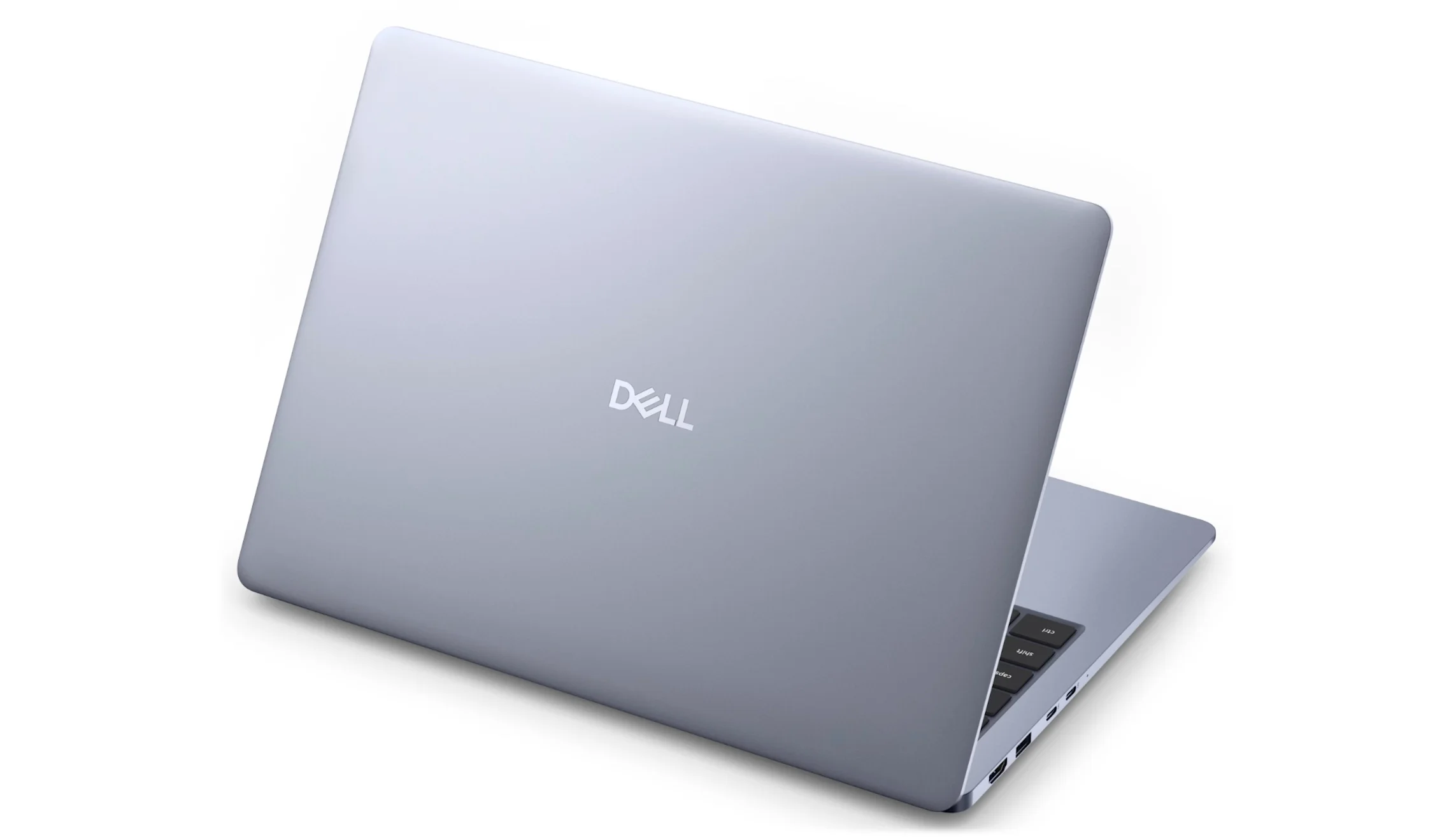
The laptop uses an aluminum chassis, weighs about 2.5 pounds and is 13.5 millimeters thick. It will be available in four colors — Linen, Dusty Rose, Washed Denim and Velvet Green, a deliberate break from the gray and black finishes that have long dominated mainstream Windows laptops.
Dell says the 14S can provide up to 21 hours of Netflix streaming on a single charge, using an optional high-energy-density battery. That figure is based on Dell laboratory testing rather than independent testing, and actual endurance will vary with screen choice, processor configuration, brightness, software, workload and battery age.
The Dell 14S is expected to reach North America this fall. Dell has not announced pricing, though company representatives said the notebook is expected to sit near, but below, the XPS 13’s $699 starting price.
The product arrives as laptop makers seek to attract students and younger buyers who expect portability and attractive design but remain sensitive to price. It also reflects Dell’s effort to give its consumer lineup a clearer middle ground between basic budget systems and its premium XPS models.
A laptop designed to look personal
The Dell 14S makes its design strategy unusually explicit.
“Color is not simply a finishing touch on the Dell 14S,” Matt McGowan, Dell’s head of product, said in a pre-announcement briefing. “It is the design story.”
The four colors, a light beige called Linen, pink-toned Dusty Rose, light-blue Washed Denim and green-toned Velvet Green, are intended to make the computer feel more like a personal item than an anonymous office device.
That positioning matters in the student market. Laptops are no longer purchased only for schoolwork. They are used for streaming, social communication, job applications, video calls, side projects, creative work and increasingly AI-assisted tasks. Manufacturers are responding by putting more emphasis on materials, color and portability.
Dell’s approach resembles a broader industry trend. Apple has used colors to differentiate consumer-facing MacBooks and iMacs, while other Windows makers have introduced lighter, thinner devices aimed at buyers who treat a laptop as both a productivity tool and an everyday accessory.
The 14S is not as thin or as light as Dell’s premium XPS 13. But at approximately 1.15 kilograms, or 2.5 pounds, it is still within the ultraportable category and should be easy to carry between a dorm, library, classroom or office.
The use of aluminum is also notable at a lower expected price point. Metal construction can make a laptop feel sturdier and more premium than plastic-based alternatives, though durability will depend on internal design and real-world testing after the device reaches consumers.
Dell says the machine is “light enough to disappear into a bag and solid enough to survive it.” That is a marketing claim, but it captures the company’s intended audience: students and mobile workers who may carry a laptop daily and want a device that does not feel disposable.
Battery life is the headline feature
The most ambitious specification is Dell’s claimed battery life.
The company says the 14S can run for up to 21 hours of Netflix streaming on a single charge. Dell attributes the number to a 750ED PNCM battery, which it describes as a denser cell designed to run cooler under load and retain capacity over time without adding significant weight or cost.
The battery has a listed capacity of 61.2 watt-hours, according to Tom’s Hardware.
For context, battery-life claims depend heavily on the test method. Dell’s 21-hour figure used a system configured with an Intel Core 5 320 processor, Intel integrated graphics, 8GB of memory, a 256GB solid-state drive and an FHD display. The test was performed in Dell labs in August at 150 nits of screen brightness with wireless connectivity enabled.
Streaming video at modest brightness is generally less demanding than a day of real student work involving video conferencing, many browser tabs, cloud synchronization, coding tools, photo editing or local AI applications.
Dell itself cautions that actual battery life can be “significantly less” than laboratory results and will decrease over time.
Even with that caveat, the emphasis on battery life is likely to resonate with students. A laptop that can reliably last a full day away from an outlet may matter more in everyday use than a small difference in benchmark performance.
The question will be how close the 14S comes to Dell’s claim in independent testing — especially in its higher-resolution, 120Hz display configuration, which is likely to use more power than the base panel.
Two displays, two priorities
Dell plans to offer two non-touch 14-inch display options, both using a 16:10 aspect ratio.
The entry-level option is a 1,920-by-1,200 LCD panel with a 60Hz refresh rate and 300 nits of brightness. The higher-end option is a 2,880-by-1,800 panel with a 120Hz refresh rate and 450 nits of brightness.
The 16:10 format provides more vertical workspace than the older 16:9 standard. For students and office users, that can mean more visible text in documents, more rows in spreadsheets and less scrolling while researching or writing.
The base screen appears designed around affordability and battery efficiency. At 300 nits, it should be adequate for indoor use, including classrooms, libraries and dorm rooms, but may be less comfortable in bright outdoor conditions or near strong sunlight.
The 2.8K panel offers a more compelling experience on paper. Its higher resolution should produce sharper text and images, while the 120Hz refresh rate can make scrolling, video playback and general navigation appear smoother. At 450 nits, it should also offer better brightness for varied environments.
However, the better display will likely come with trade-offs. A higher-resolution, higher-refresh-rate panel generally increases power consumption. Consumers will need to choose whether a sharper, smoother screen is worth a possible reduction in battery endurance and a higher purchase price.
The absence of touch support on both panels may disappoint some buyers, particularly students accustomed to tablet-like interfaces. But it may also help Dell contain cost and preserve battery life.
Intel processors and everyday performance
The Dell 14S will use Intel Core 5 and Core 7 Series 3 processors with integrated Intel graphics. Dell’s announced configurations include the Intel Core 5 320 and Intel Core 7 350, depending on model and market.
These are mainstream processors intended for general-purpose computing, not high-end gaming or demanding professional video production. The 14S should be suited to common student workloads such as:
- Web browsing and online research
- Microsoft Office or Google Workspace documents
- Video calls and remote classes
- Streaming media
- Light photo work
- Basic programming and development tools
- Multitasking across browser tabs and productivity apps
Dell says the laptop is designed to handle multitasking across tabs, documents and apps without slowing down.
The system can be configured with 8GB or 16GB of LPDDR5x memory and up to a 1TB PCIe solid-state drive.
The base configuration of 8GB of memory and 256GB of storage is a potential limitation for some buyers. It may be enough for web-based schoolwork and basic document storage, but 16GB of RAM is increasingly preferable for students who frequently run multiple browser tabs, video-conferencing tools, design software or development environments at the same time.
Storage can also fill quickly. A 256GB drive may be workable for someone who stores most files in the cloud, but students working with videos, large design projects, games or offline media libraries could benefit from a 512GB or 1TB option.
One important caveat is that the memory is listed as soldered and single-channel. That may limit future upgrades and could affect performance in some memory-heavy workloads. Buyers should select sufficient memory at purchase because it may not be possible to add more later.
The Dell 14S also does not use Intel’s forthcoming higher-end Panther Lake processor options expected in some XPS 13 models. That helps distinguish the 14S from Dell’s premium lineup, but it also confirms that the machine is intended as an everyday productivity laptop rather than a top-tier performance system.
Ports prioritize student practicality
In an era when many thin laptops rely almost entirely on USB-C ports, Dell has included a more practical range of connectivity on the 14S.
The laptop offers:
- Two USB-C 3.2 Gen 2 ports supporting up to 10Gbps data transfer, DisplayPort and Power Delivery
- One HDMI 1.4 port
- One 3.5mm headphone jack
That port selection is one of the device’s clearest advantages relative to Dell’s XPS 13, which offers only two USB-C ports.
For students, HDMI can eliminate the need for an adapter when connecting to classroom displays, dorm-room monitors or projectors. The headphone jack remains useful for wired headphones, older audio equipment and situations where Bluetooth connectivity is inconvenient or unavailable.
The laptop supports Wi-Fi 6 or Wi-Fi 6E depending on configuration, along with Bluetooth 5.3 or 5.4.
Those wireless standards are not the newest available, the XPS 13 offers Wi-Fi 7 and Bluetooth 6, according to Tom’s Hardware, but Wi-Fi 6E remains capable for most campus networks and home broadband connections.
Dell also includes a 2-megapixel, 1080p webcam, stereo speakers and far-field dual-array microphones. Windows Hello facial-recognition sign-in is available with the appropriate infrared-camera configuration.
For a generation that regularly attends remote meetings, records presentations and interviews for internships online, these features are likely to matter as much as raw processor specifications.
Price will determine its appeal
Dell has not disclosed final pricing, which makes it difficult to assess whether the 14S will genuinely deliver the value proposition the company is promising.
The company has said the machine will be priced “complementary” to the XPS 13. Dell representatives told The Verge that the 14S should be close to the XPS 13’s $700 starting price but “slightly more accessible.”
That phrasing leaves substantial room for interpretation.
If the 14S begins materially below $700, it could offer students a compelling blend of aluminum construction, portable size, practical ports and claimed long battery life. If upgraded configurations with 16GB of memory, a larger SSD and the 2.8K 120Hz screen rise sharply in price, the system may face stiff competition from Dell’s own XPS models, as well as midrange laptops from Lenovo, HP, Asus and Acer.
The market is especially price-sensitive because many students need a laptop that will remain capable for four years of coursework. Saving money at checkout can be appealing, but selecting too little memory or storage may create problems later.
Dell says the 14S will be available in North America this fall, with market-specific pricing to be announced closer to launch.
The larger strategy
The Dell 14S is part of a broader attempt to revive the mainstream Windows laptop as a personal, stylish and durable device — not simply a lower-cost version of a business notebook.
Dell is placing the 14S below the XPS 13, which it calls its premium ultraportable option. Konstantin Tuv, Dell’s head of consumer and gaming products, said the new system expands the company’s consumer strategy for students and young adults seeking a laptop they can carry all day and afford more easily.
The message is clear: Dell believes students should not have to choose between portability, design, ports and endurance.
Whether the 14S fulfills that promise will depend on final price, independent battery testing and the cost of recommended upgrades. But on paper, the device makes the right bets for its target audience: a light metal chassis, larger 16:10 screen, standard ports, a better-than-basic webcam and an emphasis on battery life.
For students shopping this fall, the Dell 14S may become a serious option if Dell keeps the entry price low and offers reasonably priced configurations with 16GB of memory. Until then, the laptop’s most attractive specification remains its least verified one: a claim that a full day of classes, study and streaming may no longer require searching for a wall outlet.