
Marching bands, ululating women and cheering men filled Eswatini’s Somhlolo National Stadium on Friday as King Mswati III marked 40 years on the throne, a milestone that underscored both the enduring power of Africa’s last absolute monarch and the controversy over the lavish spending that surrounds his rule. Tens of thousands of emaSwati, joined by regional kings and presidents, watched the 58‑year‑old monarch circle the stadium in a military uniform and open‑top car before delivering a unity‑themed speech that framed his four‑decade reign as a period of shared struggle and national progress.
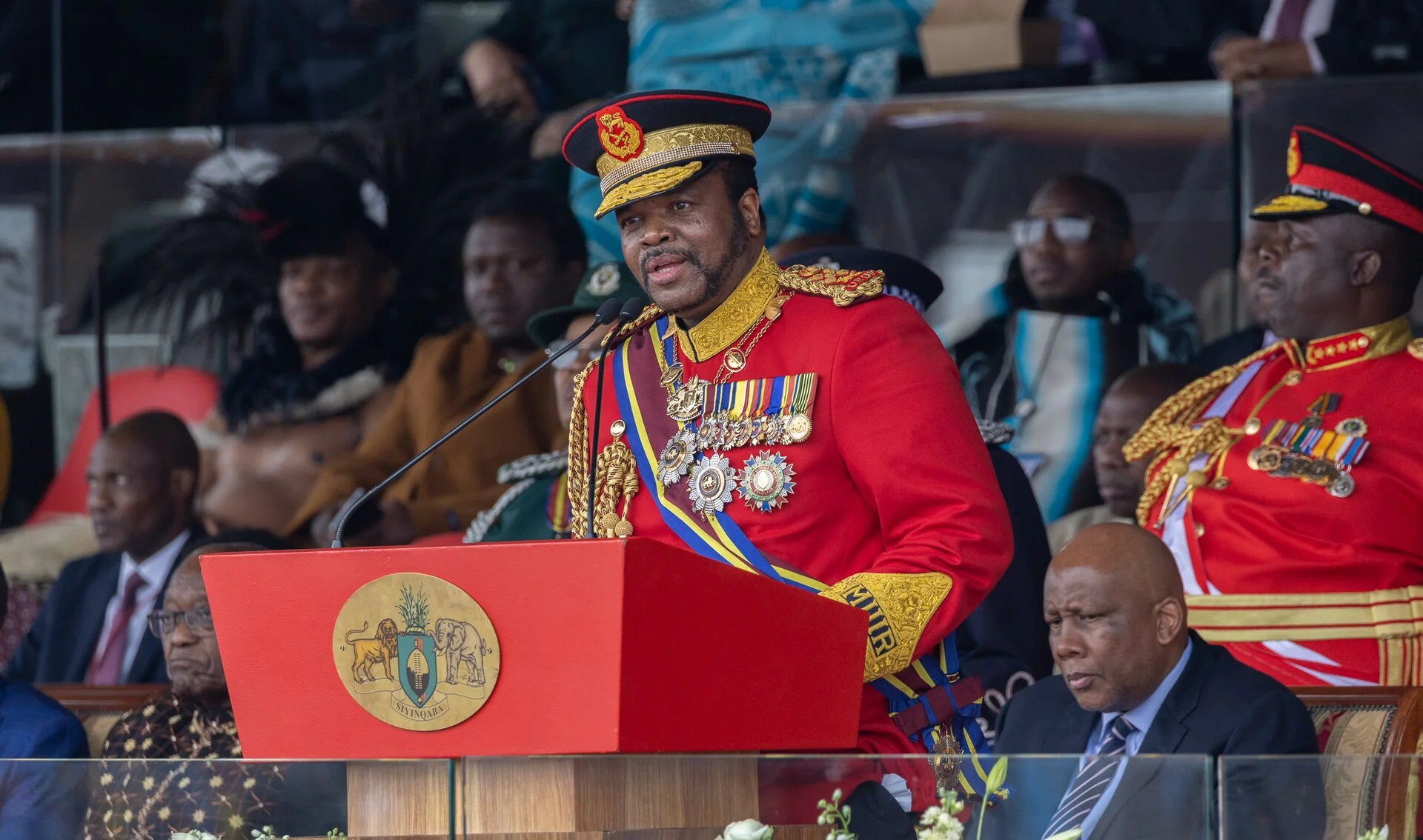
A stadium filled with drums, color and royal symbolism
The centerpiece of the jubilee was held at Somhlolo National Stadium in Lobamba, Eswatini’s traditional capital, where spectators in traditional attire and bright national colors packed the stands despite cool, overcast weather. Reuters and local outlets described marching bands blowing horns, choirs dressed in yellow, blue, and red to mimic the flag, and waves of ululation as dignitaries arrived.
Protocol dictated that the monarch arrives last. He did so in a convertible, wearing full military dress, circling the stadium’s perimeter as crowds stood, sang, and waved flags. The army band played the national anthem, followed by traditional praise songs and a rendition of “Happy Birthday,” marking not only the 40th anniversary of his accession in April 1986 but also his 58th birthday.
Over three days, state television carried live coverage of culture‑day ceremonies at the Ludzidzini Royal Residence, where regiments of male and female dancers performed in traditional dress and royal regalia emphasized continuity with a royal line that palace spokespeople say spans more than 30 kings.
Gifts, cattle, and the cost of royal celebrations
In the days leading up to the stadium ceremony, subjects from across the small, mountainous kingdom brought offerings to the monarchy, a tradition that took on added scale this year. Local media and international reports say the king received more than 250 head of cattle, along with foodstuffs, crafted objects, and cash donations estimated at over one million euros in total value.
The government’s social‑media accounts urged citizens to “join His Majesty King Mswati III in commemorating his 40‑year reign and birthday celebrations” and to honor the monarch’s leadership. Supporters described the festivities as a rightful expression of loyalty to the Ngwenyama, or “lion,” as the king is known in siSwati.
But critics, including some opposition activists and regional commentators, used the occasion to highlight royal spending and inequality in a country where about 60% of the 1.5 million population lives below the national poverty line. Reuters reported that detractors see the multi‑day celebrations, imported luxuries and security buildup as further evidence of a palace “out of touch” with ordinary economic hardship.
A king’s message: unity and development
Addressing the crowd at the stadium, King Mswati III framed his reign in terms of resilience and shared experience. “We have been through thick and thin as a nation,” he said. “It is important we remain united.”
Speakers praising the monarch highlighted specific policy initiatives, including the introduction of free primary schooling in 2022 and the deployment of mobile health clinics in 2023, which travel to remote areas of the country. A 19‑year‑old supporter, quoted by Reuters, said these measures proved the king “cares for his people” and deserved the outpouring of affection.
Royal spokesperson Percy Simelane told one outlet that the monarchy “enjoys enormous popular support and will endure in the coming years,” describing Eswatini as “the oldest nation in southern Africa” and emphasizing dynastic continuity. Government statements framed the 40‑year mark as a national achievement, presenting the king as a guarantor of stability in a region often rocked by coups and political unrest.
Absolute power in a changing region
Eswatini, formerly Swaziland, is the last absolute monarchy in sub‑Saharan Africa, a status that shapes both domestic politics and regional perceptions. King Mswati III holds sweeping authority over the executive, legislative and traditional systems, appointing the prime minister, controlling key state appointments, and retaining significant influence over land and resource allocation.
His supporters argue that this model has preserved cultural identity and shielded the country from some of the instability seen elsewhere in the region. But pro‑democracy activists inside Eswatini and rights groups abroad point to crackdowns on protests, tight controls on political parties and allegations of security‑force abuses, particularly during the 2021 unrest, as evidence that the concentration of power comes at a high cost for civil liberties.
The 40‑year celebrations took place under a heavy security presence, though there were no immediate reports of major demonstrations disrupting the official program. Analysts note that such occasions often serve a dual purpose: projecting royal legitimacy at home and signaling continuity to regional partners and investors.
Regional leaders and continental optics
The jubilee drew a roster of Southern African leaders, including the presidents of Mozambique, Zimbabwe and Botswana and King Letsie III of Lesotho, alongside Zulu King Misuzulu. Their presence was highlighted in state coverage as proof of Eswatini’s standing and the personal relationships Mswati has built over four decades.
Messages from visiting dignitaries, including a speech broadcast by Eswatini TV from Lesotho’s King Letsie III, emphasized “enduring bonds of friendship, shared heritage, and mutual respect” among monarchies and republics in the region. The optics reinforced Mswati’s image as both a traditional king and a regional statesman who has outlasted multiple democratic transitions and economic cycles around him.
At the same time, civil‑society voices argue that such high‑level solidarity can mute pressure for reforms in Eswatini, as neighboring governments prioritize stability and economic ties over human‑rights concerns.
Between cultural pride and calls for reform
For many emaSwati, the jubilee was above all a moment of cultural pride, filled with traditional regiments, choreographed dances, and imagery of a monarchy that presents itself as the embodiment of national identity. Social‑media posts from government departments and local organizations spoke of “deep reverence” and urged citizens to “keep reigning, Your Majesty.”
Yet the celebrations also sharpened long‑standing debates about economic inequality, political participation, and gender rights in a kingdom where the king’s personal wealth, large royal household and fleet of luxury vehicles have drawn criticism. Human‑rights groups have previously highlighted limits on freedom of assembly and the status of women in traditional structures, issues that were largely absent from the official jubilee messaging.
As Eswatini moves beyond this 40‑year milestone, the question for many observers is whether the monarchy’s deep cultural roots and visible popular support can coexist with rising expectations for accountability and democratic participation, or whether the tensions noted by critics during these celebrations will grow more acute in the years ahead.
Is your coverage audience more interested in the ceremonial angle of the jubilee or in the political and human‑rights debate around Eswatini’s monarchy?