
Mali’s Defense Minister Sadio Camara, a key figure in the country’s military government, has been killed in a suicide‑car‑bomb attack on his home in Kati, just outside the capital Bamako, local and international sources report. The assault was part of a broader wave of coordinated attacks by militant Islamist and Tuareg‑led factions that struck multiple cities across Mali on Saturday, in what analysts describe as one of the most significant offensives against the junta in years.
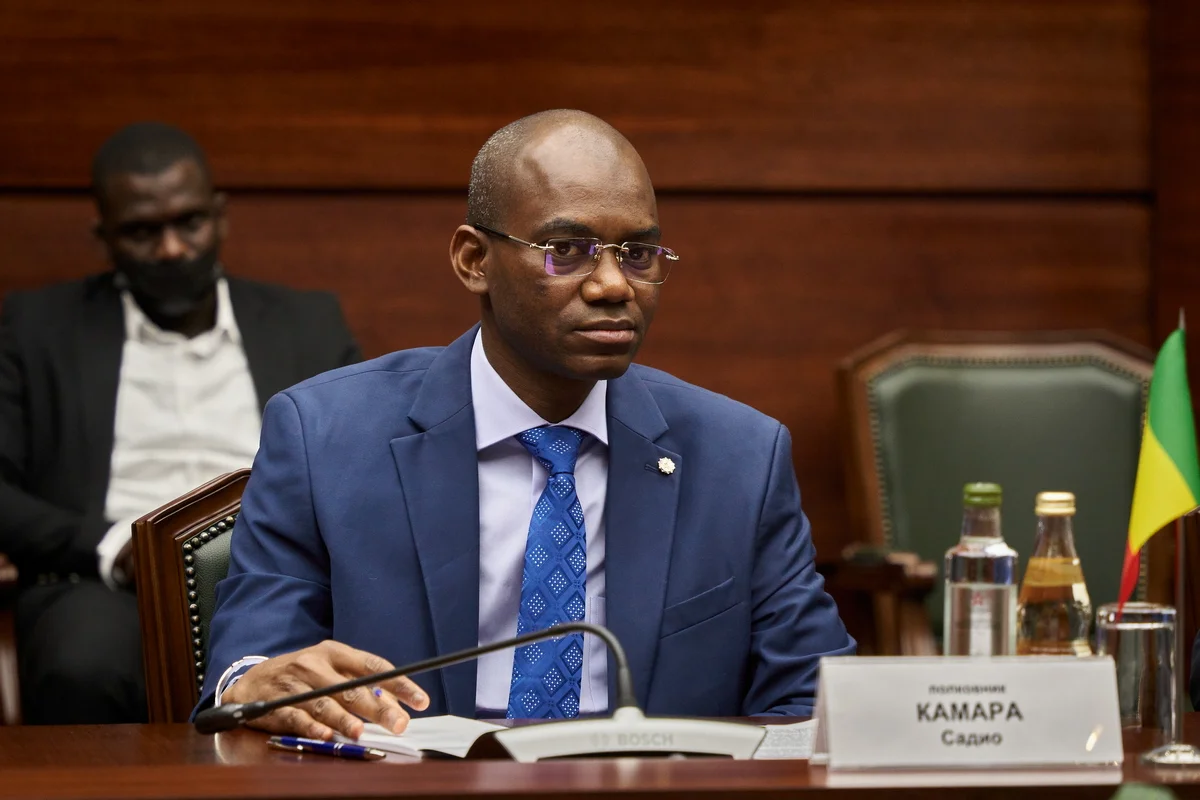
The death of the 47‑year‑old general, who played a central role in successive coups and the consolidation of military rule, marks a sharp escalation in the Sahel‑wide insurgency and raises questions about the resilience of Mali’s current leadership even as it leans heavily on Russian‑backed forces.
How the assassination unfolded
Witnesses and pro‑government, accounts say a vehicle‑borne explosive device (VBIED), a car rigged with explosives, struck Camara’s residence in the town of Kati, a key military‑camp town just west of Bamako. Residents quoted by Reuters and AFP reported that the blast was powerful enough to badly damage or largely destroy the house, with secondary reports indicating that Camara’s second wife and at least two grandchildren were also killed in the explosion.
The attack occurred in the midst of a broader, multi‑city offensive by armed groups, including the al‑Qaeda‑linked Jama’at Nusrat al‑Islam wal‑Muslimin (JNIM) and the Tuareg‑led Azawad Liberation Front (FLA), which jointly claimed responsibility for the wider campaign. Analysts describe the operation as a coordinated, multi‑prong strike intended to maximize both symbolic and tactical damage.
The wider coordinated attacks across Mali
The strike on Camara’s home was just one node in a much larger pattern of assaults that rippled through Mali on Saturday.
According to BBC, NPR and other outlets, the attacks affected:
- Bamako and Kati, where loud explosions and sustained gunfire were heard near military installations and communications hubs, prompting security forces to seal off access roads and scramble reaction units.
- Sevare and Mopti in central Mali, where fighters clashed with army and associated forces in streets and around checkpoints.
- Gao and Kidal in the north, long‑standing strongholds of both JNIM and Tuareg‑led factions, where insurgents reportedly seized or contested several positions.
Mohamed Elmaouloud Ramadane, a spokesperson for the FLA, told the BBC that the operation had been “strategically planned” and executed in coordination with JNIM, underscoring the growing alignment between jihadist and separatist networks in the Sahel.
Mali’s army announced that it was repelling the assaults and restoring order, but security sources acknowledged that the coordinated nature of the attacks tested the junta’s ability to defend multiple fronts simultaneously.
Who was Sadio Camara?
Sadio Camara, 47, was a central figure in Mali’s cycle of coups and military rule over the past decade. He first rose to prominence as a participant in the 2020 coup that ousted President Ibrahim Boubacar Keïta and helped install the country’s current military‑led government.
Camara served as Defense Minister from 2020 to 2021 and then again in a later reshuffle, making him one of the most visible and influential officers in the junta’s inner circle. In that role, he oversaw the expansion of security‑force units and the deepening of ties with Russian‑backed military contractors, including the Wagner Group’s successor, the Russian Africa Corps, which has been widely accused by the UN and human‑rights groups of committing abuses in Mali.
His personal profile reflected the dual reality of Mali’s security landscape: a coup‑maker cast as a defender of the state yet vilified by Islamist networks as a symbol of foreign‑backed oppression.
The role of JNIM, FLA and the Sahel insurgency
The suicide bombing and the wider wave of assaults are being attributed to a mix of actors:
- JNIM (Jama’at Nusrat al‑Islam wal‑Muslimin), an al‑Qaeda‑linked coalition, has long led a de facto blockade of southern Mali, targeting supply lines, fuel convoys and security posts in an effort to strangle the capital and pressure the junta.
- The FLA (Azawad Liberation Front), a Tuareg‑dominated rebel alliance, has long pushed for autonomy in northern regions such as Kidal and Gao, and has periodically clashed with both Malian security forces and rival armed groups.
The BBC and regional analysts note that the joint FLA–JNIM statement on Saturday framed the operation as a synchronized strike that would have been difficult to execute without cooperation between the two. That level of coordination is a worrying sign of convergence between jihadists and ethnic‑separatist networks, which could complicate any future peace talks.
What this means for Mali’s junta
Camara’s assassination is more than a personal loss for the Malian leadership; it is a direct strike at the core of the military‑led regime.
Analysts point out several immediate implications:
- Security‑command continuity: With Camara dead, the junta must quickly name a successor and reorganize the chain of command for the armed forces, at a time when the army is already stretched by persistent insurgent pressure.
- Russian‑backed partnership dynamics: Camara had been a key interlocutor with Russian‑linked forces; his death may create friction or uncertainty in that partnership, especially if competing factions within the Malian army vie for control of joint‑operation channels.
- Political messaging: The Military government has long framed itself as the only force capable of stabilizing Mali; a high‑profile assassination of the defense minister directly under its nominal protection undermines that narrative and may embolden opposition voices and insurgent networks.
At the same time, regional analysts warn that any attempt to retaliate with heavy‑handed military operations could fuel further cycles of reprisals and civilian suffering, especially in the north and central regions where the conflict is most entrenched.
Regional and international implications
The assassination and the broader wave of attacks come at a time of deepening volatility in the Sahel “coup belt,” where military juntas in Mali, Burkina Faso and Niger have pushed out Western‑backed governments and turned instead to Russian‑military partnerships, even as jihadist and separatist violence has intensified.
Analysts writing for outlets such as the European Parliament and crisis‑research groups stress that the attack on Camara is a signal that armed groups in the region now feel capable of striking at the highest levels of state power, even in the capital’s periphery.
For neighboring countries such as Burkina Faso, Niger and Chad, the assault underscores the risk that the Sahel’s security crisis can spill across borders, both in the form of cross‑frontier operations and refugee flows.
For France, the United States and other Western powers that have withdrawn formal military missions but maintain counter‑terrorism and diplomatic roles, the attack is a grim reminder of the limits of their current influence and the resilience of networks such as JNIM.
What happens next in Mali?
Mali’s army has declared that operations are continuing to restore security and has urged the population to remain calm, but the death of the defense minister has already shifted the country’s political‑security calculus.
In the short term, authorities are likely to tighten security in Bamako, Kati, Gao, Kidal and Mopti, imposing curfews, extra checkpoints, and movement‑restriction measures, which could further strain supply chains and daily life in affected areas.
In the longer term, the question is whether the junta can maintain cohesion and public support in the absence of its most visible defense‑architecture figure, while facing both a determined insurgency and growing international criticism over its human‑rights and governance record.
For the people of Mali, the message of Saturday’s coordinated attacks is stark: even the homes of the country’s most powerful military leaders are no longer safe from the reach of the Sahel’s sprawling, multi‑front conflict.