
Cameroonian President Paul Biya’s 45-day absence abroad has triggered fresh criticism at home, deepened uncertainty over the country’s political succession and prompted rare public discussion inside the ruling party about continuity at the top of state. At 93, Biya is the world’s oldest head of state, and his prolonged stay outside Cameroon, described by officials as a “brief private stay in Europe”, has become the longest overseas trip of his presidency.
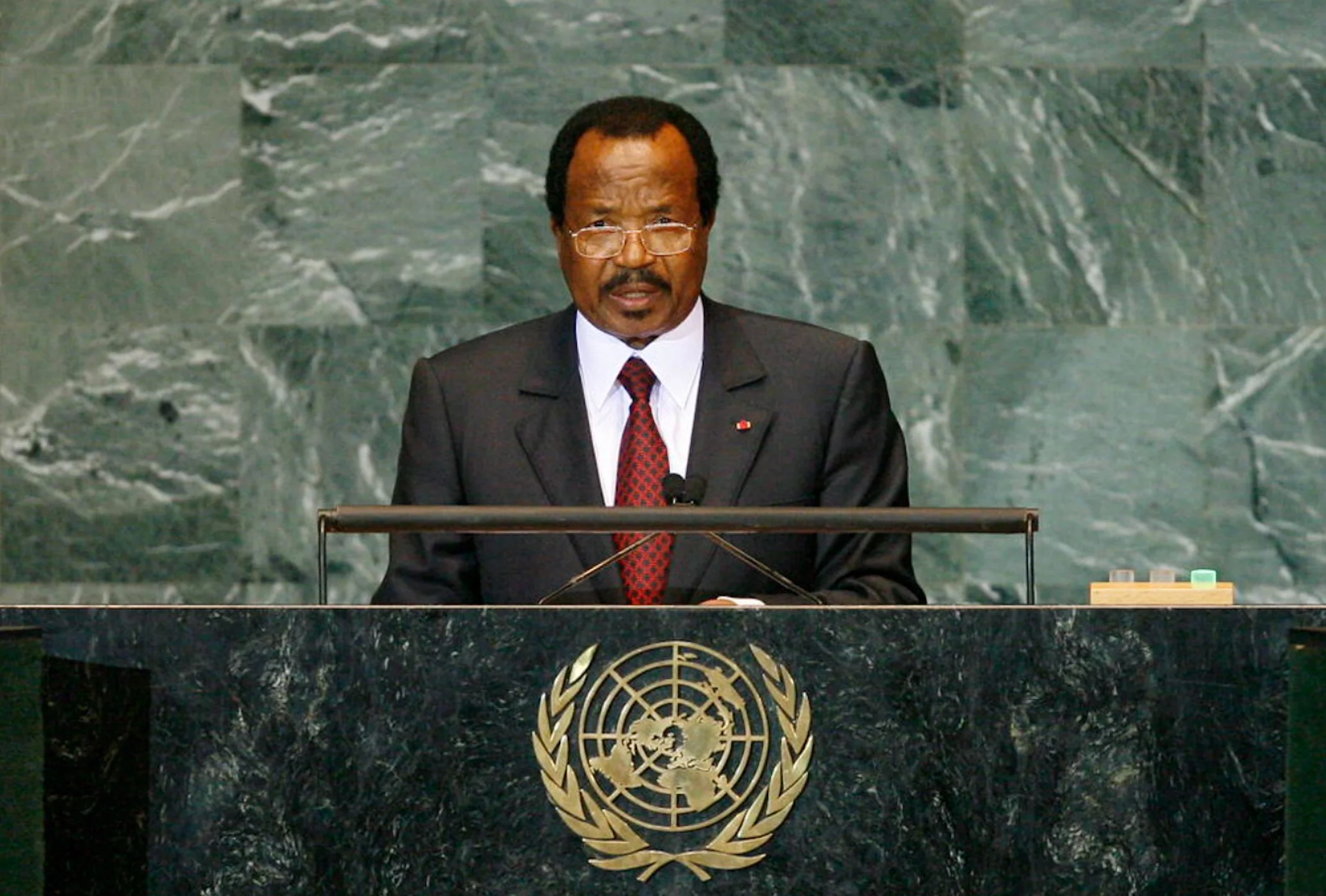
Biya’s prolonged absence
Biya left Cameroon on June 7 for what the civil cabinet called a private trip to Europe and has not returned, with the government offering no clear timeline for his comeback. Reuters reported that he has now been away for 45 days, making this the longest overseas absence of his decades in power. The lack of official detail has fueled speculation about his health and renewed questions about who is actually exercising presidential authority.
The administration has tried to project normalcy. Official presidential social media accounts have continued posting messages in Biya’s name, including diplomatic greetings and ceremonial notes, even as the president himself has not appeared publicly or directly addressed the speculation. Critics say those posts are no substitute for an in-person appearance or a substantive statement on the head of state’s condition and location.
The concern is not only Biya’s age, but the opacity around his absence. In a system already defined by centralized power, the absence of a visible leader can create a vacuum of confidence even when formal institutions remain in place.
Opposition criticism grows
Opposition figures have seized on the silence. The Cameroon Democratic Union said officials should provide “the necessary clarifications regarding the effective continuity of the state,” according to Reuters. Opposition lawmaker Jean Michel Nintcheu went further in a Facebook post, calling on the Constitutional Court to declare the presidency vacant.
That demand underscores a central tension in Cameroonian politics: the gap between a formally functioning state and a presidency that increasingly appears personalized around one man. Critics argue that a 45-day absence without a public explanation is incompatible with transparent governance, particularly in a country facing economic pressure, security challenges and long-running political fatigue.
Human rights and governance analysts say the controversy also reveals how fragile succession planning remains in Cameroon. Without a vice president in place, the country lacks a clear, visible fallback mechanism that could reassure the public if Biya’s absence were to continue. That absence of institutional clarity has turned what might have been a routine private trip into a national political issue.
Ruling party pushes back
The ruling Cameroon People’s Democratic Movement has responded by insisting the state is functioning normally. Party official Christophe Mien Zok wrote in an editorial that “the office is not vacant” and that “the Lion has not left,” a reference to Biya’s long-standing political nickname.
The party’s rare meeting of senior leaders on Wednesday was itself a signal that the issue has become serious enough to require internal management, not just public messaging. While the ruling camp is rejecting claims of a crisis, the need to publicly defend Biya’s absence suggests the leadership understands the political cost of leaving the vacuum unaddressed.
Still, the government has not said when Biya will return or whether he is in Geneva, as some officials and past reports have suggested during earlier absences. That ambiguity has allowed rumors to spread, even though officials have repeatedly denied reports that he is gravely ill or dead.
Health, secrecy, and succession
Biya’s health has long been a sensitive topic in Cameroon, and previous unexplained absences have sparked rumors and government crackdowns on reporting. In 2024, the government even banned media coverage of his condition after speculation about his whereabouts intensified, with officials saying the matter touched on national security.
This pattern helps explain why the current absence has become more than a personal matter. In Cameroon, secrecy around the president’s health has become a political instrument, protecting the image of continuity while feeding public mistrust. The longer the silence continues, the more it invites speculation about the true state of succession planning within the ruling elite.
Analysts say the issue is especially delicate because Biya’s rule has already stretched over four decades, making his eventual departure one of the most consequential political transitions in Central Africa. Yet the system appears to have offered little public preparation for that moment, leaving citizens to infer stability from official statements rather than visible governance.
Why it matters now
The criticism comes at a moment of broad political stagnation in Cameroon. Biya was re-elected after more than 40 years in power, and observers have described the country as trapped in a cycle of weak institutions, elite loyalty, and limited democratic renewal. That background magnifies the significance of any prolonged absence by the man at the center of the system.
For younger Cameroonians, Biya’s long absences and the uncertainty surrounding them are part of a larger frustration with a political order they see as distant and unresponsive. Social media skepticism has become a recurring feature of these episodes, with many citizens demanding proof of life or at least a direct address from the presidency instead of official assurances.
The controversy also matters for governance. Even if the constitution does not set a clear time limit for how long a president may remain abroad, long unexplained absences weaken confidence in continuity, decision-making and accountability. That is why the current debate is not merely about whether Biya is healthy enough to travel, but whether Cameroon’s political system can transparently function around a leader who has become increasingly remote from public view.
What comes next
For now, the ruling party appears focused on containing criticism rather than clarifying the president’s whereabouts. But unless Biya returns or his office provides a credible explanation, the pressure is likely to keep building from the opposition, civil society, and an increasingly skeptical public.
The longer the silence lasts, the more the question shifts from where Paul Biya is to what Cameroon’s political future looks like without a clear answer. In a country where formal continuity and real uncertainty have long coexisted, that is a question the ruling elite can no longer easily avoid.



