
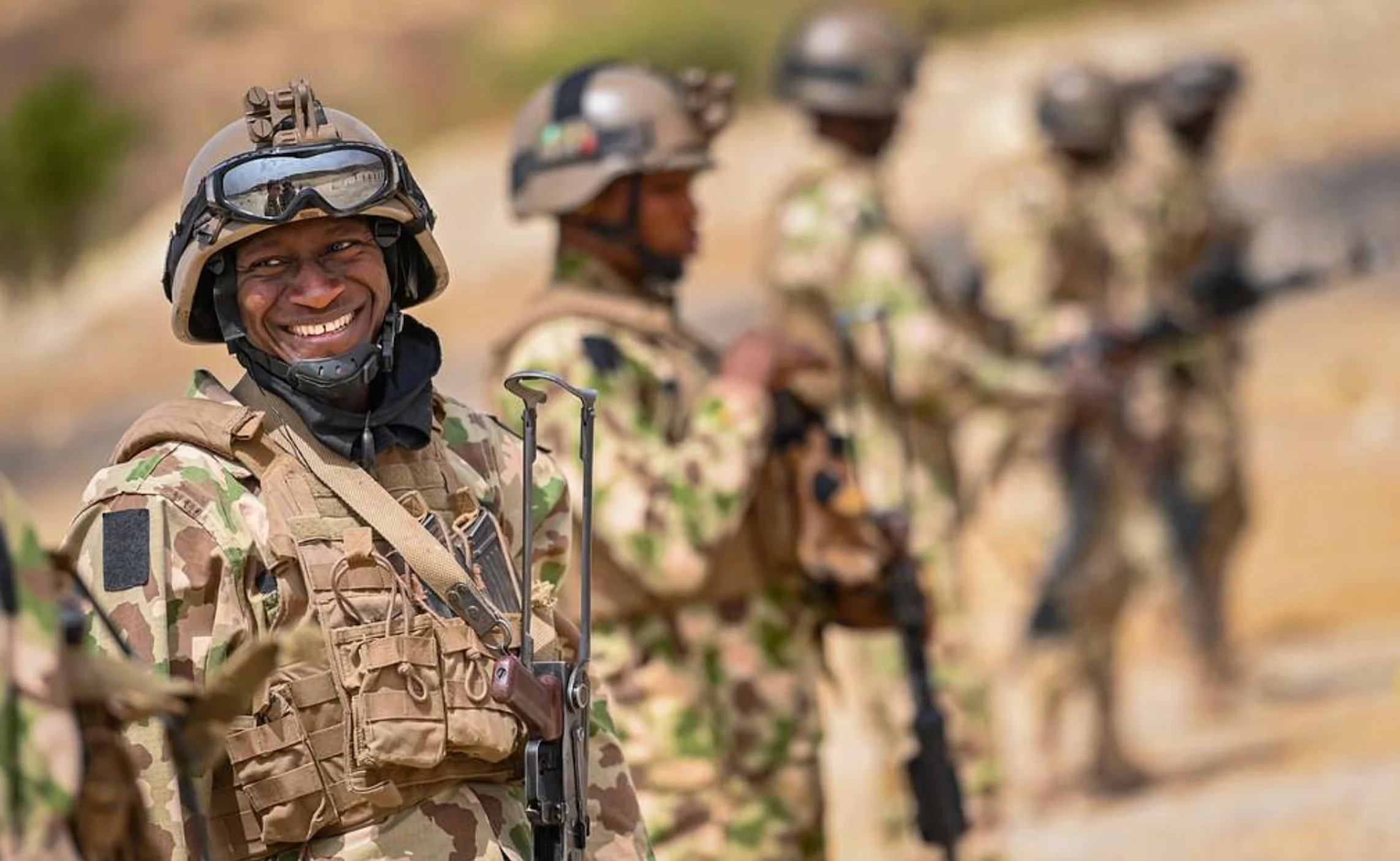
President Bola Tinubu has approved a major expansion of the Nigerian Army, raising its structure from eight to 12 divisions, and authorizing the recruitment of 28,000 additional personnel in one of the country’s largest military reorganizations in years. The government says the plan is meant to improve response times, decentralize command, and strengthen the fight against terrorism, banditry, kidnapping and other security threats across Nigeria.
What the plan includes
According to presidential spokesperson Bayo Onanuga, the new structure will create four additional divisions in Makurdi, Ilorin, Jalingo and Benin City. The army will continue operating from its existing headquarters network while the new formations cover parts of central, northeastern, and southern Nigeria.
The recruitment drive will add 28,000 personnel to the force, a significant manpower increases for an army already stretched by overlapping insurgency and internal security duties. The presidency says the expansion also builds on investments in equipment, troop welfare and force modernization.
Implementation will happen in two phases. Reuters reported that the 5th, 9th and 10th divisions are expected to become operational by September, while the 83rd Division in Benin City and further reorganizations are due by December.
Why it matters
The move comes as Nigeria continues to face security pressure from multiple fronts. Militants in the northeast, armed groups in the northwest, kidnapping networks in the north-central belt and communal violence in several states have left the army under sustained strain.
By spreading command responsibility across more divisions, the government is betting that the army can react faster and coordinate better in a country with huge territory and many flash points. Officials say the restructuring is intended to shorten the distance between threats and commanders, especially in places where response times have been too slow.
The scale of the personnel increase also signals that Abuja sees manpower as part of the answer, not just equipment. That matters in a security environment where recruitment, training and retention are just as important as hardware.
Where the new divisions go
The planned expansion would give Nigeria a more distributed military map. Under the new structure, the 1st Division remains in Kaduna, covering Kaduna, Kano, Katsina and Jigawa; the 2nd stays in Ibadan; the 3rd in Jos; the 6th in Port Harcourt; the 7th in Maiduguri; the 8th in Sokoto; the 81st in Lagos; and the 82nd in Enugu.
The new 5th Division will be in Makurdi, the 9th in Ilorin, the 10th in Jalingo and the 83rd in Benin City. That geographic spread suggests the government wants the army to be more regionally responsive, especially in zones where banditry, insurgency, and communal violence overlap.
Placing a division in Benin City is also notable because it extends the structure further into the south, where pipeline vandalism, oil theft and criminal networks remain a concern. The redesigned order of battle appears aimed at both internal security and protection of critical infrastructure.
Political and security backdrop
Tinubu’s move also reflects the political pressure of governing amid insecurity. Nigerians have long complained that military deployments have not always translated into visible safety improvements, especially in rural and frontier areas.
The expansion may therefore be read as both a security measure and a political response. By approving more divisions and recruits, the president can argue that his administration is not standing still in the face of violence, even if results take time to materialize.
The Nigeria Governors’ Forum has already welcomed the decision, saying the new structure and recruitment plan would strengthen the country’s security architecture. That backing matters because governors are often among the first officials to face local anger when kidnappings or attacks spike in their states.
What could go wrong
Expanding the army on paper is easier than making the force more effective in practice. The new recruits will need training, equipment, and command integration, while the new divisions will require logistics, intelligence support and reliable funding.
There is also the risk that growth may outpace quality. A larger army can still struggle if recruitment standards, troop welfare and discipline are not improved at the same time.
Security analysts will also watch whether the restructuring changes the balance between regional commands and central control. If the new divisions are not properly coordinated, Nigeria could end up with a larger force that is no easier to manage than the one it had before.
What to watch next
The first checkpoint is September, when the government says three of the new formations should be operational. The second is December, when the Benin City division and further reorganization are scheduled to be completed.
The more important question is whether the expansion improves security outcomes on the ground. If kidnappings, insurgent attacks, and communal violence continue at the same pace, critics will say the government expanded a structure without solving the underlying problem.
For now, Tinubu has made a clear wager: that more divisions, more troops, and more localized command can give the army a better chance to meet Nigeria’s security crisis head-on. Whether the gamble pays off will depend on execution as much as ambition.