The Russia–AES meeting in Niamey is the latest sign that the Sahel’s military-led governments are deepening ties with Moscow while trying to present the alliance as a sovereign regional bloc rather than a collection of isolated juntas. The talks, held in Niger’s capital with foreign ministers from Mali, Burkina Faso, and Niger, focus on trade, investment, and security cooperation, but they also carry a clear geopolitical message: the AES wants to build partners outside the Western orbit.
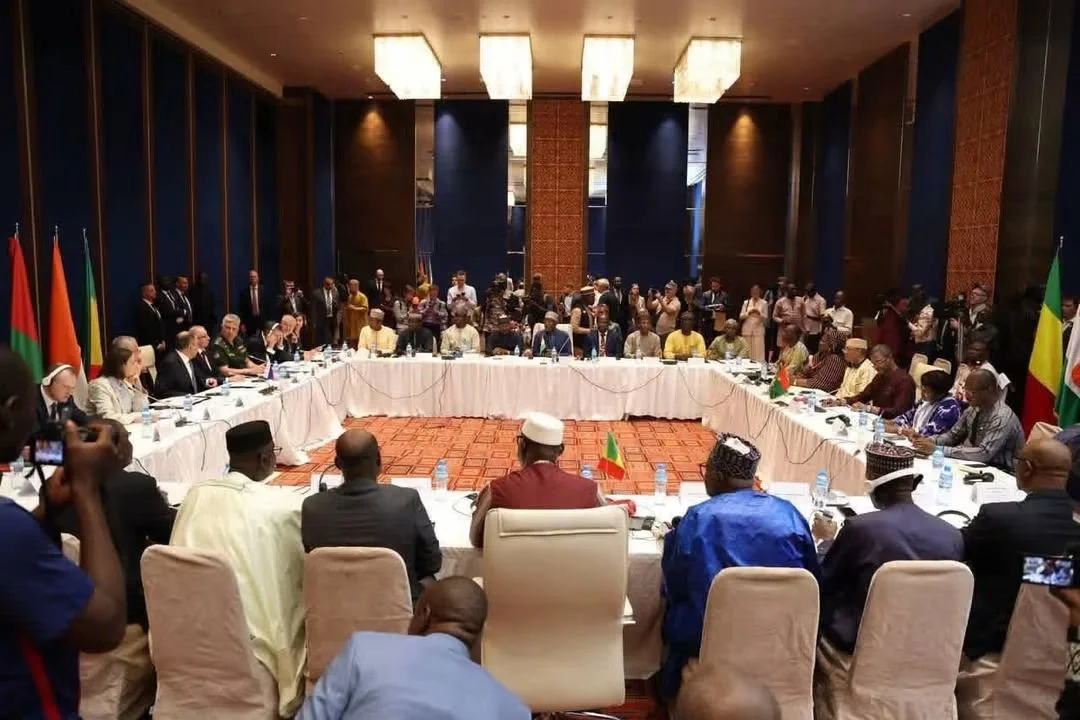
What happened in Niamey
Russia and the Alliance of Sahel States met in Niamey for a ministerial-level session that both sides framed as a continuation of their growing partnership. Russia’s foreign ministry said the agenda centered on economy, trade, and investment, while African outlets described the meeting as a second round of high-level consultations between the AES and Moscow.
Sergei Lavrov was in the Nigerien capital and met President Abdourahamane Chiani as well as Niger’s foreign minister, according to Russia’s Foreign Ministry and Russian media coverage. DW’s French-language report said Lavrov also met counterparts from Mali and Burkina Faso, underscoring that the meeting was not just bilateral but bloc-to-bloc.
The message from the summit-style talks was clear. The AES, made up of Mali, Burkina Faso, and Niger, is trying to show that it can function as a geopolitical unit rather than three separate transitional governments. Russia, for its part, is trying to cement itself as the Sahel’s preferred external partner.
Why it matters
The meeting matters because it is about more than protocol.
For the AES governments, Russia offers an alternative to the Western governments and regional institutions that have criticized their coups and transition paths. Moscow provides something else too: a security relationship that is less publicly tied to political conditionality than those offered by Paris, Washington, or ECOWAS.
For Russia, the Sahel is strategically valuable. Niger, Mali, and Burkina Faso sit in a region marked by insurgency, weak state capacity and competition for influence. By consolidating ties there, Moscow strengthens its diplomatic reach and builds a network that can support broader African policy goals.
The meeting also carries economic implications. Lavrov’s ministry said the talks focus on trade, economic and investment cooperation, while Russian media reported discussions on humanitarian and legal frameworks as well. That suggests Moscow is trying to move beyond the language of military assistance and into long-term state-to-state engagement.
Security first, economics second
Security remains the centerpiece of the relationship.
Russian and African reporting repeatedly ties the partnership to counterterrorism, regional stability, and defense cooperation. Niger, Mali, and Burkina Faso have all faced worsening jihadist violence, and each has looked for outside partners after distancing itself from some Western security arrangements.
Russia’s argument is straightforward: the AES wants partners who respect sovereignty and help it fight armed groups without political lectures. The AES governments, in turn, want military help, intelligence support and possibly access to defense equipment and training.
But there is a cost. Deeper reliance on Russia can tie the AES more closely to Moscow’s geopolitical priorities and reduce room for maneuver. It may also sharpen tensions with neighbors and regional bodies that view the Sahel pivots as destabilizing.
The sovereignty narrative
A big part of the Niamey meeting is narrative control.
The AES has consistently framed its foreign policy around sovereignty, non-interference, and a break from what it sees as neocolonial pressure. Russian and regional reporting echoed that language, saying both sides reject Western “rules-based” domination and favor a more multipolar order.
That wording is not accidental. It allows the AES to present itself to domestic audiences as independent and defiant, rather than isolated. It also gives Russia a rhetorical role as a partner in anti-colonial resistance, a theme Moscow has used across Africa.
The risk is that rhetoric can outrun results. The public in the Sahel is likely to judge these meetings by whether security improves, food and fuel prices ease, jobs emerge, and state legitimacy grows. Diplomatic language alone will not deliver that.
Niger’s diplomatic shift
Niger is especially important in this story.
Since the 2023 coup, Niamey has moved away from France and closer to Russia on security and diplomatic posture. Russian reporting says Moscow has resumed embassy activity in Niamey and is preparing to deepen bilateral ties further.
That shift matters because Niger sits at the center of the Sahel security map. Any alignment it chooses can influence neighboring Mali and Burkina Faso, as well as wider regional dynamics. Hosting the AES-Russia meeting in Niamey therefore carries symbolic weight beyond the agenda itself.
It also demonstrates Niger’s desire to be seen as a diplomatic hub rather than a pariah state. By bringing Russian and AES officials together, Niamey is trying to normalize its new foreign policy orientation and make it look institutional rather than improvised.
What to watch next
The real test is whether this meeting produces concrete commitments.
Watch for any new security agreements, embassy moves, investment pledges or defense cooperation announcements. Those details will matter more than the ceremonial handshake photos.
Also watch whether the AES begins presenting itself more like a formal geopolitical bloc with joint institutions and coordinated foreign policy. If that happens, Russia will likely continue treating Niamey as a key entry point into the Sahel.
Finally, monitor the reaction from Western governments and regional organizations. The more the AES-Russia partnership deepens, the more it will force others to decide whether to compete, accommodate or isolate.The AES-Russia meeting in Niamey shows the Sahel’s military-led states pushing deeper into a Moscow-backed partnership built on security, sovereignty, and strategic realignment. It is a diplomatic event with regional consequences, not just a photo opportunity.