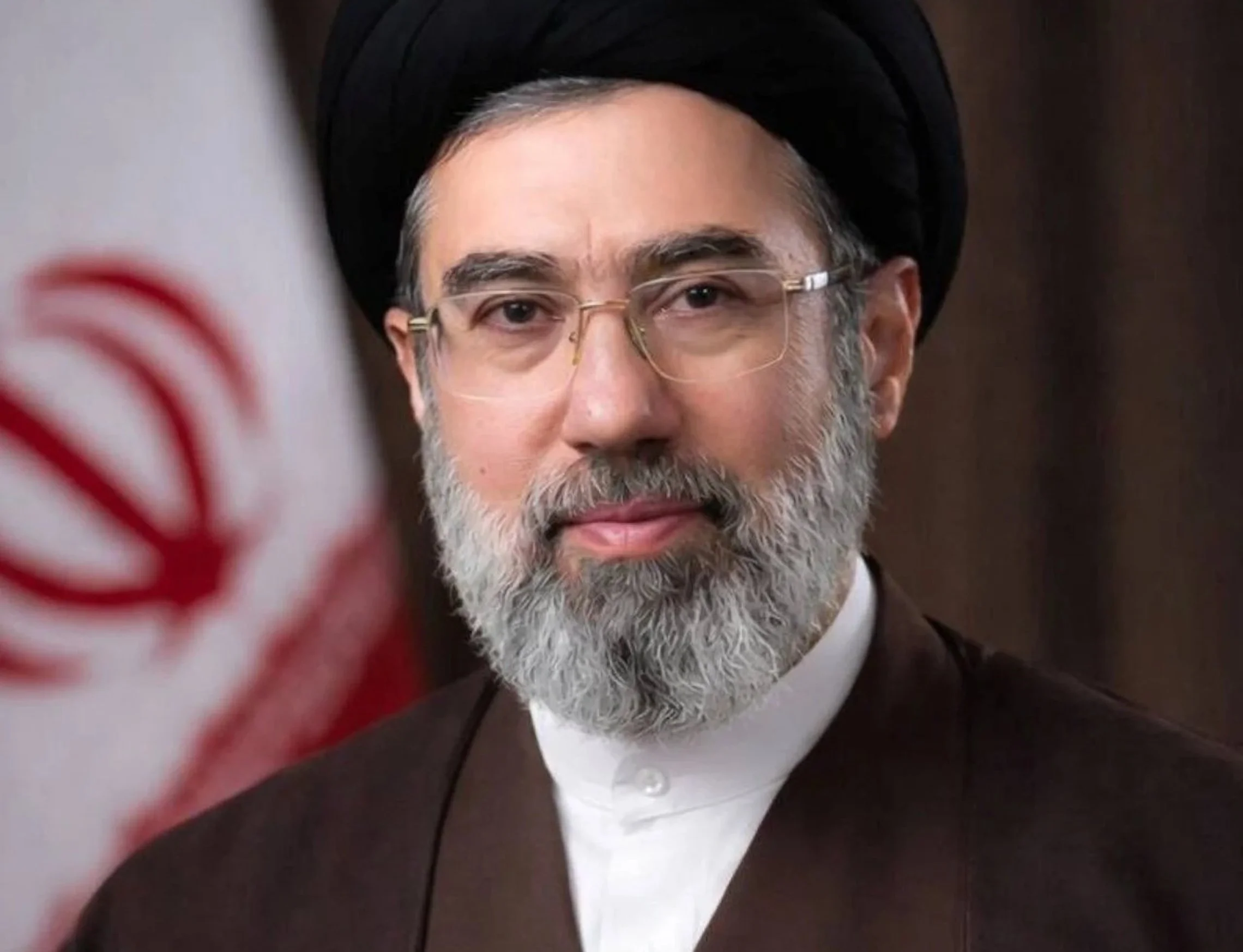
Mojtaba Khamenei, the once‑shadowy son of Ayatollah Ali Khamenei, has now stepped fullyMojtaba Khamenei, the newly appointed supreme leader of Iran, is a 56‑year‑old mid‑ranking Shia cleric and the second son of the late Ayatollah Ali Khamenei, long seen as a powerful but shadowy figure at the heart of the Islamic Republic. His elevation by the Assembly of Experts makes Iran, in effect, the first modern theocracy where the position of supreme leader has passed from father to son, intensifying accusations of creeping dynastic rule.
From shadowy son to supreme leader
Until recently, Mojtaba Khamenei was virtually unknown outside Iran, rarely appearing in public and limiting his teaching to seminary classrooms in Qom. Inside the system, however, he was widely regarded as his father’s gatekeeper: a discreet operator controlling access to the supreme leader’s office and shaping the flow of information and patronage.
Born in 1969, Mojtaba is the second of Ali Khamenei’s four sons and, like his father, wears a black turban signifying descent from the Prophet Muhammad as a sayyed, a status that carries symbolic weight in Shia politics. He fought as a young man in the Iran‑Iraq war and later pursued religious studies, rising to the mid‑level clerical rank of Hojjat al‑Islam, which is lower than the Ayatollah title held by both his father and the republic’s founder, Ruhollah Khomeini.
Critics argue that his limited scholarly standing makes him theologically underqualified to be supreme leader, but supporters point to his long experience inside the ruling apparatus and close familiarity with the security state.
Backed by the Revolutionary Guards
What Mojtaba lacks in public profile he makes up for in relationships with Iran’s Islamic Revolutionary Guard Corps (IRGC) and its Basij paramilitia, which underpin the regime’s coercive power.
Analysts quoted by Reuters and think‑tank reports describe him as enjoying “considerable support” among younger, more radical IRGC factions, some of whom have dubbed him a “mini‑supreme leader” in waiting. A 2007 US diplomatic cable later released by WikiLeaks cited multiple Iranian sources portraying Mojtaba as a key conduit to reach Ali Khamenei and an influential player in the elevation of hard‑line president Mahmoud Ahmadinejad in 2005.
He is widely believed to have backed Ahmadinejad’s contested 2009 re‑election and to have supported the violent suppression of the Green Movement protests that followed, with Basij and IRGC units playing a central role. During the more recent “Women, Life, Freedom” unrest after Mahsa Amini’s death in 2022, protesters chanted against Mojtaba by name, blaming him for crackdowns and corruption.
In 2019, the US Treasury sanctioned Mojtaba Khamenei for his links to the IRGC and role in the repressive apparatus, freezing any assets under US jurisdiction and citing him as a senior figure in “the regime’s oppression at home and aggression abroad.”
A dynastic turn in a revolutionary state
Mojtaba’s appointment marks an extraordinary dynastic turn for a system that overthrew a hereditary monarchy in 1979 and has long depicted itself as an anti‑royalist republic guided by jurists, not bloodlines.
The Assembly of Experts, the 88‑member body of clerics charged with selecting the supreme leader, confirmed his elevation in early March, days after Ali Khamenei was killed in a US‑Israeli airstrike on his compound at the start of the war. Reports from Iranian and international outlets suggest the IRGC heavily pressured assembly members through in‑person meetings, phone calls and even remote sessions after bombing damaged their offices in Tehran and Qom.
This outcome runs against Ali Khamenei’s own public stance. In a 2024 succession‑focused session of the Assembly of Experts, he said his son should not be considered, warning that a hereditary hand‑over would resemble the monarchy Iranians had toppled. His reported private remarks about not wanting to create a “monarchy” are now being contrasted with the reality of Mojtaba’s accession.
For many Iranians who took part in protests over economic hardship and political repression in recent years, the choice confirms that hard‑liners around the Guards have no intention of opening the system, despite Khamenei’s death.
Control of war, nukes and ideology
As supreme leader, Mojtaba Khamenei inherits sweeping constitutional powers:
- He is commander‑in‑chief of the armed forces, including the IRGC and its Quds Force.
- He has final say over nuclear policy, including decisions about enrichment levels and potential negotiations with world powers.
- He appoints key figures such as the judiciary chief, state broadcaster head, half the Guardian Council and top commanders, shaping every major lever of state power.
Reports from AP and other outlets note that he now sits atop an Iranian military actively engaged in conflict and in control of a stockpile of highly enriched uranium that Western governments fear could be converted into nuclear weapons if Tehran chose that path.
Analysts at the Washington Institute and other think‑tanks argue that, given his close IRGC ties and history, Mojtaba may be inclined toward “extreme strategic options,” including expanding repression at home and leaning harder on proxy forces abroad even if open war slows. Israeli officials have already warned that any new supreme leader would be a legitimate target, underscoring the perilous environment he steps into.
Domestic legitimacy problem
At home, Mojtaba faces an immediate legitimacy deficit.
BBC and New York Times profiles stress that:
- His track record in leadership is “largely untested” in public view, with no history of elected office or public diplomacy.
- Many Iranians see his selection as confirming that “the republic has become a family enterprise”, deepening cynicism after years of unfulfilled promises and harsh crackdowns.
The memory of nationwide protests in 2019 and 2022–23, brutally repressed by security forces, is still fresh. During those movements, chants like “Death to Khamenei, be it Ali or Mojtaba” circulated widely, signaling that activists viewed the son as part of the same repressive structure.
Now, as supreme leader, he must persuade a weary public that he can manage economic crisis, war, and international isolation – all while overcoming the sense that he inherited power rather than earning it through religious prestige or revolutionary sacrifice.
Clerical credentials vs. hard‑line politics
One of the more unusual aspects of Mojtaba’s rise is his clerical rank.
- He is generally referred to as Hojjat al‑Islam, a mid‑tier title, rather than Ayatollah, the rank held by his father and Ayatollah Ruhollah Khomeini when they assumed top leadership.
- Critics inside the clergy argue that this undercuts the doctrinal basis for velayat‑e faqih – rule of the jurist, which presumes a high level of religious scholarship.
Yet his defenders say his knowledge of the system’s inner workings, accumulated over decades in his father’s office and security councils, matters more than formal titles in a state where power has long tilted toward the security sector.
Mojtaba has previously suspended his religious jurisprudence classes in Qom, in a move that fueled speculation he was clearing the way for a more overtly political role. That gamble has now paid off, but it also highlights how far the Islamic Republic’s leadership has drifted from the image of independent jurists above politics.
What his leadership could mean for Iran and the region
Early signs suggest Mojtaba Khamenei’s tenure will emphasize continuity and consolidation rather than reform.
Experts quoted in media and policy analysis predict that under his watch:
- Repression is likely to intensify, at least in the short term, as the new leader seeks to deter any perception of weakness during wartime and succession.
- The IRGC will retain or even expand its dominant role in politics and the economy, from oil and construction to telecoms and media.
- Iran’s approach to the US and Israel will stay confrontational, with limited appetite for concessions on the nuclear program unless severe economic or military pressure forces a recalculation.
At the same time, some analysts caution that Mojtaba’s dependence on the Guards could, over time, constrain him – turning the supreme leader into more of a first among equals in a security‑clergy oligarchy rather than an unchallenged arbiter like his father.
For ordinary Iranians, the key questions are more immediate: can this new, largely unseen man at the top ease sanctions‑driven hardship, reduce the risk of devastating war, and allow a bit more space for daily life? For now, Mojtaba Khamenei’s biography and backers suggest continuity with the past – and perhaps an even harder edge in a system already under immense strain.