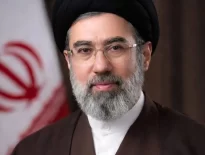
Israel says it has killed Iran’s intelligence minister, Esmaeil (Esmail) Khatib, in an overnight airstrike, the third senior Iranian official it claims to have eliminated in barely 48 hours as the Middle East war escalates on multiple fronts. Tehran has not yet confirmed Khatib’s death, leaving a critical gap between Israel’s triumphant narrative of decapitating Iran’s security leadership and Iran’s official silence in the face of mounting losses.
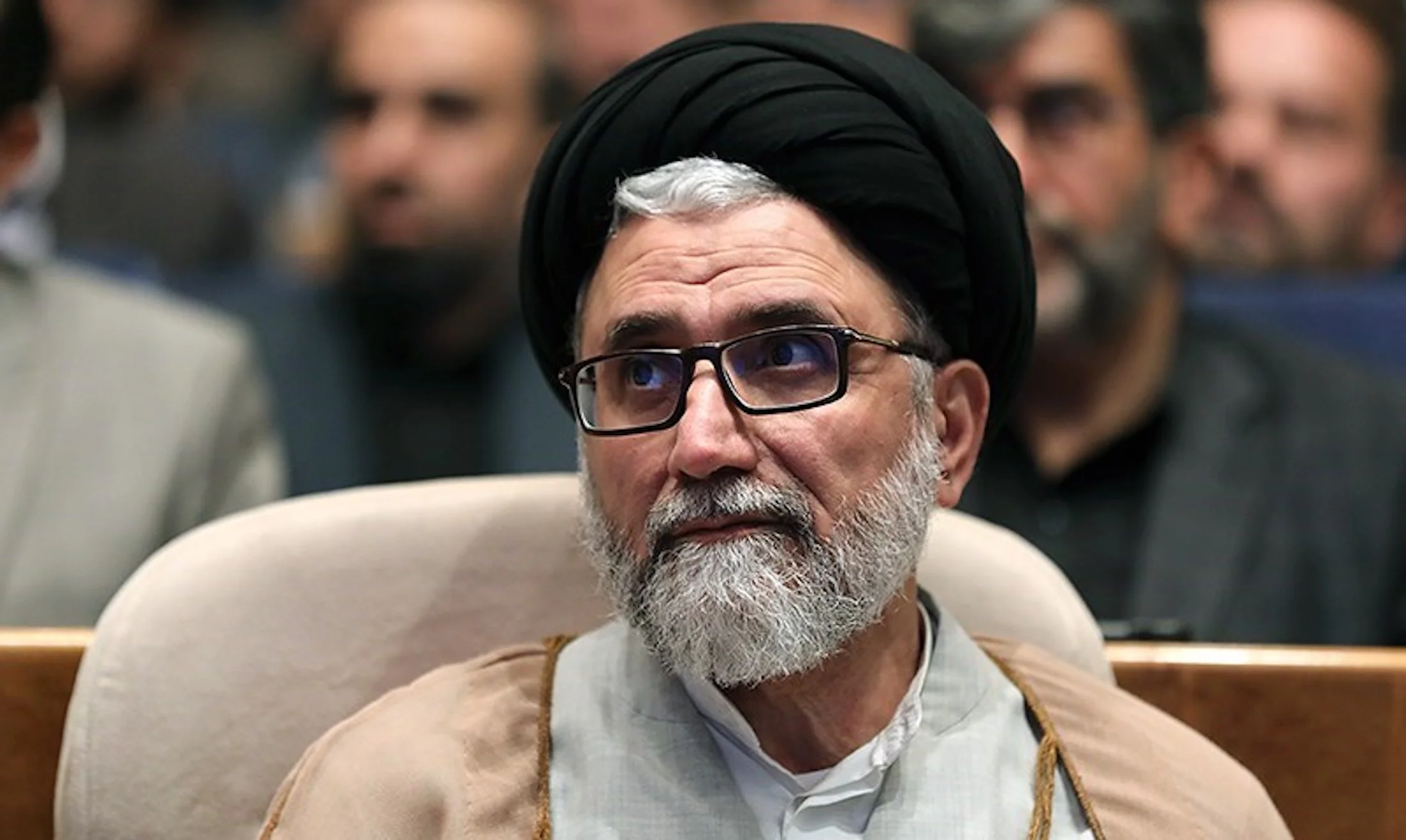
Israel’s claim: a third “decisive” strike in two days
Israeli Defense Minister Israel Katz announced on Wednesday that the Israeli military had killed Esmaeil Khatib in what he described as a precision strike, promising that “significant surprises are expected throughout this day on all fronts.”
Katz did not disclose the exact location or method of the attack, but Associated Press reporting from the Gulf region says Israel framed the operation as part of a broader campaign against Iranian leadership figures directing missile, drone, and proxy attacks. A U.S.‑based outlet citing Israeli officials said Khatib was targeted after American intelligence placed a multi‑million‑dollar bounty on him and several other senior Iranian operatives.
If confirmed, Khatib’s killing would follow closely on Israel’s claims that it eliminated Iran’s top security official Ali Larijani and Basij paramilitary commander Gholam Reza Soleimani in earlier strikes, making him the third high‑ranking target in barely two days.
Who is Esmaeil Khatib?
Esmaeil (Esmail) Khatib has served as Iran’s minister of intelligence since 2021, overseeing a powerful ministry responsible for both domestic surveillance and foreign clandestine operations.
Western governments and Israel have accused his ministry of:
- coordinating plots to target Israeli and Jewish interests abroad
- supporting cyber operations against regional rivals
- tracking and detaining dissidents and dual‑nationals inside Iran
The U.S. government had recently offered up to $10 million for information on Khatib and nine other top Iranian officials under a rewards‑for‑justice program focused on threats to American and allied personnel. That bounty underscored Washington’s view of Khatib as a central player in Iran’s shadow conflict with Israel and the West.
Within Iran’s hierarchy, the intelligence minister sits at the nexus of the security state, reporting to the president but closely aligned with the Revolutionary Guard and, until his death earlier in the war, Supreme Leader Ayatollah Ali Khamenei. Removing him would represent a direct attack on the regime’s ability to gather information, disrupt opposition and coordinate covert action.
Tehran’s silence and the fog of war
As of Wednesday morning, local time, Iranian state media had not confirmed Khatib’s death, nor issued the kind of obituary or funeral announcements that followed previous high‑profile killings.
That silence echoes Iran’s initial reaction to Israel’s claim that it had killed Larijani and Soleimani, which Tehran also delayed acknowledging. Analysts say the regime faces a dilemma: openly admitting that multiple senior figures have been assassinated in rapid succession risks exposing security failings and emboldening domestic opponents but denying it outright risks later embarrassment if evidence emerges.
For now, Iranian media have focused instead on their own operations, publicizing missile launches and airstrikes against Israeli and Gulf targets, rather than commenting directly on Israel’s leadership‑targeting claims.
Iran hits back across the region
Whatever the truth of Khatib’s fate, Iran has already escalated its military response.
On Wednesday, Iran’s Revolutionary Guard launched Khorramshahr‑4 and Qadr multiple‑warhead missiles at Israel, saying the barrage was aimed at avenging Larijani’s killing. Footage filmed by the Associated Press showed at least one missile releasing cluster munitions over Israeli territory, with Israeli officials saying two people were killed in the Tel Aviv suburb of Ramat Gan.
At the same time, Iranian forces fired missiles at Saudi Arabia’s Eastern Province, home to key oil fields, as well as Kuwait, Bahrain, Qatar, and the United Arab Emirates, according to U.S. broadcast and regional reports. Casualty figures were still emerging, but the attacks underscored Tehran’s willingness to hit at the infrastructure and allies of its adversaries, not just Israel itself.
U.S. Central Command said American aircraft struck Iranian missile sites along Iran’s coastline near the Strait of Hormuz on Tuesday, using multiple 5,000‑pound bunker‑buster bombs to reduce the threat to shipping lanes. President Donald Trump, who has publicly complained about the lack of allied warships in the Gulf, responded with a social‑media post declaring, “WE DON’T NEED THE HELP OF ANYONE!”
A pattern of leadership “decapitation”
Israel’s claim about Khatib fits into a broader pattern of leadership‑targeting that has defined this stage of the conflict.
In recent weeks, Israeli and U.S. strikes have, according to their own accounts, killed Khamenei, Larijani, Soleimani and now Khatib, as well as other Revolutionary Guard and intelligence figures. Israeli officials present these operations as a “decisive blow” designed to dismantle the command networks that orchestrate attacks on Israeli cities and regional allies.
Supporters of the strategy argue that:
- removing senior planners can disrupt complex operations
- it signals to Iran’s elite that they are personally vulnerable
- it may encourage internal debate about the costs of continued confrontation
Critics, including some Western security analysts, warn that repeated assassinations risk hardening Iran’s position, empowering more radical figures lower down the chain, and making any eventual negotiated off‑ramp harder to reach. They also point to the danger of miscalculation in a region where multiple actors, Hezbollah, Iraqi militias, Yemen’s Houthis, can respond in unpredictable ways.
Domestic stakes: secrecy, fear, and control inside Iran
Inside Iran, the reported loss of yet another senior official piles pressure on a system already shaken by war, sanctions, and years of public unrest.
The intelligence ministry plays a central role in:
- monitoring protests and online dissent
- coordinating with the judiciary on political and security trials
- liaising with the Guard and other agencies on external covert activity
If Khatib is dead, Tehran will need to move quickly to appoint a successor who can reassure both the security apparatus and factional power brokers. Even rumors of instability at the top could embolden critics or fuel power struggles between the intelligence ministry and the Revolutionary Guard’s own intelligence arm.
At the same time, the regime may respond by tightening repression at home, using the specter of foreign plots and internal spies to justify harsher crackdowns. On Wednesday, Iran’s judiciary said it had executed a man accused of spying for Mossad, alleging he had provided images and information on sensitive sites to Israel, a case likely to be read as both punishment and warning.
Global implications: energy and escalation risks
For governments and markets far from the battlefield, the Khatib episode is less about one man than about what his reported killing says about the war’s trajectory.
By openly claiming the assassination of Iran’s intelligence chief, Israel has:
- signaled that there is effectively no ceiling on the seniority of targets it is prepared to hit
- increased the chance that Iran will respond in kind, possibly against Israeli or Western officials abroad
- raised fears of a longer‑term campaign of tit‑for‑tat strikes that could spill into Europe, Asia, or North America
Meanwhile, Iran’s missile attacks on Saudi and Gulf infrastructure have reminded traders that the region’s energy arteries, from oil fields to export terminals and tanker lanes, sit uncomfortably close to the line of fire. Any sustained disruption in the Strait of Hormuz, or damage to key facilities, could reverberate through global oil prices and inflation.
Diplomats warn that with each new high‑profile killing, the political cost of compromise grows for both sides. Israeli leaders can point to slain Iranian officials as proof of military success; Iranian leaders, if they acknowledge the losses, may feel compelled to escalate to avoid looking weak.
Israel’s assertion that it has killed Esmaeil Khatib thus lands in an already combustible landscape: a war stretching from Tehran to Tel Aviv and the Gulf, a shadow conflict of spies and missiles made suddenly very public, and a region where the line between limited confrontation and wider conflagration is becoming harder to see. Whether Iran confirms, denies, or sidesteps the claim, the direction of travel is clear, toward deeper, more personal forms of warfare whose consequences will be felt far beyond the individuals now in the crosshairs.