Donald Trump’s new “Board of Peace” is being pitched as a historic forum to end wars, starting with Gaza, but its structure, funding model and leadership are already unsettling many traditional U.S. allies and raising questions about whether it will complement or compete with the United Nations.
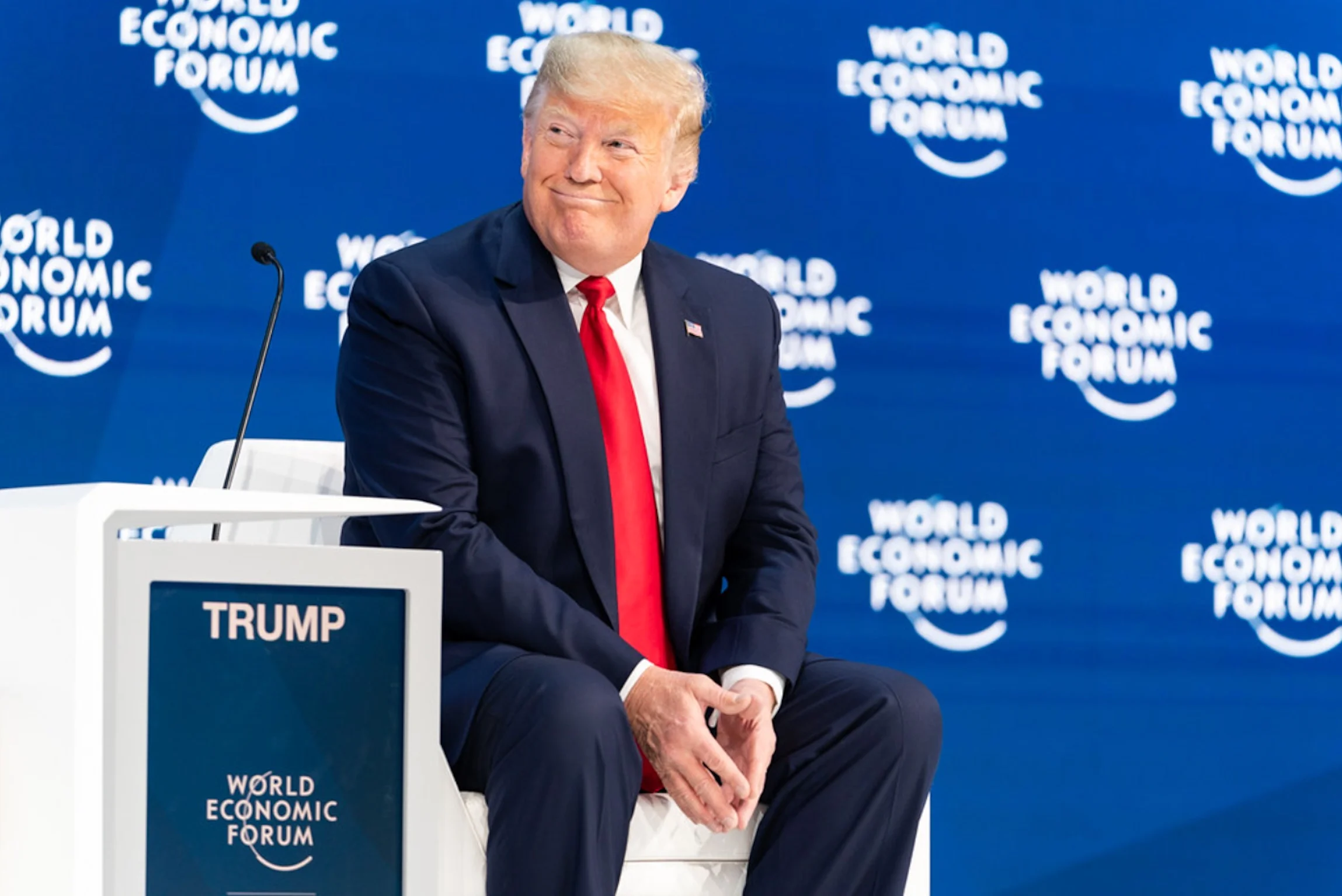
Trump, who unveiled the initiative at a signing ceremony on the sidelines of the World Economic Forum in Davos, has installed himself as lifelong chairman and is asking governments to pay up to $1 billion for permanent seats, cementing his personal control over a body that could claim a voice in some of the world’s most sensitive conflicts.
What the Board of Peace is on paper
Trump first floated the Board of Peace in September 2025 alongside his plan to end the Gaza war, casting it as an international vehicle to rebuild the enclave and “restore dependable and lawful governance.” A draft charter obtained by Reuters and CNN describes it as an organization meant to “promote stability, restore dependable and lawful governance, and secure enduring peace in areas affected or threatened by conflict.”
Key design points from the charter and White House briefings include:
- Trump as lifelong chair: The charter names “Chairman Trump” as a member for life with authority to adopt resolutions and initiatives on the board’s behalf without consulting other members.
- Executive Board of seven: The initial executive board includes U.S. Secretary of State Marco Rubio, Trump special envoy and real estate donor Steve Witkoff, former UK Prime Minister Tony Blair, and Trump’s son‑in‑law Jared Kushner, alongside three yet‑to‑be‑named international figures.
- Term‑limited members – unless they pay: Regular national members serve three‑year terms. A $1 billion contribution for “supporting the board’s operations” buys permanent membership.
- Gaza at the core: An associated Gaza Executive Board, drawing heavily on Arab states, is tasked with supporting a transitional Palestinian administration and overseeing reconstruction, investment, and security coordination in the strip.
The White House says the Board of Peace will perform “peace‑building functions in accordance with international law” and focus initially on Gaza’s stabilization: governance capacity‑building, regional relations, large‑scale reconstruction funding and capital mobilization.
Who is joining – and who is holding back
Trump’s team says between 25 and 35 nations have agreed to join in some form, with around 19 leaders or senior ministers present for the Davos signing ceremony. According to reports from Reuters, regional outlets and the Times of Israel, early sign‑ups include:
- Middle East and Gulf states: Israel, Saudi Arabia, the United Arab Emirates, Qatar, Bahrain, Egypt, and Morocco, many of them already part of the Abraham Accords architecture Trump championed in his first term.
- Broader “Global South” and nationalist partners: Argentina, Paraguay, Kazakhstan, Uzbekistan, Azerbaijan, Indonesia, Pakistan, Hungary, Belarus, Mongolia and Turkey, whose leaders have cultivated close personal ties with Trump or see potential leverage from being close to Washington.
Israeli Prime Minister Benjamin Netanyahu’s office confirmed he had accepted Trump’s invitation; Palestinian factions have publicly endorsed a Gaza‑focused executive structure under the board, seeing it as a path to more coordinated reconstruction and a transitional governing committee.
By contrast, several traditional U.S. allies, including some EU states, Canada, and Japan have responded cautiously or declined, privately questioning whether a Trump‑designed board is needed alongside the UN and existing contact groups. Diplomats told Reuters they fear the body could “harm the work of the United Nations” or turn into a parallel peace forum dominated by Trump loyalists and cash‑rich entrants.
Trump’s pitch and hints of a UN rival
From Davos, Trump has framed the Board of Peace as both a culmination of his Middle East record and a rebuke to the UN’s perceived failures. “I think the Board of Peace will be the most prestigious board ever, and it’s going to get a lot of work done that the United Nations should have done,” he told ABC News, adding, “We’ll work with the United Nations. But the Board of Peace is going to be special. We’re going to have peace.”
In a separate remark captured in the charter’s Wikipedia entry, he said the UN “never helped me” and suggested his board “might” replace it one day. At the Davos ceremony, he boasted that the Gaza ceasefire, which remains fragile, meant “peace in the Middle East” and said the board “has the chance to be one of the most consequential bodies ever.”
Critics note the tension between these claims and the board’s governance: Trump alone decides membership, chairs for life and can adopt initiatives without a recorded vote. For some European and UN officials, that looks less like a neutral peace forum and more like a personalized power platform sitting atop a new layer of global bureaucracy.
What it could mean for Gaza and beyond
In Gaza, the board’s ambitions are clearest and most immediate. Its Gaza Executive Board is intended to:
- Back a transitional Palestinian governing committee to administer the territory after the war.
- Coordinate security arrangements and eventual Israeli military withdrawal, including demobilization of remaining Hamas armed units.
- Orchestrate large reconstruction projects, using pledged billions from Gulf states and other donors, under a governance framework aligned with U.S. and allied priorities.
Supporters argue this could bring sharper focus than past UN‑led efforts that were hamstrung by vetoes, internal rivalries, and slow bureaucracies. Trump has already used the board’s launch to tout his June strike on Iran’s nuclear facilities as a “great victory for the goal of peace,” and to press for dealing with Hezbollah as a “small remnant” problem in Lebanon, moves that align closely with Israeli and some Gulf states’ security agendas.
But the charter’s language makes clear the board’s remit is not limited to Gaza. It is described as an international organization for regions “impacted or threatened by conflict,” and Trump has spoken of using it to address “other global challenges,” from Eastern Europe to Asia. That raises questions about:
- Overlap with existing formats (UN Security Council, regional organizations, contact groups).
- Legitimacy in conflicts where not all major powers are represented or where some see Trump as an interested party.
- Long‑term continuity if future U.S. administrations or European governments are less enthusiastic.
Why many global leaders are uneasy
For Washington’s traditional partners and UN officials, discomfort with the Board of Peace comes down to three main concerns: structure, money, and precedent.
Structure and concentration of power
Unlike the UN, where votes are at least formally distributed, the board’s charter centralizes authority in Trump’s hands, with an executive board dominated by his appointees and family. That raises fears that decisions will reflect U.S. domestic politics and Trump’s personal relationships more than multilateral consensus.
The $1 billion price tag
Tying permanent membership to a $1 billion contribution is unprecedented for an international peace body and risks entrenching a club of wealthy, resource‑rich states. Some allies see it as a back‑door fundraising vehicle for U.S.‑aligned projects, not a neutral platform.
Erosion of the UN’s role
While Trump insists the board is not designed to replace the UN, his repeated jabs at the organization and hints that his forum could become more “prestigious” or effective have fueled fears of institutional rivalry. For middle powers that rely on UN processes to constrain great‑power adventurism, the idea of competing, leader‑centric structures is unsettling.
There is also nervousness about who is at the table: Russian President Vladimir Putin has reportedly accepted an invitation, and leaders from Hungary, Belarus, and Turkey, all criticized for democratic backsliding, are among early joiners. Trump has defended this, saying, “If I only included innocuous individuals, it wouldn’t achieve much,” arguing that effective peace talks require the “toughest” players.
What to watch next for the US and the world
For U.S. audiences, the Board of Peace is both a foreign‑policy experiment and a domestic political signal: Trump is doubling down on a leader‑centric, deal‑driven model of diplomacy, skeptical of traditional multilateral institutions. That could influence how Washington approaches everything from Ukraine negotiations to Indo‑Pacific flashpoints, especially if the board starts to convene “peace processes” outside UN frameworks.
Globally, three questions will determine how consequential, or symbolic, the Board of Peace becomes:
- Depth of participation: Do hesitant allies ultimately join, send only observers, or stay away? Limited Western buy‑in would constrain the board’s reach, even if it gains traction in parts of the Middle East and Global South.
- Results in Gaza: The board will gain legitimacy if it helps to make a lasting ceasefire, allows for credible Palestinian governance, and gets money for rebuilding. If Gaza’s transition stalls or tilts heavily toward one side’s interests, critics will point to structural bias.
- Interaction with the UN: Coordination could make the board a useful auxiliary channel. Open competition, dueling resolutions, overlapping envoy roles, would deepen concerns about fragmentation in global conflict management.
For now, Trump’s Board of Peace is less a fully formed institution than a high‑stakes experiment in personalized multilateralism: an attempt by a sitting U.S. president to build a branded peace forum in his own image, funded by billion‑dollar memberships and anchored in a volatile conflict. Whether it becomes a footnote or a fixture in global diplomacy will depend less on the theatrics in Davos, and more on whether leaders and publics outside Trump’s inner circle decide it is a forum they trust, or a parallel track they can’t afford to legitimize.