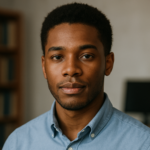
CUPERTINO, Calif. — Apple began a new chapter Tuesday as John Ternus, the company’s longtime hardware chief, succeeded Tim Cook as chief executive officer, ending a 15-year leadership period that turned the iPhone maker into one of the world’s most valuable and influential companies.
Cook, who led Apple after succeeding co-founder Steve Jobs in 2011, has moved to the role of executive chairman. In that position, he is expected to remain involved in high-level strategy and help manage Apple’s relationships with governments and policymakers, including in the United States and China.
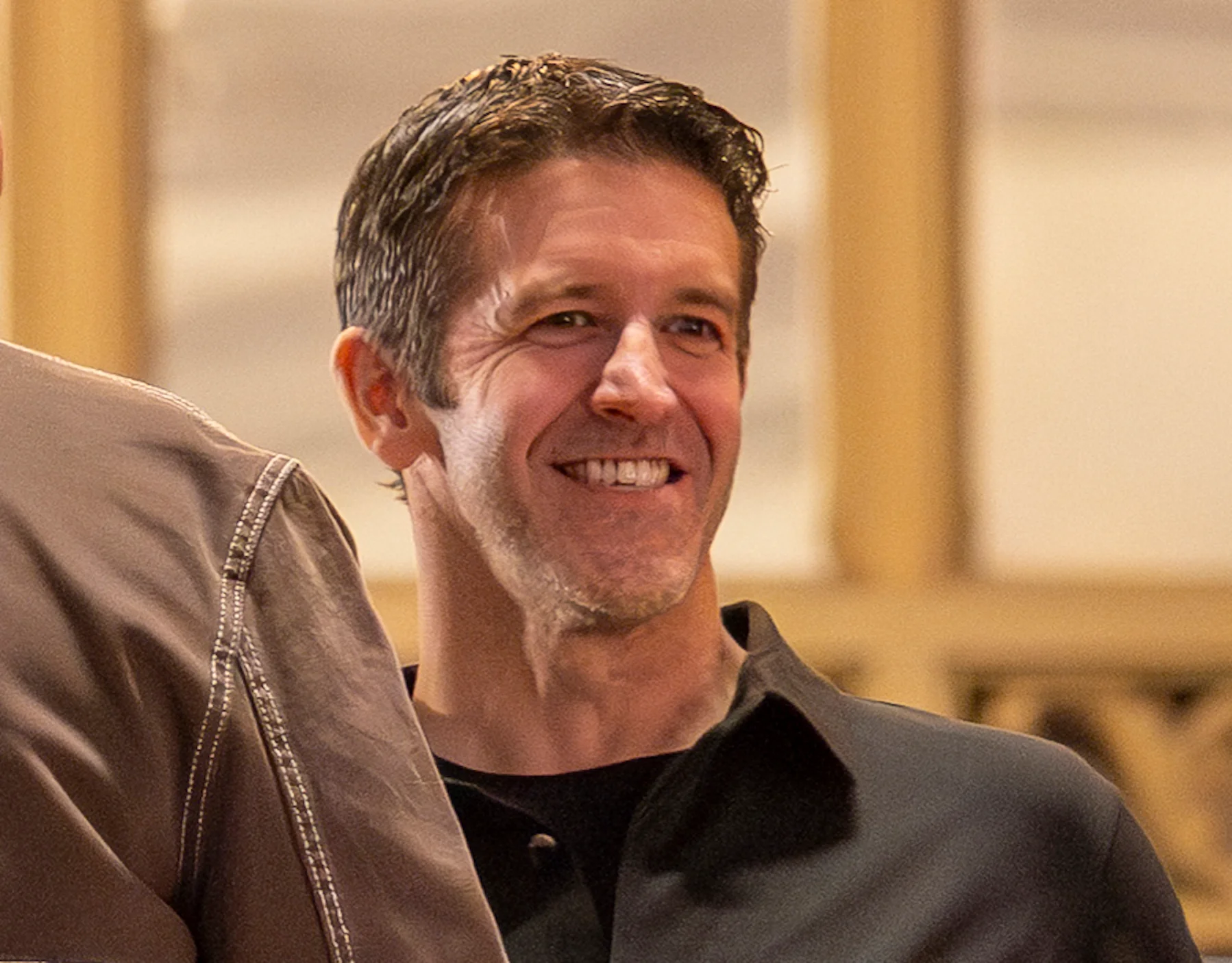
Ternus takes charge of a company far larger and more profitable than the one Cook inherited — but one confronting its most consequential technology transition since the iPhone reshaped consumer computing nearly two decades ago.
Artificial intelligence has become the central test for Apple’s next CEO. The company must show that its tightly integrated hardware, software and privacy model can compete with rivals that have moved aggressively into generative AI, cloud computing and autonomous digital assistants.
The leadership transition arrives just ahead of Apple’s Sept. 9 product event, where the company is expected to unveil a new iPhone lineup and could introduce a long-awaited foldable iPhone. The event will be Ternus’ first major public product launch as chief executive.
“This is a changing of the guard at one of the world’s most important technology companies,” said one investor assessing the leadership transition. “The Apple that Tim Cook leaves behind is an enormous success. The Apple John Ternus inherits has to prove it can lead in the next technological cycle.”
Cook’s legacy: scale and discipline
Cook’s tenure is among the most successful in modern corporate history.
When he became chief executive in August 2011, Apple had a market value of about $350 billion. Fifteen years later, the company has grown into a business valued at more than $4.5 trillion, according to Reuters.
Apple’s annual revenue rose from $108 billion when Cook took over to $416 billion in the latest fiscal year. Profit increased more than fourfold to $112 billion.
Those gains came not from one breakthrough product but from a disciplined expansion of Apple’s existing strengths.
Cook, who joined Apple in 1998 and built his reputation as an operations executive, refined a supply chain that allowed the company to produce devices at massive scale while maintaining unusually high profit margins. His logistics-focused approach helped Apple turn premium products into global consumer staples.
The iPhone remained the company’s most important product, but Cook also pushed Apple into recurring services and a broader ecosystem of hardware accessories.
Apple’s installed iPhone base reached about 2.5 billion devices, Reuters reported, giving the company a large audience for subscriptions, app purchases, cloud storage, music, video, payments and other services.
Its wearables business, including the Apple Watch and AirPods, generated $35 billion in sales in fiscal 2025.
Cook’s central strategic insight was that the customer relationship did not end when an iPhone was sold. Apple could build a recurring-revenue machine around its installed base, generating income from services long after the initial hardware purchase.
“Not only did Cook create his own path of operational and supply chain success, but he also created a values-driven culture within Apple,” Christopher Brown, a financial adviser at Synovus Securities, told Reuters. “What followed was a consumer brand loyalty and dependency flywheel that generated trillions of dollars in revenue.”
Cook also oversaw Apple’s transition from Intel-based Mac computers to Apple-designed chips, giving the company more control over performance, battery life, product timing and software integration.
That decision now gives Apple a potential advantage as AI features increasingly require powerful computing capabilities on personal devices.
Ternus inherits an AI problem
Despite Apple’s financial strength, its progress in artificial intelligence has been uneven.
Apple has introduced AI features and promoted a strategy centered on privacy, on-device processing and practical use. But the company has struggled to match the public momentum of rivals such as Microsoft, Google, Meta and OpenAI, which have made generative AI a central part of their products and investor narratives.
Most notably, Apple delayed a significant overhaul of Siri, the voice assistant that was once seen as an early leader in consumer AI. The delay has fueled criticism that Apple was late to the generative-AI race and has not yet demonstrated a compelling answer to increasingly capable chatbots and AI agents.
“AI is the single biggest challenge for Ternus,” Brian Mulberry, chief market strategist at Zacks Investment Management, told Reuters. “Apple needs to demonstrate that AI will be more than an app on the iPhone, more than Siri.”
The challenge is partly technological and partly cultural.
Apple has historically succeeded by introducing polished products after competitors have already established a category. The company was not first with a portable music player, smartphone, tablet or smartwatch. Its advantage came from integrating hardware, software and services into simpler, more refined products.
That model could work in AI if Apple can make the technology feel private, reliable and useful in everyday life. But the company faces a faster-moving market than it did in the early smartphone era. AI systems are improving quickly, and consumers are becoming accustomed to using conversational tools for search, writing, coding, planning and customer service.
Ternus must decide whether Apple can build enough of its own AI technology, rely more heavily on outside model providers, or pursue a hybrid strategy combining proprietary on-device features with cloud-based capabilities.
The task will shape the company’s products, acquisitions, hiring and relationships with developers for years.
A hardware leader takes the helm
Ternus is a natural successor in one important sense: Apple remains a hardware company at its core.
He joined Apple in 2001 and became senior vice president of hardware engineering in 2021. He has played a central role in the development of several of Apple’s most important products, including the Apple Watch, AirPods and Vision Pro headset.
The transition gives Apple a CEO with deep experience in the company’s product-development culture. Ternus understands the processes that move a product from engineering concept to global launch, as well as the demands of coordinating design, components, manufacturing, software and marketing.
His technical credentials could prove especially useful as the boundaries between AI and hardware become less distinct.
AI is driving demand for more powerful chips, more efficient devices and systems capable of processing information locally. Apple’s custom silicon, including its A-series iPhone processors and M-series Mac chips, gives it a direct role in that shift.
The company recently introduced new Mac mini and Mac Studio models designed to meet demand from users running AI agents and large-language-model workloads locally. Apple has emphasized that local AI processing can improve privacy and speed while reducing dependence on distant cloud data centers.
The question for Ternus is whether Apple can turn that technical foundation into consumer products that feel essential rather than incremental.
The iPhone event arrives quickly
Ternus will have little time to settle into the role before facing one of Apple’s most closely watched annual rituals.
The Sept. 9 event is expected to feature the latest iPhone models, which remain Apple’s most important products commercially and symbolically. Reports indicate that Apple could also unveil its first foldable iPhone, entering a category that has been led by Samsung and other Android device makers.
A foldable iPhone could give Apple a new premium product category and create another reason for customers to upgrade. It could also demonstrate that Apple remains willing to experiment with form factors, even if it enters the market later than competitors.
The timing is important because global smartphone sales have matured. Most consumers already own capable devices, and annual upgrades have become less automatic. Apple must persuade users that improvements in cameras, chips, battery life, displays and AI features justify purchasing newer models.
That is where Ternus’ background may be an asset. His career has been built around making hardware improvements that are often invisible in isolation but meaningful when combined in a finished device.
Still, investors will look beyond the specifications. They will want to know whether Apple’s next iPhones offer a convincing AI experience, and whether that experience can distinguish Apple from Android competitors.
Supply chains and geopolitics
Ternus also inherits a more difficult global operating environment.
Apple’s manufacturing system, a defining success of the Cook era, relied heavily on China for years. That concentration delivered efficiency and scale, but it also exposed the company to geopolitical risk as relations between Washington and Beijing deteriorated.
Trade tensions, tariffs and supply-chain disruptions have pushed Apple to diversify production. The company is expanding manufacturing in India and Vietnam, with Reuters reporting that Apple expects to make most U.S.-bound iPhones in India by the end of 2026. AirPods and iPads are also being assembled in Vietnam.
The shift is strategically significant, but it is not simple.
China remains central to Apple’s manufacturing ecosystem, component suppliers and consumer market. Moving more production elsewhere may reduce exposure to tariffs or political disruptions, but it can also add costs, complicate logistics and put pressure on margins.
“Beyond AI, the pressure to continue to remove manufacturing from China without pressuring margins is a tall task to undertake,” Mulberry said.
Cook will likely remain important in this area. As executive chairman, he is expected to guide Apple’s policy relationships, including its dealings with U.S. officials and the company’s complex ties with China.
Cook’s own message on his final day as CEO suggested continuity rather than a complete break. “My title changes tomorrow, but the love I have for the Apple community never will,” he wrote. “My gratitude is endless, and I’m excited for the next chapter.”
Cook remains in the room
The executive-chairman arrangement means Cook will remain an influential figure at Apple.
That may reassure investors worried about an abrupt transition. Cook retains deep relationships with Apple’s board, senior executives, suppliers, global policymakers and investors. His experience navigating trade disputes, regulatory scrutiny and supply-chain challenges will be valuable as Apple seeks to preserve its global operating model.
But Ternus will need room to establish authority.
The new CEO must make clear that Apple is not simply continuing under Cook’s shadow. The transition will be judged by how effectively Ternus sets priorities, manages the leadership team and communicates Apple’s direction during a period when the company needs to regain momentum in AI.
Apple’s internal culture has traditionally been defined by secrecy, continuity and careful succession planning. The company has rarely changed its top leadership, and it has prepared the Ternus transition over time rather than as a crisis response.
That stability could be an advantage. It gives Ternus an established organization, a loyal customer base and enormous financial resources. But it does not remove the need for decisive choices.
The next test
Cook leaves Apple with a record of extraordinary growth, operational excellence and institutional durability.
His successor takes over at a moment when Apple’s core strengths remain formidable: a global brand, integrated software and hardware, custom chips, a large installed base, deep reserves of cash and a services business that generates recurring revenue.
Yet the future may depend on how Apple responds to a changing definition of personal technology.
The smartphone created the company’s modern empire. AI could reshape how people use that smartphone, and determine which companies control the next generation of software, search, commerce and digital assistance.
For Ternus, the first challenge begins next week, when he presents Apple’s newest products to the world. The larger challenge will take years: proving that the company which mastered the mobile era can lead in the age of artificial intelligence.