
A Louisiana judge has sentenced rapper Mystikal to 20 years in prison after the New Orleans native pleaded guilty to a third‑degree rape charge stemming from a 2022 attack at his home in Ascension Parish, trading a potential life sentence for a capped term that will still keep him behind bars well into his 70s.
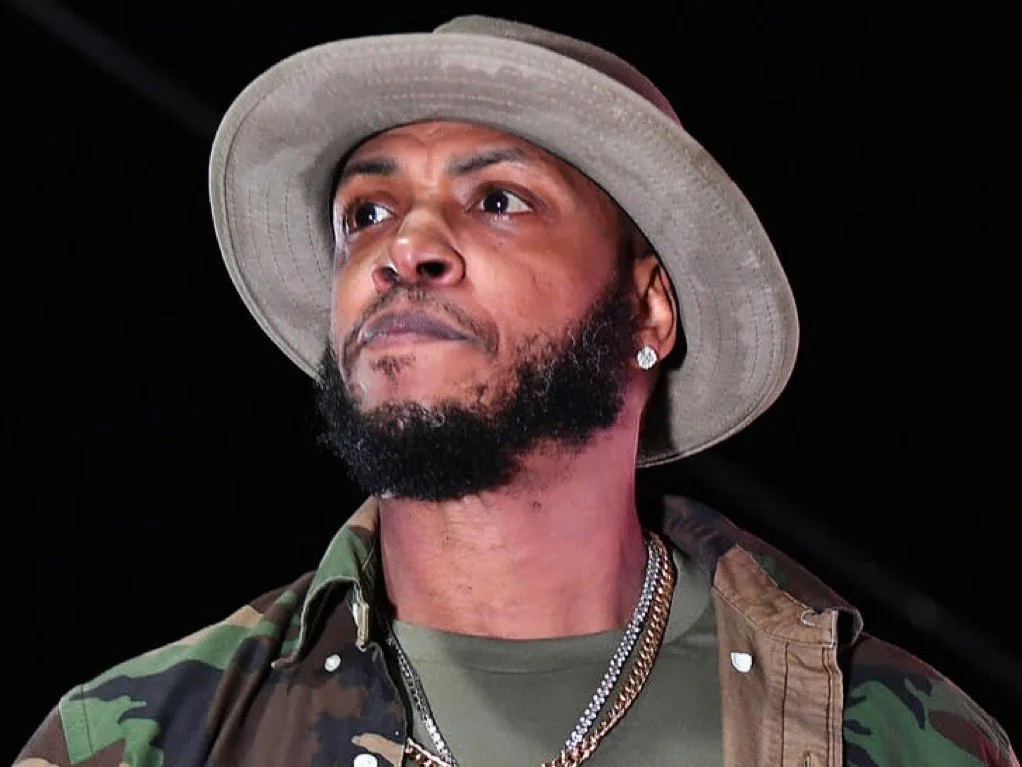
Guilty plea leads to 20‑year term
Mystikal, whose real name is Michael Lawrence Tyler, was sentenced Monday in Ascension Parish to 20 years in state prison following his March guilty plea to third‑degree rape, local broadcast and social media reports say.
A judge handed down the maximum sentence allowed under the plea agreement, which capped his exposure at 20 years after prosecutors dropped more serious charges, including first‑degree rape that had carried a mandatory life term.
Louisiana First News and Fox affiliates report that the case arose from an August 2022 incident at Tyler’s home in Prairieville, about 20 miles south of Baton Rouge, where investigators said he beat, raped, and robbed a woman during a financial dispute.
He had been held without bond since his 2022 arrest and entered his guilty plea in March 2026; sentencing was set for mid‑June after a pre‑sentence investigation.
From first‑degree charges to a plea deal
Tyler was initially indicted by an Ascension Parish grand jury on first‑degree rape, domestic abuse by strangulation, robbery and multiple drug counts linked to the 2022 encounter, charges that collectively exposed him to a potential life sentence.
Court records cited by The Advocate and summarized by Okayplayer note that he pleaded not guilty in 2022 and remained at Elayn Hunt Correctional Center without bond as his case moved slowly toward a trial originally set for March 2026.
By early March, however, prosecutors agreed to dismiss the most serious counts in exchange for a plea to third‑degree rape, a lesser Louisiana offense defined as non‑consensual sexual intercourse that does not meet the criteria for first‑ or second‑degree rape but still carries up to 20 years in prison.
A LiveNOW/FOX segment explained that the plea effectively traded “a potential life term for a sentence capped at 20 years,” with the judge retaining discretion to impose the maximum, the outcome that has now materialized.
Sentencing in Ascension Parish
Local television coverage of the June hearing, shared by Louisiana outlets, shows the judge formally sentencing Tyler to 20 years at hard labor and ordering him to register as a sex offender upon release, citing the seriousness of the offense and his prior record.
Reporters noted that the courtroom was relatively quiet, with the victim not speaking publicly but prosecutors emphasizing that the plea avoided a lengthy trial and spared her from testifying about the assault.
Video from Louisiana First News indicates that the judge referenced Tyler’s previous sex‑crime conviction as an aggravating factor, saying the court could not treat the case as a first‑time mistake.
There was no immediate indication that Tyler would appeal the sentence; under Louisiana law, a negotiated plea to a capped term typically limits grounds for appeal to procedural issues rather than the length of the sentence itself.
A history of sex‑crime cases
This is not Mystikal’s first conviction involving sexual violence.
Court records and earlier reporting show that he served six years in prison after pleading guilty in 2003 to sexually assaulting his hairstylist, a case that led to a 2004 sentence and required him to register as a sex offender upon release.
He was later arrested in 2017 on separate rape allegations in Louisiana; that case was ultimately dropped after a grand jury declined to indict him, but it kept him under legal scrutiny and highlighted a pattern of allegations spanning decades.
The 2022 case that led to his latest conviction came less than a decade after his release from the first prison term, reinforcing prosecutors’ argument that he posed an ongoing risk and should not receive leniency.
Career arc overshadowed by criminal record
Mystikal rose to national prominence in the late 1990s as part of the New Orleans rap scene, releasing platinum albums and scoring hits such as “Danger (Been So Long)” and “Shake Ya Ass” under labels including No Limit Records and Jive.
He earned multiple Grammy nominations and was a fixture in the Southern hip‑hop wave that brought artists from Louisiana and neighboring states to mainstream radio and MTV.
But his career has repeatedly been interrupted, and ultimately overshadowed, by criminal cases and prison time, with long stretches behind bars limiting his ability to record, tour or capitalize on nostalgia‑driven revivals in the 2010s and 2020s.
The latest sentence, imposed at age 55, makes any significant return to the music industry unlikely, effectively closing the chapter on a career that once positioned him as one of New Orleans’ most distinctive rap voices.
Victim advocacy and legal context
Advocates in Louisiana’s victim‑services community have framed the outcome as evidence that high‑profile defendants can still be held accountable in a state with a history of uneven responses to sexual violence.
At the same time, the plea deal, reducing a first‑degree rape charge to third‑degree—has prompted discussion about how prosecutors balance evidentiary challenges, victim preferences and the desire for certainty when negotiating resolutions in complex cases.
Legal analysts interviewed on local broadcasts noted that first‑degree rape in Louisiana carries a mandatory life sentence without parole, leaving little room for judicial discretion or negotiated outcomes once a conviction is entered.
By contrast, third‑degree rape allows a judge to calibrate punishment up to 20 years, which in this case aligned with the prosecution’s recommendation and the defense’s decision to accept the maximum in exchange for avoiding a possible life term.
US and global angles
For U.S. audiences, Tyler’s sentencing intersects with broader conversations about accountability for entertainers accused of violence, as courts and juries increasingly revisit past norms around celebrity, consent, and power.
The case also arrives amid heightened scrutiny of how Southern jurisdictions handle sexual‑assault prosecutions, with advocates pushing for more consistent enforcement regardless of a defendant’s fame or local ties.
Globally, news of Mystikal’s 20‑year sentence underscores how some of hip‑hop’s turn‑of‑the‑century figures are now confronting decades‑old patterns of behavior under legal regimes that have grown less tolerant of plea deals perceived as lenient.
For a generation that grew up with his music, the image of a Louisiana judge formally sentencing him for another rape—years after an earlier conviction—illustrates how deeply criminal records can reshape the legacies of artists whose work once dominated charts and clubs.