
Pope Leo XIV has called on Angolans to “build the hope of the future” as he begins a landmark visit to the oil‑rich but deeply scarred southern African nation, urging crowds of more than 100,000 at an open‑air Mass outside Luanda to overcome the “enmity and division, wasted resources and poverty” left by slavery, colonialism and nearly three decades of civil war.
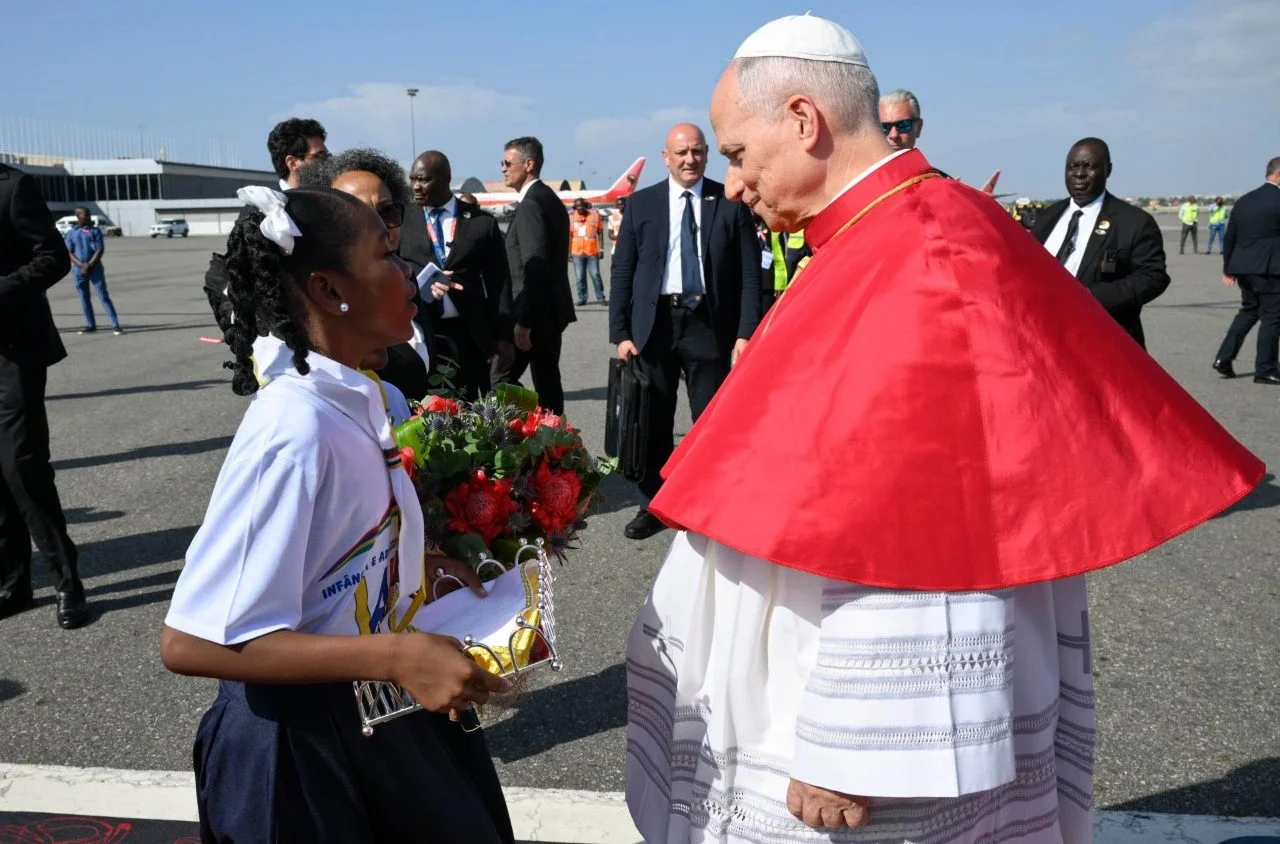
The 60‑year‑old pontiff, the third pope to visit Angola after John Paul II in 1992 and Benedict XVI in 2009, is using the third leg of his first African tour to link spiritual consolation with pointed appeals for peace, good governance, and a reckoning with the country’s role in the transatlantic slave trade.
Arrival in Luanda: a charged backdrop
Pope Leo landed at Luanda’s international airport on Saturday afternoon, flying in from Cameroon for the third leg of a week‑long African journey that Vatican officials say he had long wanted to make his first major overseas tour. Billboards bearing his image and the slogan “Com Fé e Esperança” (“With Faith and Hope”) lined main roads as thousands of people gathered to greet him, many waving Vatican and Angolan flags.
Al Jazeera notes that Leo arrives amid a public spat with U.S. President Donald Trump over the Middle East and the U.S. blockade of Iranian ports, though the pope told reporters on the papal plane that he was “not seeking a new debate with Trump” and was traveling to “encourage Catholics and people of good will” in Africa. “I am here for the Angolan people, not for politics,” he said, when pressed about the clash.
Angola, home to around 44 percent Catholics in a population of roughly 35 million, is emerging from a traumatic twentieth century: Portuguese rule until 1975, followed by a 27‑year civil war that killed more than half a million people and left the country littered with landmines and deep political divisions. Since then, a boom in offshore oil has generated vast wealth, but large swathes of the population remain in poverty, fueling frustration over corruption and inequality that Leo has already begun to address in his remarks.
A massive Mass in Kilamba: “We wish to build a country…”
On Sunday, the pope presided over an open‑air Mass in Kilamba, a sprawling, Chinese‑built satellite city about 25 kilometers from downtown Luanda, where Angolan authorities say around 100,000 people packed into a dusty field to hear him speak.
Reuters reports that Leo used his homily to hold up Angola’s hard‑won peace while warning that the legacy of war still haunts its politics and social fabric.
He described the 1975–2002 civil conflict as a time of “enmity and division, wasted resources, and poverty” and urged the country to keep moving beyond the mentality of winners and losers. “We wish to build a country where old divisions are overcome once and for all, where hatred and violence disappear, and where the scourge of corruption is healed by a new culture of justice and sharing,” he told the crowd, drawing loud applause and ululations.
Catholic News Agency’s National Catholic Register coverage says Leo’s message in Angola has revolved around three verbs: “remember, heal, build”, remember the suffering of the past, heal the wounds of war and exploitation, and build a future rooted in solidarity rather than narrow self‑interest.
Facing the past: a shrine built on slavery
One of the most symbolically charged stops on Leo’s itinerary is the Our Lady of Muxima shrine on the Kwanza River, about 80 kilometers south of Luanda, which he is due to visit during his time in Angola.
The church at Muxima, now a revered Marian shrine following reports of an apparition in the 1830s, once stood at the heart of Angola’s role in the Atlantic slave trade. AP and the New York Times explain that for decades, enslaved Africans were marched there from the interior, baptized by Portuguese clergy in the small church, then forced to walk some 145 kilometers to Luanda’s port to be shipped to Brazil and the Americas.
Angolan historians and Catholic leaders say a papal visit to Muxima is a chance for the church to acknowledge its entanglement with slavery while honoring the faith of those who passed through the chapel under duress. For Leo, whose own family history includes ancestors from Africa and Europe, it is also a moment to reflect on the Catholic Church’s ambiguous role in colonial systems that evangelized and exploited in the same breath.
“In Muxima, the pope will be walking on ground that carries the weight of both devotion and dehumanization,” theologian commentators told National Catholic Reporter, arguing that Leo’s stop there underscores his broader push for a church that confronts, rather than glosses over, its past.
Oil wealth, mass poverty
Leo’s speeches so far have also targeted the economic contradictions of modern Angola: vast offshore oil fields and diamond mines on one side, sprawling informal settlements and underfunded schools on the other.
Crux and Religion News Service report that at Kilamba he denounced “the exploitation of [Angola’s] mineral‑rich land and people,” saying that natural wealth should be “a blessing for all, not a prize for a few.” Without naming names, he criticized corruption and a political culture that treats public office as a channel for private enrichment.
EWTN notes that the Catholic Church is a major provider of schools, clinics, and social services in Angola’s poorest regions, making Leo’s emphasis on “sharing” and “justice” more than just rhetoric. The pope praised Angolan Catholics who work in these fields “often without recognition, in the peripheries and forgotten places,” and urged the church to keep siding with those “left behind by an economy that is rich but not always just.”
Encouraging a young, growing Catholic Church
Angola is one of the fastest‑growing Catholic countries in sub‑Saharan Africa, and Leo has framed his African tour, which included three days in Cameroon before Angola, as a mission to encourage a young church that now supplies priests and religious to parishes from Lisbon to Los Angeles.
At his welcome ceremony, he thanked Angolan Catholics for their “vibrant faith” and “lively liturgies,” but warned bishops and priests against clericalism and the temptation to align too closely with political or business elites. Vatican News says he repeatedly returned to the theme of “service, not privilege,” telling clergy that the church’s credibility depends on whether it can stand with families coping with unemployment, youth searching for work and former combatants still carrying the scars of war.
The EWTN “7 things to know” briefing on Angola notes that Catholics there have been heavily involved in peacebuilding and reconciliation since 2002, mediating local conflicts and supporting disarmament. Leo has praised those efforts and urged them to continue, saying Angola can offer lessons to other countries emerging from violence.
Not about Trump, but politics follows him
Despite Leo’s insistence that he did not come to Africa to “debate with Trump,” the U.S. president has hovered over the trip. In recent weeks, the two men traded barbs over U.S. policy in the Middle East and the blockade of Iranian ports, with Trump accusing the pope of being “weak on terror” and Leo criticizing the human cost of sanctions and war.
Reporters traveling with the pope say he has tried to keep the focus on local issues in Cameroon and Angola, conflict, poverty, corruption, while delivering a broader message about global peace that inevitably doubles as a critique of great‑power politics. “The world does not need more walls or blockades,” he said in general remarks before leaving Cameroon, in a line widely read as a reference to the U.S.‑Iran standoff.
In Luanda, Angolan officials have been keen to present the visit as an affirmation of the country’s post‑war stability and international standing. But Leo’s repeated emphasis on corruption, inequality, and the need to remember the victims of slavery and civil war underscores that his visit is not simply a victory lap for the political class.
A visit rich in symbolism, heavy with expectation
Pope Leo XIV’s days in Angola blend pastoral care, historical reckoning, and quiet diplomacy. He is meeting President João Lourenço and bishops, celebrating Masses that draw football‑stadium‑sized crowds, and preparing to pray in a riverside chapel that once marked the path from captivity to the slave ships.
For many Angolans, especially Catholics who queued for hours under a blazing sun to see him pass, the pope’s presence is a source of pride and hope in a country still wrestling with how to share its wealth and heal its wounds. For Leo, whose pontificate is still young, Angola is a stage on which to articulate a vision of the church as a global moral voice that refuses to look away from history’s cruelties or today’s injustices.
“Build the hope of the future,” he told the crowd at Kilamba, his voice echoing over a sea of yellow and white flags. In Angola, that hope means confronting both the ghosts of slavery and war and the temptations of oil‑fueled prosperity, a delicate balance that will outlast the pope’s plane and the banners now flapping along Luanda’s roads.