JERUSALEM — Israeli Prime Minister Benjamin Netanyahu has publicly rejected President Donald Trump’s latest U.S.-backed peace plan for Gaza, saying Israeli forces will not withdraw from the territory until Hamas fully relinquishes every category of weapon it possesses.
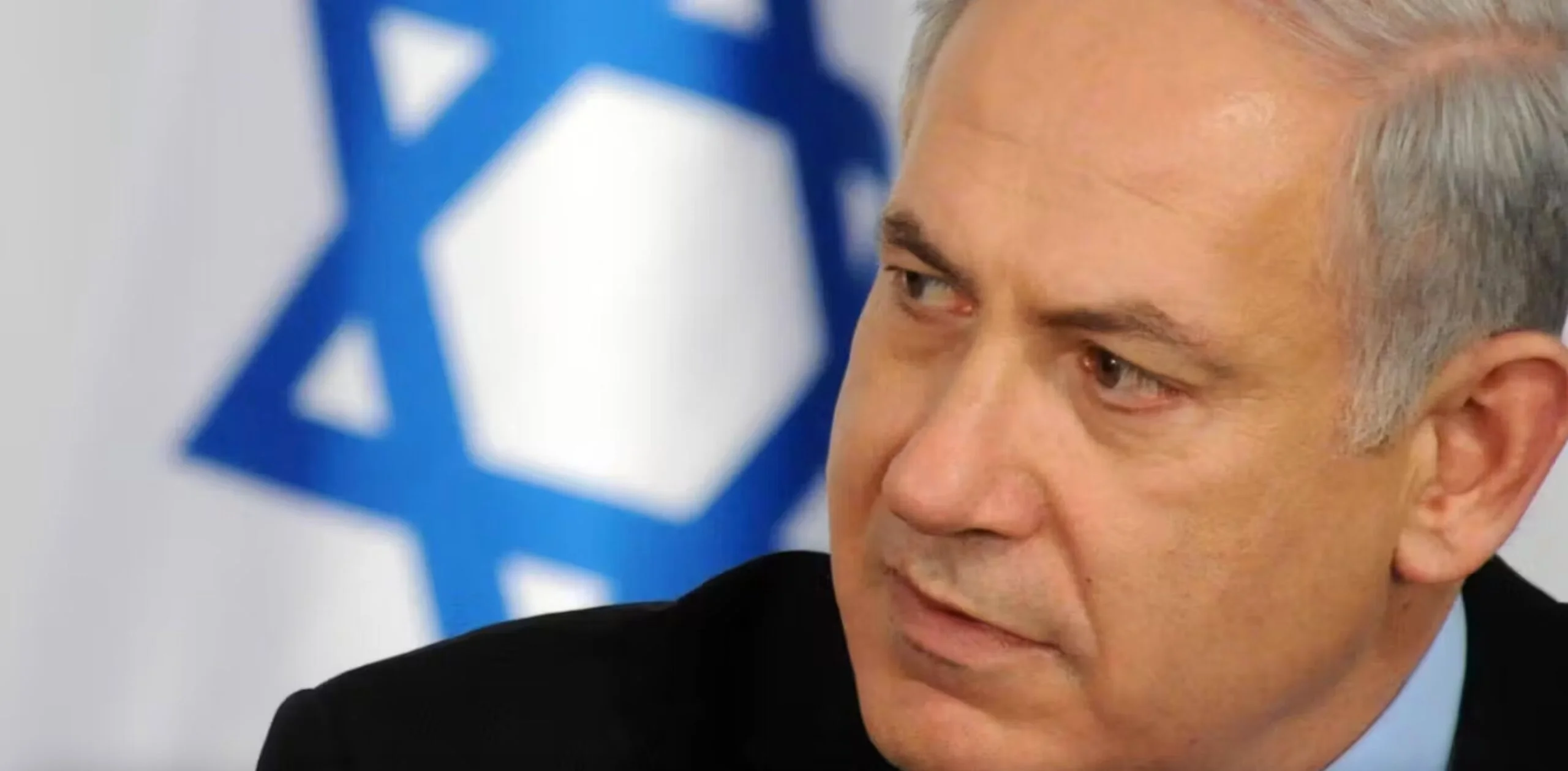
“Israel does not accept the 15-point document,” Netanyahu said Sunday at the start of a Cabinet meeting, referring to a roadmap advanced by Trump’s Board of Peace. He said Israel’s military “will not carry out any withdrawal until Hamas is genuinely disarmed,” specifying that the demand applies to “heavy weaponry, lighter weaponry, all weaponry.”
The announcement marks a clear public break between Netanyahu and the Trump administration over the sequencing of the proposed Gaza settlement. The U.S.-backed plan envisioned a phased process in which Hamas’s disarmament and an Israeli withdrawal would proceed in linked stages, rather than requiring Hamas to disarm completely before Israeli forces begin leaving.
Netanyahu’s position threatens to complicate efforts to turn a fragile ceasefire framework into a lasting agreement. It also places renewed strain on the relationship between two leaders who have generally maintained close political ties despite increasingly visible disagreements over how to end the Gaza conflict.
What Trump’s plan proposed
Trump’s 15-point plan was issued through the Board of Peace, an initiative created by the U.S. president to oversee efforts toward a Gaza settlement.
The proposal sought to combine several difficult objectives: Hamas’s disarmament, the withdrawal of Israeli troops, the reconstruction of Gaza, new security arrangements and international oversight of the territory’s transition after the war.
Under the framework, Hamas and other armed groups in Gaza would hand weapons to a vetted international policing force. Israel would withdraw in phases, with the Board of Peace supervising implementation.
Trump publicly described the proposal in late July as a “historic agreement” for the “complete disarmament” of Hamas and other armed groups in Gaza.
The plan was designed to bridge the central deadlock in the conflict. Israel has demanded the end of Hamas’s military capacity. Hamas has sought an end to Israeli military operations and withdrawal from Gaza. The U.S.-backed formula attempted to make those actions part of a synchronized process rather than force either side to move first without assurances.
But Netanyahu’s Sunday statement rejects that sequencing.
Rather than accepting a phased withdrawal tied to the decommissioning of Hamas weapons, Netanyahu said Israel will remain in Gaza until Hamas has been completely disarmed.
Netanyahu’s demand: “Real” disarmament
Netanyahu did not merely call for Hamas to surrender rockets, missiles, or heavy military equipment. He said the group must hand over all weapons.
“We are talking about real disarmament, not fictitious disarmament,” he told Cabinet ministers.[1][6]
That language appears directed at the plan’s phased approach, under which initial measures would focus on Hamas’s heavy weapons, military production sites, weapons depots, and extensive tunnel network.[11]
Israeli officials have long argued that Hamas could retain a coercive role in Gaza even if it gave up some visible military infrastructure. Netanyahu’s position suggests that Israel wants the group stripped not only of long-range capabilities but also of smaller arms that could enable continued control over territory, intimidation of rivals or attacks on Israeli forces.
For Netanyahu, the issue is therefore not only whether Hamas can launch rockets or carry out organized military operations. It is whether the group can retain any armed capacity after a settlement.
That demand creates a major practical challenge. Full disarmament by Hamas would require a mechanism capable of identifying, collecting, and verifying the removal of weapons across a densely populated territory where underground tunnels, small arms and hidden stockpiles have played a central role in the group’s military strategy.
Board of Peace officials and outside analysts have questioned whether total disarmament is realistically achievable in the short term, particularly without a durable political transition and a security force acceptable to both Palestinians and Israel.
Israel’s conditions for withdrawal
Netanyahu said the Israeli military would continue to “thwart threats” to Israeli troops and citizens while maintaining its presence in Gaza.
That position differs from the Trump-backed roadmap, which envisioned Israeli forces beginning a phased withdrawal as the disarmament process advanced.
The difference is not merely technical. It goes to the core question of leverage.
Hamas and its supporters are unlikely to accept disarmament if Israeli forces remain indefinitely positioned in Gaza. Israel, meanwhile, says it cannot withdraw while Hamas retains the ability to rebuild its armed presence or attack Israeli soldiers and communities.
The result is a familiar negotiating impasse:
Israel says Hamas must disarm before it withdraws.
Hamas has linked disarmament to Israeli withdrawal and an end to military operations.
The U.S. plan attempted to make both steps proceed together under international oversight.
Netanyahu has rejected that model.
Without agreement on the sequence, the plan’s broader components, reconstruction, governance, security guarantees and a possible international policing force, cannot move forward easily.
Netanyahu says talks with Washington continue
Despite his rejection, Netanyahu said Israel remains in discussions with the United States about the plan.
“They have ideas, some of which are acceptable to us and some of which are unacceptable to us,” he told ministers. “We know how to stand firm against these things.”
The remarks leave open the possibility that Washington and Jerusalem may attempt to revise the roadmap rather than abandon diplomacy altogether.
Netanyahu said Israeli officials had sent comments to the U.S. side, stressing that the 15-point document was not Israel’s own draft. “We did not agree,” he said. “It is not our draft. We sent our comments. This is our position.”
Trump has not publicly responded in detail to Netanyahu’s rejection. But the disagreement places the U.S. president in a difficult position. He has promoted the plan as a breakthrough and has applied pressure on Israel to reduce military operations in Gaza.
A failure to secure Israel’s participation would undermine the central claim of the Board of Peace initiative: that it can convert commitments on paper into an enforceable end to the conflict.
Hamas’s response
Hamas, according to multiple reports, reaffirmed its commitment to the framework it had accepted with the Board of Peace and called on the United States, mediators, and other parties to ensure implementation.
The group’s support does not mean that the disarmament issue is resolved. Hamas has historically resisted calls to surrender weapons, portraying its armed wing as a form of resistance against Israeli occupation and military operations.
But under the Trump-backed framework, Hamas and other armed groups were expected to hand weapons to an international force as part of a phased process tied to Israeli withdrawal and future arrangements in Gaza.
Netanyahu’s refusal to withdraw before complete disarmament effectively changes the bargain Hamas was asked to consider. Instead of simultaneous steps backed by international monitoring, Israel is demanding Hamas act first and fully, a condition the group is unlikely to accept without major concessions and credible guarantees.
The Palestinian-state question
Netanyahu also used the Cabinet meeting to rule out the establishment of a Palestinian state during his tenure.
“As long as I am prime minister, no Palestinian state will arise, not in Gaza and not in Judea and Samaria,” he said, using the biblical term often employed in Israel for the occupied West Bank.
The statement broadens the dispute beyond Gaza’s immediate security arrangements.
The Trump plan was focused on ending the Gaza conflict and overseeing a transition in the territory, but its long-term viability depends in part on whether Palestinians see a credible political future beyond military rule, international administration, or fragmented governance.
Netanyahu’s remarks signal that he does not support a broader diplomatic process leading to Palestinian statehood. That position is likely to draw criticism from Arab governments, European allies and Palestinian representatives who argue that a two-state framework remains necessary for a durable settlement.
It may also complicate efforts to secure financial support for Gaza’s reconstruction. Regional and international donors may be reluctant to commit significant resources without clarity about postwar governance, security and Palestinian political representation.
Pressure from Israel’s right wing
Netanyahu’s rejection came amid pressure from his right-wing coalition partners, who have criticized the U.S.-backed framework and opposed any agreement they believe could limit Israel’s freedom of military action in Gaza.
Some far-right allies have called for a new Cabinet vote and urged Netanyahu to formally reject the plan. They fear that a phased withdrawal, even one conditioned on Hamas disarmament, could leave Israel vulnerable and create an opening for international pressure to recognize Palestinian political rights.
Netanyahu’s public statement appears designed in part to address those domestic pressures. By emphasizing total disarmament and ruling out a Palestinian state, he reinforced core positions that are important to his political base.
But the move risks putting him at odds with Trump, whose administration has presented the plan as a major diplomatic achievement.
CNN described Netanyahu’s calculation as choosing the least damaging option: upsetting Trump may be politically costly, but accepting a plan opposed by Netanyahu’s coalition could threaten his domestic standing and government stability.
What happens next
The immediate future of the plan is uncertain.
The Israeli military has effectively paused or reduced some attacks in Gaza under U.S. pressure, Reuters reported, but the absence of agreement on withdrawal and disarmament leaves the broader conflict unresolved.
The central questions now are whether Washington will press Netanyahu to modify his position, whether mediators can produce a revised sequencing arrangement and whether Hamas would accept any framework requiring full disarmament before Israeli withdrawal.
A revised plan could attempt to strengthen verification, make Israeli withdrawal conditional on staged benchmarks, or establish a more robust international security presence. But every option carries political risks.
Israel will seek credible guarantees that Hamas cannot rearm. Hamas will seek assurances that disarmament does not leave Gaza under open-ended Israeli control. The United States and regional mediators will need to find an enforcement system that can satisfy both sides, an exceptionally difficult task after months of war, displacement, and mistrust.
For now, Netanyahu’s declaration has made one point unmistakable: Israel will not accept the U.S.-backed peace plan in its current form. The fate of Gaza’s ceasefire, reconstruction and political future will depend on whether the parties can bridge the gap between Trump’s phased roadmap and Netanyahu’s demand that Hamas lay down every weapon before Israel takes the first step toward withdrawal.