The United States has absorbed one of the most relentless, geographically extensive severe weather seasons in modern recorded history across 2026, with Illinois alone recording 145 confirmed tornadoes by mid-June, more than three times the count of traditionally tornado-prone Kansas, Oklahoma and Texas, while outbreaks in March, April and June have killed at least nine people, injured dozens more, torn through communities from Michigan to the Mississippi Delta, left hundreds of thousands without power across 15 states and produced nearly 1,500 damage reports in a single week.
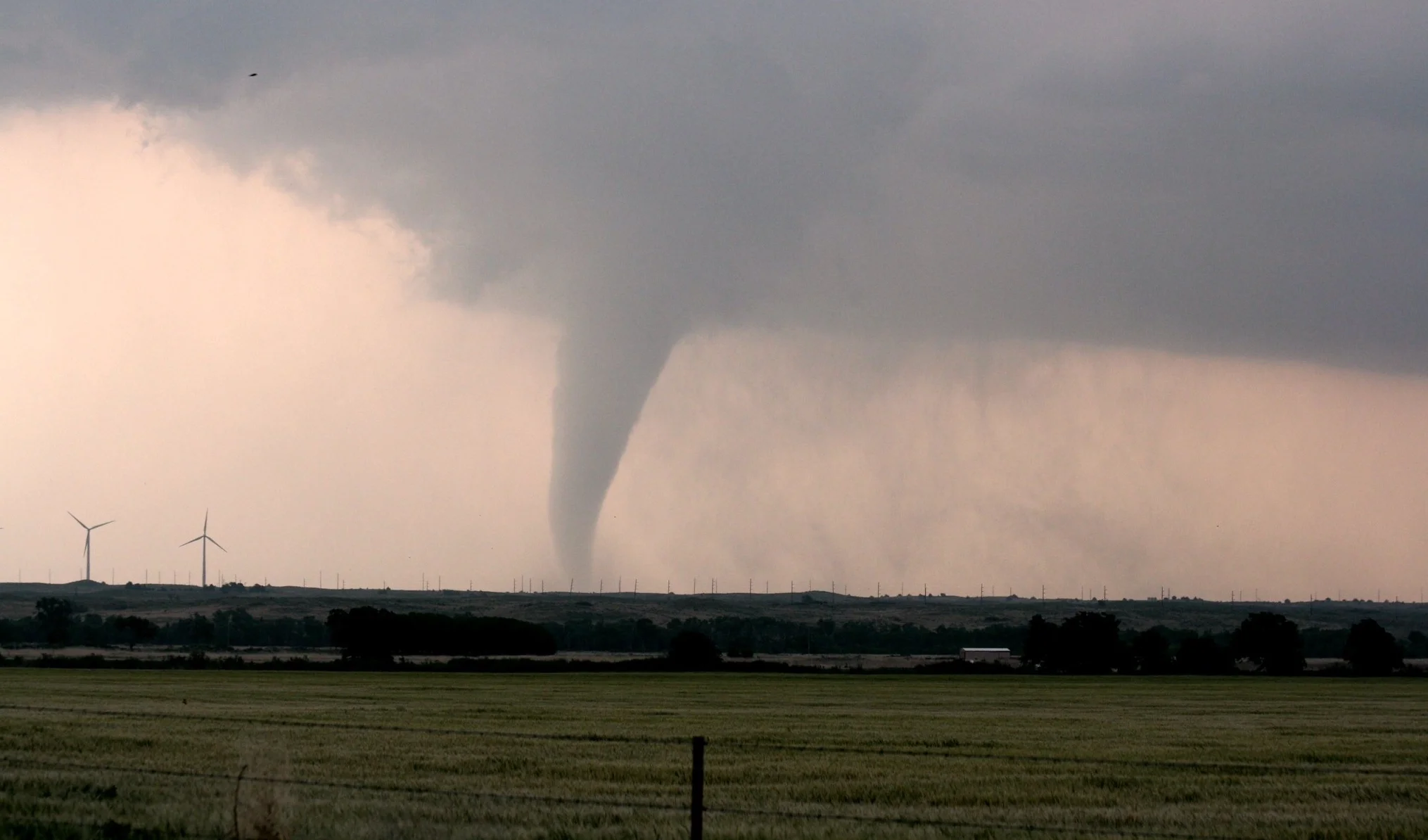
A Season That Rewrote the Map
Every spring, Americans who live in what meteorologists and popular culture have long called Tornado Alley, the band of flat, open territory stretching from northern Texas through Oklahoma, Kansas, Nebraska, and South Dakota, brace for the severe weather season with a mixture of vigilance and resigned familiarity.
In 2026, the tornado map largely ignored them.
Through mid-June, the year’s most destructive, most frequent, and most historically anomalous tornado activity has unfolded hundreds of miles northeast of traditional Tornado Alley — in Illinois, Wisconsin, Indiana, Michigan, Iowa, and Missouri, states whose residents have historically considered themselves adjacent observers of tornado season rather than its primary targets.
“America’s top tornado state in 2026 is not Oklahoma, Texas, Alabama or Kansas,” Weather.com reported on June 15. “It is Illinois.” The Weather Channel’s analysis of NOAA Storm Prediction Center data showed Illinois with 145 confirmed tornadoes through June 14, a total that exceeded the second-place state by more than 60 twisters, and that was nearly triple the counts registered in Kansas, Oklahoma, and Texas, the three states most Americans associate with tornado danger.
The consequences of that geographic shift have been measured in lives lost, homes destroyed, power lines downed and communities upended across at least 15 states in a season that AccuWeather, the National Weather Service and CNN have all described as one of the most active severe weather stretches of recent years.
March: The Outbreak That Opened the Season
The 2026 severe weather season announced itself with devastating finality in early March, when a multi-day outbreak slammed the Midwest and Plains with an intensity that forecasters had not anticipated at that early point in the calendar.
The outbreak’s deadliest moment came in Michigan, where an EF-3 tornado with estimated wind speeds of up to 160 mph tore through Union City in Branch County and Edwardsburg in Cass County, killing at least four people, three in Union City and one in Edwardsburg, and injuring a dozen more. The destruction in Union City was described by local officials as total in some neighborhoods: roofs stripped, walls collapsed inward, foundations exposed.
Simultaneously, severe weather moved through Oklahoma, where a tornado carved a four-mile path through Okmulgee County, approximately 30 miles south of Tulsa, killing two people and sending two others to hospital. Power outages affected more than 1,600 residents as electrical lines were downed and large trees uprooted across the county.
The March outbreak was a harbinger, not an aberration. Communities in Michigan, Oklahoma, Arkansas, and Missouri were still completing damage assessments and insurance claims when the next major outbreak sequence arrived in April.
April: Illinois Shattered Its Own Records
If March introduced the season’s geographic anomaly, April confirmed it.
On April 17, a significant tornado outbreak swept the Upper Midwest, concentrated in southeast Minnesota and west-central Wisconsin, with tornadoes quickly forming from developing storms along a cold front at 1 p.m. and triggering two separate waves of severe weather across the region. The National Weather Service’s La Crosse, Wisconsin office issued 26 tornado warnings in a single day, the highest one-day warning count since the office’s establishment in 1995. Preliminary reports indicated more than 100 homes were damaged across Minnesota and Wisconsin.
Earlier in April, on April 16, a broader outbreak swept Missouri, Illinois, Wisconsin, and Minnesota with confirmed tornado reports across all four states, structural damage to homes, downed trees, and power lines, and more than 50 million people in a 1,000-mile severe weather corridor. The National Weather Service confirmed at least 20 tornado reports from that event alone.
On April 17, Illinois recorded over 40 confirmed tornadoes in a single outbreak, a figure that drove the state’s 2026 year-to-date total into the record books. April also produced 27 tornadoes in Wisconsin in that single month, the highest April total in state history, including two rated EF-3 — the fourth-highest level on the Enhanced Fujita scale.
By the time the April data was compiled by NOAA’s Storm Prediction Center, Illinois had recorded 152 reported tornadoes, more than any other state in the country, and a pace that had no precedent in Midwestern tornado climatology.
May: A Misleading Lull
May brought a brief, deceptive reprieve. Fox Weather reported on May 30 that severe weather activity had been “pretty quiet” in May and that June appeared likely to continue that pattern in the near term.
Oklahoma — ordinarily one of the most tornado-active states in the country — was on track to finish May without any confirmed tornadoes for the first time in decades before the National Weather Service in Tulsa confirmed two in southeast Oklahoma late in the month. Georgia recorded only one tornado in all of April and May — its lowest peak-season total since 2012.
The apparent national lull was statistically misleading for one key reason: Illinois had already carried the season’s catastrophic load. Despite dropping from 70 tornadoes in April to just one in May, Illinois remained the national leader by a commanding margin.
Meteorologists who study severe weather patterns pointed to the state’s atmospheric geography as a contributing factor: Illinois sits at the convergence of Gulf moisture, Great Lakes cooler air masses and Appalachian-deflected jet stream patterns that in active years create precisely the conditions required for discrete supercell development and long-track tornado formation.
June: Two Outbreaks in One Week
The lull ended violently in June.
The week of June 9–11 produced one of the most active and damaging outbreak sequences of the entire year, beginning with South Dakota, Minnesota and the Dakotas on June 9, wind gusts of up to 90 mph, large hail and tens of thousands without power, and escalating through June 10 and 11 in a multi-day tornado outbreak that killed at least one person in Iowa and left a swath of destruction across Illinois and Indiana.
The June 11 outbreak was the week’s defining event. The National Weather Service’s Chicago office confirmed at least 20 tornadoes across northern Illinois and northwest Indiana, including an EF-3 from Long Point to Streator, Illinois — one of the most powerful tornadoes to strike central Illinois in years — and a second EF-3 at Kouts, Indiana, with estimated wind speeds of up to 165 mph. Additional confirmed tornadoes struck Bartlett, Hickory Hills, Dwight, Wenona and areas east of Ludlow in Illinois, and St. John and Schererville in Indiana. The NWS issued a Tornado Emergency, the most serious alert level, for Marshall County in north-central Illinois.
A USA Today review of the June 11 aftermath counted one confirmed death in Iowa and widespread structural damage across Illinois and Indiana, with more than 221,000 customers in Illinois alone without power as of Friday morning. CNN reported nearly 1,500 total damage reports — wind, hail, and tornadoes — across the central and eastern US in the span of a single week, describing it as “one of the most active stretches of severe weather this year.”
Before Illinois communities had completed repairs from the June 11 outbreak, a second major severe weather event struck the state on the night of June 17 — targeting central Illinois communities including Charleston, Effingham and Blue Mound that had largely been spared by the first sequence. Charleston declared a local state of emergency, a school roof was torn off in Blue Mound, a home in Effingham County was destroyed, two residents were hospitalized and more than 55,000 customers across at least 12 counties lost power.
The Storm Prediction Center had forecast the June 17 event to carry a high risk for the central US, describing the threat as including “long-track tornadoes,” “numerous tornadoes” and damaging winds for Terre Haute, Champaign, Peoria and Quincy, Illinois — four cities in a corridor that has absorbed repeated severe weather impacts across this spring.
State-by-State: The 2026 Damage Report
The pattern of 2026 severe weather impact, compiled from NOAA’s Storm Prediction Center, the Insurance Information Institute, National Weather Service offices and CNN, USA Today and CBS News reporting, breaks down as follows:
Illinois leads all states by a commanding margin with 145+ confirmed tornadoes through mid-June, including multiple EF-3s, and at least two major multi-county power outage events affecting more than 250,000 customers total. Charleston, Streator, Blue Mound and Effingham have all sustained significant structural damage.
Indiana was struck in multiple events: an EF-3 at Kouts in June, additional confirmed tornadoes at St. John and Schererville, and homes demolished in communities near the Lake Michigan shoreline.
Wisconsin recorded its highest-ever April tornado count, 27 in a single month, including two EF-3s, with more than 40 confirmed tornadoes year-to-date and structural damage in multiple counties.
Michigan absorbed the season’s deadliest confirmed tornado event in March: an EF-3 killing four people in Union City and Edwardsburg, with 12 injuries and widespread structural destruction in Branch and Cass counties.
Iowa absorbed one confirmed death in the June 9-11 severe weather sequence, multiple confirmed tornadoes, and repeated power outages across the eastern part of the state.
Missouri recorded 120 tornadoes in 2025 and entered 2026 with an already-elevated baseline, absorbing further outbreak events in April and June with structural damage in multiple northern counties.
Minnesota recorded its highest-ever single-day NWS warning count in April and sustained significant home damage across the southeast portion of the state — far north of the tornado belt where such impacts are historically concentrated.
Oklahoma recorded at least two confirmed deaths and two injuries in the March outbreak in Okmulgee County, along with widespread power outages — even as the state’s overall 2026 count remained below its historical average.
South Dakota, North Dakota, and Minnesota were affected by the June 9 wind and hail event, with tens of thousands losing power from storms producing 90 mph gusts.
Mississippi ranks second nationally in 2026 tornado counts with 82 preliminary reports, with a long-track EF-3 on May 6 carving an 82-mile destruction scar across the state.
North Carolina, Virginia and Washington, D.C. all received tornado warnings during the March multi-system outbreak, with more than 406,000 customers losing power across the Mid-Atlantic region.
The Shifting Geography of Risk
The data from 2026 represents not merely a statistically abnormal year but a potential preview of a longer-term geographic reorganization of tornado risk in the United States.
Climate scientists have been cautiously documenting what they describe as a northeast shift in tornado activity, away from the classic Oklahoma-Kansas-Texas Tornado Alley and toward what some researchers are calling “Dixie Alley” in the Mid-South and an emerging “Midwest Corridor” in Illinois, Indiana, Wisconsin, and Iowa. The 2026 data provides the most emphatic real-world evidence yet for that shift.
“This is the same area that seemingly has been hit hard time and time again this spring,” AccuWeather meteorologist Bernie Rayno said on June 17 during live outbreak coverage, referring explicitly to the Illinois and Indiana corridor north of Interstate 70. “And once again, it is at significant risk.”
For emergency managers, infrastructure planners, utility companies and residents across the Midwest, that observation is not a forecast for a single storm. It is a description of a new normal that 2026 has spent six months making impossible to ignore.