Vespa, the wasp‑waisted scooter that helped put post‑war Italy on wheels and later carried Gregory Peck and Audrey Hepburn through the streets of Rome, has marked its 80th birthday with a four‑day celebration in the Italian capital and a limited‑edition model aimed squarely at collectors. From June 25 to 28, tens of thousands of “Vespisti” from around the world converged on Rome for parades, exhibitions, and club events, underscoring how a utilitarian vehicle born in 1946 has become a global lifestyle icon and export success story.
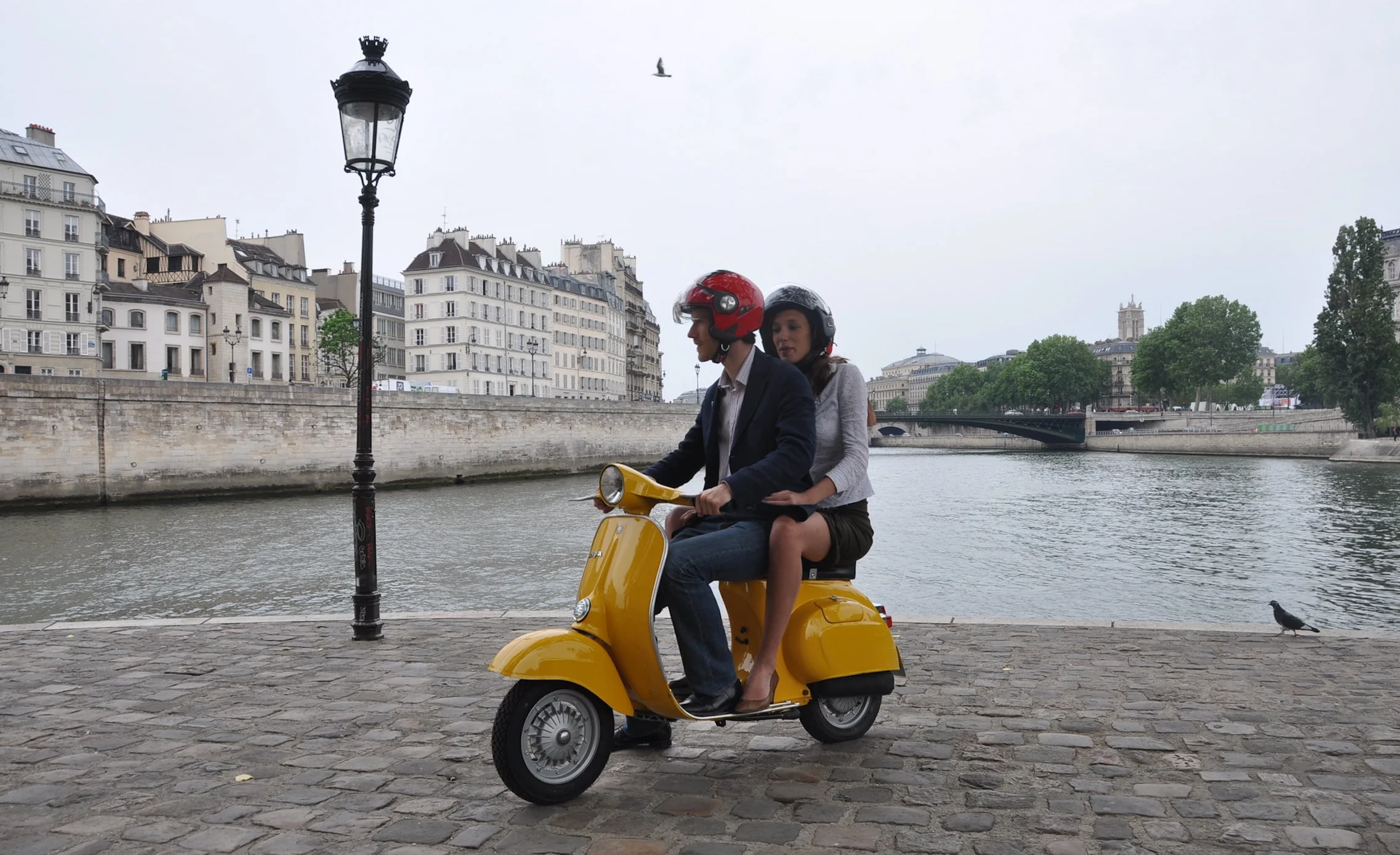
Rome turns “Vespa Village” for an 80th birthday
Rome was the natural stage for Vespa’s 80th anniversary: the city that immortalized the scooter in the 1953 film “Roman Holiday” became a sea of buzzing two‑wheelers over the weekend. Reuters reports that “Vespa Roma 2026 – 80 Years of an Icon” transformed the Foro Italico and the Stadio dei Marmi into a Vespa Village, with exhibitions, races, club events and brand showcases.
DW and the Boston Globe describe thousands of riders from across Europe, northern England, the United States, Australia, and the Philippines parading past landmarks from the Colosseum to the Roman Forum. Estimates in various reports range from “more than 10,000” Vespas to around 15,000, with some Italian outlets citing a procession of about 25,000 scooters at peak.
Rome’s mayor Roberto Gualtieri called Vespa “an iconic symbol of our history, of our culture,” saying its story “accompanies the birth and rise of Italy after the Second World War.” Italian Prime Minister Giorgia Meloni praised the brand’s “industrial excellence,” according to Ground News’ summary.
For four days, vintage and modern Vespas rolled side‑by‑side, some ridden solo, others carrying families, many decorated with national flags or club colors. AP video shows enthusiasts recounting journeys of 1,200 kilometers to reach Rome and collectors from Texas proudly noting they own 13 Vespas back home.
From war‑scarred Italy to global design icon
Vespa’s origin story is central to the anniversary narrative. Launched in 1946 by Piaggio, then a major aircraft manufacturer, the scooter was designed as a cheap, practical vehicle that could be used by a broad public, including women and priests in long skirts.
Piaggio first filed the patent on April 23, 1946, for a step‑through scooter whose bodywork protected riders from oil and dirt and whose enclosed mechanicals simplified maintenance. The name “Vespa”, Italian for “wasp”, reportedly came from Piaggio founder Enrico Piaggio’s exclamation at the prototype’s shape and buzzing sound.
The timing proved crucial. Italy, emerging from war and dictatorship, needed affordable mobility. Vespa was cheap to buy and run, nimble enough for narrow city streets, and stylish enough to appeal beyond utility. As Rome’s mayor put it, it became “the symbol of an Italy emerging from the war and getting back on its feet.”
By the 1950s and 1960s, Vespa had become one of the country’s most recognizable design exports. Films such as “Roman Holiday”, with Gregory Peck and Audrey Hepburn sharing a ride through Rome, “The Talented Mr. Ripley” and, more recently, Pixar’s “Luca” embedded the scooter in global popular culture. Around the world, Vespa came to embody not just transport but a certain romantic image of Italian life: cobbled streets, cafés, and freedom on two wheels.
Business milestones: 80 years of continuous production
Behind the nostalgia is a significant industrial story. Vespa has been in continuous production for 80 years, undergoing about 160 restyling updates as technology, safety standards and tastes changed. Matteo Colaninno, executive chairman of the Piaggio group, told DW that the company is “on the verge of 20 million vehicles produced” since 1946. A Piaggio spokesman cited by the Boston Globe said roughly 20 million Vespas have been sold worldwide and that the brand is now present in about 100–110 countries.
Today, Vespa scooters are manufactured in three plants, in Pontedera (Italy), Vietnam and India, serving Europe, Southeast Asia and other markets. Sales have been strongest in Europe and Asian urban centers, but the brand maintains a niche following in U.S. states such as Florida and California where scooters fit local climate and city layouts.
Piaggio has used anniversaries as business levers before, but the 80th birthday arrives in a competitive environment: rising urban congestion, environmental pressure, and the spread of electric micro‑mobility. By emphasizing Vespa’s heritage, craftsmanship and community, Piaggio is positioning the scooter less as a commodity and more as a durable lifestyle brand, akin to the Volkswagen Beetle in cars, as one Boston Globe writer put it.
Edizione Ottantesimo: a limited‑edition Vespa for collectors
The commercial centerpiece of the anniversary is the Vespa Edizione Ottantesimo, a limited‑run scooter designed to “stun” with commemorative details. RideApart reports that Piaggio will produce precisely 1,946 units worldwide, a nod to the year of Vespa’s launch, each with a numbered plaque hidden in the under‑seat storage.
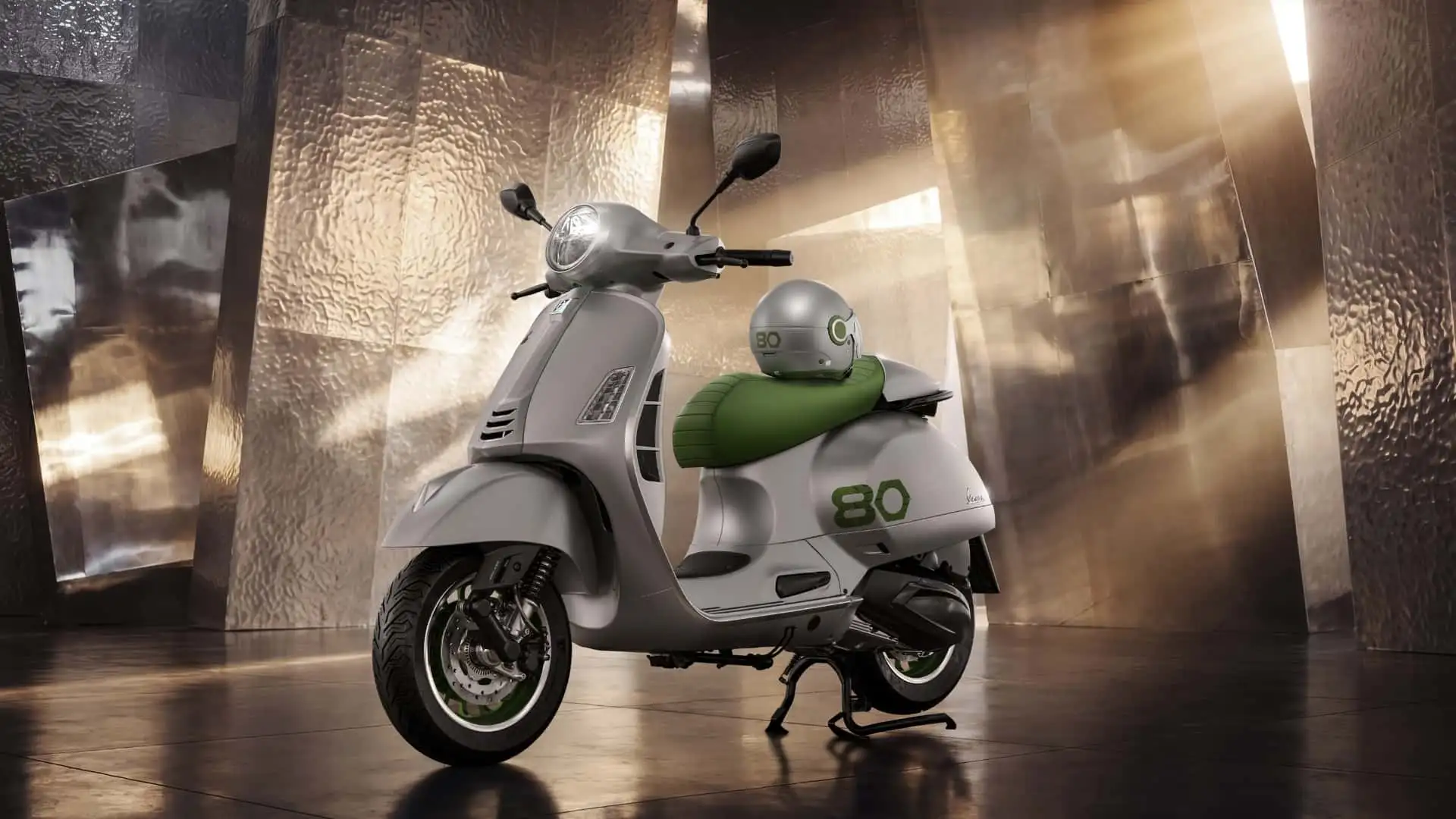
Built on the GTS 310 platform, the Edizione Ottantesimo uses a single‑cylinder engine rated at 25 horsepower and incorporates modern conveniences: full LED lighting, a 5‑inch color TFT dash, Vespa’s MIA connectivity system, keyless entry, traction control and ABS. Each scooter ships with a matching commemorative helmet, homologated to U.S. DOT standards, and a copy of the Vespa x Assouline coffee‑table book.
The model is being sold exclusively online, with orders opening during the anniversary festivities and deliveries expected from December 2026. In the U.S., the MSRP is listed at $12,000; only 25 units are allocated to the American market, underlining the scooter’s collector status. Pricing elsewhere varies, and Piaggio says the model will not be offered in Canada.
For the company, the Edizione Ottantesimo is both a tribute and a marketing experiment: using scarcity, digital‑first sales, and curated extras to test demand for high‑end, heritage‑driven scooters alongside mass‑market models.
Culture and community: Vespisti as global ambassadors
The Rome celebrations also highlight the role of Vespa clubs and riders as brand ambassadors. AP video and WION coverage show thousands of enthusiasts sharing stories of long trips, multi‑Vespa households, and decades‑old machines still on the road.
Ground News notes that attendees came from “across continental Europe, northern England, San Francisco, Australia’s Gold Coast” and beyond, calling the scooter a vehicle that “fosters community and friendship.” Many clubs organized group rides to Rome, turning the anniversary into a pilgrimage.
In business terms, that community is an intangible asset: a self‑organizing network that promotes the brand, organizes events, and sustains demand for spare parts and accessories. It also shapes Vespa’s image abroad, particularly in markets where scooters are less common, and the brand competes more with motorcycles and cars than with everyday urban runabouts.
An Italian business icon in a changing mobility landscape
Vespa’s 80th birthday is a celebration, but it also comes at a moment of transition for mobility. Urban planners across Europe and beyond are rethinking transport: encouraging public transit, cycling and low‑emission vehicles to reduce congestion and pollution. Electric scooters, e‑bikes and car‑sharing schemes are changing how younger urban residents move.
Piaggio has responded with electric Vespa variants, leveraging the brand’s design while updating its propulsion. The Edizione Ottantesimo, based on a combustion‑engine GTS, is a backward‑looking tribute, but the broader portfolio suggests Vespa aims to straddle nostalgia and transition.
Analytically, that is the broader business story behind the party in Rome: an Italian industrial icon trying to turn heritage into strategic advantage in a world where the very idea of urban mobility is being renegotiated. The scooter that once symbolized Italy’s rebirth now has to help the brand navigate a future shaped by climate policy, digital connectivity and changing consumer expectations, without losing the curved lines and buzzing charm that made it a “wasp” in the first place.