
NEW DELHI — India is facing its first year-over-year decline in rice production in a decade, as a weak and uneven monsoon threatens yields in the world’s largest rice-producing and exporting country.
The U.S. Department of Agriculture lowered its forecast for India’s 2026-27 rice production after below-normal rainfall and erratic monsoon coverage affected planting and crop development. The reduction is large enough to pull global rice output lower, though India’s substantial stockpiles are expected to cushion the immediate effect on world supply and trade.
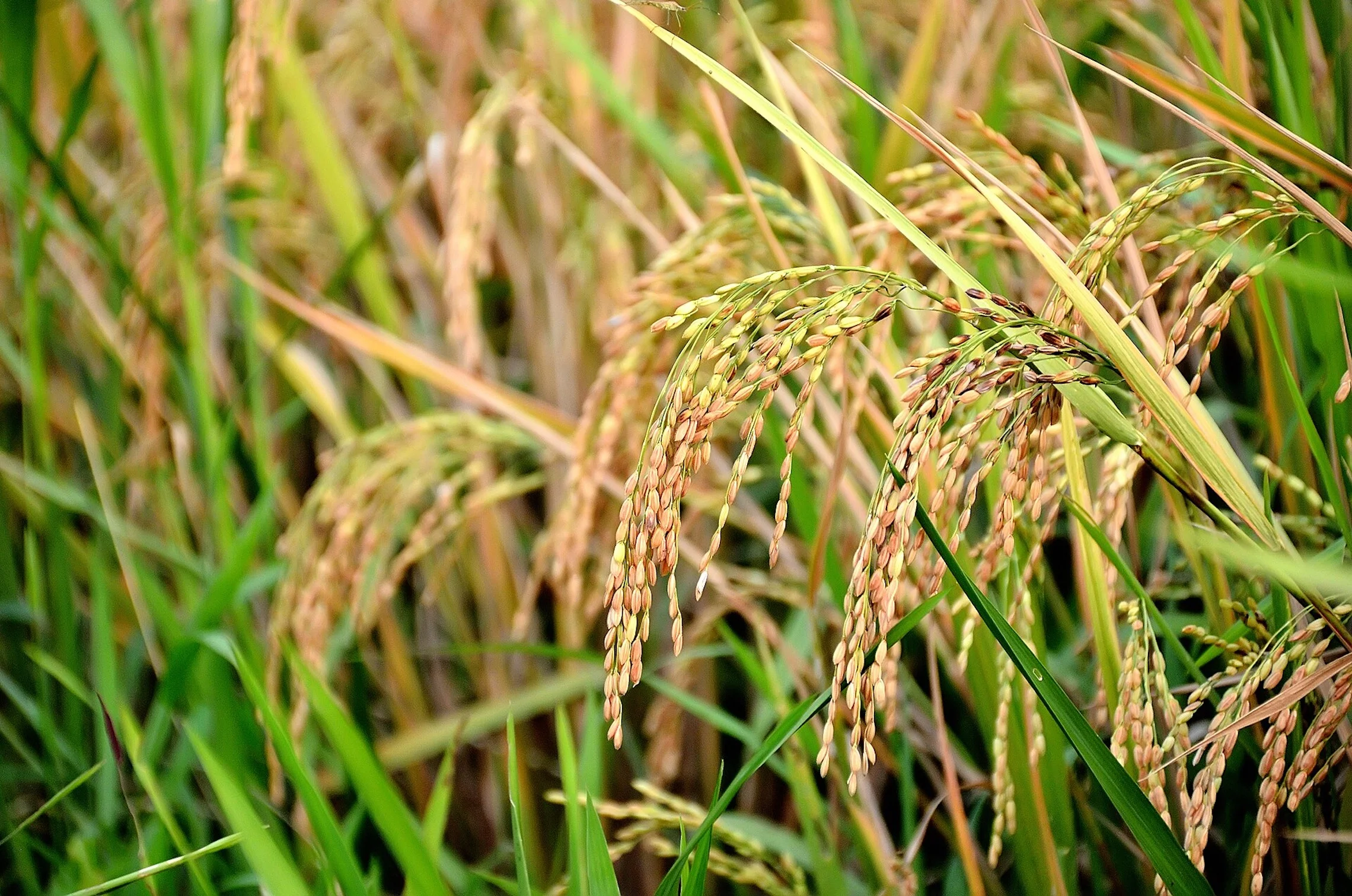
The USDA’s September World Agricultural Supply and Demand Estimates report said India’s lower crop outlook reflects below-normal rainfall and uneven monsoon distribution. It described the forecast as India’s first year-to-year reduction in rice production in 10 years.
The development is significant because India is not simply a major rice producer. It is central to the food security of hundreds of millions of people at home and a major supplier to buyers across Asia, Africa and the Middle East. A smaller harvest could affect farm incomes, domestic inflation, government food policy and international rice prices.
The decline also marks a sharp reversal from the previous season, when India reported a record rice harvest of 150.18 million metric tons.
The crop is not yet fully harvested, and production forecasts may change as weather conditions, field reports and government estimates develop. But the monsoon’s weak start, dry spells during key growth stages and the prospect of below-average September rainfall have created a difficult outlook for one of India’s most important staples.
From record harvest to weaker outlook
India entered the 2026 monsoon season after an exceptional agricultural year.
The Ministry of Agriculture and Farmers Welfare said final 2024-25 estimates placed rice production at a record 150.184 million metric tons, part of an overall record foodgrain crop of 357.73 million tons.
That strong harvest gave India unusually large rice stocks and helped contain food-price pressure. It also gave New Delhi more flexibility in managing exports, public procurement and domestic supplies.
But the weather pattern changed.
India’s monsoon is the foundation of the country’s summer crop cycle. Farmers depend on seasonal rain to provide soil moisture for planting and to sustain crops through crucial development periods. Rice, which is water-intensive and widely grown across India’s eastern, southern and northern states, is especially sensitive to the timing and distribution of rainfall.
This year, the monsoon arrived late in June, and rainfall in the first month of the season was 35% below normal, Reuters reported. That delayed planting of summer crops, including rice, because many fields lacked adequate soil moisture.
Conditions did not improve evenly afterward.
Some regions received intense rainfall, while others remained dry. Even areas with normal cumulative totals experienced prolonged dry spells followed by heavy downpours. That can be damaging because crops need rainfall at the right time, not simply a favorable total on a seasonal chart.
The Indian weather office has forecast below-average rainfall and above-average temperatures for September, a period that is critical for grain filling and yield formation in rice and other summer crops.
If the weakness persists, Reuters reported, the 2026 monsoon could become India’s weakest in nearly two decades.
Why uneven rain matters as much as low rain
A monsoon is not measured only by its final rainfall total.
For farmers, timing, geographic coverage and intensity can matter as much as the national average. Rain that arrives too late can delay sowing. A dry spell during early growth can weaken plants. Heavy rain in a short duration can cause floods, root damage, nutrient leaching and inability to reach fields.
Rice faces risks at several points in the season:
- Planting and transplanting: Fields need adequate moisture to establish seedlings.
- Vegetative growth: Dry conditions can stunt plants and reduce tillering, the production of additional stems that can bear grain.
- Flowering and grain filling: High temperatures and inadequate water can reduce grain formation and final yield.
- Harvest: Late-season rain can damage standing crops and complicate collection and storage.
The USDA’s forecast reduction reflects the combination of below-normal rainfall and uneven monsoon coverage, not a single weather event.
The concern is particularly acute because September is a critical month for crops that were already stressed by weak rainfall in August.
“Even in areas where seasonal rainfall was normal, prolonged dry spells followed by intense downpours left totals looking healthy but stressed farming,” Reuters reported.
That distinction is important for readers outside India. A national weather average can conceal local agricultural stress. A region may receive its normal monthly rainfall in two days of intense storms, followed by weeks without rain. That is not the same as a steady pattern of moisture that supports crops.
What the USDA forecasts
The USDA’s September report lowered global rice production for 2026-27 to 533.85 million metric tons, down from its August projection of 537.27 million tons.
The agency said the largest supply and use changes were in India.
Global rice supplies still rose slightly because India entered the season with higher beginning stocks. India’s stockpile increase more than offset the decline in its new crop for the purpose of total supply calculations.
| Measure | Latest USDA outlook | Why it matters |
|---|---|---|
| Global 2026-27 rice production | 533.85 million metric tons | Down from 537.27 million tons in August |
| Global rice consumption | 539.61 million metric tons | Lowered largely because of India |
| Global rice trade | 62.62 million metric tons | Slightly lower than the prior forecast |
| Global rice ending stocks | 196.99 million metric tons | Higher than August because of larger Indian beginning stocks |
| India’s share of global rice stocks | 28% | Gives New Delhi a large short-term buffer |
| India’s output trend | First year-over-year decline in 10 years | Signals a break from a decade of growth |
The USDA did not characterize the situation as an immediate global rice shortage. India’s reserves are large, and the world’s ending stocks are projected to rise rather than fall.
But the production decline changes the balance of risk.
Large stocks can protect consumers from an abrupt supply shock, but they cannot fully replace a strong harvest forever. If the monsoon damage proves deeper than expected, or if other rice-producing countries face weather problems, markets could become more sensitive.
Minor changes in Indian export policy can impact prices and availability for countries that depend largely on imported rice.
India’s role in global rice markets
India has become the world’s largest rice producer and exporter, overtaking China in production during the previous record season.
Its importance extends beyond sheer volume.
India is a leading exporter of rice and exports many kinds of rice such non-basmati white rice, parboiled rice and fragrant basmati rice. Its supplies matter notably to import-dependent countries in Africa, the Middle East and South Asia.
When India adjusts its rice trade policy, the effects can spread quickly.
In recent years, New Delhi has used export restrictions, minimum prices, duties and other controls to manage domestic supplies and food inflation. The government has also relaxed restrictions when production and stocks improved.
This gives India considerable influence over the global rice market. A weak crop may not automatically lead to export restrictions, particularly because current reserves are substantial. But it increases the likelihood that policymakers will prioritize domestic availability and inflation control over export expansion.
Reuters noted that India’s large rice stocks give the government more room to allow exports to continue without interruption than it would have in a tighter supply year.
That is reassuring for importers. But it is not a guarantee.
Policy will depend on the final harvest, domestic prices, procurement levels, weather conditions, global food costs and political pressure to protect Indian consumers.
Food inflation becomes a bigger concern
Rice is a staple food for much of India’s population, and food accounts for more than one-third of the country’s consumer-price index basket.
That makes monsoon performance central to the inflation outlook.
Reuters reported that retail inflation rose to 4.45% in July, while food inflation increased to 5.52%. A weaker monsoon could worsen food-price pressures if crop losses reduce supply or if farmers face higher costs for irrigation, fertilizer, seeds and transport.
The inflation risk is complicated by rising global commodity prices linked to the Iran conflict and disruptions in energy markets. Higher oil prices can raise fertilizer, diesel, freight and food-distribution costs. A smaller rice harvest would add another domestic pressure point.
For the Reserve Bank of India, the challenge is difficult. Higher food prices can push headline inflation up even if broader economic demand is slowing. That can limit the central bank’s ability to reduce borrowing costs, particularly if inflation expectations begin to rise.
A mix of weaker rural incomes, higher food prices and expensive energy could also put pressure on the Indian rupee and weigh on consumer spending.
The impact will not be evenly distributed. Higher costs for essentials hit poorer households harder, as they spend a bigger proportion of their budgets on food and gasoline.
Farmers face a dual risk
If the market price rises the farmer will still be making less money since he is producing less.
If the fall in output is severe, then a rice farmer who produces less may not get the full advantage of increased prices. It also costs farmers more if they need to irrigate, replace crops, buy more inputs or weather-related damage.
The weak monsoon could also affect the next agricultural cycle.
September rainfall helps determine soil moisture as farmers prepare to plant winter crops such as wheat, rapeseed, corn and chickpeas. If moisture remains low, seed germination and early growth can suffer.
That implies the impact of a bad monsoon could be felt beyond the summer rice crop. It could also effect decisions for winter planting, rural employment, the demand for farm inputs and the supply of other food commodities in 2027.
India’s agricultural system has become more resilient through irrigation, improved seed varieties, government procurement and expanded storage. But large areas remain dependent on rain-fed farming, particularly in regions where irrigation infrastructure is limited.
The monsoon remains the country’s most important agricultural variable.
Not only rice is at risk
The weather concerns extend beyond rice.
Reuters reported that below-normal rainfall is affecting water-intensive sugar cane and could reduce new cane planting for the next season. Lower sugar output could force India to increase imports beyond the 1 million tons of raw sugar it has already allowed duty-free.
Soybeans, peanuts, cotton, pulses and winter oilseeds are also vulnerable to rainfall shortfalls.
The USDA lowered India’s 2026-27 corn outlook as well, citing reduced harvested area and lower yield prospects.
A broad decline across crops could create a larger food-inflation problem than a rice declines alone. It could also increase India’s demand for imported vegetable oils, pulses, sugar or other agricultural commodities.
That would affect major agricultural exporters from Indonesia and Malaysia to Argentina, Russia, Ukraine, Australia, Canada and African countries.
India’s domestic weather, in other words, can have international trade consequences.
The climate connection
No single monsoon season can be attributed solely to climate change. Weather systems are shaped by multiple factors, including ocean temperatures, El Niño patterns, regional atmospheric conditions and natural variability.
This year, Reuters reported that a strengthening El Niño was contributing to concern about rainfall deficits.
But the broader trend is clear: farmers in India and other major food-producing regions are increasingly exposed to more erratic weather, including delayed rains, heat waves, droughts and intense downpours.
For rice, climate risk is not only about total water availability. High nite temperatures can influence grain growth. Flooding destroys crops. Drought could reduce the production. Changes in pest and disease trends could lead to increased losses.
The response requires both short-term and long-term strategies:
- Better weather forecasting and early-warning systems.
- Drought- and flood-tolerant crop varieties.
- Expanded irrigation and water-efficiency measures.
- Crop insurance and emergency farm support.
- Improved storage and procurement systems.
- Diversified cropping patterns in vulnerable regions.
- More transparent data on planting, rainfall and yields.
India’s rice production record of recent years was supported by favorable weather, expanded cultivation and government policies. The current downturn is a reminder that agricultural gains can be fragile when the climate becomes less predictable.
What happens next
The final scale of India’s rice decline will become clearer as harvest data arrive and the government, USDA and private analysts update their estimates.
Several factors will determine the outcome:
- Whether September rainfall meets or misses the weather office’s forecast.
- How much moisture remains in major rice-growing areas.
- Whether late-season heat affects grain filling.
- The extent of irrigation support in drought-affected regions.
- Government procurement and release of public rice stocks.
- India’s eventual export policy.
- Weather conditions in other major rice producers.
For now, India’s reserves provide an important buffer. USDA projects that Indian stocks will account for 28% of global rice ending inventories in 2026-27.
That stockpile reduces the chance that a single weak harvest will immediately become a global food crisis.
But it does not eliminate risk for Indian farmers, consumers or import-dependent countries. The first annual rice-production decline in a decade comes at a sensitive moment: global energy prices are high, food inflation is already a concern, and climate volatility is testing the resilience of agricultural systems worldwide.
India’s crop may still be large by historical standards. Yet the shift from record growth to decline is important because it shows how quickly the outlook can change when the monsoon fails to arrive in the right place, at the right time and with the right intensity.