
WASHINGTON — The U.S. Congress has approved a sweeping sanctions and tariff bill designed to increase economic pressure on Russia over its war in Ukraine, targeting Moscow’s energy and defense sectors, senior officials, financial institutions and the fleet of tankers used to evade existing restrictions.
The measure, formally called the Lindsey O. Graham Sanctioning Russia and Iran Act of 2026, now goes to President Donald Trump, who has said he supports it. The House passed the bill Wednesday by 262-159 after the Senate approved it 86-11 last month.
The legislation’s most consequential and controversial feature is not a new automatic tariff. It is an authorization for Trump to impose tariffs of up to 100% on China, India and other countries that remain major buyers of Russian oil and natural gas.
That distinction matters. The bill gives the president new authority; it does not automatically impose a 100% tariff on Indian, Chinese or other imports the moment it becomes law. Whether and how to use that authority would remain largely up to the White House.
The package is intended to deprive Russia of revenue used to finance its invasion of Ukraine. But it also carries risks for U.S. relations with major trading partners, global energy markets and consumer prices, which is why it faced significant opposition despite broad support for Ukraine.
The bill’s purpose
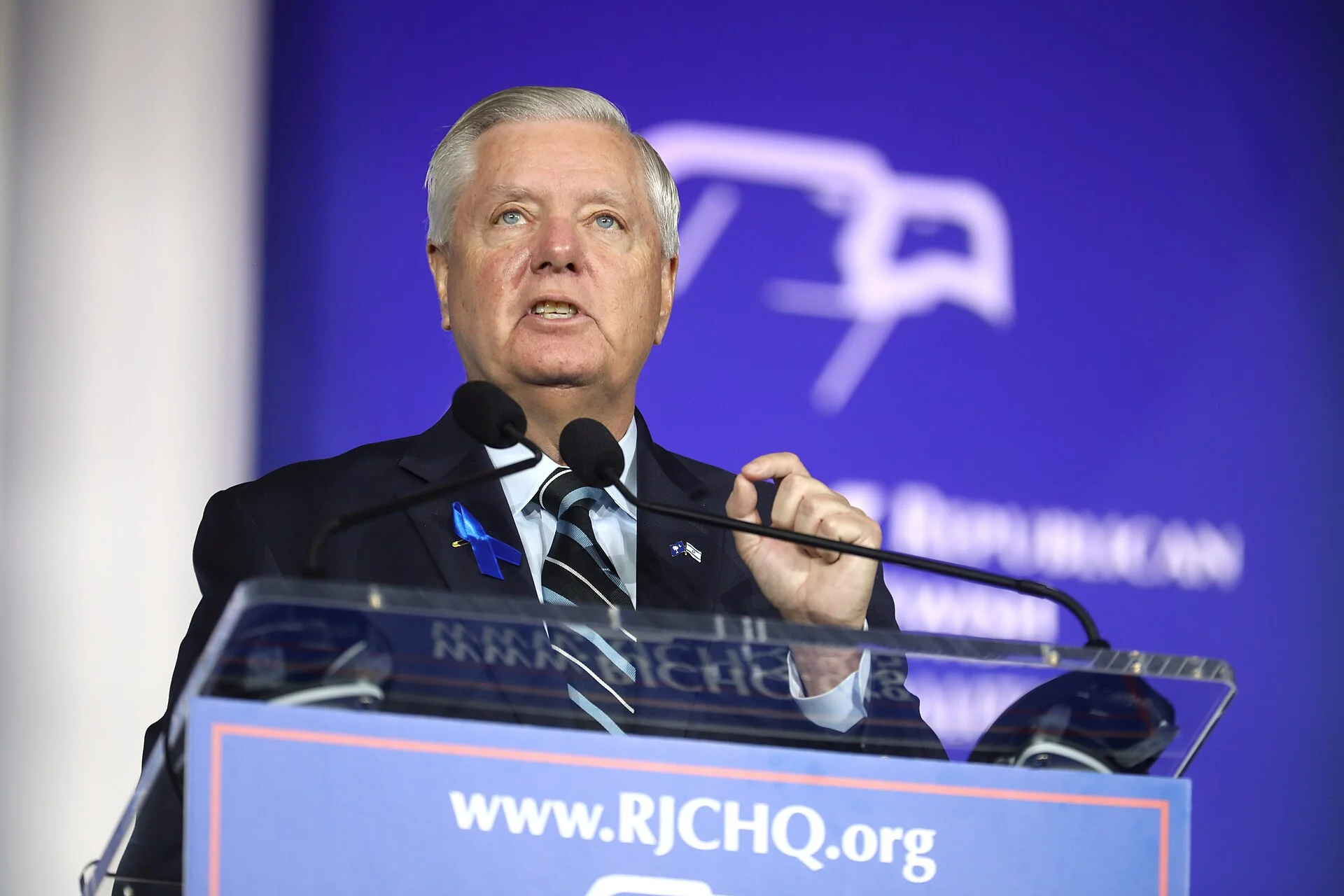
The bill was developed over more than a year by the late Sen. Lindsey Graham, a South Carolina Republican and one of Congress’ most outspoken supporters of Ukraine.
Its central premise is that existing U.S. and allied sanctions have not sufficiently reduced Russia’s ability to finance the war. Russia has adapted by redirecting oil and gas exports, using complicated shipping networks, relying on older tankers and expanding trade with countries that have not joined Western sanctions.
The bill attempts to increase pressure at several points in that system:
- Russian leaders and state institutions.
- The defense industry and firms supporting it.
- Financial institutions and banking channels.
- Energy projects and oil revenues.
- The “shadow fleet” of tankers used to evade sanctions.
- Foreign countries and entities that continue to buy significant Russian energy or help Moscow evade restrictions.
The goal is to make the economic cost of continuing the war higher for Russia, and for the countries and companies that help sustain Russia’s energy trade.
Supporters say the measure sends a strong message of U.S. support for Kyiv at a time when U.S.-mediated peace efforts have stalled. Critics say it gives Trump overly broad tariff powers that could be used unpredictably against allies and raise costs for Americans.
Sanctions on Russia’s leadership and war economy
The bill expands U.S. sanctions across core parts of Russia’s political and economic system.
It targets Russian President Vladimir Putin, senior political and military leaders, financial institutions, energy projects, oligarchs and other people or entities tied to the war effort. It also reaches foreign suppliers and networks that support Russia’s defense sector.
Sanctions can take several forms. They may freeze assets held under U.S. jurisdiction, prohibit Americans from doing business with designated people or companies, restrict access to the U.S. financial system, limit exports of certain goods and technology, or create secondary consequences for foreign entities that continue dealing with sanctioned parties.
The legislation also targets Russian defense-related activity more directly by restricting new U.S. investment in Russia and limiting exports that could support the Russian military.
These provisions build on an existing U.S. sanctions architecture that has been expanded repeatedly since Russia’s full-scale invasion of Ukraine in 2022. The new bill seeks to make that system harder to bypass by focusing not only on Russian institutions but also on the external trade and transport networks that allow Moscow to keep selling energy.
That is important because oil and gas revenue remains one of Russia’s principal sources of government income. If Moscow can continue selling large volumes of energy to global buyers, it can preserve much of the financial capacity needed to sustain military operations even under direct Western sanctions.
Targeting Russia’s “shadow fleet”
One of the bill’s most practical provisions concerns Russia’s so-called shadow fleet.
This term refers to older, often reflagged oil tankers used to transport Russian crude and petroleum products outside traditional Western insurance, shipping and compliance systems. These vessels may change ownership frequently, operate with opaque corporate structures, obscure their location data or use complex ship-to-ship transfers.
The purpose is to move Russian oil while reducing the chance that sanctions, price caps or insurance restrictions will stop the trade.
The new legislation expands sanctions against these tankers and the networks that support them.
The issue matters for both security and safety.
From a sanctions perspective, a shadow fleet allows Russia to continue earning export revenue. From an environmental and maritime perspective, older vessels operating with limited transparency can create heightened risks of oil spills, accidents and insurance disputes.
By targeting ships, owners, flags, insurers, ports and related service providers, the United States hopes to raise the cost and complexity of moving Russian oil. But enforcement is difficult. Shipping is global, ownership structures can be opaque, and vessels can shift registration or change corporate managers quickly.
The success of this provision will depend heavily on coordination with allies, maritime authorities, insurers, port operators and countries whose waters or facilities are used by the fleet.
The 100% tariff authority
The bill’s most far-reaching provision allows the president to impose tariffs of up to 100% on countries that are major purchasers of Russian oil or natural gas.
China and India are the most prominent potential targets because both have continued buying large volumes of Russian crude. But the language could also apply to other countries, including U.S. allies, depending on how the administration defines major consumption and evaluates energy dependence.
The legislation gives Trump discretion both to impose the tariffs and to lift them.
That is why the bill has generated criticism from lawmakers who otherwise support stronger action against Russia. They argue that it hands the White House a broad trade weapon with the potential to disrupt supply chains, raise import costs and damage relationships with countries needed for broader U.S. strategic goals.
The tariff authority is meant to work as a form of secondary economic pressure.
Traditional sanctions directly target Russia. Secondary sanctions or tariffs target third parties that help Russia maintain its revenue. The strategy aims to force a choice: reduce reliance on Russian energy or face severe trade penalties in the U.S. market.
| Provision | What the bill does | Potential effect |
|---|---|---|
| Russia leadership sanctions | Targets Putin, senior officials, military figures and related entities | Increases financial and travel restrictions |
| Defense-sector restrictions | Targets foreign suppliers and networks helping Russia’s military | Makes procurement and technology access harder |
| Financial sanctions | Targets Russian financial institutions and banking authorities | Restricts access to international finance |
| Energy sanctions | Targets Russian energy projects and revenue channels | Seeks to reduce funding for the war |
| Shadow-fleet provisions | Expands penalties on tankers and networks evading sanctions | Raises cost and risk of shipping Russian oil |
| Secondary tariff authority | Lets Trump impose tariffs up to 100% on major Russian energy buyers | Pressures China, India and others to reduce imports |
| Iran provisions | Extends certain Iran-related sanctions | Links Russia policy to wider U.S. Middle East pressure |
| Waiver authority | Allows the president to waive restrictions in the national interest | Preserves White House flexibility |
The bill includes exceptions for countries that import less than 15% of Russia’s natural gas exports and are taking steps to reduce their dependence on Russian energy.
That provision is designed to give some flexibility to countries that may still rely on Russian supplies for historical or geographic reasons but are actively trying to diversify.
Why China and India are central
China and India have become critical buyers of Russian energy since European countries reduced purchases after the invasion of Ukraine.
Their imports have helped Russia redirect oil that previously went to Western markets. That trade has provided Moscow with revenue and given the two Asian powers access to discounted crude.
For Washington, this creates a strategic dilemma.
Pressuring China and India could reduce Russian energy income. But imposing tariffs of up to 100% on imports from two of the world’s largest economies could also trigger retaliation, raise costs for U.S. businesses and consumers, disrupt supply chains and complicate diplomacy on issues ranging from technology to security.
India has already warned that new U.S. tariffs related to Russian oil purchases could damage bilateral ties. New Delhi says it must secure affordable energy for its population of 1.4 billion and will continue to source oil from diverse suppliers.
China has not indicated that it plans to reduce its Russian energy purchases. Beijing and Moscow have deepened trade and strategic ties in recent years, and China is likely to view U.S. tariff threats as part of a broader effort to limit its economic and geopolitical influence.
The bill’s supporters see that pressure as necessary. Its critics see it as potentially self-defeating if it pushes major powers closer to Russia rather than separating them from it.
No automatic 100% tariff
A central point for businesses and consumers is that the bill does not automatically impose a 100% tariff on goods from India, China or any other country.
It gives the president authority to impose tariffs of up to 100%, subject to the bill’s conditions and the administration’s interpretation.
That means several steps would likely be required before tariffs take effect:
- The president signs the bill into law.
- The administration identifies countries or entities it considers covered.
- The White House determines whether to use the authority.
- Agencies issue implementing rules, notices or tariff schedules.
- Affected countries may seek exemptions, negotiate changes or retaliate.
- U.S. companies assess supply-chain exposure and possible price effects.
The president also has authority to waive sanctions or restrictions if he certifies to Congress that doing so is in the national interest.
That flexibility may make the bill more usable as a diplomatic lever. The White House could threaten tariffs to seek concessions from energy buyers without immediately imposing the maximum penalty.
But it also makes the policy less predictable. Importers and foreign governments may not know how broadly the authority will be used until the administration announces specific actions.
Iran provisions
The Russia bill also extends certain sanctions related to Iran.
The Iran provisions were added after Trump asked the Senate to include them, linking the measure to the administration’s effort to apply economic pressure alongside military and diplomatic actions related to the conflict with Tehran.
The addition broadens the bill beyond Russia and Ukraine. It also makes the measure part of a larger U.S. sanctions strategy that spans energy, shipping, defense, finance and geopolitical alliances.
For critics, combining Russia and Iran provisions can make the legislation harder to evaluate as a single policy. For supporters, the connection reflects the growing overlap between Russia’s war economy, Iranian military support and wider concerns about sanctions evasion.
Why some lawmakers opposed it
The House passed the bill by 262-159, but opposition came from lawmakers across political lines.
Some Democrats said they supported Ukraine and tougher sanctions on Russia but opposed the bill’s broad tariff authority. They argued that Trump already has significant sanctions powers and that giving him additional discretion could lead to higher consumer prices without a clear strategy for ending the war.
Rep. Gregory Meeks of New York, the ranking Democrat on the House Foreign Affairs Committee, warned before the vote that the measure could produce “higher costs and more inflation for the American people.”
Some Republicans also oppose expanded sanctions or tariffs on free-market and noninterventionist grounds. Others worry about political consequences if new tariffs increase costs ahead of the midterm elections.
The objections point to a broader debate over sanctions policy.
Sanctions are designed to pressure foreign governments, but their effects can be diffuse. They may reduce access to revenue, technology and finance. They can also raise global commodity prices, create new trade routes, encourage evasion networks and prompt retaliation against U.S. firms.
The question is not simply whether sanctions are morally justified. It is whether they are structured effectively enough to change Russia’s behavior without causing more economic damage to allies, partners and Americans than policymakers are prepared to accept.
Russia’s response
The Kremlin has condemned the bill as an “unfriendly” action and said further U.S. sanctions would make a negotiated peace settlement in Ukraine harder, not easier.
Kremlin spokesman Dmitry Peskov said Moscow was monitoring the legislation and argued that additional pressure would complicate U.S.-mediated efforts to end the war.
That response is predictable. Russia has long portrayed Western sanctions as illegitimate economic warfare and used them to reinforce domestic narratives of confrontation with the United States and Europe.
The U.S. and Ukraine take the opposite view: pressure is needed precisely because negotiations have stalled and Russia has continued military operations.
The bill therefore reflects two competing theories of diplomacy.
One says sanctions increase leverage by making war more expensive. The other says sanctions harden positions and reduce incentives for compromise.
History offers evidence for both arguments. The outcome often depends on the target country’s economic resilience, outside support, domestic politics and whether credible diplomatic off-ramps exist.
What happens next
The bill now goes to Trump, who has said he supports it.
If he signs it, the administration will face immediate decisions about implementation:
- Which Russian individuals, entities and sectors to designate first.
- How aggressively to target the shadow fleet.
- Whether to issue guidance to banks, insurers and energy companies.
- Whether to use or threaten the new tariff authority against China, India or others.
- How to coordinate with European, Asian and G7 allies.
- Whether to issue national-interest waivers.
- How to manage the risk of higher energy prices and trade retaliation.
The law could become a significant source of leverage in U.S. diplomacy with China and India. It could also become a source of friction if foreign governments see it as an attempt to force them to choose between their energy needs and access to the U.S. market.
For businesses, the most important issue is not the bill’s passage alone but the implementing actions that follow. A 100% tariff authority creates potential exposure; actual tariffs, exemptions, agency guidance and enforcement priorities will determine the real economic impact.
The legislation’s core message is clear: Congress wants to increase the cost of Russia’s war by targeting the revenue system that supports it. Whether the bill can achieve that goal without widening global trade tensions will depend on how Trump uses the considerable discretion it grants him.





