
Donald Trump used his 2026 appearance at the World Economic Forum in Davos to showcase a new “Board of Peace,” soften his rhetoric over Greenland and tariffs, and reassert a nationalist, deal‑driven vision of U.S. power that unsettles many traditional allies even as it calms markets at the margin.
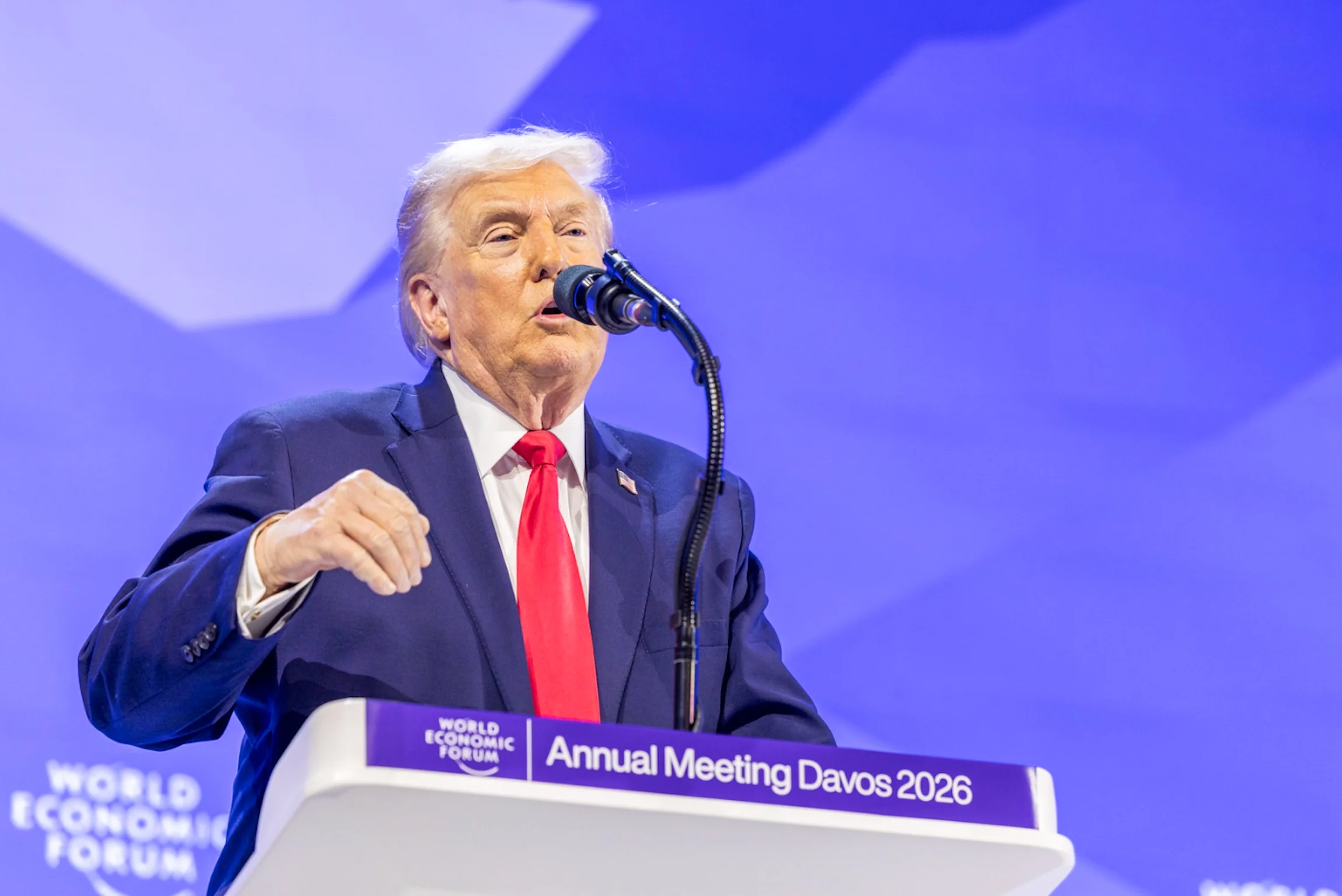
Across speeches, interviews and photo‑ops, the current U.S. president signaled he wants to write the rules of global conflict management from outside the UN system, while insisting he “won’t use force” to take Greenland and casting America as the indispensable engine of world prosperity.
1. Board of Peace: Trump’s new global stage
Trump’s most headline‑grabbing move in Davos was the formal signing of the charter for his new “Board of Peace,” a self‑branded conflict body he will chair for life. The charter, signed by more than 20 leaders and officials and backed by invitations to over 50 countries, describes a forum to “promote stability” and oversee reconstruction in war zones, with an initial mandate focused on Gaza.
Key structural features stand out:
- Trump is named chairperson and can only be removed by his own resignation or a unanimous vote of the Executive Board declaring him incapacitated.
- Member states serve three‑year terms, but those contributing over $1 billion can gain effectively permanent seats.
- A Gaza Executive Board will supervise reconstruction and transitional governance in the enclave, backed by Arab and regional funding.
Supporters present the board as a nimble alternative to paralyzed UN structures; critics, including several absent U.S. allies, see a personalized vehicle that could rival or undercut multilateral diplomacy.
2. Greenland: “I won’t use force” – but still wants the island
If the Board of Peace was about projecting Trump as a peacemaker, his remarks on Greenland exposed the harder edges of his worldview. After weeks of escalating rhetoric about taking the Arctic Island from Denmark, including tariff threats that rattled markets – Trump used his Davos address to declare that he “won’t use force” to acquire Greenland.
He told the forum: “We would be, frankly, unstoppable, but I won’t do that… I don’t have to use force, I don’t want to use force, I won’t use force,” framing this as his most important line in Davos. In interviews with CNBC and CNN, he added that the U.S. has a “concept of a deal” and a “framework for a future deal” that would renegotiate the 1951 base agreement and, in his words, secure “ownership” of Greenland because “you can’t defend it on a lease.”
NATO Secretary‑General Mark Rutte said he had a “very good discussion” with Trump on Arctic security, stressing the need to keep Russia and China out, even as local leaders in Greenland voiced alarm at being treated as a strategic asset rather than a community. European governments welcomed the explicit renunciation of military force and new tariffs but remain wary of Trump’s insistence that the island “belongs to us” and that allies will be “remembered” if they resist.
3. Economic message: America first, again – and markets exhale
On economics, Trump’s Davos speech returned to familiar themes: boasting about U.S. growth, attacking regulation and immigration, and drawing a sharp contrast with what he portrayed as a faltering Europe. “When America thrives, the entire world thrives,” he said, arguing that other countries “all follow down and follow us” and insisting he wants “strong allies, not severely weakened ones.”
The most market‑sensitive developments came not from the podium but from his subsequent clarifications. By ruling out the use of military force or immediate tariffs to secure Greenland and talking up a negotiated framework, Trump helped reverse a sharp sell‑off earlier in the week that had been driven by fears of a new transatlantic trade clash. European stocks edged higher and U.S. indices rebounded as investors priced in lower near‑term risk of sudden tariffs on EU partners.
Still, Davos made clear that geopolitics is once again a core macro driver: Trump linked energy, Arctic security, and defense spending to trade preferences, and hinted that countries cooperating on issues like Greenland or Gaza would enjoy smoother economic ties with Washington.
4. Foreign‑policy signals: Gaza, Ukraine, Venezuela
Trump used the Davos stage to broadcast a set of foreign‑policy priorities that will shape U.S. relations with allies and rivals in 2026.
On Gaza, he framed the situation as being “mostly over,” claiming only “little fires” remained and presenting the Board of Peace as the main vehicle for reconstruction and “lawful governance.” Around 35 of 50 invited nations were expected to attend the signing ceremony, including Israel and several Arab states, with the board tasked with overseeing long‑term investment and security coordination.
On Ukraine, Trump held a high‑profile meeting with President Volodymyr Zelenskyy, with both sides briefing that discussions would focus on “prosperity and security” amid ongoing talks with Russia. Details were sparse, but the optics underlined that Kyiv must now navigate a U.S. leader who casts himself as a broker of bespoke deals rather than a champion of collective security frameworks.
On Venezuela, Trump told Davos attendees the U.S. is working with the country’s “new leadership” to “capture” ousted president Nicolás Maduro and his wife, Cilia Flores, praising Caracas’s cooperation since the end of major combat and promising that “Venezuela is going to thrive.” That message will reassure some Latin American conservatives while raising questions among others about the precedent of extra‑territorial pursuit of former leaders.
5. Allies’ unease and what it means for global governance
Across the corridors in Davos, the reaction from many European and allied officials mixed relief at Trump’s short‑term de‑escalation with deep concern about the trajectory of global governance.
Diplomats worry that the Board of Peace could evolve into a de facto rival to the UN, especially given Trump’s hints that it might one day “substitute” for parts of the system he has long criticized. The board’s governance with Trump as near‑irremovable chair, billion‑dollar buy‑in for permanent seats and an executive roster heavy on Trump confidants, fuels suspicions that it will reflect one man’s priorities more than a balanced multilateral consensus.
At the same time, Trump’s public rebuke of Canada’s Prime Minister Mark Carney, his jabs at Europe’s economic performance and his insistence that Greenland “belongs to us” strained the message of partnership he tried to project from the main stage. For many mid‑sized powers, Davos 2026 underlined a new reality: navigating U.S. policy now means engaging not only with formal treaties and traditional institutions, but also with leader‑centric constructs like the Board of Peace and open‑ended “framework deals” whose details remain opaque.
6. Key takeaways for US and global audiences
For U.S. readers, Trump’s Davos appearance crystallized his second‑term foreign‑policy doctrine: pursue American interests through bespoke deals, put personal leadership at the center of peace‑making, and keep military options in reserve while brandishing economic and institutional levers. His pledge not to use force in Greenland and his “peace board” branding show an awareness of global anxieties about escalation, even as his language on ownership and tariffs keeps pressure on allies.
For global audiences, the forum offered a preview of a more fragmented diplomatic landscape. The UN remains formally intact, NATO still central in European security, and traditional alliances have not collapsed. But with a U.S. president building parallel platforms and tying strategic issues like the Arctic and Gaza to loyalty tests, Davos 2026 suggested that the next phase of globalization will be less about shared rules and more about which leader’s table you are prepared to sit at and on what terms.



