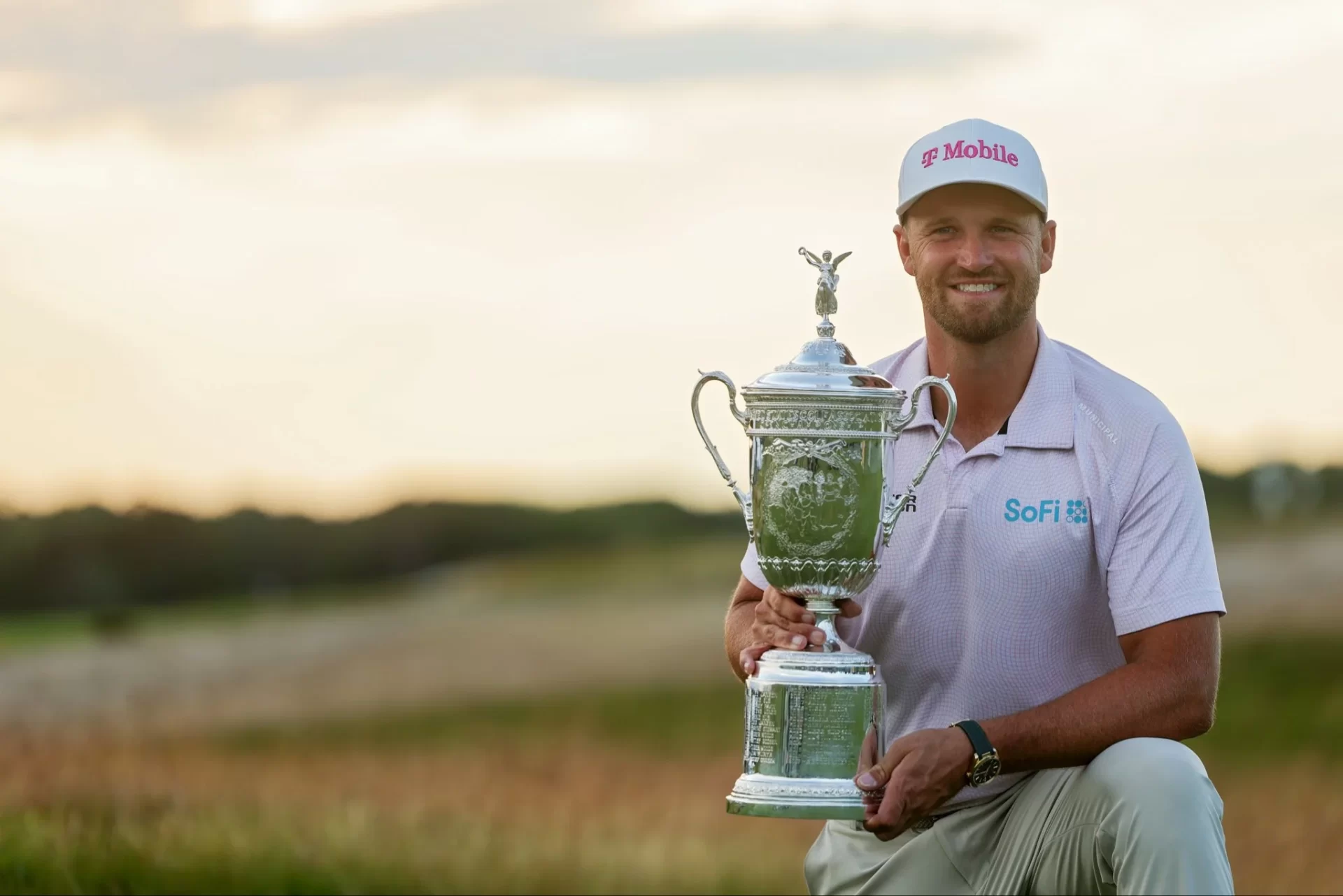
Wyndham Clark has won the 2026 U.S. Open at Shinnecock Hills, surviving a nervy back‑nine wobble, a hostile New York gallery and the weight of a six‑shot 54‑hole lead to claim his second national championship in three years and join one of the most exclusive clubs in golf history.
From record pace to a ragged finish
For three days at Shinnecock Hills, Wyndham Clark looked untouchable.
He opened the 126th U.S. Open with a 6‑under‑par 64 on Thursday, then backed it up with a 1‑under 69 on Friday to take the outright lead into the weekend. Those first 36 holes, completed in a record 133 strokes, broke the previous Shinnecock Hills U.S. Open scoring mark of 134 set by Phil Mickelson and Shigeki Maruyama in 2004 and ranked as the second‑best opening two rounds of Clark’s major career, behind only his 131‑stroke start en route to winning the 2023 U.S. Open.
By Saturday evening his lead had swelled to six shots. ESPN notes that Clark’s front‑running position put him on the verge of becoming the first wire‑to‑wire U.S. Open champion since Martin Kaymer at Pinehurst in 2014, and just the ninth in the championship’s history. The way he was striking the ball, with his length off the tee and a tidy short game on Shinnecock’s famously unforgiving greens, it was possible to wonder whether Sunday would be little more than a coronation.
Shinnecock, and New York, had other ideas.
A six‑shot cushion evaporates
The final round began with Clark at 7‑under 203, six clear of Sam Burns and Joohyung Kim. Within a few hours, that cushion had all but vanished.
Olympics.com reports that the 32‑year‑old American “nearly squandered his impressive six‑shot advantage during the final round,” stumbling to a 3‑over‑par 73 that included a front‑nine 38. ESPN describes a “shaky” Clark turning in 3‑over for the day, his swing and putting stroke noticeably tighter as winds freshened and Shinnecock’s fescue‑lined fairways and run‑off areas began to bare their teeth.
His advantage, once commanding, shrank to a single shot as Burns mounted a charge. The New York Times’ Athletic edition notes that Clark “gave up nearly all of a six‑stroke lead to start the day” before steadying himself over the closing holes.
The signature moment in that recovery came at the par‑3 11th, where Clark holed a long putt to stem the bleeding, and again at the par‑4 15th, where he poured in a 25‑footer for par that BBC Sport described as the first time it felt “apparent he was on track to become the first tournament winner since Martin Kaymer in 2014 to maintain the lead from the opening round to the final hole.”
Even then, the tension did not break. A three‑putt bogey at the 17th, on a green that has undone many champions, left Clark clinging to a one‑shot lead heading to Shinnecock’s brutish 18th.
There, with everything in play, he delivered the most mature shot of the week. From 52 feet away on the green, Clark rolled a birdie putt to within inches of the hole, then tapped in for par to close at 4‑under 276, one stroke ahead of Burns and three clear of South Korea’s Kim Joohyung in third at 1‑under.
Booed in New York, lifted by history
If the golf itself was fraught, the atmosphere was equally charged.
The New York crowd that packed into Shinnecock Hills on Sunday was noticeably cool toward Clark, whose outspoken comments during the controversial 2025 season, when he criticized course setups and sparred with fans on social media, have left him with a complicated public image. “New York didn’t really like me,” Clark admitted afterwards.
BBC Sport reports that he “dealt with jeers from the fans to win a second US Open title,” noting that several in the gallery openly cheered for his rivals and groaned at his made putts. Yahoo Sports went further, describing how “spectators who gathered at Shinnecock Hills to witness the concluding [round] on Sunday were not particularly supportive of Wyndham Clark. In fact, many fans left before Clark could celebrate his victory.”
According to that Yahoo report, multiple fans were ejected from the final round for heckling Clark and other players, with some spectators “actively cheering against him” as the back nine unfolded. It is unusual, even in New York, for a leading American in a home major to be the object of such open hostility.
Clark did not hide how much it stung. “This first victory was a breakthrough for me, showing I could do it. This one feels like a lot of redemption,” he said, according to the BBC. “Last year was incredibly difficult; it was a terrible season for me.” The subtext was clear: winning again, and doing it here, in front of this crowd, carried a different kind of satisfaction.
The optics may take longer to repair. USA Today, in a separate feature, asked bluntly: “Why does everyone hate Wyndham Clark?” and delved into fan backlash related to his comments about course difficulty and disputes with tournament officials. Shinnecock provided an uncomfortable live‑action case study in that dynamic even as it crowned him champion.
A place in the record books
Strip away the noise, and Clark’s achievement at Shinnecock is unambiguous.
Olympics.com notes that he “became the ninth golfer in U.S. Open history to go wire to wire for the championship,” joining a list that includes luminaries like Tiger Woods, Rory McIlroy and Kaymer. ESPN emphasizes that he is the first wire‑to‑wire winner since Kaymer’s 2014 triumph, underscoring how rarely a player can maintain the lead across all four days under U.S. Open set‑ups.
This is his second U.S. Open title in three years, following his 2023 victory at Los Angeles Country Club, when he held off Rory McIlroy to win his first major. At 32, he becomes one of the few active players with multiple U.S. Opens, and one of the few in any era to pair that with course‑record scoring over the first two rounds at a venue as storied as Shinnecock.
Bleacher Report highlighted just how special his early‑week performance was: “The famously tricky greens at Shinnecock Hills couldn’t stop Wyndham Clark from making history… Clark finished the first two rounds at Shinnecock in 133 strokes, beating the previous tournament course record of 134 set by Phil Mickelson and Shigeki Maruyama in 2004.” For a championship that has previously produced winning scores over par at this venue, finishing at 4‑under 276 is itself a testament to four days of world‑class control.
The money, the points and the road ahead
A second U.S. Open title brings more than just a trophy and a line in the record books.
The PGA Tour’s official breakdown shows that Clark collects 750 FedExCup points and a $4.5 million winner’s cheque from the 2026 U.S. Open purse, which distributed a total of $20 million in prize money across the field. That payout cements his position in the season‑long FedExCup race and all but guarantees his place on the next U.S. Ryder Cup and Presidents Cup teams, where his length off the tee and composure in majors will be prized.
It also reshapes his career arc. After his 2023 major breakthrough, Clark endured what he himself called a “terrible” 2025 season, missing cuts at key events and slipping down leaderboards as swing tweaks and off‑course issues took their toll. Many in the game wondered whether LACC had been a high‑water mark rather than a stepping stone.
Shinnecock answers that question decisively. The New York Times notes that Clark “won his second U.S. Open in four years,” placing him alongside a small group of modern players, think Brooks Koepka, Retief Goosen, Curtis Strange, who have turned a single major into a recurring presence at the very top of the game.
For a player once on the fringes of PGA Tour status, that is a dramatic transformation.
Shinnecock’s enduring challenge
Part of what gives Clark’s win its heft is where he did it.
Shinnecock Hills, perched above the Atlantic on eastern Long Island, has long been one of the U.S. Open’s sternest and most debated tests. In 2004, baked‑out greens and controversial pin positions led to accusations that the USGA had “lost the golf course”; in 2018, similar concerns resurfaced as scores ballooned on Saturday in windy conditions.
The 2026 set‑up was, by consensus, more balanced, firm but not unplayable, punishing of wayward drives but rewarding of well‑placed aggression. Yet it still exacted a toll. As Clark’s 3‑over 73 on Sunday and Burns’s late bogeys showed, Shinnecock remains a place where no lead is safe and no shot can be taken for granted.
That is why wire‑to‑wire winners there are rare, and why course records matter. To dominate for two days and then survive for two more at Shinnecock is to demonstrate both shot‑making and scar tissue, traits that tend to define major champions.
Redemption, with an asterisk
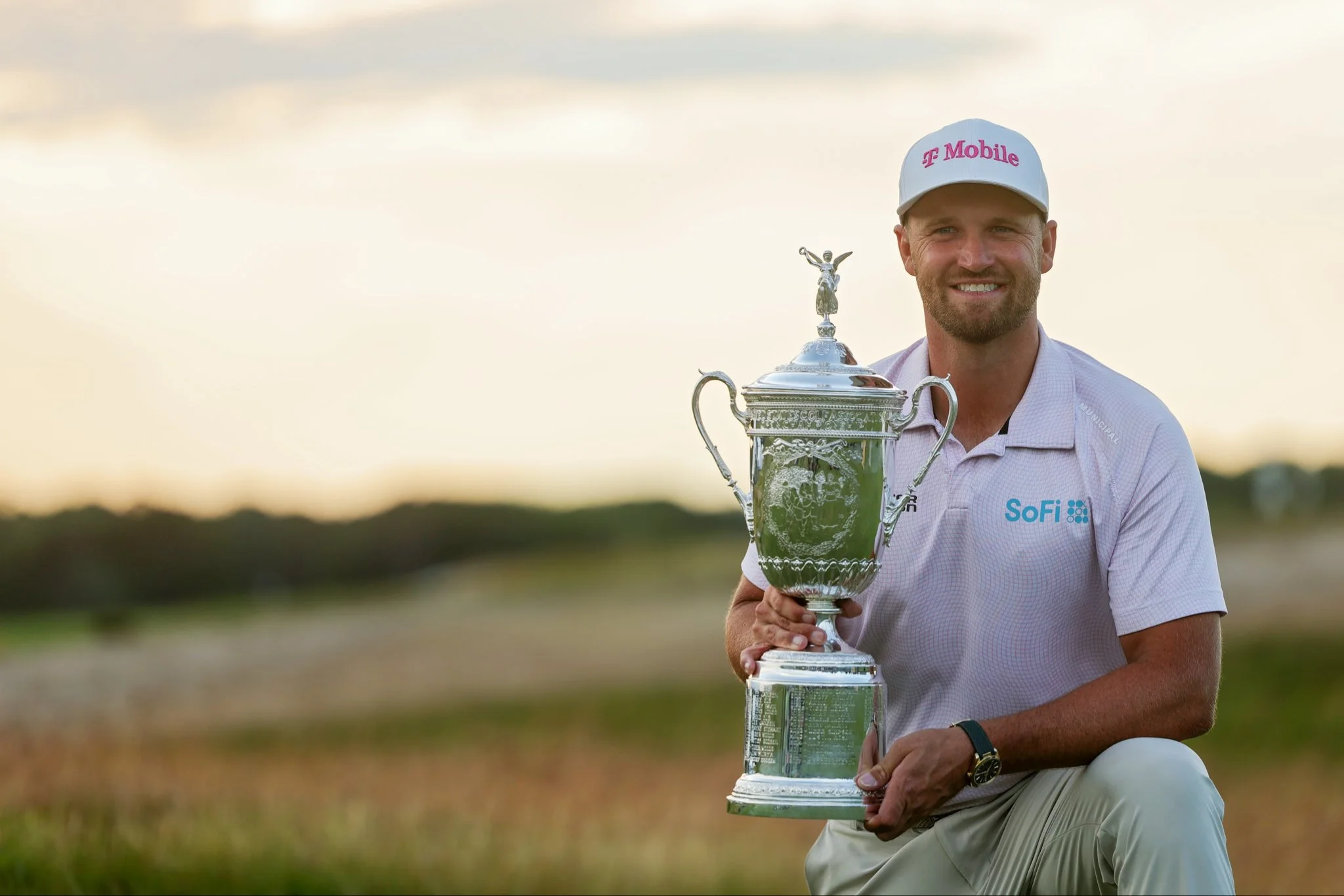
In the end, Wyndham Clark left Shinnecock Hills with the Harton S. Semple Trophy under his arm, another line etched on the winner’s board, and a week’s worth of boos echoing faintly in his ears.
“This one feels like a lot of redemption,” he said, referencing both his 2025 struggles and the criticism that followed him into New York. For his supporters, it is exactly that: a story of resilience, course management and the mental fortitude to close out a major while much of the crowd is rooting for you to fail.
For his detractors, the concerns that fueled the heckling, about his past comments, his on‑course demeanor, his relationship with fans, will not vanish overnight. They will argue that greatness in golf, especially in front of New York galleries, is as much about how you carry the weight of the moment as it is about where your name sits on the leaderboard.
What is beyond dispute is that on Sunday at Shinnecock Hills, with a six‑shot lead slipping away and the noise rising, Wyndham Clark carried enough of that weight to win the 2026 U.S. Open.