
Key Facts
- President Donald Trump proposed three alternatives to “artificial intelligence”: Superior Intelligence, Extreme Intelligence and Supreme Intelligence.
- He called “artificial intelligence” “inaccurate” and “very ineloquent” in a Truth Social poll but did not announce a formal government renaming policy.
- The alternatives are branding language, not scientific classifications. AI remains the standard term used by researchers, companies, regulators and international institutions.
- Trump also said he intends to establish an “AI Force” and appoint an AI “czar,” though he released no executive order, structure, funding plan or formal policy details.
WASHINGTON — President Donald Trump has proposed renaming artificial intelligence, inviting users of his Truth Social platform to choose among three alternatives: “Superior Intelligence,” “Extreme Intelligence” and “Supreme Intelligence.”
Trump said the term “artificial intelligence” was “inaccurate” and “very ineloquent,” arguing that a stronger label would better describe the technology’s expanding economic and strategic importance.
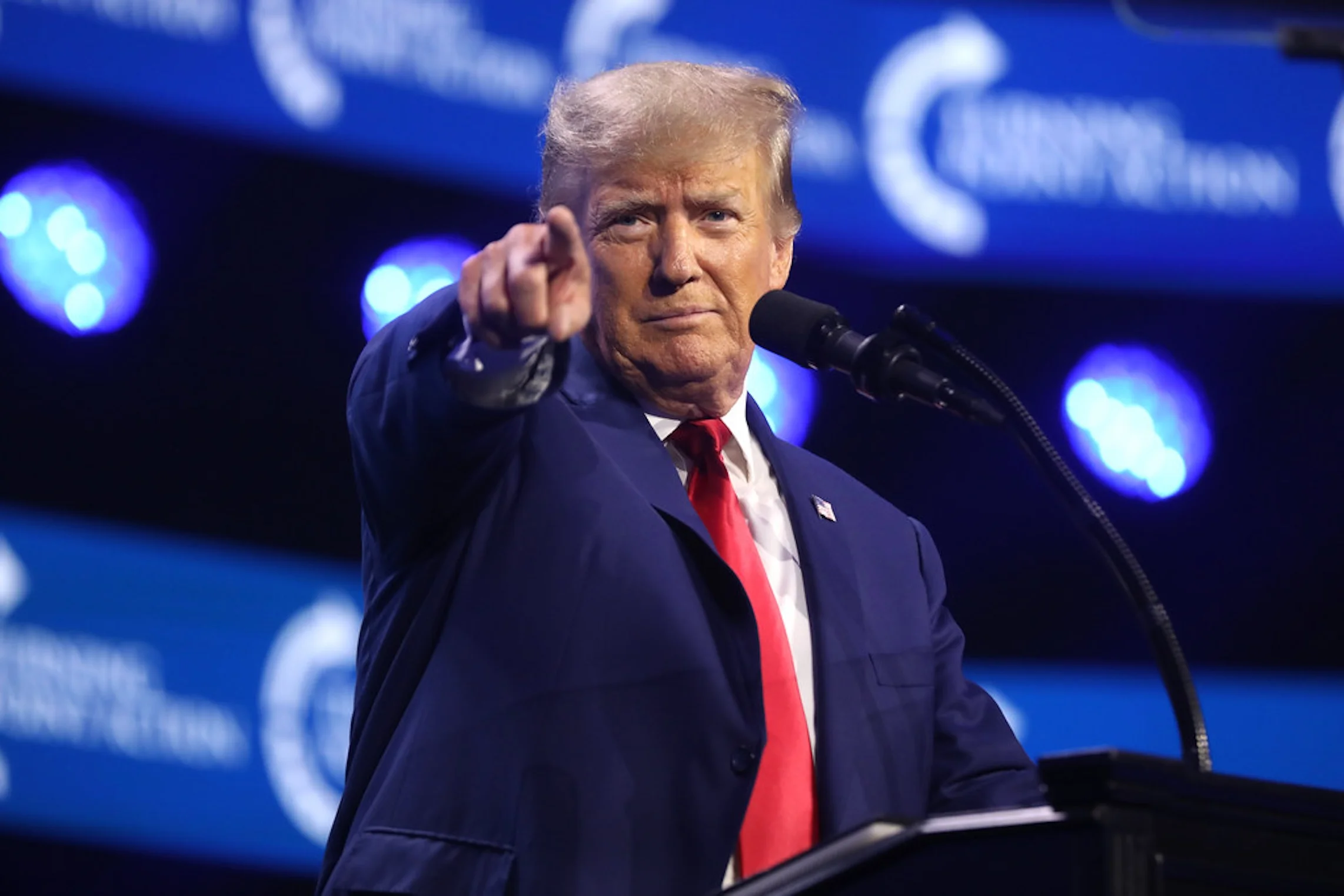
The proposal was delivered through an online poll, not through an executive order, federal agency directive or legislative initiative. It does not change the terminology used by government agencies, technology companies, researchers or international standards bodies.
Still, the post offers a glimpse into how Trump wants to frame the AI debate. Rather than emphasize the “artificial” nature of machine systems, he appears to prefer language that highlights the technology’s power, ambition and potential superiority.
The names Trump proposed are simple:
- Superior Intelligence, or SI.
- Extreme Intelligence, or EI.
- Supreme Intelligence, also abbreviated SI.
The repeated use of SI for two different choices drew immediate attention. Trump did not address the duplicate abbreviation or explain how either label would apply to the wide range of technologies currently described as artificial intelligence.
The poll had no scientific, legal or regulatory standing. Its early results reflected Truth Social users rather than a representative sample of Americans, AI researchers or technology businesses. “Superior Intelligence” initially led with about 42% of approximately 30,000 votes, followed by “Extreme Intelligence” at about 38% and “Supreme Intelligence” at about 20%, Forbes reported.
The more consequential aspect of Trump’s announcement may be his separate pledge to create an “AI Force” and appoint an AI czar, although the White House had not released details of the proposed entity’s authority, staffing, funding or relationship to existing federal agencies.
The three names Trump proposed
Trump’s poll offered three names that differ more in tone than in technical meaning.
“Superior Intelligence” presents AI as a capability that can exceed ordinary human performance. “Extreme Intelligence” emphasizes intensity and scale. “Supreme Intelligence” suggests the highest possible form of intelligence.
None is a recognized term in computer science.
| Proposed name | Abbreviation | Suggested framing | Main limitation |
|---|---|---|---|
| Superior Intelligence | SI | AI as an advanced or better form of intelligence | Can imply AI is broadly better than humans |
| Extreme Intelligence | EI | AI as unusually powerful or fast-growing | Not a defined technical category |
| Supreme Intelligence | SI | AI as the highest form of intelligence | Uses the same abbreviation as Superior Intelligence |
| Artificial Intelligence | AI | Broad term for machine systems that perform cognitive-like tasks | Broad and imperfect, but globally established |
The existing phrase “artificial intelligence” is itself broad. It can describe a recommendation algorithm, a facial-recognition system, a medical-image analysis tool, a chatbot, a self-driving system or an AI agent that uses software tools.
That breadth has led some researchers to argue that the phrase can exaggerate what current technology actually does. A system may be highly effective at predicting patterns in data or generating language while remaining unreliable at common-sense reasoning, factual verification, ethical judgment or understanding human context.
But Trump’s alternatives create a different problem. They may inflate public expectations even more.
Most AI systems do not possess general intelligence comparable to a human being. They do not have consciousness, intent, self-awareness or a comprehensive understanding of the world. Their outputs can be useful, persuasive and sometimes extraordinary, but they can also be inaccurate, biased, insecure or difficult to explain.
A term such as “Superior Intelligence” could encourage users to trust AI systems more than evidence supports.
Why Trump says “AI” is inaccurate
Trump did not explain in detail why he considers “artificial intelligence” inaccurate.
His post said only that “many people” view the phrase as inaccurate and inelegant, and that his proposed alternatives would be more “elegant and accurate.”
The word “artificial” usually distinguishes machine-created systems from biological intelligence. The word “intelligence” is used as a shorthand for software capable of performing tasks linked to perception, language, analysis, classification, prediction, reasoning or decision-making.
The phrase dates back decades and remains embedded in scientific research, government policy, business strategy, legal rules and public discussion.
Changing it would be difficult even if a president formally attempted to do so.
The term appears in:
- Federal research programs.
- NIST risk-management frameworks.
- Department of Defense technology planning.
- International standards.
- Corporate filings.
- University degree programs.
- AI-safety research.
- State laws and regulations.
- Public procurement contracts.
- Global diplomatic discussions.
Trump has not proposed a mechanism for replacing it in any of those areas.
The immediate effect of his poll is rhetorical, not administrative.
A branding argument, not a technical one
Trump’s proposal is best understood as a branding exercise.
Artificial intelligence has become one of the most powerful and contested phrases in public life. It can evoke optimism about medical breakthroughs, productivity, scientific discovery and economic growth. It can also trigger fears about job displacement, misinformation, deepfakes, surveillance, cybercrime and the loss of human control over automated systems.
Trump’s preferred names shift the tone toward confidence and expansion.
“Superior Intelligence” presents the technology as an asset that could make the United States more competitive. “Extreme Intelligence” suggests a dramatic leap in capability. “Supreme Intelligence” offers the most ambitious formulation, though it is also the least precise.
The framing matches Trump’s larger political message on technology.
He has frequently described AI as a major engine of economic growth and argued that the United States must preserve its technological lead over China. He has pushed back against calls from some technology executives and researchers to slow the development of the most powerful AI systems until safety testing and oversight improve.
In that context, the naming poll is not just a word game. It reflects a preference for presenting AI as an opportunity to be embraced rather than a risk to be constrained.
The proposed “AI Force”
Trump’s naming poll was followed by a second announcement: He said he would establish an “AI Force” and appoint an artificial-intelligence czar.
“We will not in any way hinder or stifle the Growth of this incredible Industry,” Trump wrote.
The statement offers little operational detail. It is unclear whether the AI Force would be:
- A new White House office.
- An interagency working group.
- A Defense Department program.
- A task force coordinating federal AI policy.
- A public-private advisory body.
- A regulatory or deregulatory initiative.
- A national-security unit focused on competition with China.
The United States already has multiple agencies involved in AI policy.
The National Institute of Standards and Technology develops voluntary guidance, including the AI Risk Management Framework. The Commerce Department oversees technology and export-control issues. The Federal Trade Commission examines consumer protection and competition. The Defense Department funds military AI research. The Department of Energy is involved in computing infrastructure and power demand. The White House coordinates policy across these agencies.
An AI Force could potentially make the system more coherent. It could also create overlap unless the administration defines a clear mission.
The choice of an AI czar would be particularly important. The person’s background, technology, national security, business, law, science or politics, would signal whether Trump intends to focus on growth, military competition, infrastructure, safety or regulation.
As of Sunday morning, no nominee, order or formal mandate had been announced.
The broader AI policy divide
Trump’s poll arrived during a widening debate over how quickly AI should advance.
Anthropic Chief Executive Dario Amodei has argued that leading companies should “pace the frontier,” slowing capability development when necessary so alignment research, cybersecurity work and independent evaluations can keep up.
OpenAI Chief Executive Sam Altman and xAI founder Elon Musk have supported some of Amodei’s safety proposals, including the use of independent evaluators with deep access to AI labs.
Other technology leaders, including Meta Chief Executive Mark Zuckerberg, have rejected an industry-wide slowdown. Zuckerberg argues that competition, liability, customer expectations and company-led safety testing provide enough incentive for firms to build responsibly.
Trump has sided more closely with the argument that the United States should avoid restrictions that could weaken its competitive position, especially relative to China.
The debate is not merely academic.
Companies are spending hundreds of billions of dollars on data centers, chips, electricity infrastructure and cloud systems. AI is reshaping software, media, health care, defense, education, finance, transportation and manufacturing.
The policy questions are substantial:
- Should companies be required to test powerful models before release?
- Who decides whether a system is safe enough to deploy?
- Should AI incidents be reported to the government?
- How should regulators address deepfakes, fraud and misinformation?
- What protections are needed for workers affected by automation?
- How should the government manage data-center power and water demands?
- How can the United States compete with China while protecting civil liberties and consumer rights?
Calling the technology “Superior Intelligence” does not answer those questions. But it may signal how the administration intends to frame them.
Why terminology can matter
Names influence policy.
A term such as “artificial intelligence” can make technology appear broad and mysterious. A term such as “machine learning” sounds more technical and limited. “Generative AI” points to systems that create text, images, audio, video or code. “AI agents” emphasizes autonomy and tool use.
Trump’s proposed names are more promotional.
That can matter in at least three ways.
First, it can shape public expectations. A person who hears “supreme intelligence” may assume the system is more reliable or capable than it is.
Second, it can shape business behavior. Companies may market products more aggressively if the language around AI becomes more aspirational and less cautious.
Third, it can affect regulation. If policymakers focus primarily on AI’s economic potential, they may give less attention to risks such as discrimination, privacy violations, fraudulent impersonation, unsafe automation and concentration of power.
At the same time, supporters of Trump’s approach could argue that the existing name “artificial intelligence” has become burdened by fear and hype. They may say a new term would help Americans recognize AI as a tool for productivity and scientific progress rather than a threat.
The problem is that a label cannot resolve whether a particular system is trustworthy.
For users, the more important questions remain practical:
- Does the system produce accurate information?
- Does it protect personal data?
- Can it explain or document its work?
- Can a person override it?
- Is there a clear company or individual responsible when it fails?
- Does it operate fairly across different groups of users?
How scientists describe AI
Researchers tend to use terms that identify a system’s method or function.
Common examples include:
- Machine learning: Systems that learn patterns from data.
- Generative AI: Systems that generate content, including text, images, music, video and code.
- Large language models: Systems trained on large amounts of text to predict and produce language.
- Computer vision: AI that analyzes visual images and video.
- Reinforcement learning: Systems trained through feedback and reward.
- AI agents: Systems that use tools and perform multi-step tasks with some autonomy.
- Artificial general intelligence, or AGI: A hypothetical concept referring to systems that can perform a broad range of intellectual tasks at or beyond human level.
None of Trump’s proposed names clarifies which kind of system is being discussed.
A medical-image tool and a consumer chatbot may both fall under “AI,” but they have different capabilities, risks and regulatory needs. A better public vocabulary might involve more precision, not simply stronger branding.
Early poll results have no policy effect
Trump’s Truth Social poll was informal.
It did not follow scientific sampling standards. It did not provide demographic data, methodology or verification that respondents were representative of the U.S. public. Its results cannot be interpreted as national opinion.
The early lead for “Superior Intelligence” reflects only the preferences of users who saw and chose to respond to the post.
Even if one of the names wins overwhelmingly, there is no indication that federal agencies will change their language.
The most likely near-term outcome is that “AI” remains the standard term, while Trump’s alternatives become part of the broader political and cultural conversation surrounding the technology.
The more important question is whether the AI Force and AI czar become real policy instruments.
If they do, the administration’s approach could influence how the United States funds AI research, approves data centers, manages chip exports, works with technology companies and responds to concerns about safety and misuse.
For now, Trump has made his naming preference clear: he wants “artificial intelligence” to sound less artificial and more powerful.
Whether Americans, AI companies or the scientific community adopt any of his alternatives is another matter.




