
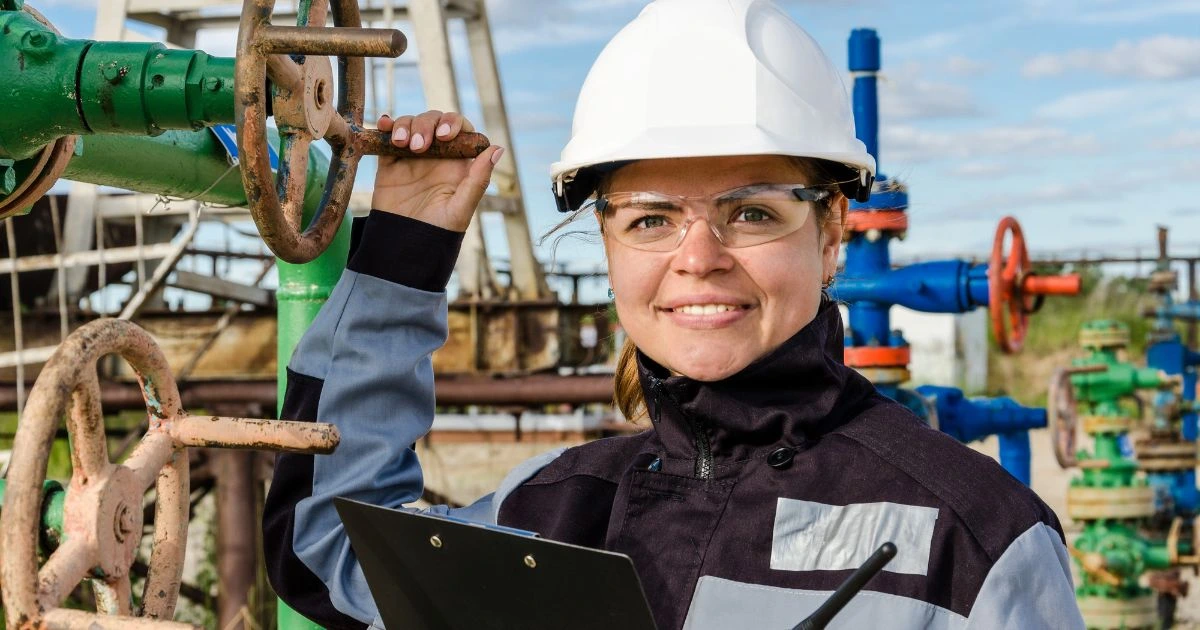
Workers on gas production sites use specialized equipment, such as drilling rigs, separators, and gas boosters, to extract natural gas for distribution.
Whether you work in the oil and gas industry or are simply curious about natural gas production, knowing the equipment and tools used in this process can help you better understand the operations involved. Gas production is a complex and highly technical process that requires specialized equipment and tools to extract natural gas from underground reserves. Without these tools, it would be impossible to produce the gas that powers our homes and industries. Let’s check out the most commonly used equipment and tools in gas production.
Drilling Rigs
The first step in gas production is to drill a well into the earth’s surface to reach the natural gas reserves. This process requires drilling rigs, which are large structures equipped with powerful drills and sophisticated machinery. Drilling rigs can be either onshore or offshore, depending on the location of the gas reserves. Onshore drilling rigs are generally smaller and more cost-effective, while offshore rigs are larger and more complex to operate.
Pipes and Casings
Workers use a series of pipes and casings to line the wellbore and maintain the integrity of the well. These pipes and casings are made of strong materials such as steel or concrete, which can withstand high pressures and extreme temperatures underground. They also prevent any potential leaks or contamination from surrounding underground layers.
Gas Lift Systems
In some cases, the natural pressure from underground reserves isn’t enough to bring the gas to the surface. In these situations, workers use gas lift systems to artificially increase the pressure in the well and push the gas up. Gas lift systems work by injecting gas from another source into the well, which helps lift the gas to the surface.
Separators
Once the natural gas reaches the surface, it goes through a series of separators to remove any impurities and separate it from other components, such as oil or water. Separators use gravity and centrifugal force to separate these elements from each other so only pure natural gas is left behind.
Gas Boosters
There are some important things to understand about gas boosters. Gas doesn’t always flow naturally at high enough pressures to be useful, especially in remote locations. In these cases, workers use gas boosters, which are pumps that increase the pressure of the gas before it enters the pipelines for distribution. This increase in pressure makes it easier and more efficient to transport the gas to its destination.
Compressors
In addition to gas boosters, workers use compressors to increase the pressure of natural gas for transportation. Compressors work by reducing the volume of the gas, which increases its pressure. This makes it easier and more cost-effective to transport larger quantities of gas over long distances through pipelines
Flow Meters
Flow meters measure the amount of natural gas workers extract from the well in real time. These meters use different technologies, such as ultrasonic, differential pressure, or turbine systems, to measure the flow rate of the gas. This information helps workers monitor production levels, detect any issues or abnormalities, and ensure accurate billing for the gas being extracted. Flow meters also help optimize production processes and maintain safety standards on the site. Thanks to these essential toolsand equipment, gas production is possible, granting us access to this vital source of energy.