Warren Buffett’s long‑telegraphed handover at Berkshire Hathaway is no longer theoretical. Greg Abel, the low‑profile Canadian executive Buffett once summed up with the words “He’s ready to be CEO tomorrow,” is now running the $1 trillion conglomerate day to day, and starting to show how he plans to steward one of corporate America’s most scrutinized empires.
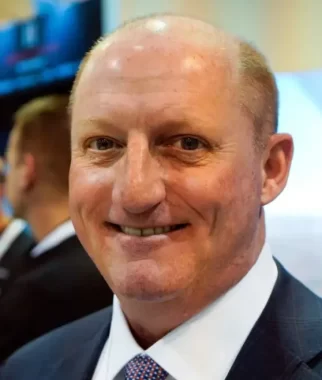
At his first Berkshire annual meeting as chief executive on Saturday, Abel presided from the main stage while Buffett watched from the arena floor in Omaha, a reversal of the roles that defined shareholder weekends for six decades. With operating earnings up, a record cash pile and a cautious message on markets, Abel used the occasion to reassure investors on the question that has hung over Berkshire for years: what comes after Buffett.
From ice hockey in Alberta to the top of Berkshire
Gregory Edward Abel, 63, grew up far from Wall Street, in Edmonton, Alberta, where he played competitive ice hockey before studying commerce at the University of Alberta. He started his career as an accountant at PricewaterhouseCoopers, then moved into the US power business at CalEnergy, a Warren Buffett‑backed firm that later evolved into MidAmerican Energy and then Berkshire Hathaway Energy (BHE).
Abel rose steadily through the ranks of that utility group, known for its heavy investments in regulated power, pipelines and renewables. By 2008 he was BHE’s CEO, running what would become one of Berkshire’s most important units and a template for Buffett’s preferred model: capital‑intensive businesses bought outright and left to operate with considerable autonomy.
Buffett first publicly identified Abel as his likely successor in 2021, telling CNBC that “the directors are in agreement that if something were to happen to me tonight, it would be Greg who’d take over tomorrow morning.” When Buffett surprised shareholders by formally stepping down as CEO last year while staying on as chairman, the board made that plan official.
Taking the stage in Omaha
Abel’s first real test in the spotlight came at this weekend’s Berkshire Hathaway annual meeting, often dubbed “Woodstock for Capitalists.” The Associated Press noted that the crowd was noticeably smaller than in Buffett’s prime years, and that the tone shifted from the folksy storytelling associated with Buffett and the late Charlie Munger to more technical discussion of earnings, regulation, and capital allocation.
“Abel is recognized as a more demanding and involved leader compared to Buffett,” AP wrote, “but he fosters this by encouraging Berkshire’s CEOs to enhance their competitive advantages while prioritizing customer satisfaction.” Executives who run Berkshire’s dozens of subsidiaries say he asks tough questions and offers pointed advice but stops short of telling them how to run their businesses, a continuation of Berkshire’s long‑standing decentralized culture.
CNBC reported that early in the meeting, a jersey emblazoned with the number 60, marking Buffett’s six decades as CEO, was hoisted into the rafters of the CHI Health Center, followed by a video montage of his career. Buffett himself, now in the chairman’s seat, told shareholders they “couldn’t have made a better decision” than appointing Abel and said the new CEO has “been 100% successful” so far.
The numbers in Abel’s first quarter
If investors came to Omaha looking for signs of slippage without Buffett at the helm, the first‑quarter numbers offered some reassurance.
- Operating earnings at Berkshire Hathaway rose, buoyed by strength in its insurance and energy units.
- The conglomerate’s cash pile climbed to a record level, with estimates clustered around $397 billion, giving Abel enormous dry powder for future deals and buybacks.
- Berkshire’s board, with Abel’s backing, resumed share repurchases, on the view that the stock trades below intrinsic value, a lever Buffett himself used heavily in recent years.
CNN said the results showed Berkshire “in robust health in its first quarter without Buffett as CEO,” even as the company’s shares have lagged the broader market since his retirement announcement. Abel has acknowledged that underperformance but argues Berkshire will continue to favor conservatism over chasing hot sectors, building value over long periods rather than quarter to quarter.
How Abel says he’ll be different, and the same
Abel has gone out of his way to promise continuity, no break‑up of Berkshire, no radical shift in investing style. At the meeting, he explicitly ruled out splitting the conglomerate, arguing that owning a mix of insurers, railroads, energy networks, manufacturers and consumer brands gives Berkshire an advantage in deploying capital and smoothing earnings.
At the same time, his public comments and background highlight some differences from Buffett:
- More operational, less anecdotal: Reporters noted that Abel’s answers leaned heavily on operating details and capital‑allocation discipline rather than the extended parables and jokes that made Buffett a folk hero.
- Measured approach to new technologies: Asked about artificial intelligence, Abel told Business Insider that Berkshire would “embrace AI judiciously,” looking at how it can improve subsidiaries’ operations rather than making a splashy bet on any one platform or stock. His tone contrasted with more aggressive tech CEOs but aligned with Buffett’s long‑held skepticism of hyped sectors.
- Tougher internal taskmaster: Subsidiary CEOs describe Abel as “more demanding” and hands‑on than Buffett in day‑to‑day oversight, according to AP and the Financial Times, though still deferential to local management.
“He poses challenging questions and offers valuable advice that his CEOs value, though he refrains from dictating their actions,” AP wrote.
The challenges ahead in a post‑Buffett era
For all his early successes, Abel faces tests that Buffett largely sidestepped or addressed in his own way.
- Deploying a record cash mountain: With nearly $400 billion on the balance sheet, Berkshire risks being criticized for hoarding cash if Abel cannot find attractive acquisitions or buybacks.
- Competing in a pricier market: Abel and Buffett have both warned that the current investing environment is “not ideal,” with high asset prices and more speculative behavior in markets. As a result, Berkshire may proceed slowly, even as shareholders push for deals.
- Proving the culture can outlast its founders: The FT writes that Abel’s “first test is winning over Berkshire’s faithful,” many of whom came to meetings primarily to see Buffett and Munger. Over time, he must show that the decentralized, trust‑based model Berkshire champions is a system, not merely a reflection of one man’s personality.
History suggests that smooth transitions at founder‑led firms are the exception, not the rule. For now, though, Buffett’s blessing, strong early results and Abel’s pledge of continuity have bought Berkshire’s new boss time to prove that the “next Warren Buffett” doesn’t need to sound like Buffett, only to allocate capital with the same patience and discipline.